Most investors do not enter the stock market thinking about regulations or dispute mechanisms.
They enter with something far simpler in mind: I will decide when I trade. I will decide how much risk I take.
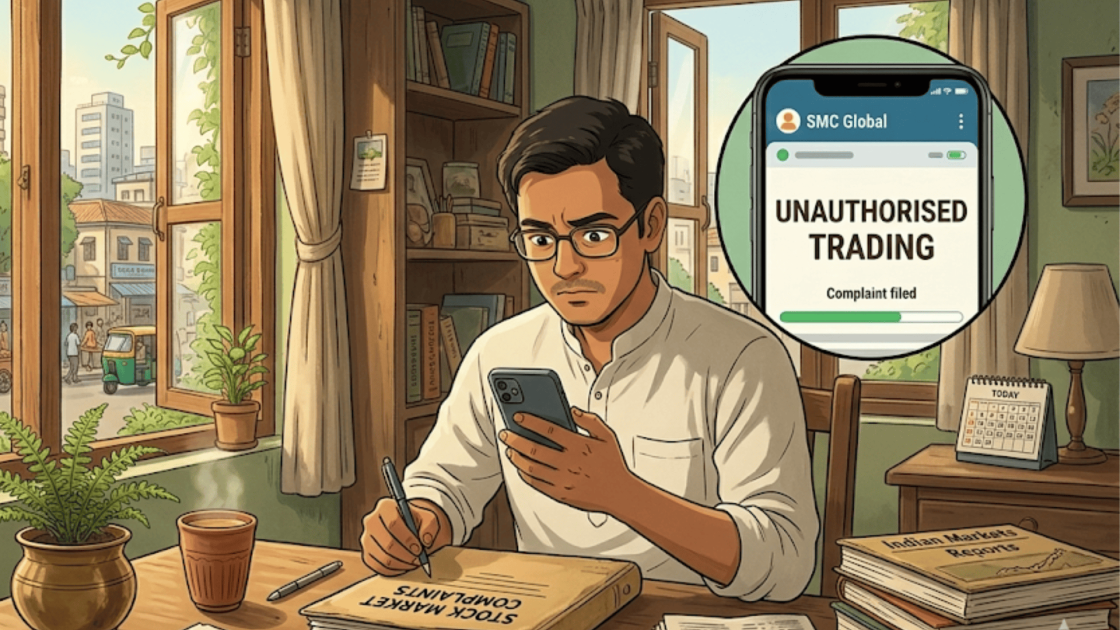
That assumption is there in the background until the day something feels off. You open your account and notice a trade you do not remember placing.
At first, you think it is a mistake. Then it starts to feel confusing, and slowly, discomfort follows.
The issue is not only about potential loss. It is also about control, or rather, the feeling that control slipped away without your knowledge.
Over the years, there have been concerns around SMC Global unauthorised trading. This does not mean every client has faced this, nor does it mean the problem exists in every situation.
But when similar issues keep coming up over the years, it becomes something you should not ignore.
This blog is meant to explain what unauthorised trading can look like, what complaint patterns of SMC Global show, and how such situations affect investors in real life.
SMC Global Overview
SMC Global Securities Ltd has been around in the Indian brokerage space for a long time.
It provides access to a wide range of products, like equities, derivatives, commodities, currencies, mutual funds, and other market-linked investments.
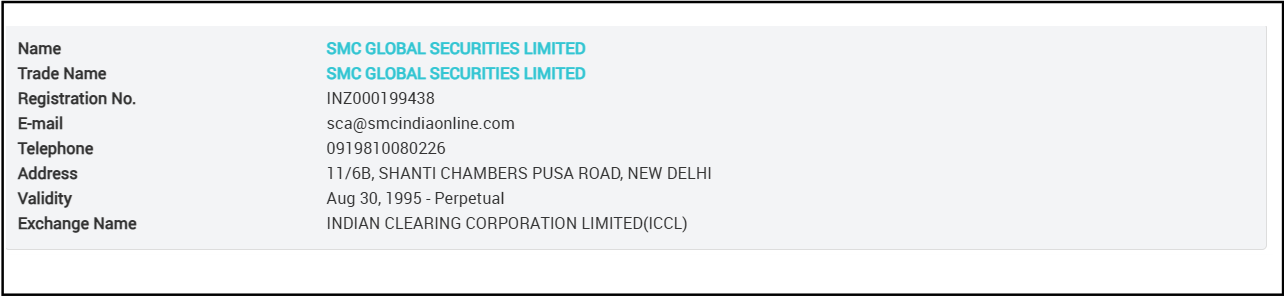
SMC Global Securities Ltd is also registered under SEBI with the registration number INZ000199438.
You can trade through SMC Global on their mobile app. Many traders, particularly those active in futures, options, and commodities, actively use SMC Global.
So, when most of your positions, margins, and exposure sit in one account, even a small unexplained trade can create unease. It gives the sense that something happened without your involvement.
How Does Unauthorised Trading Work?
Unauthorised trading is not obvious at first glance. In many cases, investors only realise something is wrong after noticing things like:
- Trades that they do not clearly remember placing
- Losses that do not match their usual approach
- Margins are suddenly blocked without warning.
- Open positions that were never properly discussed
Often, this realisation comes late, while going through contract notes or statements days after execution. By then, the situation may already have financial consequences.
You start replaying conversations in your head. Did I agree to this? Did I misunderstand something?
This is why unauthorised trading disputes tend to escalate slowly, not because investors do not care, but because they are not immediately sure what went wrong.
SMC Global Unauthorised Trading Complaints
Complaint data of SMC global unauthorised trading shows a concerning pattern. There are complaints linked to unauthorised trading every year.
Below is an overview of complaints recorded over recent years:
| Year | Total complaints | No. of unauthorized trading complaints | Percentage of unauthorized trading |
| 2021–22 | 91 | 16 | 17.58% |
| 2022–23 | 61 | 19 | 31.15% |
| 2023–24 | 84 | 23 | 27.38% |
| 2024–25 | 480 | 342 | 71.25% |
| 2025–26 | 140 | 50 | 35.71% |
In this, one year stands out very clearly – 2024-25.
When more than 70% of all complaints in a single year fall under unauthorised trading, that figure cannot be treated as routine.
It is significantly higher than in earlier years, where the proportion stayed much lower. This does not automatically mean that every complaint was upheld or proven.
However, it does suggest that a large number of investors felt that trades were being executed without proper approval during that time.
And when that many investors feel uneasy about the same issue, it points to a pattern that deserves attention.
Impact on Investors
The most visible impact is financial. Unexpected trades can lead to losses, excessive brokerage, margin shortages, or forced square-offs, sometimes before an investor even understands what caused them.
But the longer-term impact is often psychological. Many investors stop trusting their accounts completely.
They open their apps repeatedly to make sure nothing new has appeared. Some trade less, some even stop trading altogether.
For cautious investors or those new to the market, this loss of confidence can stay long after the money issue is resolved.
When Can a Broker Be Held Accountable?
There is a common belief that once a trade shows up in your account, responsibility automatically rests with you. That belief is misleading.
Brokers are expected to execute trades only after proper authorisation and to maintain records that show how and when that authorisation was obtained.
If those requirements are not met, accountability does not automatically sit with the investor.
- When There Is No Proof You Approved the Trade
Authorisation is not assumed. It must be clear. If a broker cannot provide call recordings, order logs, or confirmations linked to registered contact details, the trade can be questioned.
In such cases, the benefit of the doubt does not automatically favour the broker.
- When Trades Go Beyond What Was Clearly Understood
Even if you give some permissions, they are not unlimited.
Trades that exceed agreed quantities, involve additional positions or increase risk beyond what was discussed can still be considered unauthorised.
So, consent is specific, and brokers cannot treat it as a free permission.
- When Records Are Missing During a Complaint
Once you raise a complaint, the broker is expected to explain the trades with proper documentation.
If call records, system logs, or order details are missing or incomplete, it weakens the broker’s position significantly. In regulatory processes, records are very crucial.
- When “Technical Issues” or Dealer Errors Are Blamed
Brokers sometimes blame system errors or dealer mistakes. However, these explanations do not automatically justify unauthorized trades.
System control, access management, and supervision are the broker’s responsibility. If those controls fail, the burden does not shift to the investor.
How To File a Complaint Against a Broker?
The first reaction is usually panic. That is normal. But what you do next can make a real difference.
Taking calm, well-documented steps early can significantly improve how your complaint is assessed later.
Step1. Stop and Understand Before Acting
Avoid rushing into corrective trades. Start by identifying exactly which transactions you believe were unauthorized and when they occurred.
This clarity helps prevent confusion and ensures you focus only on genuinely disputed trades.
Step 2: Create a Clear Record
Download contract notes, ledger statements, margin reports, and trade histories. Plus, save emails, SMS alerts, app notifications, and screenshots.
A complete and organised record strengthens your position at every stage of escalation.
Step 3: Communicate in Writing
Raise the issue formally with the broker through email or their grievance system. Ask specific questions and request proof of authorisation for the disputed trades.
Written communication creates an audit trail that is critical if the matter progresses further.
Step 4: Escalate a Complaint in SCORES
If responses are delayed or unclear, escalate the matter through SEBI SCORES and then, if needed, through the stock exchange grievance mechanism.
To protect the integrity of the market, SEBI enforces strict penalties and regulatory measures against these trades, as unauthorised trading risk directly undermine investor confidence and market stability.
Following the prescribed escalation sequence helps avoid procedural objections later.
Step 5: Prepare for Arbitration if Needed
If the issue remains unresolved, arbitration in stock market is the final route. It is a structured legal process, and outcomes often depend heavily on documentation and how clearly the case is presented.
Early preparation ensures you are not scrambling for evidence when timelines become strict.
Need Help?
Many investors struggle not because their complaint is weak, but because they do not know how to approach it.
Reach out to us; We support investors by:
- Reviewing trade data and statements carefully
- Assessing whether trades may qualify as unauthorised
- Organising evidence in a structured, usable format
- Structure stock market complaints with correct legal framing
- Guiding investors through regulatory and arbitration processes
- Lodging complaint via SMART ODR.
Having direction reduces stress and leads to better outcomes, especially in situations that feel overwhelming. You do not have to handle this on your own.
Conclusion
SMC Global Securities Ltd. operates as a SEBI-registered brokerage with formal systems and disclosures.
Unauthorised trading concerns related to SMC Global do not describe every investor’s experience. However, repeated complaints show why vigilance matters.
If you are investing or trading through any broker, it should feel deliberate and transparent, not confusing.
So, when something does not feel right, you must review all your trades and look for signs of unauthorised orders. If you notice those signs early, it can change the outcome completely.
The regulatory environment in India has evolved to be incredibly protective of the retail investor.
SEBI does not take a “light touch” approach when it comes to the integrity of trade execution.
When a broker is found guilty of executing trades without a clear client mandate, they face severe unauthorised trading penalties.
Trust is at the core of investing, and protecting that trust begins with awareness.