
Quick Summary
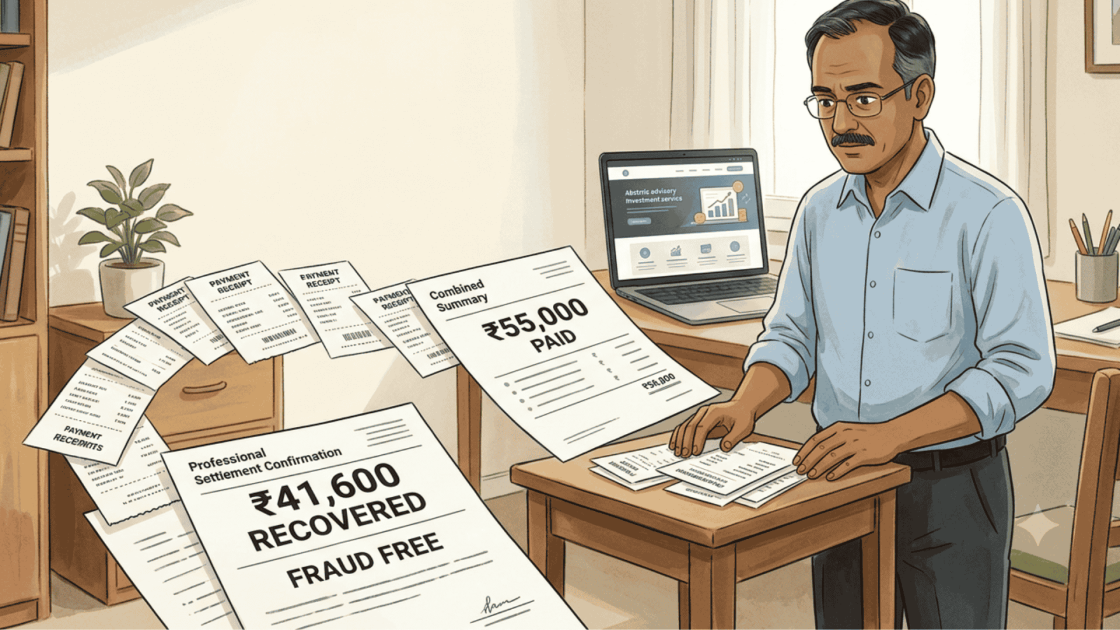
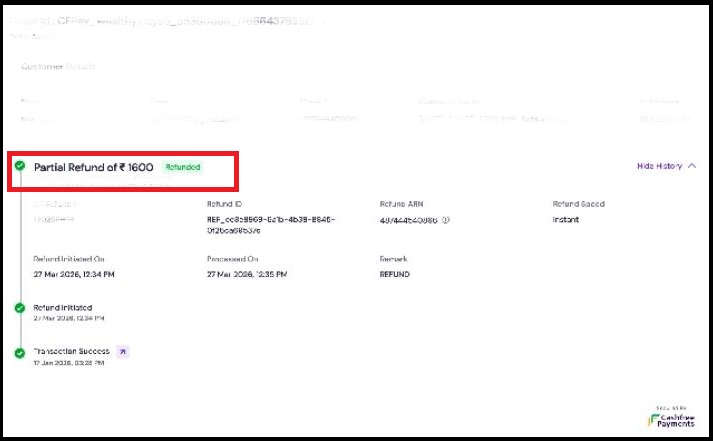
Om Prakash (name changed) paid 55,000 to a firm that turned out to hold no SEBI registration at all, spread across several small packages under different names. His claim reached 1,00,000. Scattered payments across multiple scheme names made the relationship look smaller than it actually was until the total was added up. Our team recovered 41,600, a 41.6 percent share.
Om Prakash (name changed) was contacted by a small advisory operation in early 2025 offering a starter package for a modest fee, positioned as a low-commitment way to try their trading calls.
Over the following two months, he was moved through a series of small upgrades, each with its own package name like:
- Starter Plus
- Weekly Pro
- Momentum Access
Each of these was priced individually rather than as part of one visible relationship.
His combined payments across all of these packages reached ₹55,000, though no single payment on its own looked large enough to raise concern at the time it was made.
When he later checked the firm’s credentials, it held no SEBI registration under any category. It had never been permitted to charge for investment advice in any form, regardless of how the packages were named or priced.
Offering paid trading calls without registration is the core violation here, and the scattered package structure appears to have made the true scale of the relationship harder to notice from the inside.
How FraudFree Built the Case Around the Hidden ₹55,000 Total
The challenge was not finding one large payment. It was showing that several smaller payments all belonged to the same relationship.
Om Prakash had paid for different packages over two months, but the same contact and underlying team remained involved throughout. We brought every payment into one timeline and showed the complete picture.
Step 1: Put Every Payment on One Timeline
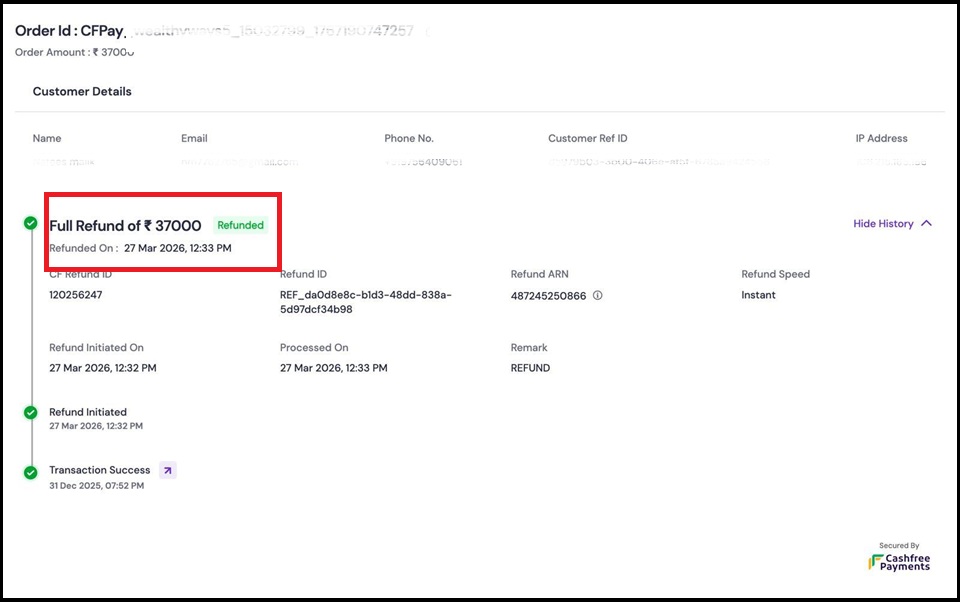
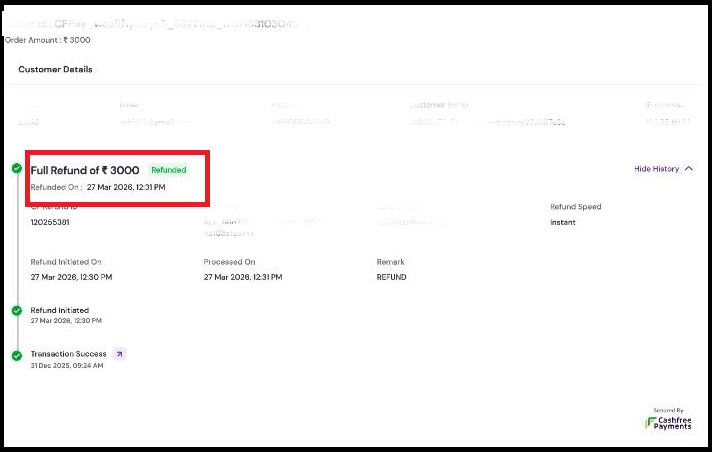
We collected each receipt and payment record and placed them in chronological order. Together, the records showed ₹55,000 flowing to the same underlying operation.
Step 2: Check What the Firm Could Legally Offer
We searched the firm’s name and contact details on the SEBI registry. The firm had no SEBI registration under any category that permitted it to provide investment-related services.
Step 3: Look Beyond the Package Names
The firm argued that each package represented a separate service. We challenged that explanation by connecting the same client, contact person, team, and continuing relationship across all the packages.
The package names changed. The relationship did not.
Step 4: Build the Complaint Around the Complete Picture
We submitted the payment trail alongside the registration check. Instead of treating each payment as an isolated transaction, we presented the entire ₹55,000 relationship as one connected sequence.
Drained by Consecutive Advisory Package Upgrades?
Small payments add up fast, especially when paid to entities operating without SEBI authorization.
Register with us we will help you map your full payment history and build a unified claim through official regulatory channels.
Conclusion
A relationship split across several small packages can look harmless when you view each payment separately. Add them together, and the real picture can change quickly.
If you paid for multiple packages from the same firm or contact, add every payment before treating each package as a separate transaction. The combined trail may tell a very different story.
Alongside SCORES, our team raises complaints against SEBI intermediaries for unregistered operations and uses the SMART ODR portal when a firm stops responding.
Report. Recover. Stay Fraud Free.
Frequently Asked Questions
Smaller, scattered payments are less likely to raise concern individually, both for the client paying and for anyone reviewing the relationship later.
Not if the same firm or team was behind all of them. What matters is the underlying relationship, not the label attached to each payment.
Search the firm's name and any contact number or website directly on the SEBI registry. Absence from that registry is a documentable fact on its own.
The claim itself was built primarily around the fee total, and unregistered fee based claims tend to settle close to what was actually paid.





 Add us as a preferred source on Google »

