The Indian stock market has opened doors for millions of retail investors, offering endless opportunities to build wealth.
With platforms like Upstox, trading has become easier, faster, and more accessible than ever before.
However, while technology has made investing convenient, it’s equally important to understand the costs that come with it.
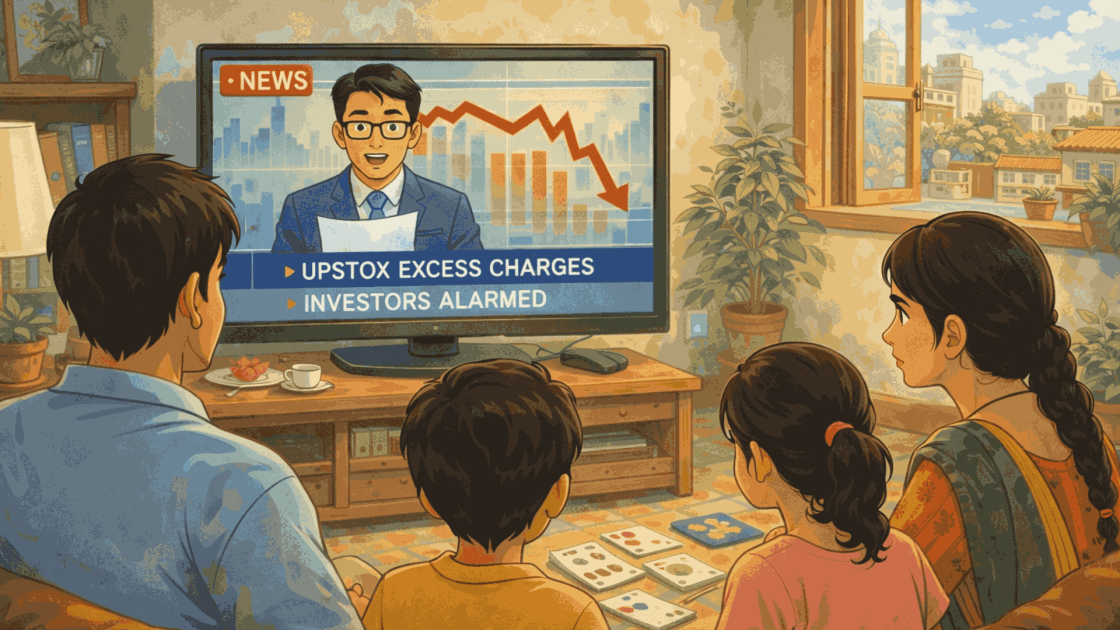
Sometimes, investors notice unexpected or excess charges in their accounts, and that’s when confusion and frustration begin, often leading them to consider filing a Upstox complaint.
Upstox Excess Charges Overview
Upstox is one of India’s popular discount brokers, known for its affordable pricing and easy-to-use trading app.
Their flat-fee model helps investors save on brokerage. For instance, they typically charge ₹20 per trade for intraday or F&O orders, while delivery-based trades are often free.
Sometimes, high-frequency trades or system errors may also make your brokerage bills look inflated.
If you’re trading actively, even small fees can add up, making it essential to track your statements carefully.
The data represents complaint records submitted through the reporting platform and may not reflect the company’s entire customer base.
Summary table: Year, No. of active clients, No. of complaints, Complaints against excess charges
| Year | No. of Active Clients | No. of Complaints | Complaints against Excess Charges |
| 2021-22 | 5115523 | 502 | Around 173 |
| 2022-23 | 2516647 | 402 | Around 78 |
| 2023-24 | 2516647 | 299 | Around 191 |
| 2024-25 | 2747330 | 735 | Around 392 |
| 2025-26 | 2036413 | 877 | Around 570 |
The platform had 5,115,523 active clients and recorded 502 total complaints in the year 2021-22. Among these, 173 complaints were related to excess charges, showing that a noticeable portion of users raised concerns about additional fees.
In 2022–23, the number of active clients reduced to 2,516,647. Along with this decline, total complaints also dropped to 402, and 78 complaints were about excess charges, indicating fewer reported issues during this period.
For 2023–24, the number of clients remained unchanged at 2,516,647, while overall complaints decreased further to 299. However, complaints related to excess charges increased to 191, suggesting that more users specifically questioned brokerage or fee-related deductions.
In 2024–25, the active client count slightly increased to 2,747,330. During the same year, total complaints rose sharply to 735, and 392 of these complaints were linked to excess charges, highlighting a growing concern among traders.
In 2025–26, the number of active clients dropped to 2,036,413, but total complaints climbed to 877. Out of these, 570 complaints were about excess charges, which indicates a significant rise in fee-related grievances.
The data reflect that complaints about excess charges have increased over the years, even when the client base did not grow at the same pace.
This suggests that users are becoming more alert about brokerage costs and are more likely to question unexpected charges.
When Can You Say It’s Brokerage Churning?
Brokerage churning in Stock Market happens when a broker executes unnecessary trades in your account, often to earn more brokerage commission.
This practice goes against ethical trading standards and can negatively impact your portfolio’s performance.
You might suspect churning if:
- Broker is executing trades without your clear consent.
- The number of trades is abnormally high without any real investment goal.
- Your portfolio shows multiple buy-sell transactions of the same stock within short intervals.
If this sounds familiar, it’s important not to ignore it. Brokerage churning isn’t just unfair, it’s a violation of regulatory norms.
How to Report a Complaint Against a Stock Broker?
If you suspect excess charges or churning in your Upstox account, take these steps:
1. Review Your Contract Note
Every trade executed in your account generates a contract note that shows a detailed breakdown of brokerage, taxes, and other charges.
Carefully review this document to understand exactly what fees have been applied. Sometimes charges appear higher simply because multiple statutory fees are included.
2. Verify Your Ledger Statement
Your ledger statement records every debit and credit in your trading account. By reviewing it regularly, you can identify unusual deductions or duplicate charges.
This helps investors keep track of brokerage costs and other account-related fees.
3. Contact Broker Support
If you still feel the charges are incorrect, reach out to the broker’s support team with your trade details and screenshots.
Most billing issues can be clarified or resolved directly by customer support.
Keeping clear records of your communication can also help if the matter needs escalation.
4. File a Complaint in NSE
If the broker does not resolve your concern, you can file a complaint with the relevant stock exchange.
Exchanges like the National Stock Exchange of India and BSE Limited provide investor grievance mechanisms to review such cases.
This step ensures that your complaint is formally recorded.
5. File a Complaint in SCORES
If the issue is still unresolved, you can escalate it further through SEBI’s official grievance redressal platform, which allows investors to submit complaints and track their status.
You can provide all supporting documents, including trade details and communication records, to help SEBI review the matter properly.
The platform also ensures that the complaint is forwarded to the concerned entity for a response within a defined timeline.
5. Arbitration in Stock Market
If the dispute continues, investors can proceed further by opting for arbitration through the stock exchange.
As part of this process, you may first lodge a report in SMART ODR, where the case is reviewed before moving to arbitration, and an independent authority examines the evidence submitted by both parties to reach a decision.
6. Escalate the Matter to the Regulator
If the issue still persists, you can escalate the complaint to the Securities and Exchange Board of India through the SCORES platform.
This allows the regulator to review your complaint and ensure proper action is taken. Escalating the matter helps protect investor rights and maintain transparency in the market.
Need Help?
If you’re unsure about your trade statements or find it difficult to understand the charges applied to your account, register with us. Our team is here to help.
We can assist you in reviewing your contract notes, analyzing your ledger statements, and identifying any possible excess or unexplained charges.
Our goal is to help investors clearly understand brokerage fees, regulatory charges, and how they impact overall trading costs.
With the right guidance, you can make informed decisions and take the appropriate steps if any discrepancies are found.
Whether it’s clarifying brokerage calculations or guiding you through the complaint process, we’re here to support you in protecting your investments and ensuring transparency in your trading account.
Conclusion
The world of stock market investing is exciting, but only when you stay informed. Understanding how your broker charges you is just as important as choosing what stocks to buy.
If you ever notice unusual deductions or patterns, act immediately: review your statements, question unclear fees, and don’t hesitate to escalate when necessary.
After all, protecting your money is as vital as growing it. A smart investor isn’t just one who trades well, but one who stays alert, informed, and proactive.