Many traders rely on their mobile trading apps to manage investments throughout the day.
Whether it is checking portfolio positions, placing an order quickly, or tracking market movement, the trading app becomes the primary gateway to the stock market.
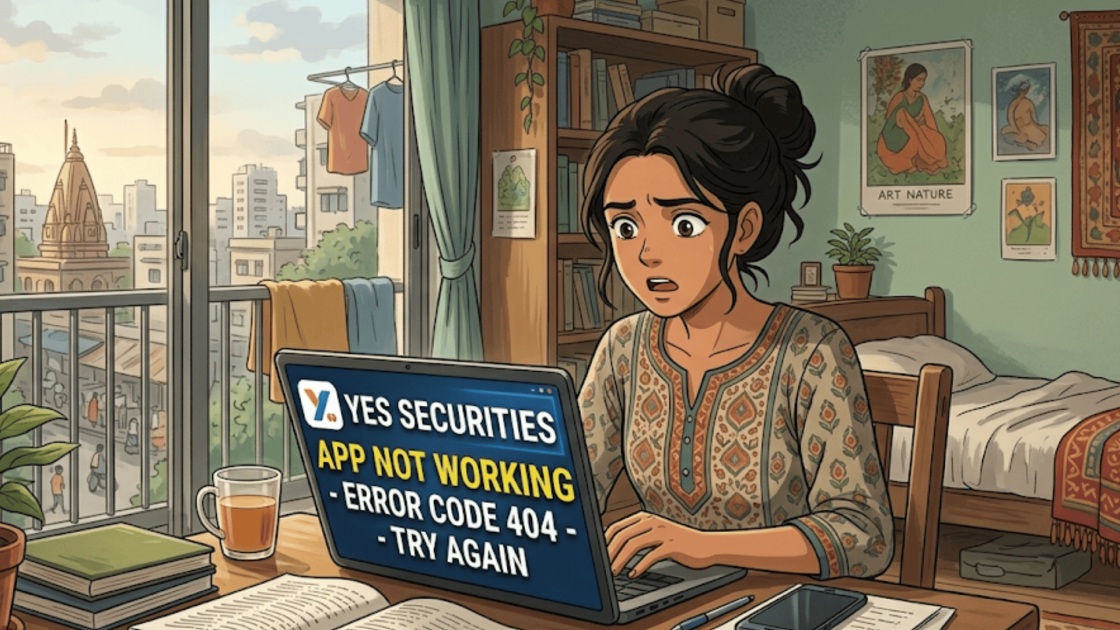
Sometimes, however, users report issues like the app not loading properly, login errors, or orders not going through. When this happens, investors often search online for “YES Securities app not working.”
In most cases, these complaints relate to the OMNI App, the trading platform offered by YES Securities (India) Limited.
YES Securities is a SEBI-registered stockbroker that provides trading access across segments like equities and derivatives through exchanges such as NSE.
Investors use its digital platform to execute trades and monitor their investments.
Since trading platforms operate through complex technology systems, temporary disruptions can sometimes occur.
In this blog, we examine how technical glitches happen, what exchange disclosures indicate about such incidents, how they may affect investors, and what steps traders can take if they encounter problems while using the app.
OMNI App Technical Glitch Review
YES Securities operates its mobile trading platform called the OMNI App. Investors use this platform to place trades, monitor market movements, and manage their investment portfolios.
Through the OMNI App, users can trade in segments such as equities and derivatives on stock exchanges like NSE and BSE.
For many investors, the app acts as the main interface to access the market, especially for placing orders during trading hours.
Behind the mobile interface, several systems work together to execute a trade successfully.
These include the mobile application itself, backend servers that process requests, the order management system that routes trades, and connectivity with the stock exchange.
If any one of these systems experiences disruption, traders may face issues such as login failures, delayed order placement, or temporary platform outages.
Regulators and market participants use the term technical glitch in stock exchange operations to describe these systemic disruptions.
While a glitch might sound like a minor “hiccup,” in a high-volatility environment, even a few minutes of downtime can mean the difference between a protected profit and a catastrophic loss.
According to the framework issued by SEBI, a technical glitch refers to a malfunction in the broker’s trading infrastructure that impacts the ability of investors to place, modify, or execute orders.
In simple terms, a technical glitch may include situations such as:
- Login failures on the trading platform
- Delays in order execution
- Server outages are affecting the trading system
- issues within the order management system
- connectivity problems between the broker’s system and the exchange
When such issues occur, investors may temporarily lose access to normal trading functions.
What Brokers Must Do During a Technical Glitch?
Regulators require brokers to follow a defined process when a technical glitch occurs.
Under the regulatory framework, brokers are expected to report the incident to the concerned stock exchange within two hours of detecting the issue.
They must also inform affected clients and begin investigating the cause of the disruption.
After the issue is resolved, the broker must submit a Root Cause Analysis report within fourteen days explaining what went wrong and what corrective steps were taken.
In addition, brokers must maintain Business Continuity and Disaster Recovery systems to ensure that trading operations can continue even if a primary system faces disruption.
Stock exchanges publish disclosures of technical glitches reported by brokers as part of their transparency and monitoring framework.
YES Securities Complaints
YES Securities serves a large base of investors across India. The broker reportedly has around 6 lakh clients, with about 74,770 active trading clients as of May 2025.
When a trading platform serves tens of thousands of active traders, even a short system disruption during market hours may affect multiple users simultaneously.
This is why exchanges monitor platform reliability and require brokers to disclose technical incidents.
Stock exchanges publish technical glitch disclosures reported by brokers as part of the regulatory transparency framework.
The table below summarises technical glitches reported by YES Securities (India) Limited based on disclosures published by the exchange.
| Financial Year | Technical Glitches Reported |
|---|---|
| 2025–26 | 2 |
| 2023–25 | 0 |
The exchange disclosures show that technical glitches reported by YES Securities appear limited and spread across different financial years.
The incidents are not clustered within a short timeframe. In many cases, this type of pattern may indicate isolated system disruptions rather than persistent infrastructure failures.
Technical glitches can occur in complex trading systems where multiple technological components interact.
Exchanges require brokers to report these incidents so that infrastructure issues can be monitored and addressed.
Impact on Retail Traders
Even short disruptions on a trading platform can affect retail investors, especially during active market hours.
For traders using the platform, such issues may lead to situations like:
- Inability to exit open positions
- Missed trading opportunities
- Delays in order execution
- Execution risks during volatile market conditions
When markets move quickly, timing plays a critical role in trading decisions. A temporary platform disruption may therefore affect investors who rely on mobile trading apps for real-time execution.
What To Do To Report a Technical Glitch in India?
If investors face issues such as login failures, order execution delays, or the trading app not functioning properly, it is important to report the issue through the proper channels.
Taking the right steps and keeping records can help during dispute resolution.
Step 1: Contact the Broker
Start by reaching out to the customer support team of YES Securities. Brokers usually provide support through phone, email, or in-app help desks.
Reporting the issue immediately helps the broker investigate the problem.
Step 2: Keep Evidence
Investors should keep records of the issue. Useful evidence may include:
- screenshots of the error
- order logs or trade confirmations
- timestamps showing when the issue occurred
These details can help establish what happened during the disruption.
Step 3: File a Complaint on SCORES
If the issue remains unresolved, investors can file a complaint through the SEBI. The SCORES portal of SEBI allows investors to register grievances against market intermediaries.
The complaint is forwarded to the concerned broker, and investors can track the status of their grievance through the platform.
Step 4: Escalate Through the Exchange
If the issue still remains unresolved, investors may escalate the matter through the investor grievance mechanism and lodge a complaint to the NSE.
Proper documentation and timely reporting can significantly help investors if a dispute arises due to a technical trading issue.
Step 5: Lodge a Complaint through SMART ODR
If the matter turns into a formal dispute, for example, when you claim compensation, and the broker denies responsibility, the case may proceed to the SMART ODR framework.
This platform facilitates mediation and conciliation between investors and intermediaries, and if the issue remains unresolved, the dispute can eventually move to arbitration in the stock market.
Need Help?
Technical issues on a trading platform can sometimes create confusion for investors, especially when trades fail, orders get delayed, or the app does not function properly during market hours.
In such situations, understanding the correct process to report the issue and escalate the complaint becomes important.
Broker-related disputes or platform disruptions may require proper documentation, communication with the broker, and sometimes escalation through regulatory channels.
Many investors are not fully aware of the steps involved in resolving such issues.
If you are facing unresolved trading issues, broker disputes, or problems related to trading platforms, you can register with us for guidance.
Our team can help you understand the available options and the appropriate steps to address the issue through the proper regulatory mechanisms.
Conclusion
Trading apps have become an essential tool for investors who want quick access to the stock market.
Platforms like the OMNI App allow users to place orders, track portfolios, and monitor market movements directly from their mobile devices.
However, like any technology-driven system, trading platforms can sometimes experience technical glitches.
Regulators such as SEBI require brokers to report these incidents, investigate the cause, and maintain systems that reduce the risk of future disruptions.
For investors, the most important step is to stay informed and act quickly if a problem occurs.
Keeping records, reporting issues promptly, and using the proper grievance channels can help resolve disputes more effectively.
Staying vigilant and documenting trading issues ensures that investors are better prepared to protect their interests if technical problems arise while using a trading platform.