

If you paid for access to the YTA Premium Telegram Channel believing it was backed by a SEBI-registered or NISM-certified team, you were not making an irrational decision; you were relying on a claim that SEBI has since found to be false.
There are documented cases of investors being misled about the most fundamental thing they were trying to verify: whether the person advising them was legally authorised to do so.
If you subscribed, paid fees, or entered into any arrangement with YTA Premium, this blog outlines exactly what was found, what it means for your situation, and what you can do right now.
YTA Premium Telegram Channel Details
YTA Premium Telegram Channel operated as part of a Telegram ecosystem associated with Yash Trading Academy, run by Yash Garg.
The platform offered paid trading calls, stock market recommendations, and account-handling style arrangements across multiple channels covering equity and derivatives trading.
The model relied on Telegram’s capacity for fast communication, instant alerts, and the psychological pull of exclusive “premium group” access to attract and retain paying subscribers.
Subscribers typically discovered the channel through social media promotion, profit screenshots, claims of trading accuracy, and the specific assertion that the team behind it held recognised regulatory credentials.
For investors in India’s growing retail trading community, the false regulatory claims were designed to address the exact concern that should have protected them.
The channel is part of a broader pattern SEBI has documented across India’s Telegram trading ecosystem, where the combination of fast communication, visual profit claims, and false credential assertions creates conditions for investor harm at a significant scale.
Yash Garg SEBI Order
The facts established in SEBI’s formal order are the most important starting point for every investor who interacts with this channel.
SEBI’s investigation into Yash Garg and Yash Trading Academy produced a formal order on March 27, 2026.
The investigation examined whether the operations being conducted through YTA’s Telegram ecosystem complied with the regulatory framework governing Investment Advisers and Portfolio Managers in India.
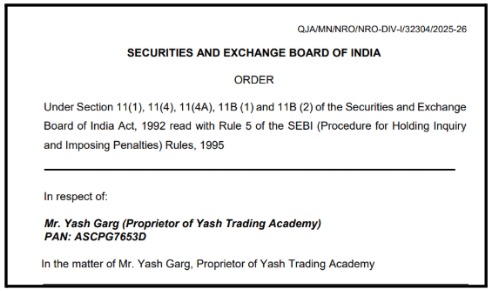
SEBI found that Yash Garg and Yash Trading Academy did not hold any valid registration as an Investment Adviser under the SEBI (Investment Advisers) Regulations, 2013, or as a Portfolio Manager under the SEBI (Portfolio Managers) Regulations, 2020.
Despite this, the channels were clearly providing both investment advisory services and account-handling style arrangements to paying subscribers, activities that legally require registration.
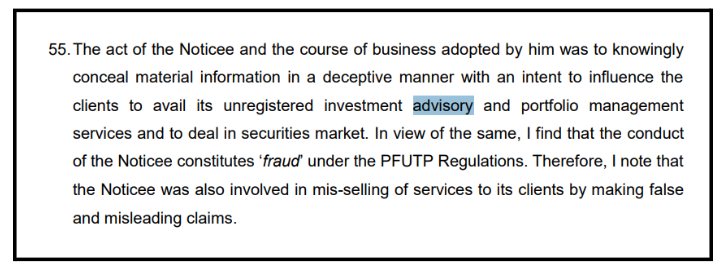
Operating these services without registration is not a technicality.
It means that the regulatory protections investors assume exist when dealing with a registered entity, the mandatory disclosures, the regulatory accountability, and the formal grievance mechanisms did not apply.
Additionally, SEBI’s investigation revealed that Yash Garg had falsely claimed his operations were backed by a “SEBI-registered” or “NISM-certified” team.
These claims were found to be untrue.
This distinction matters enormously for investors.
There is a meaningful difference between a legitimate advisory business that fails to meet certain conduct standards and an operation that actively deceives investors about its regulatory status.
This observation confirms that the confusion experienced by investors was not the result of carelessness on their part.
It was a foreseeable consequence of the way the operation was structured and presented.
What Happened to Investors Who Paid?
Public discussions and reports surrounding the YTA Premium Telegram Channel largely gained attention after SEBI action against Yash Garg and Yash Trading Academy became publicly reported.
According to SEBI observations referenced in media reports, complaints from investors formed part of the basis for regulatory examination.
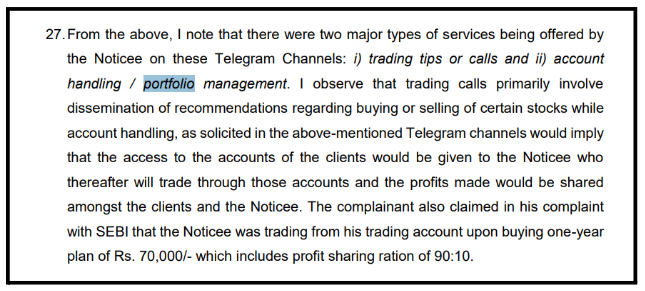
Complaints suggest that users who paid subscription fees or entered profit-sharing arrangements with the channel found it difficult to raise concerns through normal channels once they encountered issues.
The SEBI process, while effective, takes considerable time and does not guarantee individual investors will receive their money back quickly.
That is why investors should avoid depending only on testimonials, screenshots, or social media hype before making financial decisions.
Instead, proper verification, independent research, and regulatory checks become essential.
And this is exactly why SEBI has recently increased its focus on unregulated digital advisory ecosystems.
Many investors initially believed they were dealing with a regulated advisory operation.
Only later, after losses, payment disputes, or difficulties obtaining support, did they begin questioning whether the representations made to them were accurate.
Warning Signs That Should Stop Any Investor Before Joining Any Telegram Trading Channel
The YTA case is one of the most clearly documented examples of the pattern that precedes investor harm in Telegram-based advisory operations.
Recognising each element helps investors protect themselves, before paying and after:
- Any claim of SEBI registration or NISM certification needs independent verification: Never rely on a claim of regulatory credentials made by the channel itself, in a Telegram bio, a promotional post, or a sales conversation.
- A “premium” group with no verifiable registered entity behind it: If the channel cannot tell you the full legal name of the registered entity, the specific SEBI registration number, and the validity dates of that registration, and you cannot independently verify all three, the premium label is meaningless.
- Profit screenshots without loss disclosure: No trading operation produces only wins. If a channel’s promotional material shows exclusively successful trades without any reference to losses, failed calls, or risk exposure, what you are seeing is a selective presentation.
- Communication that disappears after payment: If the responsiveness, the promises, and the personal attention that characterised the pre-payment relationship change noticeably after your money has been transferred, document every instance immediately.
SEBI Action Against Unregulated Telegram Channels
SEBI has been increasingly tightening its action against unregistered Telegram channels that provide stock tips, trading calls, or investment-related advice without proper regulatory approval.
Over the past few years, the regulator has observed a growing trend where Telegram groups are used to influence retail investors through aggressive market claims and unverified trading recommendations.
Documents and regulatory observations also indicate concerns around practices where certain stocks are heavily promoted to create artificial excitement among retail traders.
In some situations, prices may rise temporarily due to increased buying activity, after which operators or connected parties may allegedly exit their positions while ordinary investors remain exposed to losses.
How To Complain Against Unregistered Telegram Channels?
Most investors wait too long before documenting what happened.
Unfortunately, waiting often makes complaints harder because chats disappear, payment records become scattered, and timelines become unclear.
If you believe you have been misled by an unregistered Telegram trading channel, there are clear and accessible avenues to raise a formal complaint.
Here is how to approach it step by step to file Yash Trading Academy complaints:
1. Start by Collecting All Supporting Records
Before taking any step, organise every important document connected to the service.
Keep payment receipts, bank statements, WhatsApp chats, emails, recommendation messages, agreements, and legally available call recordings properly arranged by date.
Well-organised records make it easier to explain your case clearly later.
2. File a Cyber Crime Report
If you believe you were misled by an unregistered entity or false service-related claims, you may additionally report the matter through the cybercrime reporting portal.
This may become relevant, particularly in cases involving online transactions or digital communication.
3. File a Complaint with SEBI
Investors may also send a formal E-mail to SEBI along with all supporting evidence and relevant documents.
This helps create an official regulatory record regarding the matter.
When submitting your complaint, include a clear timeline of events, details of the services purchased, payment records, supporting evidence, and the outcome you are seeking.
Maintaining complete documentation can help ensure that the complaint is reviewed more effectively.
Need Help?
Many investors are not sure whether what happened was simply a bad trading experience or something that deserves a formal complaint.
That uncertainty often delays action regarding Telegram stock market fraud recovery.
If you are struggling to organise records, understand Telegram-based trading activity, or evaluate possible complaint options, our team can help you review the available documentation and understand the next steps.
If you have concerns regarding YTA Premium Telegram Channel or a similar service, you may register with us for guidance based on your records.
Conclusion
The YTA Premium Telegram Channel case highlights an important lesson for every investor: popularity on social media should never be confused with regulatory approval.
SEBI’s findings indicate that investors should verify registrations independently before paying for trading advice, market calls, or account-management-style services.
Before joining any Telegram trading group, investors should understand who is providing the advice, whether they are authorised to do so, and what risks are involved.
In the stock market, caution, verification, and documentation usually provide far greater protection than screenshots, subscriber counts, or promotional claims.
Frequently Asked Questions
1. I verified the SEBI registration claim before paying, and it seemed legitimate. Does that matter for my complaint?
Yes, and significantly. The SEBI order specifically found that false claims of SEBI and NISM credentials were made to investors.
An investor who conducted reasonable verification and was misled by false claims about regulatory status is in a stronger position than one who paid without any verification.
2. How can I verify whether a Telegram trading channel is genuine?
Investors should independently verify registrations, review disclosures, check communication practices, and avoid relying solely on profit screenshots or subscriber counts.
3. What are the biggest warning signs in Telegram trading groups?
Guaranteed returns, recovery promises, pressure selling, account-access requests, and aggressive profit marketing are some of the most common concerns investors should evaluate carefully.
4. Can I recover money paid to a Telegram trading channel?
Recovery depends on the facts of the case, available evidence, payment records, and the nature of the representations made. Investors should preserve all communications and payment proofs and explore the available complaint mechanisms without delay.





 Add us as a preferred source on Google »

