Did you ever try stock market trading or hear about investing in the market? If yes, then you’ve probably come across the name Zerodha.
It’s one of India’s most popular brokerage apps, used by over 1.6 crore customers for trading stocks, mutual funds, and more.
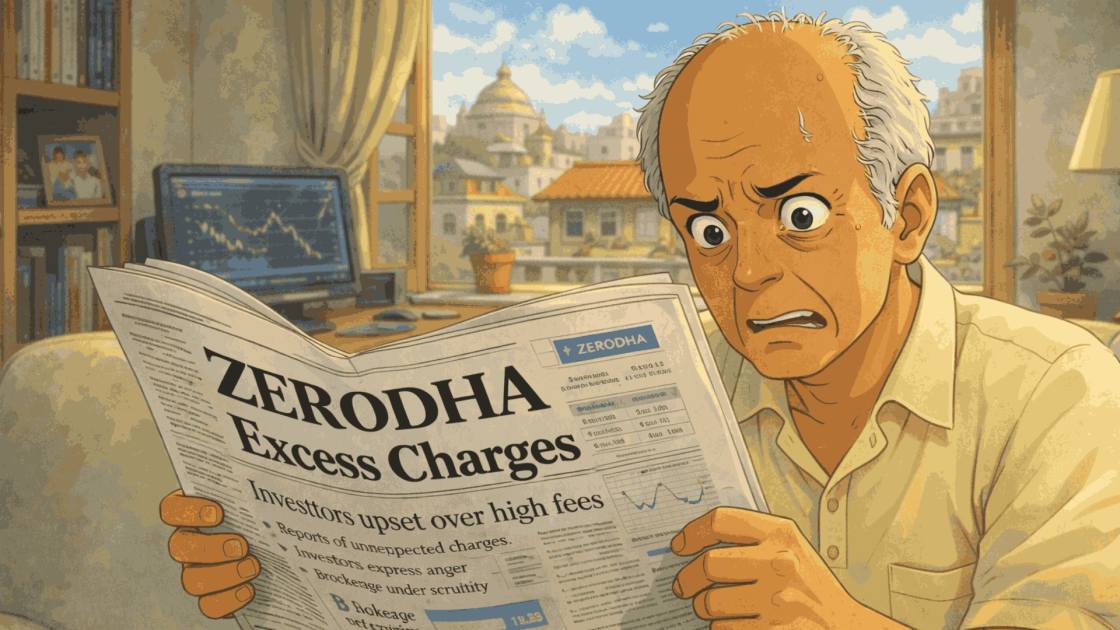
But here’s the thing: sometimes traders notice charges on their account that seem higher than expected. This can be confusing and frustrating.
If you’ve experienced this, you’re not alone.
Let’s break down what Zerodha charges, what excess charges or churning in Share Market means, and what you can do if you think something’s not right.
Zerodha Overview
Zerodha changed the game in India by introducing discount broking. Before Zerodha, brokers used to charge a percentage of your trade value, which could get expensive quickly.
Zerodha introduced a flat-fee model that made trading affordable for regular people.
Sometimes traders feel they’ve been charged more than what the standard fee structure suggests. This could happen due to:
- Misunderstanding of how charges are calculated
- Hidden or unexpected fees
- Errors in billing
- Or, in rare cases, brokerage churning
Brokerage churning is when a broker (or someone managing your account) executes unnecessary trades just to generate more commission. It’s unethical and can eat into your profits without you realizing it.
Zerodha Excess Charges Complaints
The data represents complaint records submitted through the reporting platform and may not reflect the company’s entire customer base.
Summary table: Year, No. of active clients, No. of complaints, Complaints against excess charges
|
Year |
No. of Active Clients | No. of Complaints |
Complaints against Excess Charges |
|
2021-22 |
6277437 | 543 | 183 |
| 2022-23 | 7287148 | 446 |
82 |
|
2023-24 |
7287148 | 567 | 350 |
| 2024-25 | 7888964 | 1075 |
595 |
|
2025-26 |
6862233 | 734 |
466 |
In 2021–22, the platform had 6,277,437 active clients and recorded 543 total complaints. Out of these, 183 complaints were related to excess charges, indicating that some users faced issues regarding brokerage or additional fees.
The number of active clients increased to 7,287,148 in the year 2022-23.
However, total complaints decreased to 446, and 82 complaints were about excess charges, suggesting a temporary reduction in fee-related concerns.
During 2023–24, the number of active clients remained 7,287,148, but total complaints increased to 567.
Among them, 350 complaints were linked to excess charges, showing a significant rise in complaints specifically related to extra fees.
In 2024–25, the client base further grew to 7,888,964, which is the highest in the table.
At the same time, total complaints increased sharply to 1,075, and 595 of these were related to excess charges, indicating growing dissatisfaction regarding brokerage costs.
In 2025–26, the number of active clients slightly declined to 6,862,233, while total complaints reduced to 734. Out of these, 466 complaints were still about excess charges, showing that fee-related issues continued to be a major concern.
Overall, the data shows that while the number of clients increased over the years, complaints, especially those related to excess charges, also rose significantly, highlighting the importance of transparent brokerage practices and clear fee structures.
When Can You Say It’s Brokerage Churning?
Not every high charge means churning. But here are signs that something might be wrong.
Excessive trading in your account without your clear consent or understanding can be a warning sign. This may include trades being executed that you did not authorize or were not properly informed about.
Another indicator is frequent buy-sell cycles, where the same stocks are repeatedly traded without any clear investment strategy.
In such cases, you might notice high trading activity but little or no growth in your portfolio.
You may also observe that the charges on your statement do not match the broker’s published fee structure.
Additionally, constant pressure from someone managing or advising your account to trade more frequently can signal a potential issue.
What are the Steps to a Complaint against Zerodha?
If you suspect excess charges in your account, it can be incredibly frustrating, and if you find Zerodha not working at that exact moment, it makes the situation even worse.
Being unable to access your dashboard or contact support during a billing dispute leaves your capital at risk. In such cases, taking a documented, step-by-step approach is the only way to ensure your grievance is resolved.
Take these steps to protect your interests:
1. Review Your Trade History and Bills: Log in to your Zerodha account and check your contract notes and ledger. Every trade has a detailed breakdown of charges. Compare these with Zerodha’s official charge list on their website.
2. Contact Zerodha Support: If something doesn’t add up, reach out to Zerodha directly. Use their support portal at support.zerodha.com, raise a ticket explaining your concern, keep screenshots and documentation ready. Most billing issues get resolved at this stage.
3. File a Complaint in SEBI: If your broker doesn’t respond satisfactorily, you can escalate to SEBI (Securities and Exchange Board of India) and file a complaint in SCORES. SEBI is the market regulator and takes investor complaints seriously.
4. Arbitration in Stock Market: Stock exchanges like NSE and BSE have arbitration mechanisms. If you have a dispute with your broker that can’t be resolved directly, you can file for arbitration through the exchange. This is a formal process where an independent party reviews your case.
Need Help?
Dealing with brokerage disputes can feel overwhelming, especially if you’re new to trading. Understanding contract notes, calculating charges, and knowing your rights takes time and expertise.
That’s where we come in, reach out to us.
As professional guides in financial matters, we help traders and investors:
- Understand their brokerage statements
- Identify if they’ve been overcharged
- Draft complaints to brokers and SEBI
- Navigate the arbitration process
- Get clarity on their rights as investors
You don’t have to figure this out alone. Whether it’s a small billing error or a serious case of churning, having someone experienced on your side makes a difference.
Conclusion
Zerodha is a reliable and transparent broker used by millions. Their fee structure is straightforward, and most traders have a smooth experience. But mistakes can happen, and in rare cases, something more serious, like churning, might occur.
Being aware of trading charges is essential to avoid confusion and financial loss.
If you ever encounter unexplained deductions, taking timely action, like filing a Zerodha complaint to SEBI, can help safeguard your interests.
If you have questions or need guidance, feel free to reach out. Your money matters, and so does knowing where it goes.