

Quick Summary
Rakesh Oberoi (name changed) watched his advisory invoice jump from 12,500 to 62,500 the day after he deposited more capital. His claim reached 4,73,000. Eleven invoices later, the pattern was unmistakable. The fee moved with his balance, not with any change in service. Our team recovered 2,60,000, a 55 percent share.
Rakesh (name changed) deposited ₹1,00,000 with his advisory firm in January 2026. Soon after, he received an invoice for ₹12,500, an amount that appeared proportionate to his investment.
Then he increased his capital.
The very next day, a new invoice landed: ₹62,500. That was five times the earlier fee, with no clear explanation except a reference to an “upgraded package.”
What followed was a pattern that became harder to ignore.
Another deposit brought a ₹55,000 invoice. Then came ₹43,000. Then ₹32,000. Each time Rakesh added money to his account, another demand to upgrade and pay more followed.
By the end, he had received eleven invoices.
Yet nothing meaningful had changed in the service. The calls remained the same. The research alerts remained the same. The advice remained the same.
Only one thing kept changing: the amount of money in his account.
That is precisely the kind of conflict SEBI’s fee rules are intended to prevent.
When an advisory firm’s earnings rise with the client’s deposits rather than the service delivered, the financial incentive can shift in the wrong direction. The focus can move from providing better advice to encouraging the client to put in more capital.
Across all eleven invoices, Rakesh was charged ₹3,33,500 in advisory fees. When his trading losses were added, his total claim reached ₹4,73,000.
What looked like a series of separate invoices began to reveal something much bigger: a fee structure that appeared to grow with his capital, not with the service he was receiving.
How We Turned Eleven Invoices Into a Clear Case
The biggest challenge was not finding one questionable invoice. It was proving that all eleven invoices followed the same pattern.
We put Rakesh’s deposit dates, account balances, and invoices into one timeline. Once everything was placed in order, the sequence became difficult to explain away.
Step 1: Put Every Payment on One Timeline
We matched each of Rakesh’s deposits with the invoice that followed it. The timeline showed a consistent pattern: more money deposited, followed by another fee demand.
This helped move the complaint beyond a disagreement over individual invoices. It showed a repeated pattern across all eleven payments.
Step 2: Show What Actually Changed
We then compared the invoices with the services Rakesh was receiving.
The firm described the higher charges as upgrades to different service tiers. But the evidence showed no corresponding change in the calls, research alerts, or service frequency.
The invoices were changing. The service was not.
Step 3: Highlight the Fee Structure Problem
The next step was to explain why this pattern mattered.
If a client’s fee keeps increasing as more capital is deposited, while the underlying service remains unchanged, the arrangement can create a financial incentive to encourage larger deposits rather than provide a genuinely different level of service.
That became an important part of our complaint.
Step 4: Present the Evidence as One Continuous Story
Rather than submitting eleven invoices as disconnected documents, we presented them in sequence with the corresponding deposit dates.
The SEBI SCORES portal complaint therefore showed the entire progression at a glance.
The firm responded that every invoice represented a genuine upgrade. But when those alleged upgrades were compared against the actual services Rakesh received, there was little evidence of any meaningful change.
From a Fee Dispute to a ₹2.60 Lakh Settlement
Once the complete invoice pattern was documented, the dispute was no longer about whether one particular fee was justified.
The question became much simpler:
Why did Rakesh’s fees keep rising when the service he received did not?
With the evidence presented in this sequence, the firm agreed to settle the matter.
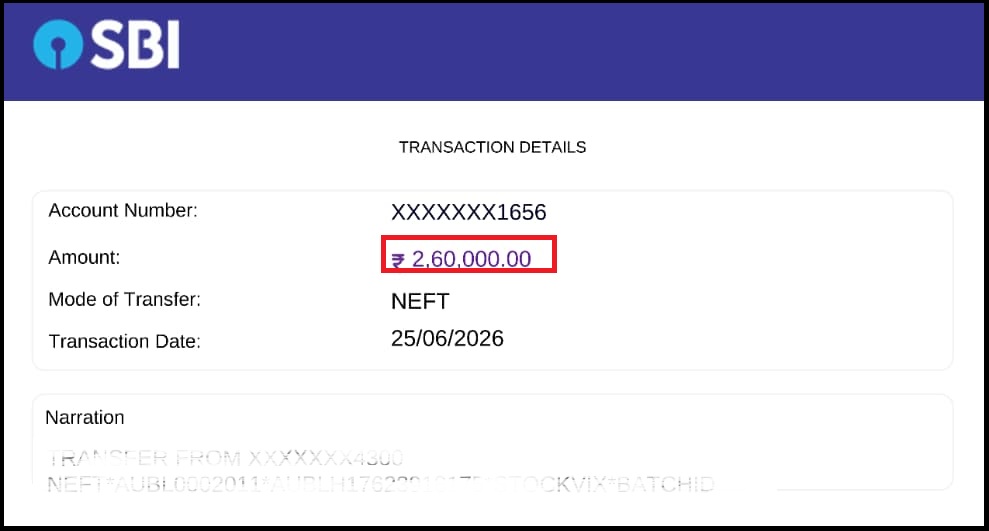
Rakesh recovered ₹2,60,000 against his ₹4,73,000 claim, representing approximately 55% of the amount claimed.
The settlement was paid through a direct NEFT transfer, and the transaction receipt was preserved as proof of the recovery.
For Rakesh, the turning point was not a single invoice. It was showing how all eleven invoices fit together.
Did your advisory fee increase soon after you added more funds?
Register with us if your advisory fee has jumped right after you added funds. We will check the pattern for free.
Conclusion
A rising advisory fee is not automatically suspicious. A rising fee that tracks your account balance, with no matching change in service, is.
Line up your invoice dates against your deposit dates if you have ever felt pressured to add funds right after a fee increase. The pattern is often obvious once both are placed together.
Where a firm resists a documented pattern like this one, our team escalates through the SMART ODR portal to push the file toward resolution.
Report. Recover. Stay Fraud Free.
Frequently Asked Questions
There is no fixed number, but more instances make the pattern harder to dismiss as coincidence. Even three or four matching invoices and deposits can support a strong file.
Different names do not break the pattern if the underlying service stayed the same. What matters is whether anything you actually received changed alongside the price.
Yes. Fewer invoices with a clear correlation to deposit dates can still establish the same pattern, just with a smaller evidence set.
A portion of the claim reflected trading losses rather than fees paid, which is assessed separately from the fee pattern violation itself.





 Add us as a preferred source on Google »

