
Digital brokerage platforms are changing how Indian investors participate in the stock market.
Firms such as Alice Blue Financial Services provide online trading platforms with competitive pricing and easy-to-use tools for investors.
While these platforms aim to make trading affordable, some users have raised concerns about unexpected or excessive charges in their accounts.
This article reviews complaints related to Alice Blue and explains what investors should keep in mind about brokerage charges and trading practices.
Alice Blue Money Excess Charges Overview
Alice Blue is a brokerage firm that offers trading and investment services across multiple financial markets.
Investors can access equities, derivatives, commodities, and currencies through its digital platforms, benefiting from a cost-effective, flat-fee brokerage model.
Churning in the stock market refers to the practice where a broker repeatedly buys and sells securities in an investor’s account without any legitimate investment purpose or benefit to the investor.
The main objective behind churning is often to generate additional brokerage fees from these frequent trades.
While trading is a normal part of investing, excessive churning can unnecessarily increase costs, reduce returns, and hinder the overall growth of an investor’s portfolio.
Alice Blue Money Excess Charges Complaints
To know a little more about exactly the kind of broker Alice Blue is, we shall analyse the complaint data available on the NSE site.
| Financial year |
Total clients |
No. of complaints | % of complaints w.r.t. clients | Resolved complaints | % resolved w.r.t. Total complaints |
Arbitrations |
| 2022-23 |
163442 |
100 | 0.06 | 97 | 97 | 0 |
|
2023-24 |
163442 |
66 |
0.04 |
66 |
100 |
3 |
|
2024-25 |
131289 |
129 |
0.09 |
129 |
100 |
0 |
|
2025-26 |
93618 | 59 | 0.06 | 56 | 94.91 |
0 |
After remaining stable in 2022–23 and 2023–24, the number of clients declined significantly in the following years.
Even with this decline in clients, the number of complaints has not fallen in the same way and has even reached 129 in 2024–25, which is noticeably high.
While most complaints appear to be marked as resolved, the mix of declining clients and recurring complaints could raise questions about customer satisfaction and whether deeper issues might still remain.
| Financial year |
No. of complaints |
Excess Charges complaints |
% of excess charges complaints w.r.t. complaints |
| 2022-23 |
100 |
Around 34 |
34% |
| 2023-24 |
66 |
Around 45 |
68.18% |
| 2024-25 |
129 |
Around 61 |
47.28% |
| 2025-26 |
59 |
Around 30 |
50.84% |
A significant portion of the complaints each year seems to be related to excess charges, which stands out as a recurring theme.
In 2023–24, these complaints made up more than two-thirds of all complaints, and in other years, they still account for nearly half.
When such a large share of grievances points to the same issue, it may raise concerns about clarity in pricing, fee communication, or how charges are being applied to clients.
Alice Blue Money Google Reviews
Let us hear it directly from the users and see how this data manifests in practical life.

It seems this user was cheated out of his hard-earned money right out of his account.
He says that even after bringing up the issue with customer care, he did not get his money back.
The firm is assertive that they mailed him regarding the same a couple of days ago; however, the user never received such a mail.
Here’s another with a similar complaint:
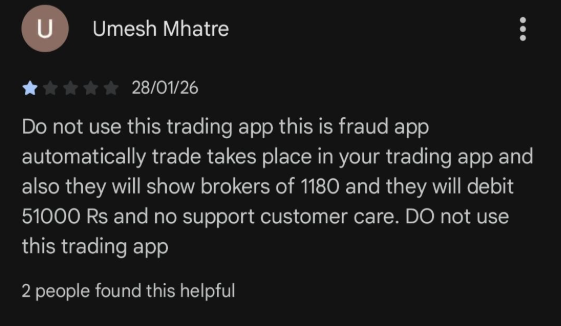
Both these users were charged more than they were supposed to be, and these can be considered classic cases of brokerage churning.
These real-life examples, combined with the aforementioned statistics, show us a real but concerning picture of what goes on on this app.
Impact on Investors
When too many trades take place in a short period of time, investors are directly harmed in the process.
Excess charges lead to many problematic results for the investors, such as:
- Higher Trading Costs Can Reduce Returns: Brokerage churning often leads to frequent buying and selling of securities. When this happens, brokerage fees, taxes, and other transaction charges can quickly add up and reduce the investor’s overall returns.
- Complaint Trends Help Investors Evaluate Brokers: Many investors review complaint records before choosing a broker. These records can give an idea of the experiences other traders have had with the platform or brokerage firm.
- Rising Complaints May Increase Investor Caution: When complaint numbers grow over time, retail investors may become more careful and take a closer look at the broker’s services and policies.
- Reviewing Trading Activity Becomes Important: Investors often check their contract notes and account statements to understand how trades are happening in their accounts and whether the activity matches their strategy.
- Tracking Brokerage Charges Helps Investors Stay Informed: By monitoring brokerage deductions and the number of trades placed in their accounts, investors can better understand how trading costs are affecting their portfolio.
This is why it is important for investors to regularly review their trading statements and ensure that all transactions match their investment strategy.
When Can You Take Action Against a Broker?
Investors should always stay alert to unusual activity in their trading accounts. Paying attention to small warning signs early can help prevent larger financial losses later.
Sometimes problems begin with small irregularities, such as trades appearing without clear approval or charges increasing without a clear explanation.
These situations should not be ignored.
Some common warning signs include frequent trades that do not match your investment plan, difficulty getting proper order records from your broker, or sudden increases in brokerage charges.
If you notice any of these issues, start reviewing your account statements and keep a record of all communications with your broker.
Investors have the right to raise concerns and file complaints if necessary. Acting quickly can help protect both your investments and your rights in the market.
How to File a Complaint Against a Stock Broker in India?
Knowing the correct steps can help you protect your investments and ensure your concerns are properly addressed.
Step 1: Collect Supporting Evidence
Gather all materials connected to the issue, including contract notes, order history, emails, SMS notifications, screenshots, and call recordings.
Having clear documentation helps demonstrate that something went wrong, especially if trades were placed without your consent.
Step 2: Raise the Issue with the Broker
The next step is to contact your broker directly. Explain the problem clearly through email or customer support and provide the documents you collected.
Many complaints are settled once the broker reviews the evidence.
Step 3: File a Complaint in SCORES
If the broker fails to resolve the issue, you can escalate the matter by filing a complaint with SEBI. The SCORES portal deals with these complaints.
This makes the complaint official and ensures that the broker must respond to the regulator.
Step 4: Use Arbitration as a Final Step
If the dispute still continues, you can approach for arbitration in stock market.
In this process, an independent authority examines the case and gives a legally binding decision to resolve the dispute.
Need Help?
Feeling confused about the next step? You don’t have to deal with it alone. Just register with us and let our team help you.
We take care of everything- from drafting your complaint to filing it properly and even representing you before SEBI if the issue goes further.
Our goal is to make the process easy and stress-free for you.
Conclusion
In summary, while Alice Blue provides accessible trading platforms and a flat-fee brokerage model, the complaint data highlights patterns that investors should not ignore.
A declining client base alongside recurring complaints may point to concerns around fee clarity and account activity.
When similar grievances appear repeatedly, it becomes important for investors to carefully review their statements and trading history.
Staying informed and taking timely action can help investors protect their funds and ensure brokers remain accountable for their practices.