
Quick Summary
Technical glitch complaints against Anand Rathi rose from 3 in 2023-24 to 7 in 2024-25, before settling at 4 in 2025-26. With roughly 1,45,667 registered clients and an estimated 14,000-plus potentially trading at once, even a brief outage can affect a meaningful number of people simultaneously. SEBI’s framework requires brokers to report a glitch to the exchange within two hours, notify clients directly, and file a root cause analysis within fourteen working days. This blog covers what actually counts as a technical glitch, the real complaint trend, the exact regulatory timeline Anand Rathi is required to follow, and the specific evidence you need if a glitch costs you a trade.
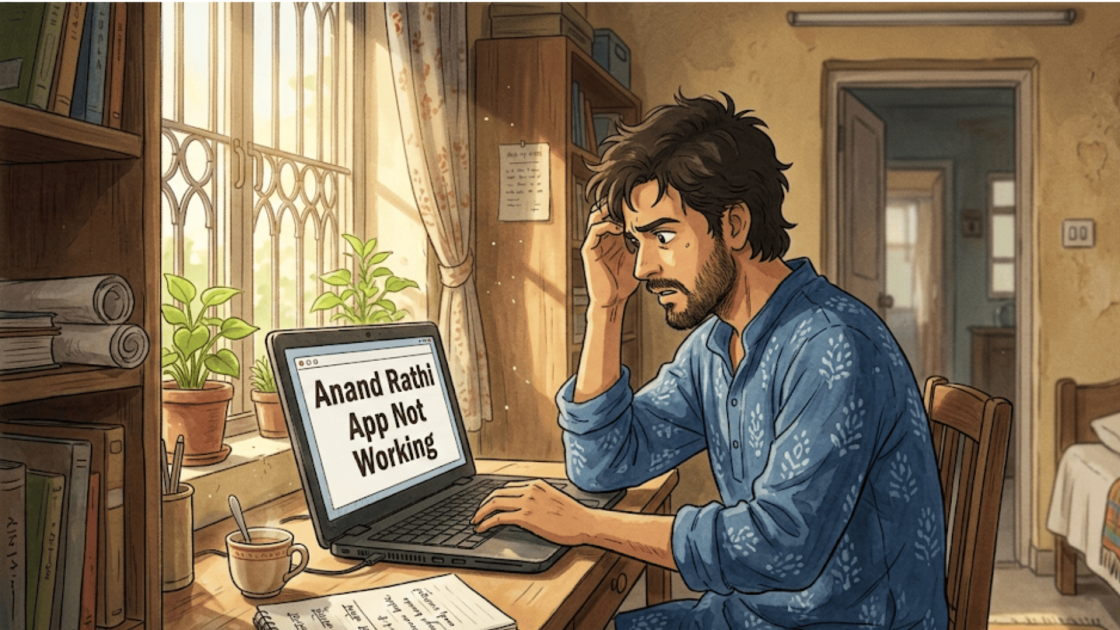
Anand Rathi app not working during a live trade isn’t just annoying; it’s the exact five-minute window SEBI itself uses to define a reportable technical glitch.
You open the app, check a price, try to place an order, and the screen sits there.
Meanwhile, the market keeps moving without you.
This blog covers the gap between what you needed the app to do and what it actually did: the real glitch data, what SEBI legally requires the broker to do when it happens, and how to protect yourself if it costs you money.
What Counts as an Anand Rathi Technical Glitch?
Most traders today rely almost completely on mobile apps.
You open the app, check a stock price, place an order, and track your positions, all from your phone.
Because of that, people expect their trading app to work smoothly, especially when the market is open. But sometimes traders run into problems.
The app might refuse to log in. The screen may freeze right when you try to place a trade. In some cases, the platform becomes so slow that it feels impossible to do anything for several minutes.
A technical glitch in share market occurs when a broker’s trading system stops functioning properly, often for five minutes or more, causing login failures, order delays, or difficulty managing trades.
These glitches often happen when a large number of orders are placed simultaneously, putting heavy load on servers and exchange systems.
If any part of that infrastructure slows down or becomes overloaded, it can lead to app freezes, delayed orders, or incorrect information on your screen.
New software updates or system integrations that don’t work smoothly with existing systems can trigger the same problem.
Stock exchanges actually keep track of this.
NSE publishes data about system disruptions reported by trading members specifically to maintain transparency, so investors know when incidents happen rather than having to take a broker’s word for it.
That’s different from a trade showing up that you never placed at all, which is its own issue covered on our Anand Rathi unauthorised trading page.
Anand Rathi Technical Glitch Complaints
Based on the information available on the NSE website, a few technical glitches connected to Anand Rathi Share and Stock Brokers Limited have been reported over the past few years.
| Year | Technical Glitch Complaints Reported |
|---|---|
| 2023-24 | 3 |
| 2024-25 | 7 |
| 2025-26 | 4 |
Keep one thing in mind here: a reported technical glitch does not automatically mean wrongdoing. Technology platforms can occasionally face temporary disruptions.
However, if similar issues keep appearing, they may raise real questions about system capacity, infrastructure, or how well the technology is actually being managed behind the scenes.
Why a Small Number of Glitches Can Still Affect Thousands?
Even a small system disruption can affect traders more than people realise. Anand Rathi has around 1,45,667 registered clients.
Of course, not everyone trades every day. But if even 10% of clients are actively trading at a given time, that’s still more than 14,000 traders potentially using the platform during market hours.
Now imagine the app stops responding during a sudden price move. For active traders, a few minutes can make a big difference. Orders may not go through at the expected price.
Traders may struggle to exit losing positions. Stop-loss orders might sit unchanged while the price runs away from them. Sometimes a good opportunity simply disappears while the system isn’t responding.
This becomes even more critical in segments like intraday trading or derivatives, where prices move rapidly, and a five-minute freeze can be the difference between a planned exit and a forced loss.
Apart from the direct financial impact, repeated technical issues also chip away at trust.
Traders expect their broker’s platform to stay stable during market hours, and when it doesn’t, that naturally makes people more cautious about relying on it during their next trade.
What Does SEBI Require Anand Rathi to Do When a Glitch Happens?
Since trading now depends so heavily on technology, regulators keep a close watch on system failures. SEBI has built a specific framework governing exactly how brokers must respond.
The idea is simple: if something goes wrong, brokers have to inform both the exchange and their clients quickly, and actually investigate what caused it, rather than letting it quietly repeat.
Here’s the exact timeline SEBI holds every broker to:
1. Report to the Exchange Within Two Hours
If a technical glitch happens, the broker has to inform the stock exchange within two hours of detecting the issue.
This isn’t optional or discretionary; it’s a hard regulatory deadline.
2. Notify Clients Directly
The broker must also notify its clients through the website, email, SMS alerts, or notifications inside the trading app itself. Silence isn’t compliant.
3. Submit a Preliminary Incident Report by the Next Trading Day
The broker must submit a preliminary incident report to the exchange briefly explaining what happened, no later than the next trading day.
Exchanges can review these incidents and take action if they believe the broker’s systems aren’t functioning properly.
4. File a Root Cause Analysis Within Fourteen Working Days
The broker must conduct a deeper investigation and submit a root cause analysis report within fourteen working days, explaining why the glitch occurred and what steps will prevent it from happening again.
In many cases, brokers also provide backup options, dealer terminals or call-and-trade facilities, that let you execute orders if the app or web platform temporarily stops working.
Knowing these exist before you need them is worth doing now, not during the outage itself.
Did an Anand Rathi app freeze cost you a trade during a critical market move?
Our team will review your evidence, check whether the timeline matches SEBI’s own glitch definition, and helps you file a complaint built to get a real response.
Register with us for a free consultation.
How To Report an Anand Rathi Technical Glitch?
Here’s the thing most traders get wrong when their app fails mid-trade. They call support, vent their frustration, and hope someone fixes it.
That’s not a complaint; that’s just a phone call, and it leaves you with nothing to point to later if the loss was real.
What actually protects you is documentation captured in the moment, followed by escalation through the right channel in the right order.
Here’s how that actually works:
Capture evidence immediately. If the app freezes, crashes, or shows an error message, take a screenshot or screen recording as quickly as possible.
Try to capture the time, the error message, and the screen showing the issue. Write down when the problem started and when the app started working again.
Regulators generally treat an issue as a technical glitch if trading functions stop or slow down for five minutes or longer, so the exact timing matters.
Inform the broker quickly. Contact Anand Rathi’s customer support through email, phone, or the help section of the app. Explain what happened, include the time of the incident, and attach any screenshots you captured.
Request confirmation about whether there was a system issue at that time. A written response from the broker becomes valuable if you need to escalate later.
Check for exchange notifications. Brokers sometimes officially report technical glitches to the stock exchange. Checking the exchange website or broker announcements can help you confirm whether the issue was reported publicly, which strengthens your case if it was.
If the broker’s response doesn’t resolve things and the failure caused a real financial loss, you have several formal channels available, each suited to a different stage of the dispute.
- File a SEBI SCORES complaint to bring the regulator directly into the process, with your screenshots and timeline attached as evidence.
- Approach the exchange directly through NSE or BSE complaint if your trades ran through that exchange, since both maintain their own investor grievance mechanisms separate from SEBI’s.
- Move to SMART ODR registration if the matter escalates into a formal dispute; this puts you into structured mediation or conciliation before anything more serious.
- Pursue arbitration through the relevant stock exchange if it’s still unresolved after that; an independent arbitrator reviews the full evidence and issues a binding decision.
For the complete process laid out from your first written complaint through to final escalation, our guide on complaint against stock broker SEBI covers that end to end.
Conclusion
Technology has made stock market trading faster and easier than ever before, but when a trading app suddenly stops working during market hours, even a few minutes of disruption can create serious frustration and, sometimes, real financial loss.
That’s exactly why regulators expect brokers to maintain reliable infrastructure and report technical glitches quickly rather than treating them as a private, internal matter.
For you as an investor, the best approach is to stay alert. If the platform behaves unusually during market hours, document it immediately and report it the same day.
In a market where prices move every second, reliable technology matters just as much as the trade itself.
Report. Recover. Stay Fraud Free.
3 in 2023-24, rising to 7 in 2024-25, then settling at 4 in 2025-26, based on data published through NSE's own disruption tracking. Within two hours of detecting the issue, followed by a preliminary incident report by the next trading day and a full root cause analysis within fourteen working days. Not automatically. Occasional disruptions can happen to any platform. A repeated pattern, however, raises real questions about system capacity and infrastructure management. Screenshot or screen record the error immediately, note the exact time, and contact the broker's support team in writing the same day. You can pursue it through SCORES, the exchange grievance mechanism, or arbitration, but you need documented evidence, timestamps and screenshots matter most in these cases.Frequently Asked Questions




 Add us as a preferred source on Google »

