
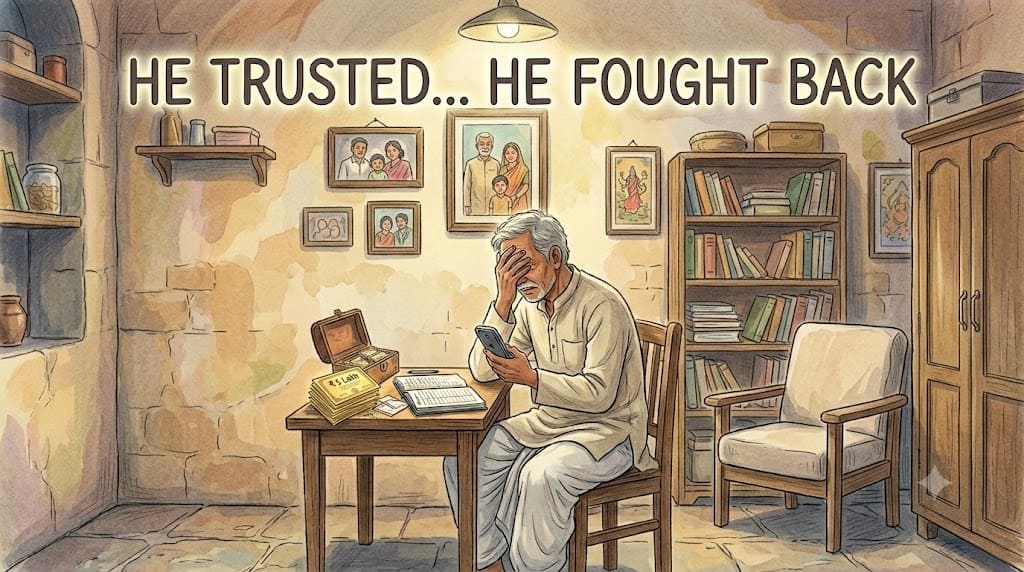
Prakash (name changed) was not a gambler. He was the patient kind – a stock portfolio worth about ₹4.5 lakh, built to sit and grow, the sort of account that is supposed to be boring.
What undid him was not a cold call. It was a familiar voice.
The dealer who had handled his account at his old broker moved to a new firm, and kept calling with the same friendly pitch: bring your whole portfolio over, we’ll look after it properly, I’ve got good sources, I’ll even pull out a little profit for you here and there.
After months of gentle pressure, Prakash gave in and shifted the entire portfolio across.
That is when the account stopped being boring.
The dealer began selling his holdings – the long-term stocks Prakash had meant to hold – to free up cash “to play with.”
Quietly, the portfolio was being turned into trading fuel. Soon it had moved into commodities, into crude oil.
Prakash said take one or two lots. The dealer, with brokerage on his mind, took many more.
Then it crossed the final line. The dealer started trading from his own phone using Prakash’s OTP – buying and selling without telling him, fifteen or twenty trades Prakash never saw and never approved.
When crude fell hard one day on international news, he was told to hold, carry it forward, it’ll come back. The firm’s system squared the positions off anyway. Nobody called to ask him first.
When the dust settled, the ₹4.5 lakh portfolio was worth about ₹1 lakh. Roughly ₹3.5 lakh was gone – and the brokerage, especially on the commodity trades, had been so heavy that even the office “reduced” it when he complained.
He had kept his recordings and chats. When he came to us, he called it his own mistake for trusting the man.
It was not. Almost nothing that happened to that account was his to authorise. We have taken up his case, and it has more than one clear violation in it.
Your Holdings Are Not the Broker’s to Sell
Start with the part most people never question.
The stocks in your portfolio are yours. A broker or its dealer cannot sell your holdings to raise cash for trading without your specific authorisation for each sale.
Liquidating a long-term portfolio to feed short-term bets is not “managing” your account – it is dismantling it, and it is the broker’s conduct, not your investment choice.
When a buy-and-hold portfolio is quietly converted into margin for speculation, that alone is a serious red flag worth building a claim on.
Trading on Your OTP Is Still Unauthorised Trading
The dealer’s trick – placing trades from his own device using Prakash’s OTP – does not make those trades authorised. It makes them easier to hide.
A trade is yours only if you approve that specific trade. A dealer running fifteen or twenty buys and sells you were never told about, OTP or not, is unauthorised trading, plain and simple.
The OTP was never a blank cheque to trade the account into the ground.
The Commodity Churn Was for Brokerage
Watch the pattern in the crude oil trades. Prakash asked for one or two lots; the dealer took many.
Commodities carry high brokerage, and the more lots that turn over, the more the dealer earns – regardless of how Prakash did.
The clearest proof of the motive is almost comic: the brokerage was so large that the office negotiated it down when he objected. You do not negotiate down a fair fee. You negotiate down a fee that was never about the client in the first place.
The Firm Answers for the Dealer
It does not matter that the dealer was an old contact, or that he had “moved firms.” A registered broker is accountable for the dealer operating under its name.
The portfolio transfer was not a favour – it was the setup. And the firm that took the account on is the firm that has to answer for how it was run.
How You Get It Back
Step 1: File a written, violation-wise complaint with the broker’s compliance officer – the unauthorised OTP trades, the holdings sold without authorisation, the commodity churning, and the brokerage.
Step 2: No genuine resolution in 15 working days? Lodge a complaint in SEBI SCORES.
Step 3: Escalate to SMART ODR, and on to arbitration in stock market before a panel if it is not settled.
Hold on to everything – the recordings, the chats, and the contract notes that show both the trades you never placed and the brokerage stacked on them. The list of stocks that were sold out from under you is part of the picture too.
The line worth keeping: a portfolio you built to hold is not raw material for someone else’s bets – and the day it gets sold off without your say-so, the loss stops being yours to carry.
You don’t have to navigate the confusing maze of SEBI SCORES, SMART ODR, and exchange arbitrations alone.
If your broker liquidated your long-term portfolio or executed unauthorized trades on your OTP, every day you wait makes it harder to prove your case.
We specialize in helping retail investors build bulletproof claims, organize their digital evidence, and recover what is rightfully theirs.
Register with us now.
Don’t let them turn your hard-earned portfolio into raw material for their commission targets. Tell us what happened, and let our experts take over the fight.*
Frequently Asked Questions
1. Can a broker sell my shares to fund trading?
No. Your holdings are yours. Selling them without your specific authorisation – to raise margin or for any other reason – is the broker’s conduct, and it is claimable.
2. The dealer traded using my OTP. Doesn’t that mean I authorised it?
No. A trade is authorised only if you approved that specific trade. Placing orders from his own device on your OTP, without telling you, is unauthorised trading.
3. My dealer moved to a new firm and took my portfolio. Does the new firm answer for him?
Yes. A registered broker is accountable for the dealer acting under it. The claim is pursued against the firm through SCORES and SMART ODR.



 Add us as a preferred source on Google »

