
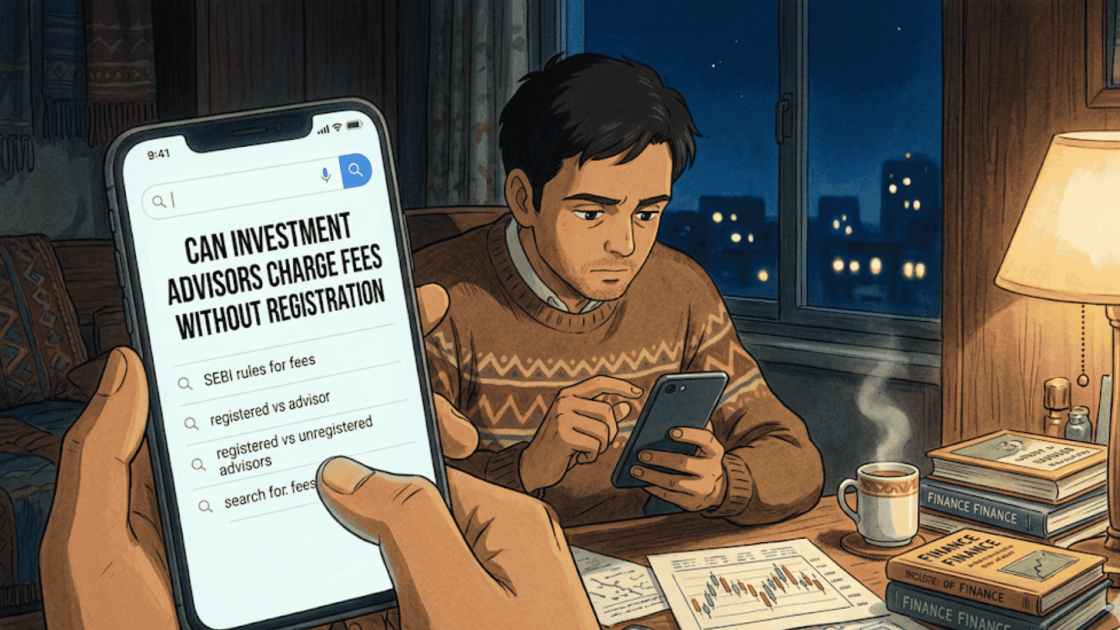
Have you encountered an investment advisor charging fees without an SEBI registration?
Are they justifying it with grand promises of guaranteed returns?
This guide breaks down SEBI’s strict legal boundaries, explores a real-world enforcement case, and shows you exactly how to recover your money if you’ve been misled.
It also covers a real enforcement case, so you know exactly what action to take, what SEBI does about it, and what outcome you can expect.
Can Investment Advisors Charge Fees Without Registration or Not?
The short, direct answer is: No.
Under SEBI regulations, charging fees for personalised investment advice without a valid registration is a punishable offence.
If you are dealing with any of these, treat it as a warning sign:
- Cash or personal UPI payments instead of a business account to keep collected fees hidden from regulatory tracking.
- Fees demanded before a signed client agreement so there is no legal record if you later raise a complaint.
- No SEBI registration number on request; a legitimate advisor always has one and shares it without hesitation.
- Profit promises used to justify fees; no registered advisor is legally allowed to make this promise.
It does not matter how good their track record claims to be, how many testimonials they show you, or how convincingly they present themselves.
Without a valid SEBI registration, they have no legal right to charge you for advice.
This applies to individuals working independently, firms operating from offices, and it also applies to people running paid groups on WhatsApp and Telegram.
SEBI Rules on Charging Advisory Fees in India
SEBI’s Investment Adviser regulations lay down very specific rules about how fees can be charged, even for registered advisors.
A registered Investment Advisor can charge fees in one of two ways: either a fixed fee per service, or a percentage of assets under advice.
They cannot charge based on profits made or share in your gains.
This is important because any advisor offering a “profit-sharing” arrangement is operating outside SEBI’s permitted fee structure, even if they are registered.
Beyond fee structure, registered advisors must also:
- Sign a formal written agreement with the client before any fees are collected.
- Conduct a risk profiling exercise to understand the client’s financial situation.
- Maintain proper records of all interactions and advice given
- Disclose all conflicts of interest.
- Not promise or guarantee returns under any circumstances.
Every single one of these is a regulatory requirement, not a courtesy.
Is Paid Stock Advice on Telegram or WhatsApp Legal?
This is perhaps the most relevant question for most retail investors today, given how many paid tip groups operate on these platforms.
Charging subscription fees for stock tips on WhatsApp or Telegram without a valid SEBI registration is illegal, and the platform does not change that.
What matters is that someone is exchanging money for investment advice.
SEBI has repeatedly cautioned investors against unregistered tip providers. Even if the tips occasionally prove accurate, you still have no regulatory protection if things go wrong.
“I already paid them. I got lured in, transferred the money, and now I have no idea where to turn. Does SEBI even take action against these people, and is getting my money back even possible?”
If that sounds familiar, here is a real case that answers exactly that.
How Did SEBI Take Action Against an Unregistered Advisory?
SEBI started looking into this case after receiving a complaint that Yash Garg was running a fake academy, claiming to be a SEBI-registered intermediary while offering unregistered investment and portfolio management services through multiple Telegram channels.
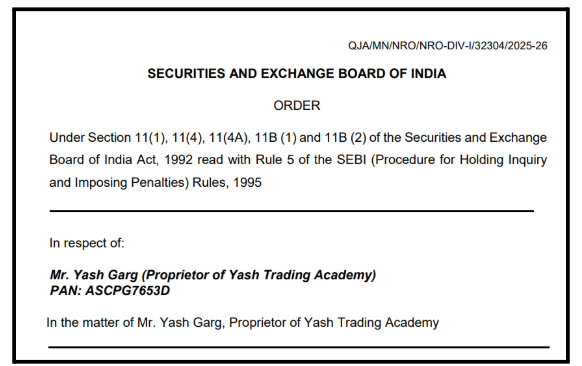
Garg ran these services without any SEBI registration.
He collected fees from clients for trading calls and also managed their demat accounts on a profit-sharing basis, both activities outside the legal framework entirely.
Clients paid upfront, with no proper agreement or regulatory protection in place.
On top of that, Garg made the situation worse by falsely claiming his channels were “SEBI and NISM registered,” promising 100% guaranteed profits with full refunds, and offering discounts to pull more investors in.
SEBI traced ₹92,98,405 collected across four bank accounts as direct proceeds from these unregistered activities.
-
SEBI Penalty on Yash Trading Academy
A total penalty of ₹16,00,000 was imposed: ₹10 lakh under Section 15HA (fraudulent trade practices), ₹3 lakh under Section 15HB (unregistered PMS), and ₹3 lakh under Section 15EB (unregistered investment advisory).
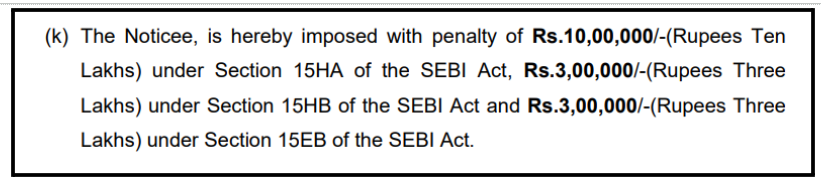
Garg was also debarred from securities markets for two years and directed to refund the entire ₹92.98 lakh to investors within three months.
Yash Garg SEBI order shows, SEBI can officially order a full refund, but getting your money back depends entirely on whether the scammer has already emptied their bank accounts.
As this SEBI action against unregistered advisory shows, SEBI can officially order a full refund, but getting your money back depends entirely on whether the scammer has already emptied their bank accounts.
If you have faced something similar, reporting it is the first step that makes everything else count.
What To Do If You Have Already Paid An Unregistered Advisor?
If you have already paid fees to someone operating without SEBI registration, here is how to respond.
Step 1: Gather Everything First
Pull together every piece of evidence you have: payment receipts, bank transfer records, screenshots of conversations, advisory messages, any agreements or lack thereof, and call recordings if available.
Organise everything in date order before you do anything else.
Step 2: Approach Them Directly In Writing
Send a formal written complaint by email and keep a copy. Give them a clear deadline to respond.
This creates a paper trail and strengthens your case before you escalate further.
Step 3: File A Complaint To SEBI
If the entity does not respond or refuses to refund, send a formal written complaint to SEBI by email.
Your complaint should include your full name and contact details, a clear description of the services you paid for, the amount paid and the mode of payment, all supporting evidence you have gathered, and a specific request for action against the unregistered entity.
Keep a copy of everything you send.
Step 4: File A Police Complaint
If the amount is significant or the operator has disappeared entirely, file an FIR at your nearest police station under cheating and fraud.
Mention that the person collected fees for investment advice without SEBI registration. A registered FIR strengthens any parallel complaint you have already filed with SEBI.
Need Help?
Got lured by the claims of an unregistered advisory and now find yourself in a loss with no idea where to start?
Organising evidence, drafting a complaint, and navigating SEBI’s process alone can feel overwhelming, especially when you are already dealing with a financial setback.
We are here to help you build a stronger case and take the right steps. We can help you with:
- Gathering and organising all your evidence into a structured format that holds up in a complaint.
- Drafting a strong formal complaint to SEBI that clearly states your case and what you are seeking.
- Guiding you through the entire reporting process from the first written complaint to escalation, so nothing is missed.
Reach out to us today and take the first step towards getting your money back.
Conclusion
It does not matter how polished their pitch is, how impressive their past calls sound, or how many screenshots of profit they share with you.
Before you pay a single rupee for investment advice, verify the SEBI registration independently on SEBI’s official website.
If the registration exists and is active, check whether they have any enforcement orders or complaint history.
Ask for their registration certificate. Insist on a signed agreement before paying. Make sure they conduct a proper risk profiling session with you.
And if the registration does not exist at all?
Walk away. If someone is charging specifically for personalized investment advice without proper registration, that is a serious warning sign.
Your money, your time, and your financial future deserve better than that.
Frequently Asked Questions
1. Does labeling a paid Telegram channel as “purely educational” make charging advisory fees legal?
No, changing the label or platform does not bypass the law; charging for stock tips requires valid registration.
2. Can an independent social media freelancer charge for personalized stock tips without a license?
No, employment status does not matter; anyone providing paid, personalized financial advice must be registered with SEBI.
3. Does an operator’s high past performance or positive testimonials give them a legal right to charge fees?
No, even if their previous stock tips were highly accurate, collecting fees without SEBI registration is illegal.
4. Should I pay an advisory firm if they are very old but their SEBI registration is missing or expired?
No, a firm’s age or past reputation does not matter; it is completely illegal to pay them if their registration is inactive or expired.
5. Where should a retail investor send a complaint against an unregistered paid advisory scam?
You can email your complaint narrative along with your digital evidence, including the bank statements, chat screenshots, and paid stock tips, directly to SEBI.





 Add us as a preferred source on Google »

