
In India’s fast-moving stock market, flashy promises of “hidden gems” and “guaranteed multibaggers” are everywhere.
Scroll through social media or open WhatsApp, and you’re instantly bombarded with tips that sound too good to ignore, and often, too good to be true.
That brings us to Fusiontech Research. Who are they? What does it really mean to be a SEBI-registered research analyst?
And most importantly, should you trust their services before clicking that tempting “Subscribe” button?
Let’s cut through the hype and take a closer look, because when it comes to your money, informed decisions always outperform blind tips.
Fusiontech Research Review
Based in Indore, Madhya Pradesh, Fusiontech Research is a stock market advisory firm offering intraday calls and well-researched stock recommendations.
The firm operates under the proprietorship of Kapil Verma, and here’s the credibility booster, holds a SEBI Research Analyst Registration (INH000019488).

Unlike random Telegram or WhatsApp tip providers who vanish after a bad call, Fusiontech Research operates within the legal framework laid down by SEBI.
Being a SEBI-registered Research Analyst means they are officially authorised to publish research reports and provide buy/sell recommendations on securities.
In simple terms, they act as a bridge between raw market data and actionable trading strategies, not guesswork or hype.
Fusiontech doesn’t believe in a “one-size-fits-all” approach. Instead, it organises its offerings into four specialised service buckets, collectively branded under their “Vintage” series.

Whether you’re a cautious trader or someone who thrives on higher risk, there’s a category designed to align with your trading style and risk profile.
Let’s find out what users are saying about their services.
What SEBI Allows a Research Analyst to Do?
Before you act on any market advice, it’s fair to ask: Can we really trust this Research Analyst?
If your analyst is registered with SEBI and follows the SEBI (Research Analysts) Regulations, 2014, the answer is yes, but within clear boundaries.
Let’s break down what a SEBI-registered Research Analyst (RA) is actually allowed to do :
- A Research Analyst can create and publish structured, well-documented research reports on listed securities or broader market segments. These reports typically walk you through fundamental or technical analysis.
- An RA may provide buy, sell, or hold recommendations based strictly on research. Recommendations should reflect research judgment, not a hidden sales pitch.
- An RA can charge for their research and advisory services, but only under strict rules designed to prevent bias.
- Research Analysts are also allowed to share opinions and insights on:
- Market trends
- Sectors or investment themes
- Macroeconomic developments
- Derivative strategies
- Individual stocks
A SEBI-registered Research Analyst is meant to be an independent research professional, not a tip-seller or a trader in disguise.
When they stay within these rules, they’re one of the most reliable sources of market insight an investor can have.
Fusiontech Research Complaints
If you scan online complaint forums, a worrying pattern quickly emerges around Fusiontech Research, and it’s not a pleasant one.
Many investors say their troubles began with unsolicited trading calls. No prior consent, no clear introduction, just persistent pitches promising “sure-shot” profits.
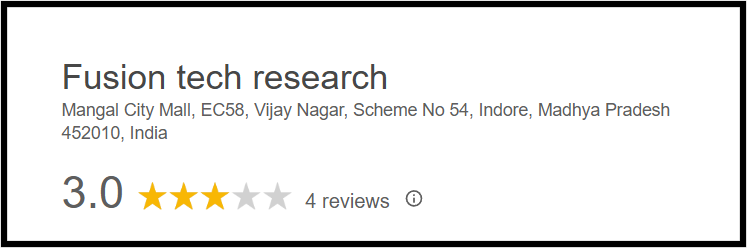
Moreover, the overall review on Google is also low, showing a 3.0 rating.
Complaints also point to investment advice allegedly given without proper SEBI registration.
Even more concerning, some individuals report being contacted by people impersonating Fusiontech, raising serious trust and authenticity issues.
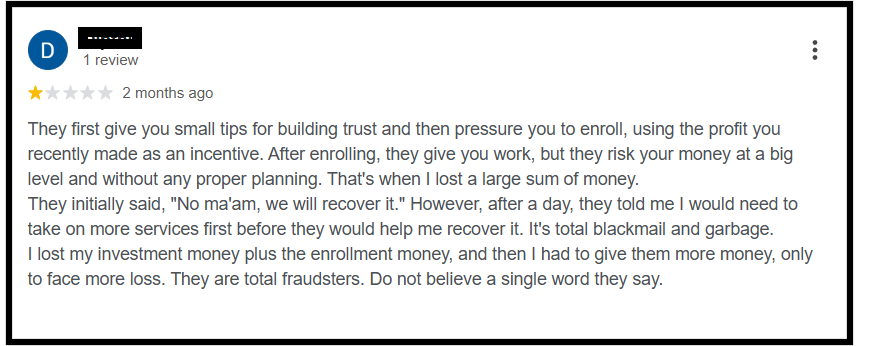
The review describes a classic pattern often associated with financial scams or mis-selling.
As per the investor, the process started with “small tips for building trust,” which is a tactic used to establish credibility before requesting a significant financial commitment.
The practices described strongly suggest violations of ethical standards and regulatory norms common in the financial services industry, such as promising guaranteed returns and engaging in unauthorised investment advisory activities.
How to Complain Against a Research Analyst?
When you’re having troubles with your broker, you may feel overwhelmed, especially if you don’t know how to file a report or what regulators expect.
When you register with us, we’ll walk you gently through the entire process from gathering proof to submitting your case online.
Here’s the kind of support you get:
- Building Your Evidence File: We assist you in collecting and organising all the materials that support your complaint. This includes trade sheets, ledgers, contract notes, screenshots, email trails, and call logs.
- File a Complaint in SCORES: Our experts draft clear, professional, and regulatory-compliant complaint drafts that are specifically tailored for NSE, BSE, SEBI SCORES, and SMART ODR. Thus, your problem is recognised at the first point of contact.
- File a complaint in SMART ODR: Regardless of whether it’s SCORES or SMART ODR, we assist you in submitting your complaint perfectly so that nothing gets rejected.
- Guiding You Through Escalation: We walk you through the whole escalation process in simple terms if the problem is not resolved by the first step.
- Preparation for Hearings: In the event of your matter going to counselling or filing arbitration in stock exchange issues, we assist you in preparing your statements and evidentiary support. So that you have the right spirit, are well organised, and competent in presenting your point of view.
Conclusion
The Biggest Takeaway? Your money, your responsibility.
At the end of the day, the most important person in your financial journey isn’t a “research expert,” a flashy Telegram channel, or a smooth-talking advisor.
It’s YOU. Research firms can provide data and opinions, but discipline, judgment, and caution must come from the investor.
The promise of “loss recovery” and the use of “lot-wise instructions” transform a simple research service into a Fraudulent Trade Practice. SEBI became extremely stringent with “fee-hungry” analysts.
Registered intermediaries are meant to be partners in an investor’s growth, not predators.
Only pay for services that are transparent, respect SEBI fee caps, and never promise “sure-shot” gains.