You open your trading account expecting your usual positions, but something feels off.
Trades appear that you don’t remember placing. Losses don’t add up. You start questioning what actually happened.
At this point, most investors struggle, not because the issue is small, but because they don’t know how to interpret it or what to do next.
HDFC Securities operates as a full-service broker backed by a strong banking brand.
Investors use it for research support, relationship managers, and a wide range of investment options.
But when execution involves human intervention, errors and miscommunication can happen.
Instead of relying on opinions, this blog breaks down what actually matters in HDFC Securities complaints.
We’ll analyse exchange-level complaint data, examine a real arbitration case where the dispute escalated into a significant financial outcome, and explain what actions you should take if you face a similar situation.
Because understanding the platform is one thing, but knowing how to respond when something goes wrong is what actually protects you.
HDFC Securities Overview
HDFC Securities operates as a full-service stockbroker and is backed by HDFC Bank. It offers a wide range of investment and trading services under one platform.
Investors use HDFC Securities for:
- Equity trading (intraday and delivery)
- Futures and Options (F&O)
- Mutual funds and IPO investments
- Bonds, fixed income products, and more
Unlike discount brokers, HDFC Securities assigns relationship managers (RMs) to many clients. This adds a layer of support, especially for beginners or those who prefer guided investing.
But this is where things get important.
When trading involves direct human interaction, calls, suggestions, or execution through an RM, the chances of miscommunication, misunderstanding, or even unauthorised activity increase.
The system doesn’t fail alone; execution depends on how instructions flow between the investor and the broker.
This doesn’t mean the platform is unsafe. It means the way you use it matters.
Some investors rely completely on their RM. Others track every trade themselves.
The difference between these two approaches often decides whether an issue gets avoided or escalates.
This is why looking at actual complaint data and real dispute cases becomes important. It shows how these situations play out in reality—not just in theory.
HDFC Securities Complaints Data
Before forming any opinion based on reviews or individual experiences, it’s important to look at exchange-level complaint data.
This data shows how often investors actually raise issues and how those issues get resolved.
| Financial Year | Total Clients | No. of Complaints | % of Complaints | Resolved Complaints | % Resolved | Arbitration |
|---|---|---|---|---|---|---|
| 2022–23 | 1,289,402 | 512 | 0.040% | 498 | 97.27% | 6 |
| 2023–24 | 1,289,402 | 536 | 0.041% | 522 | 97.39% | 4 |
| 2024–25 | 1,402,885 | 801 | 0.057% | 801 | 100% | 2 |
| 2025–26 | 1,318,774 | 742 | 0.056% | 683 | 92.04% | 0 |
At first glance, the complaint percentage looks extremely low, consistently below 0.06%. On paper, this might suggest everything is running smoothly.
But the absolute numbers tell a different story.
Complaints have increased from 512 to 801, which clearly shows rising user friction. At the same time, while the resolution rate has mostly remained high, the recent drop to 92% in 2025-26 indicates that not all issues are getting resolved quickly.
Then comes the more important part: arbitration cases.
These are not routine complaints. These are cases where disputes escalate beyond normal resolution.
Even though the numbers are small, their presence across years shows that some issues are serious enough to move into formal dispute mechanisms.
This is where most investors misread the data.
Low complaint percentages don’t mean there are no problems. They only show how many people actually reported issues to the exchange.
In reality, many investors:
- Don’t escalate complaints
- Try to resolve issues directly
- Or don’t know the process at all
So even a few hundred complaints can reflect a much larger base of unresolved or unreported issues.
What this data really tells you is simple: You cannot rely only on the broker’s brand or reputation, and you need to stay actively involved in your own account
Because when issues happen, resolution depends on how quickly you identify and act on them.
And this is exactly why looking at a real case becomes important, where things didn’t stop at complaints but escalated further.
HDFC Securities Arbitration Case
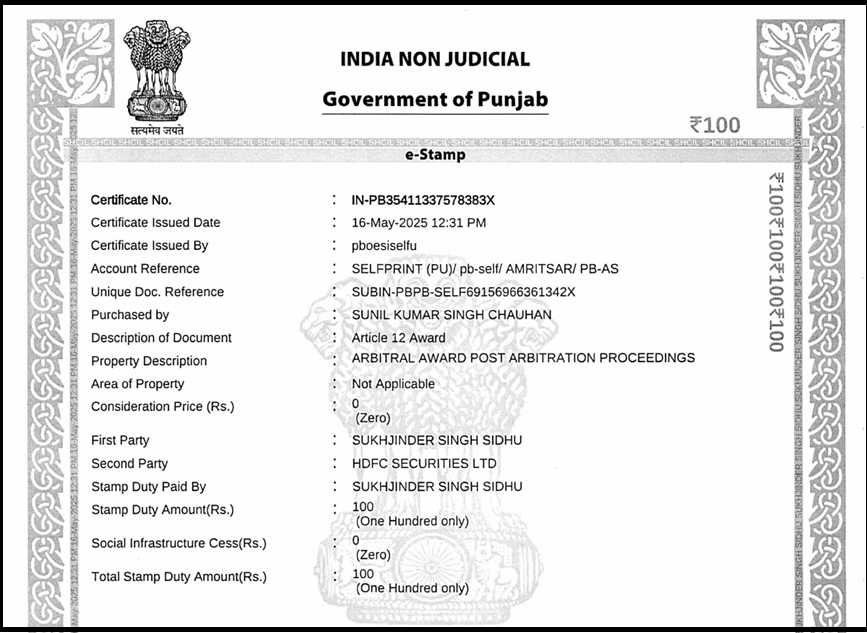
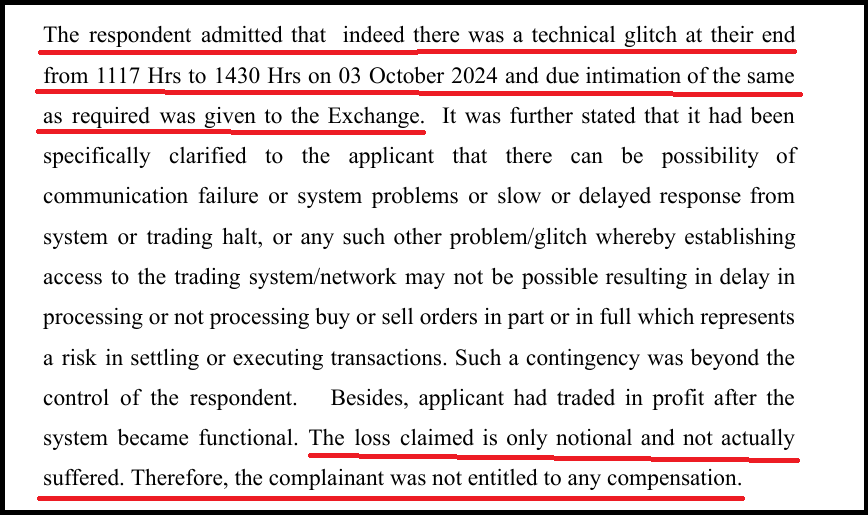
This case shows a situation where the issue was not about unauthorised trading, but about a technical failure during live market hours and yet, the client did not receive any compensation.
The client placed two F&O (Nifty PUT) orders on 3rd October 2024.
At that time, the option was trading around ₹337.
However, the orders remained stuck in “in-transit” status for more than two hours. During this period, the price moved significantly and reached around ₹532.
HDFC Securities User Reviews
Numbers and case studies show one side of the story. Real clarity comes from how the platform performs during actual trading.
These reviews reveal issues that directly affect execution, speed, and decision-making.
1. Order Placement Limitation (GTD Orders)
The app restricts GTD (Good Till Date) orders by applying the current day’s price limit—even when the order is meant for future execution.
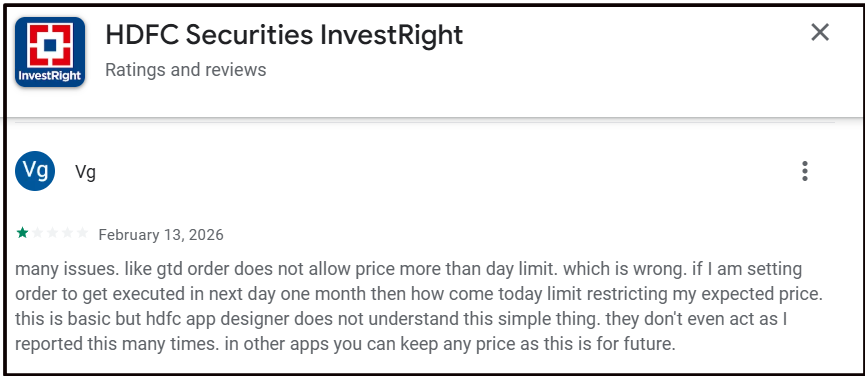
This is a basic functionality gap.
A trader sets a GTD order for future execution, but the platform blocks it based on today’s price band. This directly limits trading strategy.
The bigger concern is the lack of action despite repeated reporting. The issue is not just technical, it reflects poor response to user feedback.
2. Login Delays During Critical Trade
The app requires password and OTP entry before allowing access, even during urgent situations.
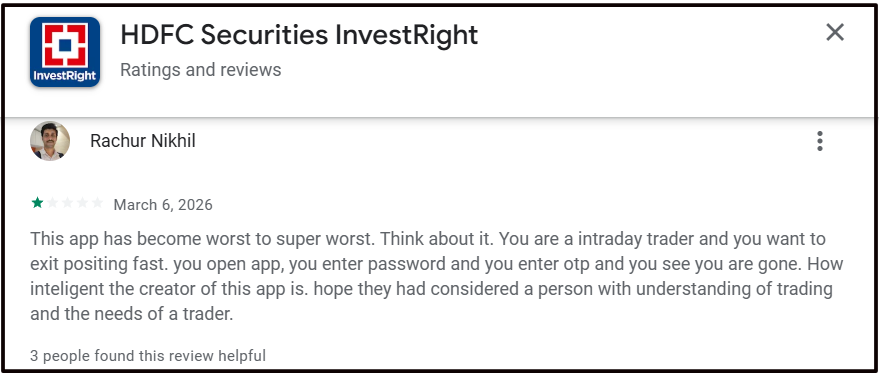
In fast-moving markets, execution speed matters.
A trader tries to exit a position, but the login process slows them down. That delay can directly lead to losses.
This is not just a usability issue, it creates real trading risk and highlights a recurring HDFC securities login issue.
3. App Performance Issues at Market Open
The app fails to function properly during the first few minutes after the market opens. It also struggles with watchlist updates and price adjustments after corporate actions.
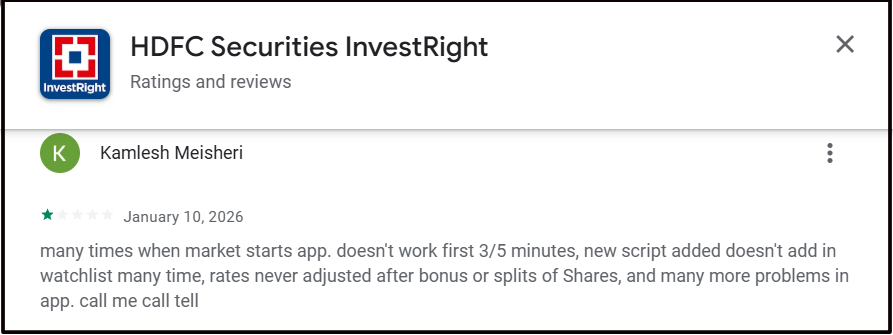
The market opening window is critical.
Traders depend on that time for execution, and when they experience issues like HDFC securities not working, the impact is immediate.
Incorrect price adjustments further affect decision-making. This shows inconsistency in core functionality.
4. Data Accuracy and Chart Issues
The app displays incorrect charts, repeats the same chart for different stocks, and struggles with sorting data properly.
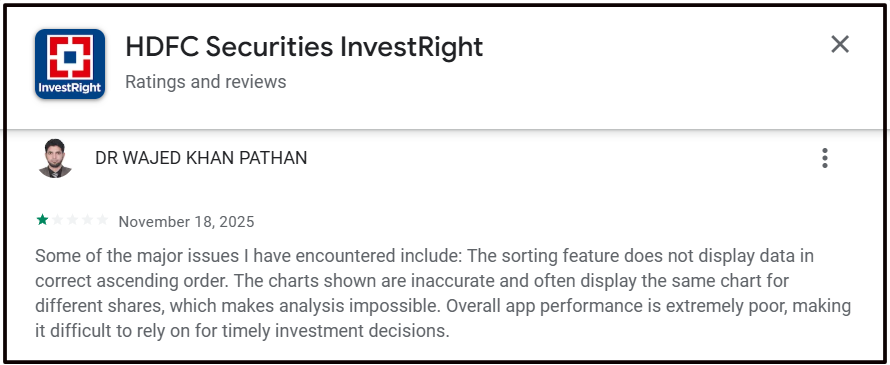
Traders rely on charts and data to make decisions.
When the platform shows incorrect information, analysis becomes unreliable. The platform stops being a tool and starts becoming a risk.
Across these reviews, a clear pattern emerges. The issues revolve around; Execution delays, App reliability and Data accuracy. These are not minor inconveniences. They directly affect trading outcomes.
When To Take Action Against Brokers?
Most issues with brokers don’t start as big problems; they start as small inconsistencies that investors overlook.
What turns them into serious situations is not the issue itself, but the delay in responding to it.
Knowing when to act is more important than knowing everything about the platform.
- Take action the moment something feels off in your account. Don’t wait for confirmation. If something looks unusual, check it immediately.
- Don’t ignore trades that you didn’t place or don’t understand. Even one unexpected trade is enough reason to investigate.
- Question margin calls or position square-offs that lack clarity. If funds move or positions close without clear explanation, don’t assume it’s normal.
- Pay attention if the app shows incorrect data or delays execution. Wrong data or delayed orders can directly impact your decisions and outcomes.
- Don’t rely on verbal explanations; document everything properly. Calls don’t create proof. Use email or official support channels.
- Raise a formal complaint through email or a support ticket. A written complaint creates a record and strengthens your position.
- Keep records like screenshots, contract notes, and transaction details. Proper documentation helps you explain and support your case clearly.
- Don’t wait for the issue to resolve on its own; follow up actively. Waiting rarely solves problems. Follow up until you get clarity.
- Escalate if the broker delays or avoids a clear resolution. If responses don’t match the issue, move to the next level without delay.
Acting early doesn’t create problems; it prevents them. The sooner you respond, the more control you have over the situation.
Where to Complaint Against Stock Broker?
Most investors don’t face bigger problems because of one mistake; they face them because they delay action.
If something feels off in your account, you need to follow a clear process instead of relying on calls or assumptions.
Step 1: Gather all the proof
Maintain clear records of all approved trades, invested amounts, and any communication with your broker.
If any irregularities arise, collect supporting evidence such as:
- Screenshots
- Trade confirmations
- Contract notes
- Messages or emails
- Call recordings
Keeping this documentation organized will significantly strengthen your case when filing a complaint.
Step 2: Raise the Complaint with your Broker
Start by reporting the issue directly to your broker through their official support channel (email or ticket).
Clearly mention:
- What exactly went wrong
- Date and details of the transaction
- Any proof (screenshots, statements, emails)
Write it properly. This is not a casual message; it should read like a formal complaint.
This step creates a record, which becomes important if you need to escalate later.
Step 3: File a Complaint in SCORES
If the issue is still not resolved, you can lodge a complaint in SEBI through its SCORES portal.
This moves your complaint into a regulated system where:
- The broker must respond
- The complaint gets officially recorded
- There is accountability
Step 4: Lodge a Complaint in SMART ODR
If the issue remains unresolved, you can move to the Online Dispute Resolution (ODR) mechanism.
This is where:
- The matter goes beyond complaint handling
- A neutral system reviews the dispute
- Both sides present their case
ODR is structured and time-bound. It pushes the issue toward resolution instead of ongoing back-and-forth.
Step 5: Arbitration in Stock Exchange
If the dispute is still unresolved, it moves to arbitration.
This is a formal process where:
- Evidence is examined
- Both parties present their arguments
- A final decision is given
The outcome of arbitration is binding, which means the matter reaches closure at this stage.
At this stage, it becomes a formal dispute, not just a support issue.
Always document everything and act early. Don’t rely only on calls or verbal confirmations, and don’t ignore small inconsistencies.
Because once a problem grows, resolving it becomes much harder.
Need Help?
If you’re facing an issue with your broker and things are not adding up, don’t try to figure everything out on your own.
Most investors get stuck at this stage.
They are not sure whether the issue is serious, whether they should escalate, or how to interpret what actually happened in their account.
That confusion leads to delay, and delay makes the situation worse.
If you’re unsure about:
- Whether the trades in your account are actually authorized
- How to read your contract notes or ledger
- Whether the broker’s explanation is valid
- Or when to escalate the issue
You need clarity before taking the next step. Because once you delay action or misinterpret the situation, it becomes harder to fix later.
Getting clarity early doesn’t escalate the problem; it prevents it from getting worse.
If you want structured guidance and a clearer understanding of how to handle such situations, you can register with us.
Conclusion
HDFC Securities is a well-established broker backed by a strong brand. Many investors use it for its wide range of services and support.
But as the data and case we discussed show, issues can still arise, and when they do, the impact can be significant.
The complaint data shows that while most issues get resolved, the number of complaints remains and, in some cases, escalates further.
The arbitration case makes one thing very clear: when proper process and authorisation are missing, the consequences can be serious.
This naturally raises an important question for every investor: can you trust a stockbroker?
This doesn’t mean you should avoid a broker.
It means you should stay aware while using one. Track your trades. Verify confirmations. Don’t rely completely on anyone else to manage your account.
And most importantly, take action early when something doesn’t feel right.
Because in the end, your account is your responsibility, and staying informed is your strongest protection.