

Quick Summary
Not every research analyst plays fair. Some make a stock sound like a sure thing, hide the risks, manufacture urgency, or push tips that never suited you in the first place. By the time you spot it, the money is usually gone and the analyst has moved to the next idea. This page breaks down the five most common ways analysts mislead investors, shows a real SEBI case where the regulator fined an analyst ₹5 lakh for exactly this conduct, and explains what to do if it happened to you. Knowing the pattern is the fastest way to stop being caught by it.
Have you ever bought a stock because a research analyst called it a “sure-shot winner,” then watched it sink a few weeks later? You are not alone.
Most investors trust research reports, Telegram calls, and YouTube tips because they assume the analyst did the homework for them. That is what an analyst is meant to do.
But some do the opposite.
They exaggerate the upside, bury the risks, and rush you into decisions, and by the time the losses show up, they have already moved on.
This page shows you exactly how that happens, so you can catch it early.
What Are the Common Ways Analysts Mislead Investors?
Genuine SEBI registered research analysts are supposed to help investors make informed decisions. A misleading one steers you toward a decision that suits them.
The difference usually shows up as a pattern, and once you know the pattern, it is hard to miss.
There are five tactics that come up again and again.
Each one is a way of showing you only part of the picture, and each is a signal to slow down and ask questions before you pay or trade.
1. Promising Unrealistic Returns
The biggest red flag is a stock sold as a guaranteed win: “this will double in three months,” “guaranteed multibagger,” “no risk, only upside.”
The market does not work that way, and no analyst can promise what a stock will do next.
A promise this certain is not confidence; it is a rule being broken.
2. Hiding the Risks
Every investment carries risk, and a genuine analyst talks about both sides: the debt, the regulatory issues, the weak numbers, the industry headwinds.
A misleading one talks only about the profit and leaves the rest out.
If a recommendation never mentions what could go wrong, you are getting half the story, and the missing half is the part that costs you.
3. Manufacturing Urgency
Some calls are built to rush you, not inform you. “Buy before the market closes.” “Only a few hours left.” “Smart money is already in.”
The point of these lines is to stop you thinking.
A real opportunity does not expire in ten minutes, and any pitch that needs you to act before you can check it is a pitch worth walking away from.
4. Pushing Stocks That Never Suited You
A stock that fits an aggressive trader can be completely wrong for someone protecting their retirement savings.
If an analyst recommends the same high-risk bets to everyone, with no regard for your goals, your risk appetite, or your situation, the advice is not built around you.
It is built around what they want to sell.
Sometimes this shows up not as one bad pick but as a steady stream of “add more, average it down” instructions that only ever deepen your loss.
We break that pattern down through a real case on our page: research analyst wrong advice.
5. Showing Only the Wins
Notice how some analysts talk endlessly about their winning calls but never mention the ones that failed?
That paints a picture of a success rate that does not exist.
You see the wins; the losses quietly vanish from the conversation, and you end up trusting a track record that was never real.
This raises a fair question: can SEBI registered research analyst do trading in the stocks they recommend to you? We cover the answer in full on its own page.
Are Research Analysts Even Allowed to Make These Claims?
No, and this is the part that turns a bad experience into a complaint you can act on.
SEBI regulates research analysts, and the rules demand fairness, proper disclosures, and honesty about conflicts of interest.
A research report has to rest on real analysis, and it cannot carry misleading statements designed to push you into a trade.
So when an analyst makes false claims, hides material information, or dresses up their record, they are not just being pushy.
They are breaking the rules that licensed them, which means you have grounds to raise it.
A Real SEBI Case: ₹5 Lakh Penalty for Misleading Conduct
If someone promises to help you recover your losses quickly, this case is worth your attention because SEBI treated that exact promise as a violation.
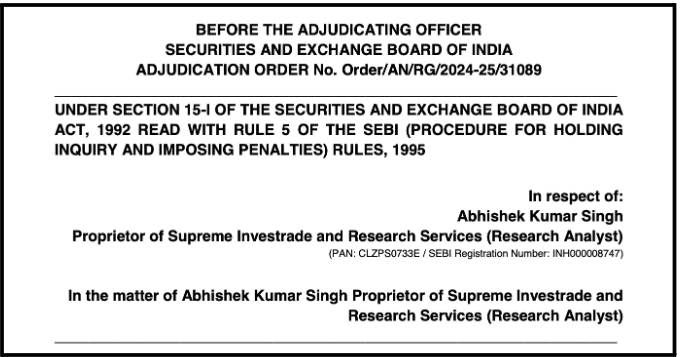
In December 2024, SEBI passed an order against Abhishek Kumar Singh, proprietor of Supreme Investrade and Research Services.
The regulator reviewed investor complaints, WhatsApp chats, and other records before reaching its findings.
SEBI’s concern was not that investors lost money. It was how the firm won and handled clients.
According to the regulator, the firm allegedly showed prospective clients screenshots of profits to convince them they could earn the same, and its messaging leaned heavily on profits while staying quiet about risk.
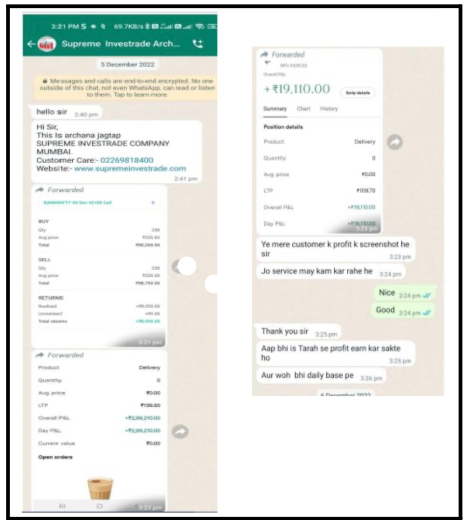
It got worse once clients started losing. The firm allegedly pushed those clients to invest more, promoting premium packages that would supposedly recover the earlier losses.
It also allegedly sent direct trading instructions over WhatsApp, telling clients when to buy, when to sell, and how much, which is not what a research analyst is allowed to do.
Then came the detail that stands out.
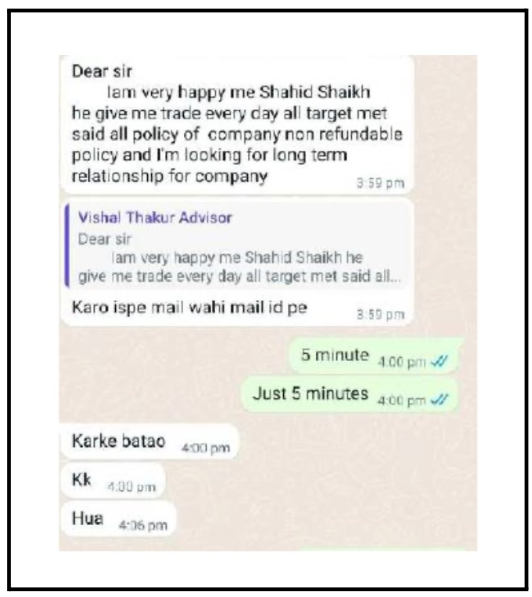
After one client complained to SEBI, the firm allegedly drafted a satisfaction message and asked the client to send it, so the complaint could be marked resolved and closed.
SEBI imposed a penalty of ₹5 lakh.
The case is a checklist of what to watch for: profit screenshots used as bait, loss-recovery promises after you are already down, direct trade instructions from a “research” service, and pressure to withdraw your own complaint.
If you see any of these, slow down.
How to Protect Yourself Before You Get Misled?
You cannot control what an analyst says, but you can control how easily you are misled.
A little caution up front saves a lot of loss later, and four habits do most of the work.
- Verify the analyst first. Check that they are actually SEBI registered before you act on anything, and do not treat a big social media following as proof.
Confirming the validity of a SEBI registered research analyst takes a few minutes and can save you lakhs. - Read past the target price. A real research report explains why a stock might fall, not just why it might rise. If a recommendation is all upside and no risk, treat that as a warning.
- Refuse to be rushed. Fear and greed are the levers these tactics pull. If you are being pushed to buy this second, step back. A decision made under pressure is the one you regret.
- Keep records from day one. Save the reports, the WhatsApp and Telegram messages, the ads, the screenshots, the payment receipts.
Most people start collecting evidence only after the loss, when messages are already deleted, and groups have vanished. Early records are what make a later complaint stick.
What to Do If a Research Analyst Misled You?
If you believe an analyst misled you into a loss, the sooner you act, the stronger your case, because evidence gets harder to gather with time.
Because the analyst is SEBI registered, you have a full formal route: a written grievance to the firm, then SEBI SCORES portal, then SMART ODR, and arbitration if it comes to that.
If you want the full process, from the first grievance to arbitration, we walk through every stage on our guide: complaint against sebi registered research analyst email.
Do you need help filing a complaint against a misleading analyst?
We help you file it end to end, matching what you were told against what the rules require, building the evidence, and taking it through SCORES to arbitration.
Conclusion
You have the right to fair, honest, unbiased research. When an analyst hides risks, fakes a track record, or rushes you into a trade, that right has been broken, and it is not something you simply have to accept.
The Supreme Investrade order shows SEBI does act on this conduct, with a real ₹5 lakh penalty.
The single habit that protects you most is the simplest one: when someone spends far more time talking about profits than risks, slow down and ask questions.
No analyst can legally guarantee a profit or promise to recover your losses, however confident the voice sounds.
Frequently Asked Questions
A call going wrong is not misconduct by itself, since markets move. But if the recommendation was misleading, or important risks were hidden from you, that is a different matter and worth raising as a complaint.
Verify their registration on SEBI's official records before acting on any tip. A large follower count or a slick website is not proof, only the SEBI registration is.
Save research reports, WhatsApp and Telegram messages, advertisements, screenshots, and every payment receipt. Collect them as you go, not after a loss, when messages are often already gone.
Recovery is possible where the conduct broke SEBI's rules, though it depends on your evidence and the specific facts. Both the fees and losses tied to misleading conduct can be pursued.





 Add us as a preferred source on Google »

