
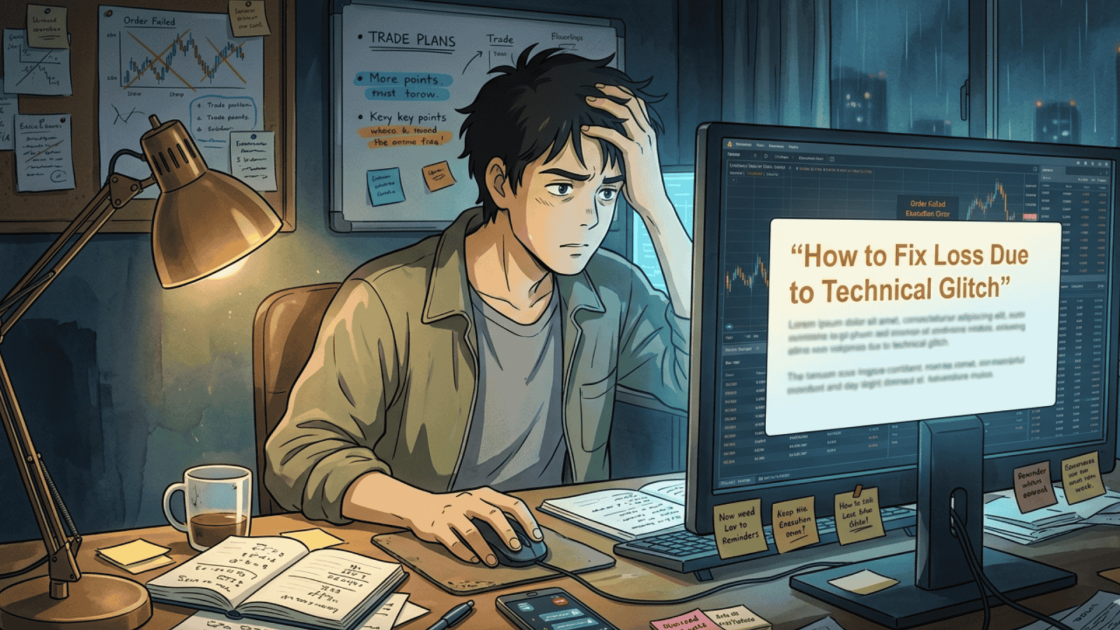
Your trade was running at a profit. You tried to exit. The order got rejected, again and again. By the time the system came back to life, the market had already moved against you. You’re staring at a loss that didn’t have to happen.
Sound familiar?
Technical glitches in trading platforms are more common than brokers would like you to know.
And the worst part?
Most traders assume there’s nothing they can do about it. They take the loss, curse the app, and move on.
But here’s the thing: that assumption is wrong.
If a broker’s system failure or an exchange-level disruption caused you a financial loss, you have every right to seek compensation. The law is on your side, and real arbitration cases have proven it.
In this blog, we walk you through exactly what counts as a technical glitch, what your rights are, how to build a solid case, and what the step-by-step process looks like to recover your trading app glitch losses.
Technical Glitch in Stock Market
A technical glitch is when your broker’s platform fails at a critical moment, not a slow-loading screen or a minor display error, but a system failure that directly causes you financial loss, and you cannot intervene.
Not every bad trade qualifies.
But these specific situations do:
- Order rejections during live positions: You’re holding an active position, and the system keeps rejecting your exit orders, whether market, limit, or stop-loss. The price moves, and you absorb a loss you couldn’t prevent.
- Positions disappearing from view: The app shows no active trades. You can’t monitor anything. You can’t square off. By the time the screen loads again, an auto square-off has already happened at unfavourable prices.
- Auto square-offs without warning: Your broker’s Risk Management System closes your positions without notifying you, and without giving you a reasonable window to add funds or take corrective action.
- Margin miscalculations by the broker’s RMS: The system squares off more positions than needed due to an error in margin calculation, causing a loss that exceeds what even the shortfall situation warranted.
The first and most important question traders ask after a glitch is: what do I do right now?
Before escalating anywhere, there are a few immediate steps you can take at your own end, and knowing the difference between a personal issue and a broker-side failure is what determines your next move.
How to Fix Loss Due to Technical Glitch in Indian Stock Market?
Not every platform issue is a broker’s fault.
Before assuming something is wrong at the broker’s end, run through the following checklist on your side first.
Step 1: Check at Your End First
When orders start failing or the platform behaves unexpectedly, rule out issues from your side before escalating:
- Check your internet connection.
- Restart the app or platform.
- Switch devices or browsers.
- Check your margin and account status.
- Try calling the broker’s dealing desk.
If, after all of the above, your orders are still getting rejected and the problem persists across devices and connections, it is no longer your end.
At that point, the issue lies either with your broker’s platform or with the exchange itself.
Step 2: Determine Whether It Is a Broker Issue or a Market-Wide Problem
Once you’ve ruled out your own connectivity, check whether other traders are experiencing the same problem:
- Check trader communities on Twitter/X, Telegram, or Reddit; if the issue is market-wide, it will show up there almost instantly.
- Visit the NSE or BSE official websites and check their market status or announcements section for any notices about ongoing technical disruptions.
- Check if your broker has posted any service alerts or system maintenance notices on their website or social media.
A market-wide exchange disruption does not eliminate your right to claim.
Step 3: Take Screenshots and Document Everything Immediately
While the glitch is happening, or immediately after, capture everything you can:
- Screenshot your trading screen showing rejected orders and any error messages, with timestamps visible.
- If positions disappeared from the screen, screenshot the blank positions view.
- Note the exact time of every order attempt and the price levels at that moment.
- Download your order history from the platform as soon as it is accessible. This log is your primary evidence.
Do not wait. Platforms can refresh, error messages can disappear, and order logs can become harder to interpret later.
The documentation you gather in the first 30 minutes after a glitch is often the most critical piece of evidence in any arbitration that follows.
Step 4: Report to Your Broker’s Customer Support Immediately
Contact your broker through every available channel and create a formal paper trail:
- Call the broker’s customer support helpline and note the name of the executive you spoke to, along with the time of the call.
- Send a written complaint via email to their grievance or support email address. Be specific: mention the date, time, the exact orders placed, the rejections received, and the financial loss incurred.
- Use the in-app chat or support ticket system and save the conversation log.
- Specifically ask the broker whether they received any exchange-level notification about a disruption and at what time.
The broker’s response, or their lack of one, becomes part of your evidence. Save every reply, including auto-acknowledgement emails.
Now that you know what to do in the immediate aftermath of a glitch, it’s equally important to understand what formal mechanisms exist to escalate your complaint.
How to Report a Technical Glitch?
If you’ve suffered a loss due to a technical glitch, the strength of your claim depends almost entirely on how well you document what happened.
Step 1: Capture everything immediately
Right after the incident, take screenshots of your trading screen, rejected orders with timestamps, error messages, your position screen if it was blank, and any notifications (or absence of them) on the app.
Do this before anything refreshes or disappears.
Step 2: Pull your order and trade history
Download your complete order log for the day from your broker’s platform.
This will show every order you placed, the time it was placed, and whether it was accepted, rejected, or modified. This is your core evidence.
Step 3: Save all broker communication
Any email, chat, or in-app message from the broker, especially anything that mentions a “system issue,” “exchange disruption,” or “cautionary warning”, must be saved.
Check the timestamps carefully. As the Nuvama case showed, a warning sent after the damage is done tells a very different story than one sent in advance.
Step 4: File a formal complaint with your broker first
Before approaching any regulator, raise the issue in writing with your broker’s grievance team.
Be factual: mention the date, time, orders placed, orders rejected, price at which you could have exited, and price at which the exit actually happened. Document their response, or their silence.
Step 5: Lodge a Complaint in SCORES
If the broker dismisses your complaint or doesn’t respond within a reasonable window, file a complaint on SEBI’s SCORES portal. Include all the evidence from the steps above.
Be specific about the loss, with calculations, not approximations.
Step 6: File a Complaint in Smart ODR
For disputes that remain unresolved after the broker-level complaint, SEBI’s SMART ODR (Online Dispute Resolution) platform allows you to initiate conciliation and, if needed, arbitration directly through an online process.
This is the route through which all three cases mentioned above were eventually resolved.
Step 7: Stock Market Arbitration
Conciliation may not always succeed. If the conciliator marks the matter as unresolved, you can proceed to formal arbitration.
At this stage, the clarity of your documentation, timestamps, price data, order logs, and communication records becomes the foundation of your case.
Below are such examples where traders who followed the right process were able to successfully claim a refund through arbitration.
Technical Glitch Arbitration Cases
Real-world arbitration cases highlight how technical glitches and order rejections in platforms like the National Stock Exchange and BSE Limited have led to unexpected financial losses for traders.
Case 1: Bharat Vaghari vs. Moneylicious Securities, ₹4,53,081 Awarded
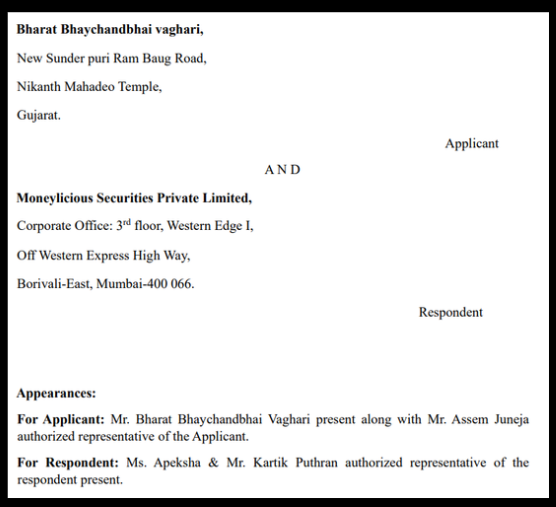
On July 12, 2024, Bharat placed a buy order for BankNifty options through his broker Moneylicious Securities.
The target price was ₹103. When he tried to exit at ₹94.50, every single order, market, limit, and stop-loss was rejected. He tried repeatedly. Nothing worked.
By the time the system allowed him to exit, at 11:19 AM, the price had dropped to ₹53.46. What should have been a profit of over ₹6 lakh became a nominal gain of just ₹33,250.
The broker’s defence was that the issue originated from a BSE-side reconciliation failure, not their platform. The arbitrator, however, noted that the broker failed to provide any documented exchange communication as evidence for this claim.
The obligation to execute trades properly and without disruption lies with the broker, and that obligation was not met.
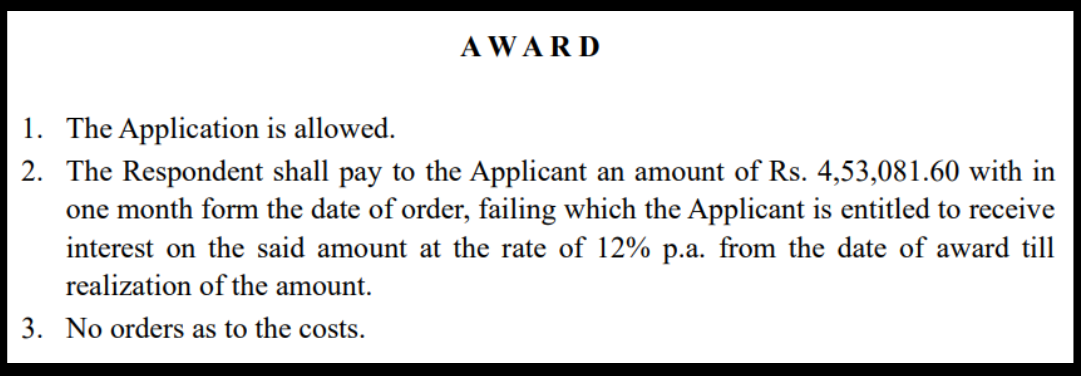
Award: ₹4,53,081.60 in favour of the trader.
The key calculation: the difference between the price at which exit should have happened (₹94.50) and the price at which it actually happened (₹53.46), multiplied across all 11,040 units.
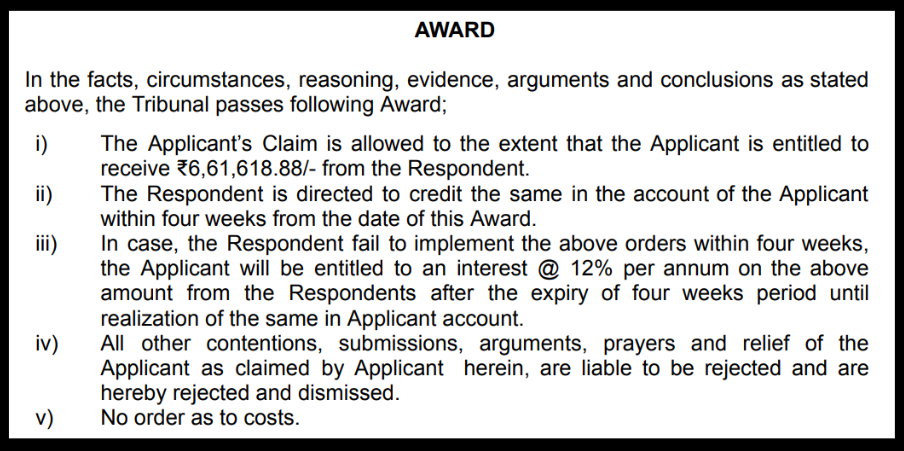
Case 2: Jagir Ashish Jhaveri vs. Nuvama Wealth, ₹6,61,618 Awarded
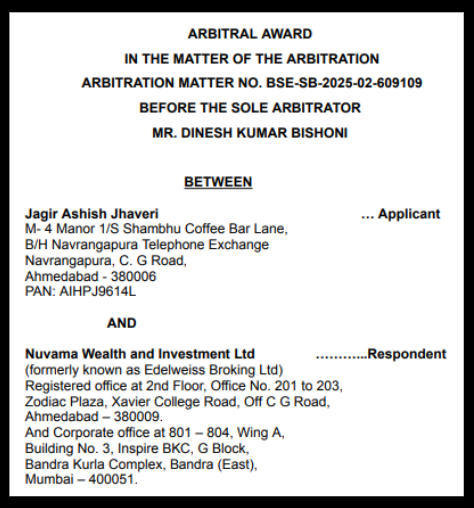
Between 10:50 AM and 11:30 AM on the same date, July 12, 2024, Jagir was actively trading in BSE F&O through Nuvama’s mobile app. Mid-session, all his open positions vanished from the screen entirely.
He could neither see his trades nor exit them manually.
When the system came back, all positions had been squared off automatically at prices far below what he would have chosen.
The total loss: ₹6,61,618.88.
Nuvama’s argument was that the glitch was at BSE’s end and not theirs. They also pointed to a cautionary warning they had sent to clients.
But the arbitrator found a critical problem with that defence: the warning was sent at 11:32 AM, two full minutes after the glitch had ended and seven minutes after the affected trading window.
The damage had already been done by the time the notification went out.
The arbitrator concluded that even if the root cause was at the exchange level, the broker’s responsibility to inform clients in real time was not discharged.
Under SEBI’s framework, brokers are required to alert clients the moment a system-level risk is detected, not after positions have already been wiped out.
Full claim of ₹6,61,618.88 was awarded to the trader.
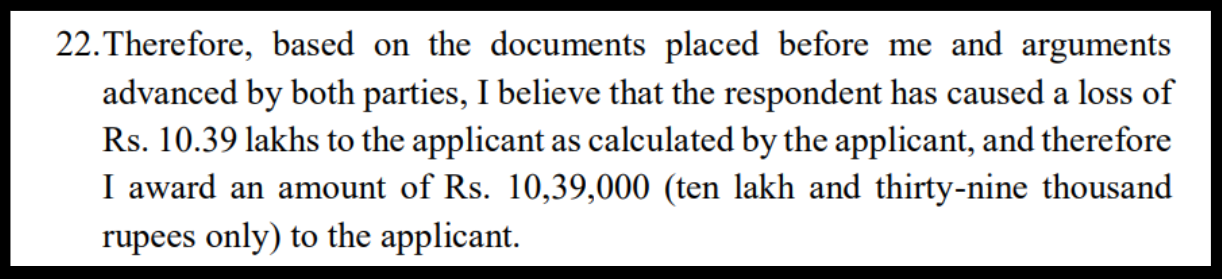
Case 3: Jethi Subhash Saurabh vs. Zerodha Commodities, ₹10,39,000 Awarded
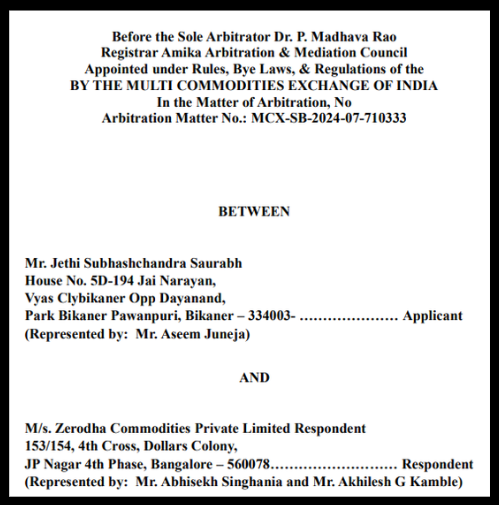
This case is slightly different but equally important. On April 2, 2024, Zerodha’s RMS system squared off six lots of SILVER MAY FUT at 10:33 PM, without sending any prior warning to the trader about the margin shortfall that led to the action.
Interestingly, earlier that same day, when a potential margin issue arose at 10:07 AM, the system had properly alerted the trader, who then cancelled the order and resolved the situation.
But for the evening transaction that caused the actual square-off, no such alert was sent.
The arbitrator noted that Zerodha’s own RMS framework was programmed to alert clients only at every 5% interval beyond 100% margin shortfall.
The square-off happened at 127%, which fell between two scheduled alerts. In practical terms, the trader was left in the dark during the window that mattered most.
The arbitrator also flagged that four additional lots were squared off beyond what was needed to cover the shortfall, and even Zerodha acknowledged this by reinstating two lots almost immediately after the square-off. This miscalculation alone added significantly to the trader’s loss.
Award: ₹10,39,000 in favour of the trader.
In each case, the broker either failed to notify the client in time, failed to prove the exchange was solely at fault, or caused excess harm through an internal system error.
And in each case, the arbitrator held the broker accountable, regardless of which entity technically caused the underlying disruption.
This is an important point. Even when the exchange itself is experiencing issues, your broker has a duty to communicate that to you immediately. If they don’t, and you suffer a loss as a result, that failure in communication creates liability.
Need Help?
If you’re uncertain about how to proceed or find the process confusing, you don’t have to handle it by yourself.
You can simply register with us, and we’ll take it forward from there.
Once you reach out, our team will assess your case, organise the necessary details, and support you at every step. From preparing your complaint to directing you to the right platform, we aim to make the entire journey smooth and stress-free.
With the right support and clarity, resolving your issue becomes far more manageable. You don’t have to figure it all out alone.
Conclusion
Trading involves risk. Technical failures should not be one of them.
When a broker’s system collapses mid-trade, positions vanish from sight, or orders get rejected for no market-based reason, you are no longer dealing with investment risk; you are dealing with an operational failure that costs you real money.
The regulatory framework in India does provide a path to accountability. Brokers have defined obligations. Arbitrators do rule against them when those obligations aren’t met.
And as these three cases show, amounts ranging from ₹4.5 lakh to over ₹10 lakh have been awarded to traders who documented their cases properly and pursued them through the right process.
The system exists. The process works. But it requires you to act quickly, document carefully, and know your rights.
If you’ve experienced a similar loss and need help navigating the process from complaint drafting to arbitration preparation, getting the right support can make all the difference.




 Add us as a preferred source on Google »

