
Quick Summary
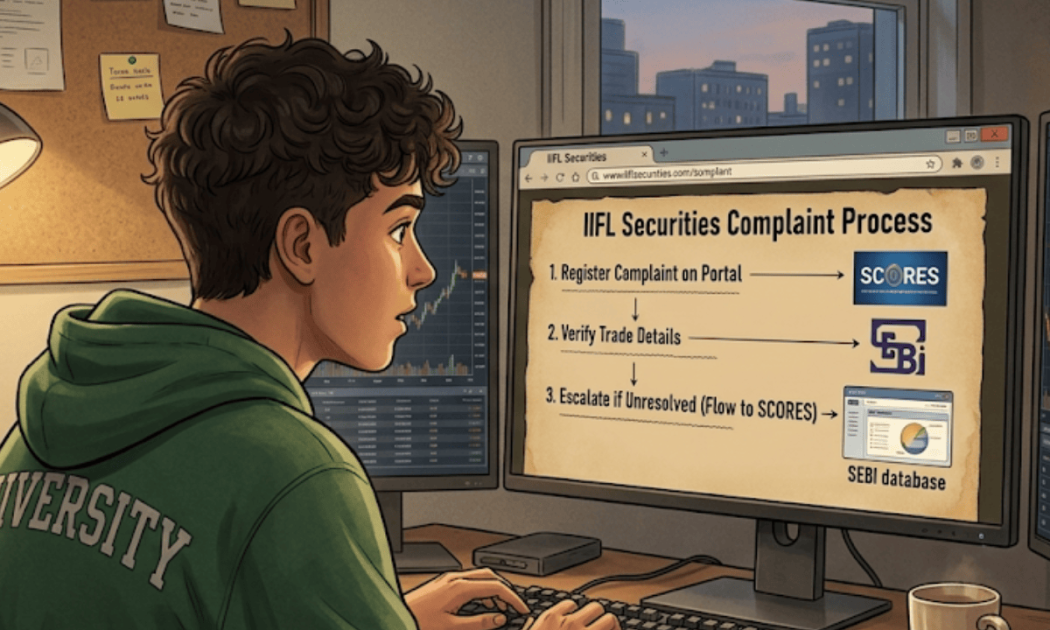
The IIFL Securities complaint process runs across seven stages: evidence collection, formal complaint to IIFL, stock exchange escalation, SEBI SCORES, SMART ODR, and NSE or BSE arbitration. One investor followed this path and recovered Rs. 14,37,200 after the NSE Arbitration Tribunal found unauthorised trades, false guaranteed return promises, and excessive churning by IIFL representatives. Complaint data shows unauthorised trading complaints rose from 44 in 2024 to 88 in 2025. Excess brokerage accounts for the largest share. This page covers the complete process with the case study in full.
You noticed something wrong. A trade you did not place. Charges that do not match. A representative who promised returns that never came.
You want to do something about it. But the complaint process feels long, unclear, and exhausting before it even starts.
This IIFL Securities complaint process blog makes it simple. Seven steps.
Each one building on the last. And a real case that shows what happens when someone follows every step correctly.
What IIFL Securities Investors Are Actually Complaining About?
Before walking through the process, it helps to know that your situation is not unique.
IIFL Securities complaint data from exchange records shows clear patterns.
Excess brokerage charges account for the largest share: approximately 155 of 284 complaints in 2024, 370 of 658 in 2025, and 183 of 380 in 2026.
Unauthorised trading complaints rose from 44 in 2024 to 88 in 2025, before settling at 66 in 2026.
The 2024 to 2025 doubling is significant and reflects a period where these complaints were escalating sharply.
A technical glitch complaint resulted in a Rs. 1,79,000 arbitration award after an investor was unable to square off her position for 72 minutes between 9:48 AM and 11:00 AM because the IIFL app stopped accepting orders.
She received the compensation amount plus Rs. 20,000 towards arbitration costs.
These numbers and cases exist in official records. They are not hypothetical.
The Seven-Step IIFL Securities Complaint Process
Navigating an investor dispute can feel overwhelming, but following this structured, step-by-step process ensures your complaint is documented, escalated, and resolved effectively.
Step 1: Collect Your Evidence Before Anything Else
This step happens before you contact anyone. Evidence gathered now is evidence that works at every stage. Evidence gathered later fills gaps instead of building strength.
Collect your trading account statements and order logs covering the disputed period. Download every contract note for the trades in question.
Save every email, WhatsApp message, or chat from any IIFL representative. Pull your call records for calls made to or from IIFL.
If any promotional material promised returns or guaranteed profits, save that too.
Save everything to a separate folder immediately. Brokers are better equipped than individual investors, and that advantage shrinks the moment you have complete documentation.
Step 2: Draft Your Complaint in Writing
Write down exactly what happened, when it happened, and the specific financial impact. Keep it factual.
Include the exact dates of each incident, the amounts involved in each transaction, the specific conduct you are complaining about in plain language, and what resolution you are seeking.
A written complaint that is specific and factual moves faster than a verbal complaint and creates a paper trail from day one.
Step 3: File Formally with IIFL Securities
Raise the complaint through IIFL’s official grievance channels. SEBI requires brokers to respond within a prescribed timeframe.
For more information about the contact details and the specific email IDs for different complaint categories, read the blog on IIFL Securities complaint form here.
Note the date you submitted and keep the reference number or acknowledgement. Non-response within the required timeframe is itself grounds for escalation.
Step 4: Escalate to the Stock Exchange
If IIFL does not resolve your complaint satisfactorily, escalate to the relevant exchange. NSE for NSE trades, BSE for BSE trades.
Both exchanges have investor grievance cells and online complaint portals. The exchange takes up the matter with the broker directly.
This stage also creates a formal exchange-level record of your complaint.
For the detailed guide on which portal to use at each stage and how to navigate each one, the portals page has the full breakdown.
Read the IIFL Securities complaint portals guide covering IIFL, NSE NICE, SEBI SCORES, and SMART ODR.
Step 5: File on SEBI SCORES
If the exchange resolution is unsatisfactory, file on SEBI SCORES at scores.sebi.gov.in. Include your previous complaint reference numbers and all supporting documents.
SCORES routes the complaint back to IIFL with a formal regulatory direction to respond. The broker’s compliance with this direction is monitored by SEBI.
For the complete SCORES guide including what each status label means and what to do when a complaint stalls, the SCORES overview covers the full process.
Read how SEBI SCORES works and what to expect at each stage.
Step 6: File on SMART ODR
If SCORES does not produce a satisfactory resolution, move to SMART ODR at smartodr.in. This is an online dispute resolution platform specifically for securities market disputes.
An independent conciliator is assigned. Both parties must participate. The process aims for a mutually agreed resolution before arbitration.
Many disputes settle here when the documentation is strong.
Step 7: NSE or BSE Arbitration
If SMART ODR conciliation fails, formal arbitration is the final step. An independent arbitrator reviews all evidence from both sides and issues a legally binding award.
This is where the Rs. 14,37,200 recovery happened.
Case Study: How Sukhadeo Gorakha Bhil Recovered Rs. 14,37,200 from IIFL Securities
Sukhadeo Gorakha Bhil was a first-time investor who trusted IIFL Securities representatives after being promised guaranteed monthly returns of 25 to 40 percent through futures and options trading.
He believed the assurances and invested his savings.
Within two months, his trading account showed losses of Rs. 14,37,200. According to the investor, many of these trades were executed without his knowledge or approval.
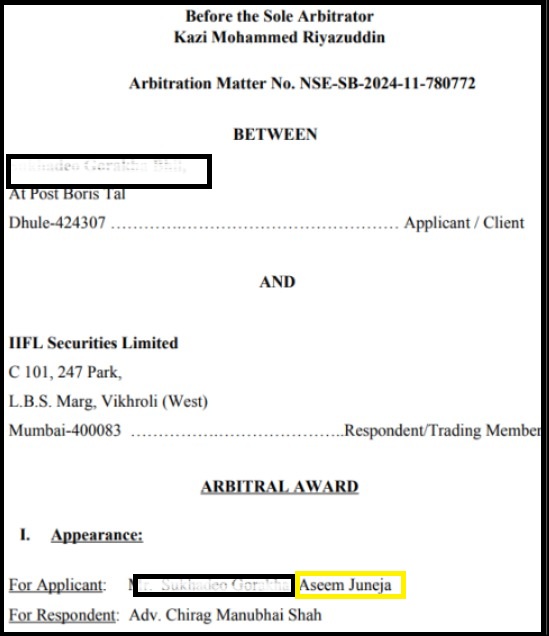
He brought the case to our team. We took the matter to the NSE Arbitration Tribunal and established the following:
Unauthorised trades were executed without his consent. False and misleading assurances of guaranteed monthly returns between 25 and 40 percent were made.
Excessive trading, what regulators call churning, was occurring primarily to generate higher brokerage commissions.
High-pressure tactics were used repeatedly to persuade him to deposit more funds. IIFL Securities failed to adequately supervise and control the actions of its representatives.
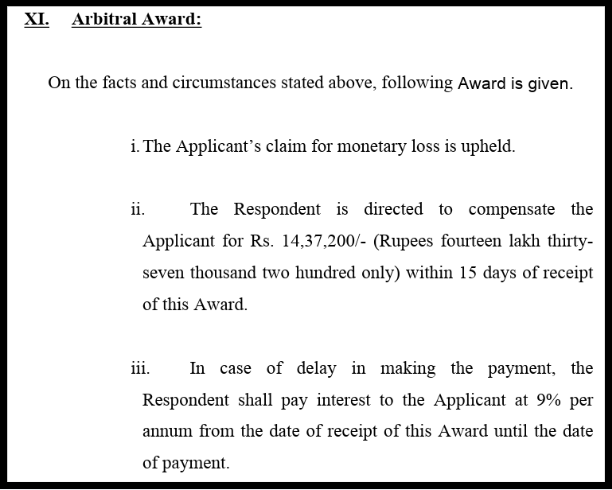
After reviewing the evidence, the NSE Arbitration Tribunal ruled in his favour. IIFL Securities was directed to pay Rs. 14,37,200 in full.
What Made This Case Win?
Three things separated this case from complaints that do not progress.
The first was documentation. Every trade, every promise, and every communication was part of the case file. The arbitrator could see the gap between what was promised and what was executed.
The second was regulatory framing. The case was not presented as “I lost money and I am unhappy.” It was presented as “specific regulatory violations occurred and here is the evidence for each one.”
Guaranteed return promises violate SEBI’s Advertisement Code. Churning is explicitly addressed in SEBI’s circulars on broker conduct.
Unauthorised trades violate SEBI’s 2018 circular. Each violation had a regulatory basis.
The third was following every step in sequence. Skipping the internal complaint, going straight to arbitration, or missing the SMART ODR stage can weaken a case procedurally. Every stage was completed in order.
What to Do If You Are Facing a Similar Situation?
The data shows you are not alone. Unauthorised trades, guaranteed return promises, and excess charges are the three most common patterns in IIFL Securities complaints.
If your situation involves any of these, the process above is your path. Document first. Complain in writing. Follow every stage in sequence.
The arbitration award at the end is legally binding and enforceable as a civil court decree.
Our team reviews IIFL Securities cases, organises the evidence, and represents investors through SEBI SCORES, SMART ODR, and NSE or BSE arbitration.
Conclusion
The IIFL Securities complaint process has seven clear stages. Each one builds on the previous one. Skipping stages weakens the case procedurally and can delay the outcome.
The Rs. 14,37,200 recovery for Sukhadeo Gorakha Bhil shows what following every stage correctly produces. Strong documentation, clear regulatory framing, and patience through the process.
The complaint data shows this happens repeatedly. Excess brokerage and unauthorised trades account for hundreds of complaints annually.
Many investors have recovered through this process. The ones who do are almost always the ones who documented early and followed the sequence.
Frequently Asked Questions
IIFL Securities is expected to respond to internal complaints within 30 days. SEBI SCORES typically sees resolution within 21 to 45 days per stage. SMART ODR conciliation adds 6 to 12 weeks. If the matter goes to NSE or BSE arbitration, add another 3 to 6 months. Total from first complaint to arbitration award typically runs 6 to 12 months.
Yes, if the evidence supports it. Sukhadeo Gorakha Bhil recovered his full Rs. 14,37,200. The amount awarded depends on what the arbitrator finds proven based on your documentation. Market losses caused by normal market movements are not recoverable. Losses caused by unauthorised trades, false promises, or regulatory violations are.
Non-response within the prescribed timeframe is itself an escalation ground. Document the date of your complaint and the absence of response. This becomes supporting evidence at the stock exchange and SEBI SCORES stages.
Excess brokerage charges account for the largest share, approximately 155 of 284 complaints in 2024. Unauthorised trading complaints doubled from 44 in 2024 to 88 in 2025. Technical glitch complaints have also produced arbitration awards. If your situation matches any of these patterns, the complaint process applies.
No, not for the internal complaint, SEBI SCORES, or SMART ODR stages. For NSE or BSE arbitration, professional support in organising evidence and preparing the regulatory argument significantly improves outcomes, even though formal legal representation is not mandatory.



 Add us as a preferred source on Google »

