

Quick Summary
For Meenal Rathi (name changed), a beginner investor from Indore, the first sign of trouble wasn’t a loss on her trades. It was an invoice printed with someone else’s name on it. A single representative of a firm registered as a Research Analyst had given her every recommendation under two different names, collected fees before sharing any terms, and then issued the invoice to a person who wasn’t even the client. Her initial claim came to ₹26,000: ₹13,000 in fees plus ₹13,000 in trading losses. The case went to SEBI SCORES 2.0 after a formal legal notice, closing with a recovery of ₹25,000.
Meenal Rathi (name changed) is a beginner investor from Indore. Her first clue that something was wrong was not a trading loss. It was an invoice with a stranger’s name printed on it.
She was contacted by a man who introduced himself as an advisor working for a firm registered with SEBI as a Research Analyst. He called himself “Sundeep” in their first conversation.
Before she paid anything, he sent her screenshots on WhatsApp showing past profitable trades, presented as proof of the firm’s accuracy. Those screenshots were the reason she agreed to subscribe.
She paid thirteen thousand rupees across four transactions over two days. No terms and conditions were shared with her before or after any of these payments. No agreement was ever signed.
Firms that skip this basic step before collecting a fee can be reported through a complaint against a SEBI registered research analyst, and payment timestamps are usually enough to prove it.
The Same Voice, A Different Name
As the relationship continued, the same man began signing off some conversations as “Shamsher.” Same phone number, same trading calls, two separate identities presented to one client.
A representative concealing his own identity denies a client the most basic thing she is owed, knowing exactly who is advising her and whether that person is even certified to do so.
An Invoice Addressed To Someone Else Entirely
Three days after collecting her money, the firm issued an invoice. It was addressed not to Meenal, but to her mother, a person who had no trading account, no KYC on file, and made no payment.
Every contract note from Meenal’s own trading account carried her PAN. Every payment came from her own bank account. Yet the one document meant to record the transaction named someone who was never part of it.
This was not a small clerical slip. A firm that runs proper KYC on one person and bills another entirely has a structural gap in its own records, not a typo.
Fees Collected Before Any Terms Existed
The invoice also listed a service period starting three days after Meenal had already paid in full. Money had left her account before any document describing what she was paying for even existed.
SEBI rules are direct on this point. No fee can be charged, and no service can be rendered until the client has received the terms and given consent. Neither happened here before the first rupee was collected.
Promises Of Recovery, And Not One Research Report
Before she paid, Meenal was told the firm’s recommendations would help her recover earlier trading losses. When her capital was lost again on this firm’s calls, she was moved into another trading group with the same promise.
Across the entire engagement, she received intraday trading levels over WhatsApp. She never received a single research report, despite paying for a service sold to her as research.
The Recovery Strategy: How Our Team Took It Forward
This case turned on documentation the firm itself had produced. An invoice with the wrong name on it is difficult for any firm to explain away later.
Step One: We Timestamped Every Payment Against The Terms
All four UPI payments were dated and compared against the date the terms were eventually shared, three days later. This alone proved fees were charged before consent existed.
Step Two: We Flagged The Invoice Mismatch As A Standalone Violation
We treated the invoice naming Meenal’s mother as a distinct record-keeping breach, separate from the missing consent and the identity concealment, since each violation needed its own regulatory basis.
Step Three: We Documented the Two-Name Pattern
WhatsApp threads showing the same number signing off as two different people were compiled into a single exhibit, alongside a formal demand for the representative’s real name and certification details.
Step Four: We Requested Proof Of Research That Was Never Produced
Our notice called on the firm to produce the research reports underlying every recommendation given to Meenal. A service billed as research requires documented analysis behind each call.
Step Five: We Sent A Legal Notice With A Firm Deadline
The notice detailed every violation with dates, amounts, and the exact clause of the Master Circular each one breached, giving the firm five business days to settle.
Step Six: We Filed Through SEBI SCORES
When the deadline passed without resolution, we filed a formal grievance on SEBI SCORES, attaching the payment trail, the mismatched invoice, and the WhatsApp identity evidence together.
Paying For Research You Never Received? Our Team Can Help
We trace every payment, every invoice, and every inconsistency into one documented timeline, then push it through a formal notice and SCORES until it is resolved. Register with us.
Final Outcome On Recovery After Fees Charged Under A False Identity
Meenal’s total claim stood at ₹26,000, covering the fees collected without consent and the trading loss that followed the recommendations she received.
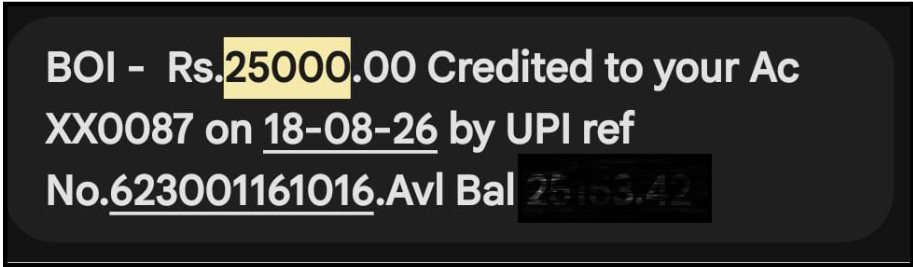
Through the SEBI SCORES process, the matter was resolved with a recovery of ₹25,000, restoring almost the entire amount she had originally claimed.
Conclusion
If your invoice does not carry your own name, or if the person advising you seems to answer to more than one identity, those details matter far more than they first appear to.
Report. Recover. Stay Fraud Free.
Frequently Asked Questions
A minor spelling slip is different from an invoice addressed to a completely different person. The second points to a deeper gap in the firm's own KYC and billing records.
No. Consent on the terms must be received before any fee is charged or service is rendered, under SEBI's Master Circular for Research Analysts.
Yes. Firms are required to maintain a transparent record of who is interacting with each client. Concealing identity behind multiple names undermines that requirement directly.
A Research Analyst must maintain a documented research report behind every recommendation. Its complete absence is itself grounds for a complaint.
Yes. Save them. Using past performance to induce a client to subscribe is restricted, and those screenshots often become useful evidence.





 Add us as a preferred source on Google »

