
Quick Summary
SEBI has closed a six-year case against stock broker Modex International Securities Ltd, finding it misappropriated roughly Rs 136 crore in client funds and left a shortfall of Rs 95 crore in client securities. Whole Time Director Pavan Kumar Sachdeva was found personally liable and fined alongside the firm. A co-director died during the proceedings and was let off. The order, dated August 21, 2026, hands NSE the job of settling remaining client claims from what’s left of the firm’s assets
If you had money or shares parked with a broker and things went quiet for years while a case dragged through SEBI and the courts, this is roughly what that process looks like from the inside.
Modex International Securities Limited, a stock broker registered with SEBI, first came under the scanner back in 2020. The final order closing out that case only arrived this August, six years later.
How This Started: A Falsified Register of Securities
The trigger was routine supervision. NSE, going through offsite data and an onsite inspection, found that Modex had been passing false entries in its Register of Securities, the document that’s supposed to show exactly which client owns which shares.
That discovery led to a full forensic audit covering April 2017 to January 2020.
What it turned up was serious enough for SEBI to freeze Modex and its two Whole Time Directors, Dharmendra Kumar Arora and Pavan Kumar Sachdeva, within days.
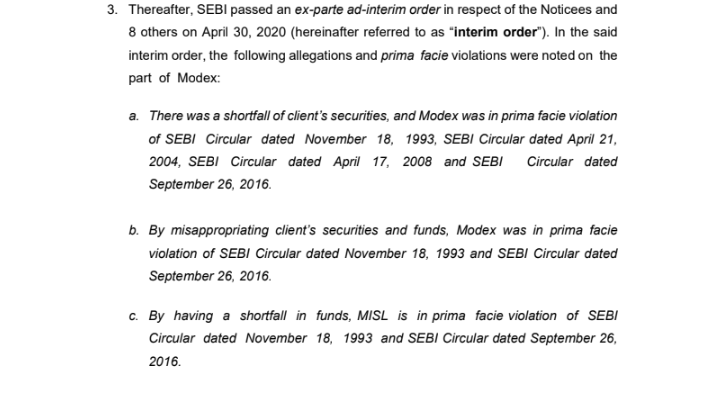
The Rs 95 Crore in Client Securities That Weren’t There
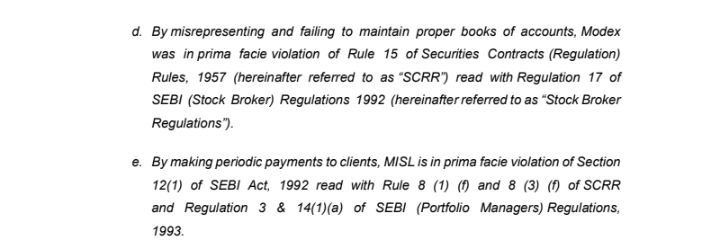
The forensic audit found that as of January 24, 2020, Modex was short by Rs 95.29 crore in client securities across 288 different scrips. In simple terms, clients who should have had certain shares sitting with the broker didn’t.
Separately, the audit found Rs 113.03 crore worth of securities recoverable from another set of client accounts, cases where Modex had effectively used one client’s account to sell shares belonging to someone else.
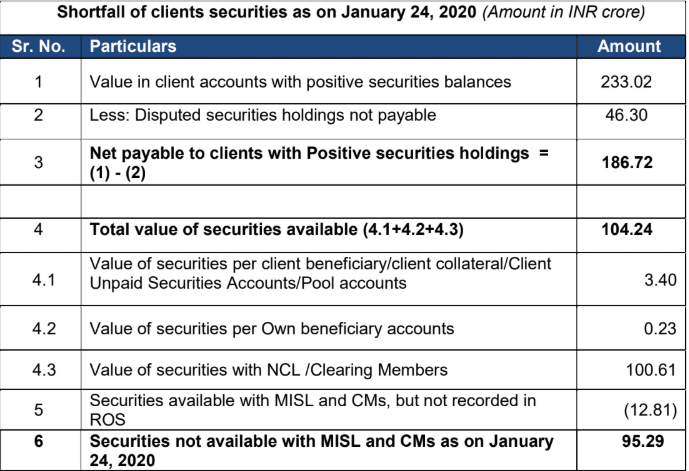
Modex argued these two numbers should offset each other, since the recoverable amount was even bigger than the shortfall.
SEBI rejected that outright: money owed by some clients doesn’t erase the obligation to actually hand over shares to different clients who were owed them.
Rs 136 Crore That Never Made It Back to Clients
The bigger number in this case is what happened to client funds.
SEBI’s audit found that Modex received Rs 126.31 crore in sale proceeds from the exchanges on behalf of clients, plus another roughly Rs 10 crore directly from clients, and simply didn’t pass most of it on.
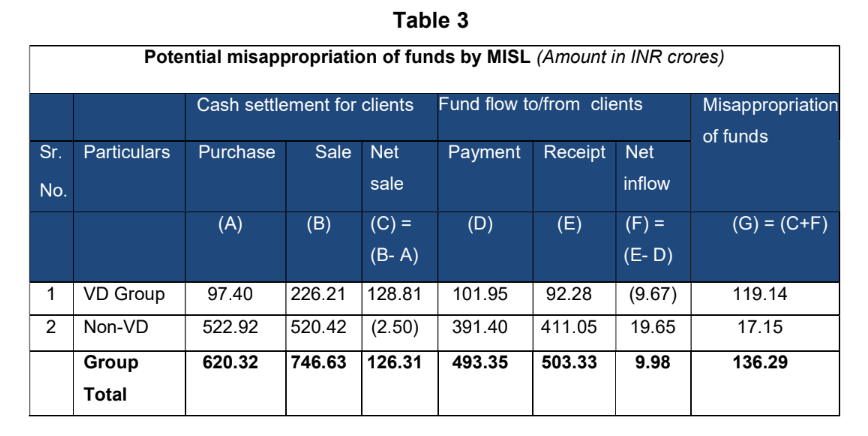
Modex’s defence was that some of this money never left the company; it was simply moved from its cash settlement account to its Futures and Options settlement account to cover trading losses there.
SEBI found that argument beside the point. Client money has to stay segregated from the broker’s own funds regardless of which internal account it ends up in, and shifting it to plug a different business problem is itself the violation.
The firm also admitted to using roughly Rs 10.47 crore of client money as an advance toward buying flats, later selling those flats to pay clients back.
SEBI’s response was direct: client funds can’t be diverted into property purchases in the first place, and paying the money back later doesn’t undo that.
The “VD Group”: Payments That Looked Like Guaranteed Returns
This is the part of the case that reads most like a scheme retail investors would recognise, if not from Modex specifically, then from similar stories.
A set of clients internally coded as the “VD Group” had been collecting periodic payments from Modex that functioned like assured returns on their investments.
The problem was that many of these same clients were sitting on heavy losses in the Futures and Options segment.
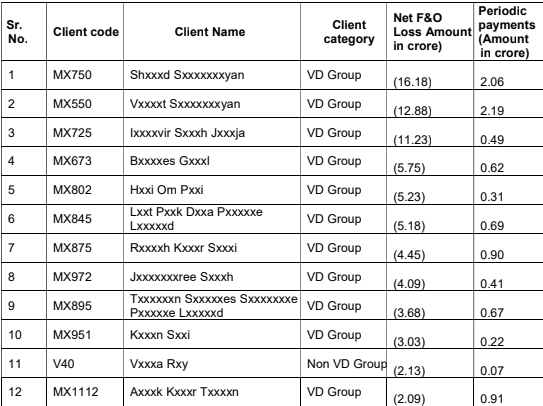
SEBI found that Modex paid out roughly Rs 16.87 crore to 50 of these clients even as 47 of them were carrying a combined Rs 98.60 crore in losses.
To fund those payouts, Modex sold securities belonging to other, unrelated clients.
SEBI’s conclusion was blunt: this wasn’t ordinary broking. It was Modex effectively running an unregistered portfolio management operation, collecting client money, promising periodic returns, and covering the gap with other people’s shares when the underlying trades lost money.
The Defence: “It Was the Director Who Handled That”
Modex’s central argument throughout the case was that its late director, Dharmendra Kumar Arora, ran the company day to day, and that a separate independent director, referred to in the order as having managed the VD Group relationships personally, was the one actually responsible for the assured-returns arrangement.
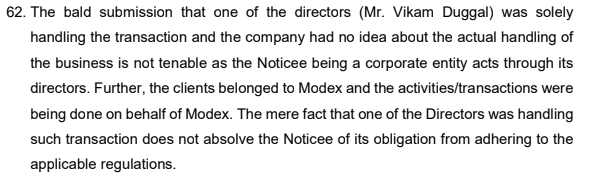
SEBI wasn’t persuaded. A company acts through its directors and employees, and can’t disown responsibility for what those people did on its behalf, especially when SEBI specifically asked during the hearing whether Modex had taken any action against the director it was blaming, and got no evidence that it had.
Why Pavan Kumar Sachdeva Couldn’t Distance Himself Either
Sachdeva’s personal defence was that he came from a real estate background, had no securities market expertise, was rarely in the office, and wasn’t an authorised signatory on some of the firm’s accounts.
SEBI checked the underlying facts and found a different picture. Sachdeva was a Whole-Time Director holding 37.5% of the company, and his own wife had mortgaged her personal property to secure a credit facility for the business.
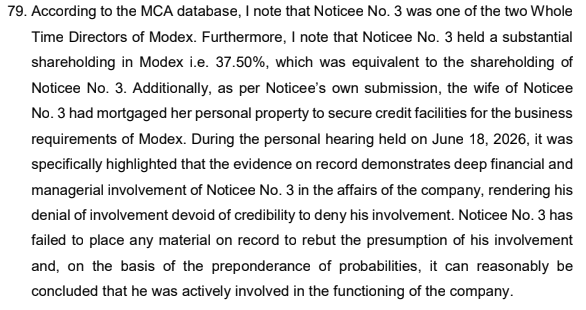
SEBI held that this level of financial entanglement was inconsistent with someone who was merely a passive, uninvolved director. He was found vicariously liable under Section 27 of the SEBI Act and deemed responsible for the company’s violations.
His co-director, Dharmendra Kumar Arora, had passed away in April 2021, before SEBI even issued the formal show-cause notice. Proceedings against him were closed as abated, though NSE retains the ability to use his frozen assets toward settling client claims.
Is Modex International Securities Still a Registered Broker?
No, not in any functioning sense. Modex was expelled as a trading member of NSE in September 2020 and of BSE shortly after, and it has been barred from accessing the securities market since the original 2020 interim order.
This final order confirms that restraint continues until NSE finishes settling outstanding client claims. Modex, in other words, has not been an active, functioning broker for years, even though this case took until 2026 to formally conclude.
What Happens to Client Money Now
SEBI has named NSE as the lead exchange responsible for handling remaining client complaints and claims against Modex. NSE will use whatever’s left of Modex’s assets, and to the extent legally possible, Sachdeva’s assets, to settle what clients are still owed.
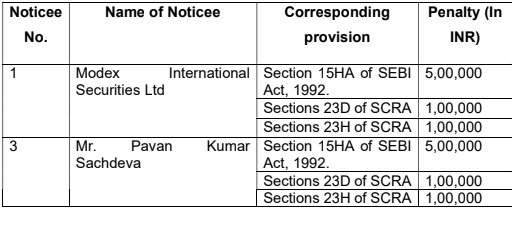
Separately, SEBI imposed monetary penalties of Rs 7,00,000 each on Modex and on Sachdeva, a combined Rs 14,00,000, payable within 45 days.
SEBI’s order notes that the exchange had, by the time of this order, already begun returning securities and repaying funds to clients as part of an ongoing settlement process.
We’ve covered a comparable case of broker fund diversion and registration cancellation in our piece on SEBI trade record requests, which walks through what happens after a similar order and why getting your own records matters.
What This Means If You Were a Modex Client
If you had an account with Modex International Securities, the settlement process is already underway through NSE as the designated lead exchange, so your first step is checking directly with NSE on the status of your specific claim rather than waiting for Modex to reach out.
If you’re still owed funds or securities and haven’t heard anything, you can also raise the matter through SEBI’s SCORES complaint portal to have it formally tracked.
Report. Recover. Stay Fraud Free.
Frequently Asked Questions
No. It was expelled from NSE and BSE back in 2020 and has been barred from the securities market since then. This order continues that restraint.
SEBI's findings include a Rs 95.29 crore shortfall in client securities and roughly Rs 136 crore in misappropriated client funds, alongside a separate Rs 79.61 crore shortfall in available funds.
SEBI found these payments functioned as unregistered portfolio management returns, funded in part by selling other clients' securities, and held this to be a separate violation from the core fund and securities shortfall.
Director Dharmendra Kumar Arora passed away before SEBI issued its formal show-cause notice, so proceedings against him were closed. Director Pavan Kumar Sachdeva was found personally liable based on his shareholding and financial involvement in the company.
A combined Rs 14,00,000, split as Rs 7,00,000 each on Modex International Securities and Pavan Kumar Sachdeva.
NSE has been named the lead exchange handling client settlements for this case, so that's the direct point of contact for tracking an existing claim.
Yes, SEBI's SCORES portal accepts complaints against any SEBI-regulated entity, including one already under enforcement action like this.




 Add us as a preferred source on Google »

