
Quick Summary
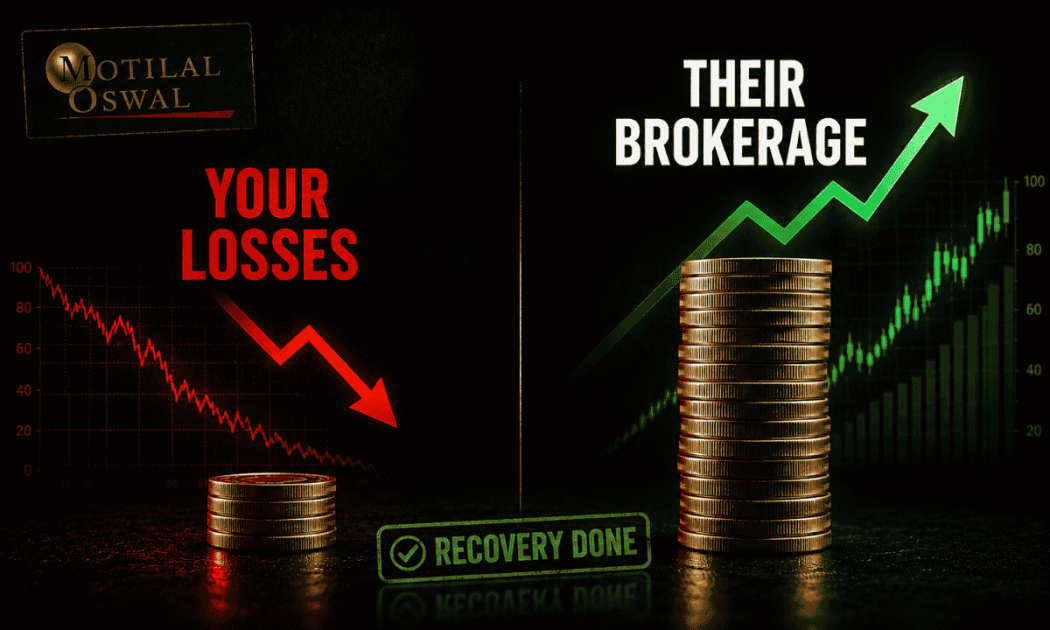
In four separate awards, NSE tribunals ordered Motilal Oswal to refund brokerage to clients whose accounts were over-traded to generate that brokerage. The largest was ₹7,39,592, the exact brokerage the broker had earned by acting as the client’s advisor. The others ordered partial refunds of 50% to 80% of the brokerage, in cases where a novice was pushed into heavy trading. The principle running through all four is simple: a broker cannot profit from a wrong it committed. This page explains how churning is proven and how these clients recovered.
Churning is the quiet one. There’s no single dramatic trade to point at. Instead, your account is traded far more than it should be, and each trade skims a little brokerage, until the broker has earned handsomely while you’ve lost.
It’s harder to spot than an unauthorised trade, because on paper you may have agreed to each order.
But when the volume only makes sense as a way to generate brokerage, tribunals have a name for it, and a remedy.
In four separate cases, NSE tribunals ordered Motilal Oswal to hand brokerage back. Here’s how they saw through it.
The Case That Set the Standard
A client who came to the market fresh, investing his savings through the broker’s app.
For months it went fine.
Then his advisor was changed without his consent, and the new advisor told him his portfolio was in loss and pushed him toward option trading to recover it, insisting he pledge his entire portfolio.
He said repeatedly he wanted to trade only in small lots. He was swayed into bigger ones on the promise of recovering his loss.
Within weeks, he had lost over eleven lakh, and been steered into currency trading he didn’t understand, and even sold an insurance policy dressed up as an investment.
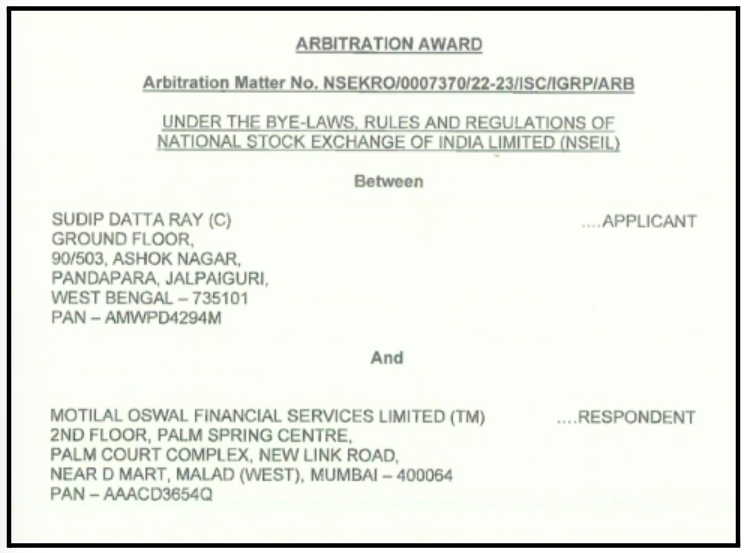
The tribunal’s finding cut to the heart of it. A broker is meant to execute the orders a client places. It cannot act as the client’s advisor and push trades.
There was no record of the client placing any of these orders, only the broker deciding and the client concurring.
The whole exercise, the tribunal held, existed to generate brokerage, and the broker had earned ₹7,39,592 from it over the period.
Why Motilal Oswal Couldn’t Stand The Claim?
The reasoning is one worth keeping in your back pocket, because it applies far beyond this one case.
The tribunal held that a broker cannot take advantage of its own wrong.
When the brokerage a firm earns is the direct product of conduct that breached its duty, whether that’s acting as an unlicensed advisor or pushing a novice into unsuitable volume, it cannot keep that gain. So the tribunal ordered the entire brokerage returned.
The resulting Motilal Oswal excess charges quickly decimated the account. Calculating the extreme fee-to-equity ratio made the broker’s underlying motives undeniable.
That logic scales down cleanly to partial refunds too, and the other three cases show how.
Similar Practice, at Every Size
In one appeal, the broker had earned ₹2,72,000 in brokerage while the client lost ₹2,93,567 in just four days.
The tribunal held the broker had failed in its duty to advise and mitigate, and ordered half the brokerage, ₹1,36,000, refunded.
In another, a novice was influenced to over-trade in the currency segment. The tribunal found this breached the fair-dealing rule under Regulation 4.5.2 of the F&O trading regulations and ordered 50% of the brokerage, ₹60,003, returned.
The most pointed of the four involved a client induced into currency trading by a representative who claimed to be a “SEBI registered stock advisor” and promised assured daily returns.
The tribunal found the broker had influenced and induced trading completely against the economic status of a novice, again breaching Regulation 4.5.2, and ordered 80% of the brokerage plus tax refunded, ₹1,01,958.
The thread across all four is unmistakable. When trading volume exists to feed brokerage rather than serve the client, that brokerage is recoverable. The refund tracks how badly the broker overstepped, from half to the whole amount.
Motilal Oswal Churning Brokerage: What to Do If Your Account Was Churned?
Churning is proven through pattern, not a single trade, so the evidence you gather is about volume and influence.
Pull these together now:
- Your full trade ledger for the period, showing the frequency and volume of trades
- A breakdown of total brokerage charged over that period
- Your contract notes, to show how much of your capital went to brokerage versus market loss
- Any call recording, WhatsApp chat, or email where an advisor pushed you to trade more, pledge holdings, or add funds
- Any record of you asking to trade small, or to stop, that was overridden
The comparison that reveals it: put the brokerage the broker earned next to the loss you suffered. In these wins, the two figures were often close, and that closeness is what exposed the churning. When a broker earns nearly as much as you lose, the account is being worked for fees.
Watch for the advisor line. If someone at the broker claimed to be a “registered advisor” or gave assured-return promises, that’s significant. Brokers execute orders; they are not licensed to advise or guarantee returns, and tribunals have treated those claims as evidence of inducement.
The wider pattern of complaints and regulatory action against this broker is covered on our page collecting Motilal Oswal complaints, which is a useful companion if churning is only part of what you experienced.
Was your Motilal Oswal account traded far more than you wanted?
We reconcile the brokerage earned against your actual loss, isolate the trades that only make sense as fee generation, and build the claim on the fair-dealing rules tribunals apply. Register with us to get the assistance.
How Hard It Is to Prove Churning: An Honest View
Here’s the honest position, because churning is harder to prove than it is to feel.
If you placed your own orders and the volume was genuinely your choice, a churning claim is difficult.
Where you have room is influence and unsuitability: a novice pushed into heavy or unsuitable trading, an advisor steering the account, a brokerage that swallowed a large share of your capital. That’s where these four wins lived.
The refunds here ranged from a partial 50% to the full amount, and they tracked how clearly the broker had crossed from executing to inducing. The stronger your evidence of being pushed, the closer to a full refund you get.
Conclusion
The ₹7.39 lakh award set the standard: a broker that earns brokerage through conduct breaching its duty cannot keep that gain.
The three partial refunds show the same rule at work on a sliding scale, from half the brokerage to 80%, each tracking how far the broker overstepped in pushing a client to trade.
If your account was worked for fees rather than served, that brokerage may be recoverable, in part or in full.
Report. Recover. Stay Fraud Free.
Frequently Asked Questions
Churning is excessive trading in your account driven by the broker's interest in generating brokerage rather than your interest as an investor. It is proven through the pattern and volume of trades, and the share of your capital consumed by brokerage, rather than a single disputed trade.
Yes. In the reviewed cases, tribunals ordered Motilal Oswal to refund brokerage ranging from 50% to the full amount, where the broker acted as an advisor or induced a novice into heavy or unsuitable trading. The largest single refund was ₹7,39,592.
A stockbroker is meant to execute the orders you place, not to advise you on what to trade or push you into positions. In the reviewed cases, tribunals treated the broker deciding trades and merely obtaining the client's concurrence as a breach, and made the broker return the brokerage earned.
The four reviewed refunds were ₹7,39,592 (full brokerage), ₹1,36,000 (50%), ₹1,01,958 (80% plus tax), and ₹60,003 (50%). Each tracked how far the broker had overstepped in generating the trades.




 Add us as a preferred source on Google »

