
Quick Summary
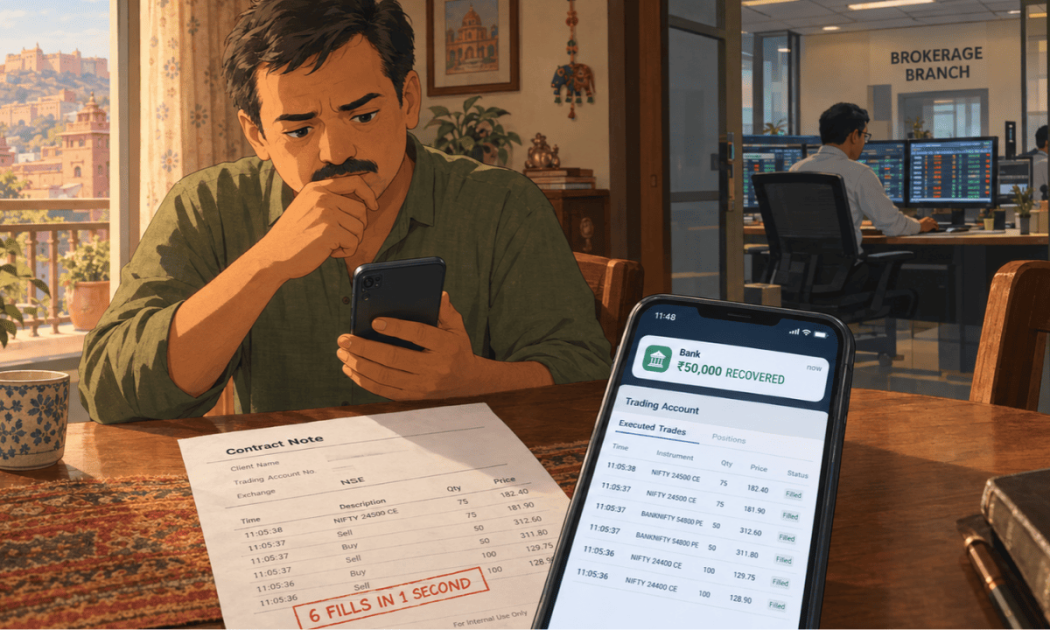
A broker’s representative pressed a client to share his login for a “premium terminal service” after he refused several times. The login was passed to a branch manager in another city, and branch staff then traded his account without approval on each order. The contract note showed six fills inside one second and a basket trade marker, pointing to a dealer terminal. The loss with charges came to ₹63,800. After a formal legal notice and a SMART ODR filing, he recovered ₹50,000, roughly 78 percent of his claim.
Someone you have never spoken to is trading your account, and the person who made it possible works for your own broker.
That is what happened to Anil Saxena (name changed) from Jaipur, Rajasthan, after a representative called him four times about a “premium terminal service.”
Six order fills landing within one second pointed to a branch terminal, and here is how we got ₹50,000 back.
How Broker Staff Tricked a Trader Into Sharing Login Credentials?
Anil opened a trading account through a broker’s representative. Soon after, the same representative called with an offer.
A premium terminal service, he said, would place trades from the terminal and generate profits automatically.
The catch was a simple request.
Anil had to hand over his user ID and login credentials.
Broker Representative Repeatedly Asking for Client Login Credentials
Anil refused two or three times. The calls kept coming over eleven days.
His call log shows contact on four separate dates in August.
Eventually, worn down by the persuasion, he shared his credentials.
A broker’s representative has no reason to ask for a client’s login.
The request itself breaks the basic safeguard that only the client places his own orders.
How Were Login Credentials Passed to a Branch Manager in Another City?
The representative did not use the credentials himself. He passed them to the manager of the broker’s branch in another city.
That branch is named on the contract note as the dealing office.
Anil lived in a different city altogether. Every link in the chain belonged to the broker, the representative, the branch manager, and the branch terminal.
No outside party was involved.
Anyone whose login was passed to a branch can start a stock broker employee complaint, since the broker answers for its own staff.
WhatsApp Trade Tips While Orders Were Placed Without Client Confirmation
Anil received buy and sell recommendations on WhatsApp. But the actual orders went in from the branch terminal without waiting for his confirmation on each trade.
A tip is advice. An order needs the client’s own instruction every time.
Trading continued from 17 August onward, with small credits and debits posting to his account across the week.
On 25 August, around 11:30 in the morning, Anil discovered the trades had already been executed.
He had approved none of those specific orders.
Contract Note Evidence: Six Order Fills in a Single Second
The contract note for that day held the strongest evidence. It recorded large index option trades, including one contract bought and sold in a quantity of 2,850.
The order and trade timestamps showed six separate fills for that contract between 11:05:37 and 11:05:38.
The remarks column read BT, a marker for basket trades.
A retail investor tapping buttons on a phone does not produce six fills across thousands of units in one second.
We argued that this pattern points to a dealer terminal with direct system access, which matched the dealing office printed on the contract note.
The note also recorded the damage. The net trading loss was ₹49,256.
Brokerage, exchange charges, turnover fees, and stamp duty took the net payable to ₹63,793.44.
Anil noticed only twenty-five minutes after those orders went in.
How We Proved a Dealer Terminal Placed the Orders, Not a Phone?
The case rested on records the broker already held.
Our job was to make the broker explain them.
Step One: We Fixed the Timeline From the Call Log
The call log showed sustained contact on the dates leading up to the trading.
It proved the representative drove the credential request, not Anil.
Step Two: We Used the Timestamps as Proof of Terminal Placement
The six fills inside one second were set out beside the BT remark.
We argued the pattern could not come from an ordinary retail app.
Step Three: We Tied the Chain Together Using the Broker’s Own Documents
The contract note named the branch as the dealing office. The representative who took the login belonged to the same broker.
We showed that every step stayed inside one firm.
Step Four: We Demanded Proof of Per Trade Instruction
SEBI rules require a broker to keep evidence that the client placed each order.
Our notice asked for call recordings, written instructions, or digital confirmations for every order. None was produced.
Step Five: We Called for the Terminal Records
We asked the broker to preserve the order logs showing the placing terminal and user ID for each order, plus branch access logs for the whole period.
Step Six: We Escalated to SMART ODR
When the notice did not settle the dispute, we filed on SMART ODR with the contract note, the call log, and the account statements attached.
How Much Was Recovered Through the SMART ODR Complaint?
Anil’s claim stood at ₹63,800.
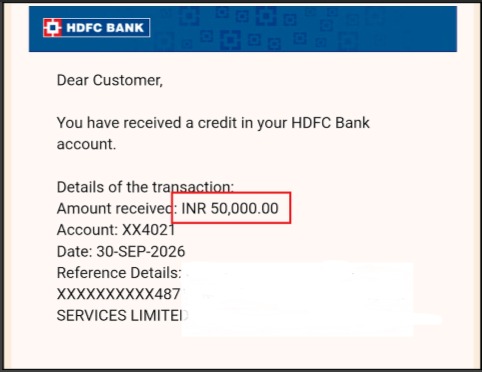
Through the SMART ODR process, the matter was resolved with a recovery of ₹50,000, about 78 percent of the claim.
Asked for Your Login by Someone at Your Broker? Our Team Can Help
Anil’s case worked because the call log, the contract note, and the timestamps told one story. If your broker’s staff ever asked for your credentials, save the call history and your contract notes today.
Register with us and we will take it from there.
Conclusion
Sharing a login is the one step that lets another person act as you.
Anil gave his credentials after repeated persuasion, and a branch the broker itself controlled used them. His case shows why the contract note matters.
A dealing office, a basket trade marker, and timestamps within a single second turned a complaint about “unauthorised trades” into a documented chain from request to terminal.
It also shows that a client’s own decision to share a login does not erase the broker’s duty.
A broker answers for its representatives and branch managers, and must keep proof of each instruction.
If a similar dispute stalls, the SMART ODR complaint route accepts the same documents and moves the matter to a structured forum.
Report. Recover. Stay Fraud Free.
No. Only you place your orders. A request for your user ID and credentials is a warning sign, even if it comes from the broker's own staff. No, but it may be raised against you. The broker still answers for its staff and must prove you instructed each trade. It marks a basket trade. Many fills inside a second can point to terminal placement rather than manual orders on a phone. Ask for per trade instruction records, order logs showing the placing terminal and user ID, call recordings, and branch access logs. No. A recommendation is advice. Each order needs your specific instruction before it is placed.Frequently Asked Questions





 Add us as a preferred source on Google »

