
Quick Summary
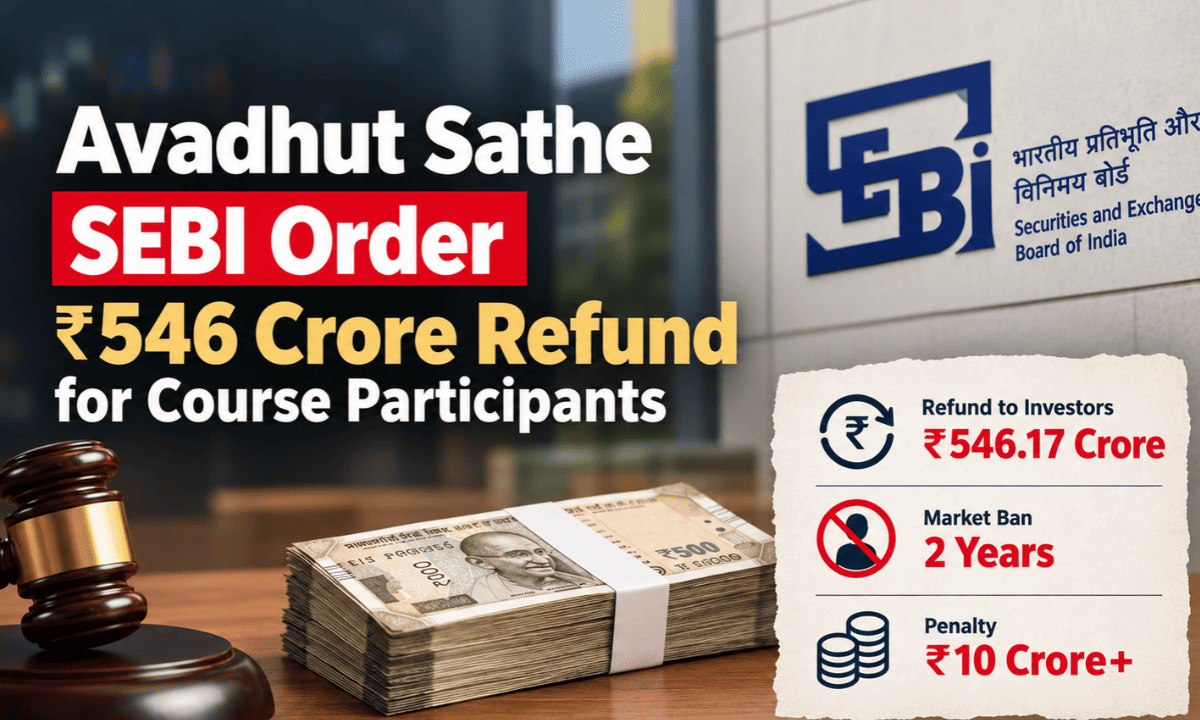
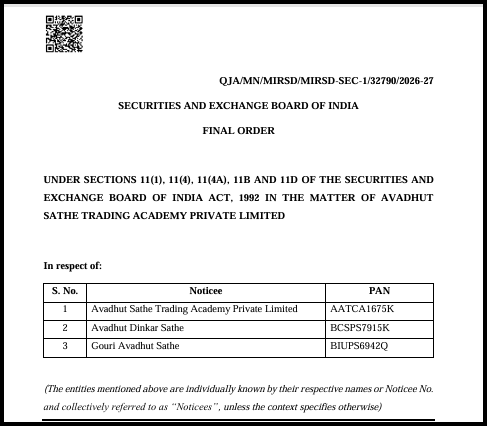
On October 23, 2026, SEBI’s Quasi Judicial Authority passed a final order against Avadhut Sathe Trading Academy Private Limited, Avadhut Dinkar Sathe and Gouri Avadhut Sathe. The academy and Avadhut Sathe must refund ₹546.17 crore to course participants and pay ₹67.87 crore as interest. Penalties of ₹6 crore, ₹4 crore and ₹1.5 crore were also imposed on the three noticees. The academy and Avadhut Sathe are barred from the securities market for two years, while Gouri Sathe is barred for six months. All refunds must be completed within five months.
Paid for a stock market course and wondered if you could ever get that money back? SEBI has now answered that for one of India’s biggest trading academies.
The Avadhut Sathe SEBI order of October 23, 2026 directs a ₹546.17 crore refund to course participants.
It also bars the founders from the market and adds penalties worth crores.
Here is what the order says, who owes what, and what it means if you ever enrolled.
The Case Timeline: How SEBI Reached the Final October Order?
SEBI did not reach this order overnight. It came after a warning, an investigation, a search, and an interim order.
An interim order is a temporary order passed early to protect investors while a case is examined. A final order comes only after the accused have replied and been heard.
Here is the timeline, from the first warning to the final decision on October 23, 2026.
1. The Administrative Warning of March 1, 2024
SEBI first examined the academy’s activity for FY 2023-24. It found the academy was publishing selectively profitable trades of participants.
It issued an Administrative Warning on March 1, 2024, against misrepresentation and selective disclosure.
2. Complaints And The Investigation
SEBI then received complaints from people who had paid for various programmes. They alleged the promised returns did not match their experience.
An Investigating Authority was appointed on July 24, 2025. It covered July 1, 2017 to October 9, 2025.
3. Search And Seizure
A Special Court authorised a search on August 18, 2025. The search and seizure ran on August 20 and 21, 2025.
Further complaints followed.
They alleged selective showcasing of profitable trades and live trading sessions with direct trade calls.
4. The Interim Order of December 4, 2025
SEBI passed an Interim Order cum Show Cause Notice on December 4, 2025. The noticees challenged it before the Securities Appellate Tribunal.
The tribunal’s order of January 22, 2026 partly allowed the appeal on the impounding of proceeds. It also directed replies and a final adjudication.
Our earlier post on the Avadhut Sathe penalty explains that stage in detail.
What SEBI Said Happened Inside The Trading Sessions?
The central question was simple. Was this education, or was it something else?
The noticees said the academy teaches chart analysis, risk management, and independent decision-making.
SEBI looked at what was actually shared during the paid sessions.
1. Specific Stock Recommendations
The order refers to video recordings and WhatsApp chats containing securities recommendations given to participants.
2. Entry, Exit And Stop-Loss Levels
The evidence included suggested entry and exit targets, stop-loss levels, and forecasts of the directional movement of specific stocks.
3. Live Trading Positions
The order records that positions taken by Avadhut Sathe were shared with participants. Strategies and specific calls were also given during live market hours.
4. The Officer’s View On The “Education” Label
The officer held that calling the programmes education, or the payments course fees, does not change the character of the services supplied.
The whole fee was treated as consideration for those services.
How SEBI Calculated the ₹546.17 Crore Avadhut Sathe Refund?
Our first report on the SEBI raid at Avadhut Sathe’s academy looked at its revenue.
The final order puts the amount collected at ₹6,01,37,96,917 from participants between July 25, 2015 and October 9, 2025. That is the total across all programmes.
The refund amount is lower. The officer only used courses where direct evidence was available.
1. Course-Wise Break-Up
All figures are in ₹ crore.
| Course | Total (in crores) |
|---|---|
| GEO | 423.49 |
| Mentorship | 39.08 |
| GEO Plus | 36.65 |
| Aarambh | 21.40 |
| Eye Opener | 16.67 |
| GEO Panoramic | 3.53 |
| VOW | 4.35 |
| Gurukul Samanvay | 1.00 |
| Total | 546.17 |
2. Year-Wise Fees
The same amount, by year, was ₹41.35 crore in 2020, ₹69.69 crore in 2021 and ₹110.33 crore in 2022.
It was ₹136.70 crore in 2023, ₹133.28 crore in 2024, and ₹54.81 crore in 2025.
3. How Interest Was Fixed
The officer could not fix a start date batch by batch. He used October 10, 2025, the completion of the last batch examined.
Simple interest at 12% per annum runs from that date to the date of the order. It comes to ₹67.87 crore.
Avadhut Sathe Testimonial Videos: What SEBI Accepted & Rejected?
SEBI also examined testimonial videos circulated on social media.
The order compared the advertised results with profit and loss data from the exchanges.
This part is balanced. The officer did not accept every allegation.
1. Allegations Held Not Established
For one participant, the video claimed ₹1 crore from Bank Nifty options against a computed ₹4.17 lakh.
The officer accepted the noticees’ objection that expiry-settled option positions had been left out. He held the allegation was not established.
For another, the SEBI computation showed an aggregate loss of ₹3,05,704.40.
A corrected figure for one contract turned the result into a profit of about ₹6.29 lakh. The officer did not rely on that testimonial.
2. Allegations Held Established
A video said a participant earned consistently more than her former salary.
Exchange data showed an aggregate loss of ₹1,38,244.37 for that period. The officer held the false portrayal established.
A video claimed a ₹2.5 lakh net profit, while exchange data showed a net loss of ₹13,256.85.
The officer held the net profit misrepresentation established, but not the claim about how a bike was funded.
A video claimed ₹43.2 lakh trading profit and carried the line “Validated by verified P&L”. Exchange data showed a loss of ₹5,58,444.43, and the officer held it established.
3. What This Meant For The Charges
The officer found the published claims were reckless and likely to influence investors. He held they were used to induce enrolment and increase income.
He also found mis-selling. The order says advice was given without assessing suitability, and material facts were concealed from buyers.
Defending Avadhut Sathe: Arguments Raised Against SEBI’s Order
The noticees were heard on March 17, April 6, April 24 and October 13, 2026.
They filed replies on March 26 and April 27, 2026.
Their key points, as recorded in the order, were:
- The academy is an education provider with a 17-year teaching method.
- An ex parte interim order combined with a show cause notice is procedurally unfair.
- The impounding of about ₹546 crore was disproportionate.
- Testimonials were published in good faith on students’ accounts, with consent.
- Disclaimers were given before sessions, and the academy holds ISO 9000 certification for education.
- Section 27 cannot make a director liable without proof of the role played.
The officer addressed each.
He held that the interim directions had already been before the tribunal, and the final proceedings were meant for final determination.
Is Avadhut Sathe Trading Academy SEBI Registered Or Not?
The order states that neither the company nor its two directors were registered with SEBI under the Investment Advisers Regulations or the Research Analyst Regulations.
SEBI held that the services supplied fell within investment advice and research analyst activity.
That breached Section 12(1) of the SEBI Act read with Regulation 3(1) of the IA Regulations and Regulation 3(1) of the RA Regulations.
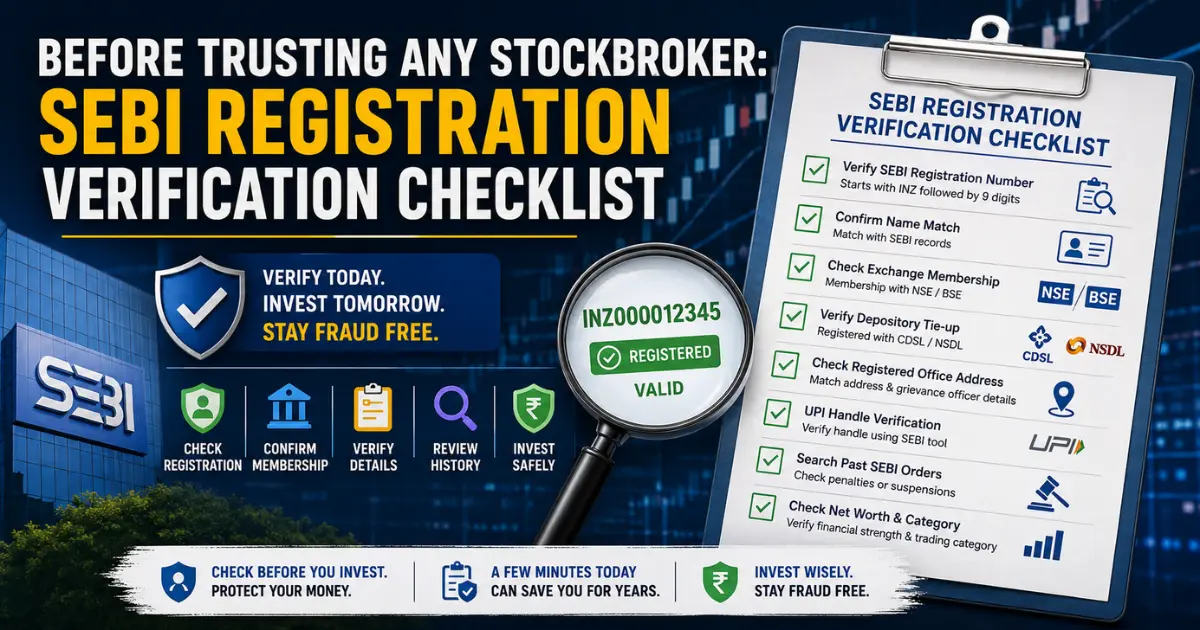
Before dealing with any adviser or analyst, you can check the registration yourself. Our SEBI registered research analyst verification checklist shows how.
Why Is Gouri Sathe Treated Differently?
The order separates the three noticees.
This matters for accuracy.
1. Her Liability
Gouri Avadhut Sathe is a director.
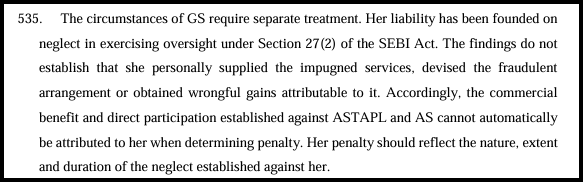
The finding against her rests on neglect in exercising oversight under Section 27 of the SEBI Act.
2. What The Officer Did Not Find
The officer said she was not found to have supplied the advisory services or devised the arrangement.
The material did not establish wrongful gains attributable to her.
3. The Result For Her
She is not liable for the disgorgement.
Her penalty and 6-month debarment reflect the neglect found against her.
Inside the SEBI Ruling: Every Direction for Avadhut Sathe Explained
The directions in paragraph 537 are the heart of the order.
They are effective immediately.
1. Stop The Services
All three noticees must cease offering advisory and research services.
They must also stop using live or historical data to predict future price movements for a specified security.
2. Refund ₹546.17 Crore In 5 Months
The company and Avadhut Sathe must refund the amount jointly and severally within five months of receiving the order.
The money goes into a dedicated bank account, and refunds are paid from it.
3. Interest To The Investor Fund
The same two noticees must deposit ₹67.87 crore as interest.
It goes to SEBI’s Investor Protection and Education Fund.
4. Public Notice Within 30 Days
They must publish a notice in two national newspapers, one English and one Hindi, and one local-language paper.
The notice must explain how to claim a refund and give a contact person’s name, address, and details.
5. Electronic Refunds Only
Repayments may be made only through electronic transfers or other banking channels with audit trails.
6. Asset And Account Restrictions
The company and Avadhut Sathe cannot sell assets, including securities and mutual funds, except to make refunds. Their bank accounts are frozen for debits until the deposits are made.
7. CA-Certified Completion Report
After refunds, they must file a completion report with SEBI within 30 days. A peer-reviewed Chartered Accountant must certify it.
8. Escrow For Unclaimed Money
Any balance of the refundable amount goes to SEBI, which keeps it in an escrow account for one year. Anything left after that goes to the Investor Protection and Education Fund.
9. Market Bans
The company and Avadhut Sathe are barred from the securities market for two years or until compliance with the refund direction, whichever is later. Gouri Sathe is barred for six months.
10. Open Derivative Positions
Open derivative positions can be closed within three months or at expiry, whichever is earlier.
SEBI Penalties Breakdown: Fines for Avadhut Sathe & Academy
Similar penalties have followed other advisory cases, as our post on SEBI action against unregistered investment advisors shows.
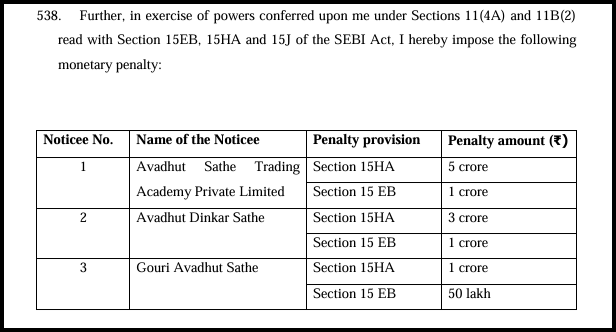
The officer imposed penalties under Section 15HA for fraudulent and unfair trade practices and Section 15EB for the advisory and research violations.
| Noticee | Section 15HA | Section 15EB |
|---|---|---|
| Avadhut Sathe Trading Academy Private Limited | ₹5 crore | ₹1 crore |
| Avadhut Dinkar Sathe | ₹3 crore | ₹1 crore |
| Gouri Avadhut Sathe | ₹1 crore | ₹50 lakh |
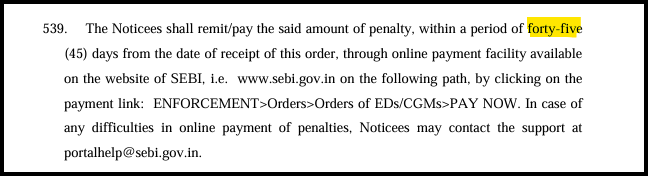
Penalties are payable within 45 days on the SEBI website. The path is ENFORCEMENT, Orders, Orders of EDs/CGMs, then PAY NOW.
In setting the amounts, the officer considered gain, investor loss, and repetition. He treated ₹546.17 crore as a quantified loss and noted that misleading promotion continued after the March 2024 warning.
What Investors Who Paid The Avadhut Sathe Trading Academy Should Do Now?
The order is the first step.
The actual refund process depends on the public notice and the dedicated account.
1. Watch For The Public Notice
The notice must appear within 30 days of the order. It will name a contact person and explain the claim process.
2. Keep Your Records
Gather payment receipts, enrolment confirmations, bank statements, and any messages from your batch.
3. Know Your Complaint Route
If you believe a refund is not being processed as directed, you can write to SEBI. Our guide on how to complain to SEBI walks through the steps.
4. Stay Alert To Similar Offers
Be careful with any course that mixes live trading calls with fees. Check the claims against exchange records before you enrol.
Can The Order Be Challenged?
The order says it is subject to judicial orders, as applicable.
The noticees have already approached the tribunal once. Its order of January 22, 2026 partly allowed the appeal on the impounding of proceeds, and our report on the SAT order on Avadhut Sathe explains how that played out.
Any further appeal would be a separate development. The directions operate immediately unless a court orders otherwise.
Conclusion
The Avadhut Sathe SEBI order puts the burden on the company and its founder, with a defined refund path. The case also shows the officer weighing evidence.
Some testimonial allegations failed, and one director was treated separately.
If you paid for these programmes, watch for the official public notice.
Keep your records ready.
Report. Recover. Stay Fraud Free.
SEBI directed a refund of ₹546.17 crore, with ₹67.87 crore interest to the investor fund. The company and Avadhut Sathe are jointly and severally liable. The company faces ₹5 crore and ₹1 crore. Avadhut Sathe faces ₹3 crore and ₹1 crore, and Gouri Sathe ₹1 crore and ₹50 lakh. No. The officer held her liability rests on neglect of oversight, and the refund was not directed against her. The company and Avadhut Sathe are barred for two years or until refunds are complete, whichever is later. Gouri Sathe is barred for six months. The noticees must publish a notice within 30 days naming a contact person. Refunds will go through electronic transfer from a dedicated account. The order is subject to judicial orders, as applicable. It is effective immediately unless a court directs otherwise.Frequently Asked Questions



 Add us as a preferred source on Google »