

Before paying any research analyst, one of the first questions investors should ask is whether the individual is actually registered with SEBI.
If you’ve come across Vivek Singh of TradeAlphaGuru through Telegram, WhatsApp, X, or a referral, verifying his regulatory status is a sensible first step.
In this guide, we’ll examine Vivek Singh SEBI registration, explain what that registration really means, review publicly available information about his services, and discuss what you can do if you face a dispute.
Who Is Vivek Singh?
Vivek Kr Singh runs TradeAlphaGuru, a research advisory based out of Lucknow, Uttar Pradesh.
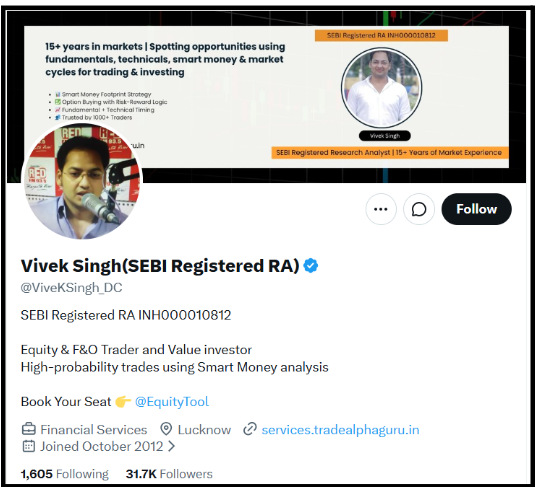
He operates as an individual SEBI-registered Research Analyst rather than through a larger advisory company.
His website offers equity and F&O research, model portfolio guidance, and educational webinars for retail traders.
He also operates a Telegram channel named Tradealphaguru along with WhatsApp consultations.
Knowing who operates the advisory is only the first step.
The more important question is whether the person is authorised to provide paid stock research under SEBI regulations. Let’s verify that next.
Is Vivek Singh SEBI Registered or Not?
Yes, Vivek Singh holds a valid SEBI registration as a Research Analyst. His registration number is INH000010812.

SEBI’s record lists this registration as perpetual, effective from November 10, 2022.
So, he does qualify to offer paid research calls under the law.
However, a registration number is only the starting point of due diligence.
A SEBI registration confirms one specific thing. It confirms that the individual has cleared SEBI’s eligibility checks to offer paid research services legally.
It says nothing about the quality of any single recommendation, and it can’t promise that a call will work out.
Many investors read “SEBI registered” as a safety stamp, but the registration only opens the door to operate, nothing more.
As SEBI itself states, registration granted by SEBI, BASL membership, or NISM certification does not guarantee the performance of a Research Analyst or assure returns to investors.
Understanding what a SEBI registration means is only one part of the verification process.
Many investors verify the SEBI registration but skip reading the disclosure document, complaint history, or marketing claims. They only start checking these details after facing a dispute.
Spending a few extra minutes on due diligence before making payment can often help avoid unnecessary complications later.
Also Read: Is One Nivesh SEBI registered, two dates, one registration number.
Is Vivek Singh Genuine?
Trust comes down to checking both the paperwork and the everyday conduct behind it.
1. Regulatory Disclosures and a Dedicated Page Against Impersonation
TradeAlphaGuru maintains its regulatory disclosures in line with SEBI requirements.
The website also carries a dedicated fraud awareness page, warning visitors about impersonators using the TradeAlphaGuru name to promise guaranteed returns.
Both measures demonstrate that the website includes regulatory disclosures and investor awareness information that prospective subscribers can review during their due diligence process.
2. No Independent Reviews or Records to Verify the 15-Year Experience Claim
The About Us page states that Vivek Singh brings over 15 years of market experience.
However, his SEBI registration only dates back to November 2022, and no independent review, credentials, or public record exist to support the longer claim.
Experience stated on a website alone carries no regulatory weight.
So, if you were thinking of taking a step forward only because of the experience claim, it is advisable to independently review the services offered, available client feedback, and regulatory disclosures before making any payment.
3. 123K Trusted Clients Mentioned, But Zero Complaints in Disclosure
The homepage displays a counter showing 123K trusted clients, yet the monthly disclosure consistently records zero complaints from any source.
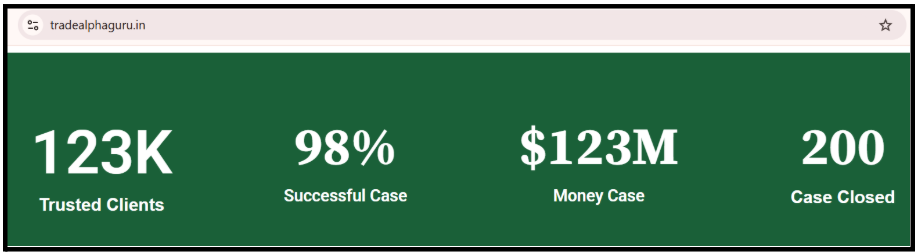
While a large client base may naturally lead investors to expect at least some customer grievances over time, complaint figures alone should not be treated as proof of service quality, whether positive or negative.
They are simply one factor to consider during due diligence.
Investors may wish to consider both the marketing claims and the published complaint disclosures together as part of their overall due diligence.
Here’s a quick look at the complaint numbers behind the above point:
| Year | Carried Forward from Previous Year | Received | Resolved | Pending |
| 2022-23 | 0 | 0 | 0 | 0 |
| 2023-24 | 0 | 0 | 0 | 0 |
| 2024-25 | 0 | 0 | 0 | 0 |
| 2025-26 | 0 | 0 | 0 | 0 |
| 0 | 0 | 0 | 0 |
The annual disposal table above covers every year since registration, from 2022-23 through 2025-26, and every column reads zero across the board.
The absence of reported complaints should not automatically be interpreted as proof of service quality.
Complaint disclosures represent only one aspect of due diligence and should be considered alongside regulatory filings, disclosures, pricing transparency, and independent user experiences.
What Can a Research Analyst Do?
Beyond reviewing disclosures and complaint records, investors should also understand what a SEBI-registered Research Analyst is legally permitted to do.
Knowing these boundaries can help you identify services that may fall outside the regulatory framework.
Under the SEBI (Research Analysts) Regulations, a registered Research Analyst may:
- Provide buy, sell, or hold recommendations that are supported by documented research and analysis.
- Publish research reports, market commentary, price targets, and model portfolios for clients.
- Offer research subscriptions and educational content related to securities and market analysis.
- Explain the rationale behind investment recommendations and disclose any material conflicts of interest where applicable.
However, a Research Analyst is not permitted to:
- Manage or operate a client’s trading or Demat account.
- Execute trades or make investment decisions on a client’s behalf.
- Promise fixed returns, guaranteed profits, or assured income under any subscription plan.
- Misrepresent risks or make claims that cannot be supported by proper research.
These regulatory boundaries apply to every SEBI-registered Research Analyst, irrespective of their experience, popularity, or client base.
How to File a Complaint Against a Research Analyst?
If you believe a research analyst has made misleading claims, failed to deliver the agreed service, or acted outside SEBI’s Research Analyst Regulations, there is a structured grievance mechanism available.
The process is broadly the same regardless of which registered research analyst you are dealing with.
Step 1: Put Your Concern in Writing First
Draft a clear message listing the promise made, the amount paid, and the loss faced. Send this directly to the analyst’s listed compliance contact.
Give the analyst a fair window to respond before you move ahead.
Step 2:File a Complaint in SCORES
Log your complaint on the SCORES portal with full details. Upload supporting documents like payment slips and message screenshots.
SCORES then forwards your case to the analyst and tracks the response time.
Step 3: Escalate through SMART ODR
Turn to SMART ODR if SCORES doesn’t bring a resolution. This route opens with a conciliation stage between you and the analyst.
Many disputes settle right here, without ever needing a formal hearing.
Step 4: Stock Market Arbitration
Escalate to arbitration on the same SMART ODR platform if conciliation fails.
File your Statement of Claim along with your evidence within the set deadline.
An independent arbitrator then reviews both sides and issues a binding decision.
Need Help?
Got a call from someone projecting any claim outside the research analyst regulations? Already paid for a plan and now feel unsure about your next move?
Our team has guided several investors through SCORES and SMART ODR cases just like this.
If you need assistance understanding the complaint process or preparing your documentation, you can register with us for guidance.
Conclusion
Asking “Is Vivek Singh SEBI registered?” should not be the end of decision-making for you.
Vivek Singh’s TradeAlphaGuru does hold a valid SEBI registration, but that number alone won’t shield you from every risk.
This blog walked through his registration status, his service plans, and a few inconsistencies worth a second look.
None of this confirms any wrongdoing on its own, yet together, these gaps call for a closer look before you commit any money.
So, question every claim, read the fine print fully, and turn to SCORES or SMART ODR the moment something feels off.
Taking a few extra minutes to verify registration, review disclosures, and understand the scope of SEBI regulations can help you make a more informed decision before paying for any research service.
Frequently Asked Questions
1. Can a SEBI-registered analyst promise to double your money?
No, no registered analyst can promise a fixed or doubled return under SEBI’s rules.
2. Should I trust a research analyst just based on their experience?
No, years of experience cannot be considered a measure of safety; do proper research on the advisory service before paying.
In the case of Vivek Singh, the SEBI registration itself only dates back to November 2022, with no independent record confirming the longer claims.
3. Is TradeAlphaGuru SEBI registered?
TradeAlphaGuru operates through Vivek Singh, who is a SEBI-registered Research Analyst.
Before subscribing to any paid service, investors should independently verify the registration details, read the disclosure document, and understand the nature of the services being offered.
4. Does SEBI registration guarantee profits?
No. A SEBI registration does not guarantee profits, successful stock recommendations, or protection against investment losses.
It simply means the Research Analyst has met SEBI’s regulatory requirements to provide research services.





 Add us as a preferred source on Google »

