
A first-time investor deposited ₹90,000 after being promised low brokerage and steady monthly returns. He followed every instruction. He watched the losses grow.
And when everything was gone, his broker handed him a brokerage bill of ₹95,879, bigger than his entire investment and asked for ₹30,000 more.
They thought they would get away with it. They did not. This is the full story of how he got ₹76,941 back in the A C Agarwal unauthorised trading recovery case.
A C Agarwal Unauthorised Trading
Behind every number in the A C Agarwal unauthorised trading recovery case was a deliberate choice made by the broker, not the market.
This was a broker that allegedly lured a client with illegal promises, executed trades without proper consent, charged brokerage exceeding the investor’s entire capital, and showed falsified figures to hide what was actually happening.
It started simply enough. A representative of A C Agarwal Share Brokers approached the investor with a simple pitch: open a demat account, enjoy low brokerage, earn assured monthly returns.
The investor trusted the promise and opened the account. Not one commitment was put in writing. No risk disclosure document.
The account opening itself was a compliance failure from the very first step.
Then the instructions began. Trades arrived as direct calls from the relationship manager: buy this, sell that, follow this instruction.
The investor followed, trusting professional guidance from a registered broker. Then the losses started appearing.
That is when the manipulation became visible. The investor checked the screenshots that had been shared. One SENSEX trade of 31 lots at 86500 strike showed a loss of approximately ₹4,800.
The official contract note for that same trade showed a loss of approximately ₹95,000. Same trade. Same date.
A difference of nearly ₹90,000 in reported loss. The figures had been manipulated to hide the actual losses.
By the time the full picture became clear, the entire ₹90,000 was gone.
The broker then pressured the investor to deposit ₹30,000 more, promising full recovery.
That deposit never happened. The investor came to us instead and that decision changed everything.
How Did the Investor Lose His ₹90,000?
Six violations. Each one is documented. Each one mapped to a specific SEBI regulation.
1. Assured Return Promise to Induce Account Opening
The relationship manager promised assured monthly returns to get the investor to open a demat account.
SEBI explicitly prohibits brokers from making assured return guarantees of any kind. The promise was illegal the moment it was made, written or verbal.
2. No Brokerage Disclosure, No Risk Document, No Derivative Consent
At account opening, not one mandatory document was provided to the investor. No tariff sheet or risk disclosure, and not even a derivative trading consent form.
These are not optional formalities; they are fundamental compliance requirements under SEBI regulations.
Skipping all three simultaneously is not an oversight.
The investor’s first trade was placed before they had any idea what they were agreeing to, what it would cost, or what risk they were carrying.
3. Contract Note vs Screenshot Manipulation
The same SENSEX trade: 31 lots at an 86,500 strike, produced two completely different loss figures.
The Relationship Manager sent the investor heavily manipulated screenshots via WhatsApp showing only a ₹4,800 loss.
However, the official exchange contract note for that identical trade revealed the true loss: ₹95,000.
The figures sent to the investor were intentionally altered to keep them unaware of the catastrophic losses occurring in their actual account.
4. Excessive and Undisclosed Brokerage
The investor received a verbal assurance of ₹20 per lot as the brokerage rate. What was actually charged was ₹95,879 in total brokerage against ₹90,000 in invested capital.
The brokerage bill exceeded the entire investment.
None of this was disclosed upfront despite a specific verbal commitment to the contrary.
5. Broker-Driven Trading Without Client Consent
Every single trade in this account was instruction-driven by the relationship manager.
The investor received calls directing what to trade and followed them, trusting professional guidance from a registered broker. The investor never made a single independent trading decision.
6. Fund Pressure After Complete Capital Wipeout
After the investor’s entire ₹90,000 was gone, the broker did not stop. Pressure mounted to deposit an additional ₹30,000 with false recovery assurances.
Targeting a client who has already lost everything and asking for more is predatory conduct by any measure.
This Is How We Recovered His Money
This A C Agarwal unauthorised trading recovery case arrived with a distressed investor, a manipulated contract note, and a broker offering no meaningful response.
We built it into a clean, precise, violation-mapped complaint and pushed it through every escalation level until the full amount came back.
Step 1: Building the Evidence
We identified the contract note versus screenshot discrepancy as the centrepiece of the case. Same trade. Same date.
A ₹90,000 difference in reported loss. We compiled brokerage statements, trade logs, WhatsApp call instructions from the RM, and all account opening communication showing zero written disclosures.
Every piece of evidence was verified and structured before a single word was filed.
Step 2: Formal Complaint with A C Agarwal Share Brokers
We filed a detailed, violation-wise complaint directly with A C Agarwal’s compliance department and senior management.
The complaint was precise, referenced, and supported by documentary evidence at every point. The broker did not provide an adequate response.
Step 3: Escalation to SEBI SCORES
With no resolution from the broker, we escalated to SEBI SCORES with the full documentation package.
Each violation was mapped to the corresponding SEBI circular and broker conduct regulation.
This created an official regulatory record and placed direct pressure on the broker to respond. SEBI SCORES did not resolve the matter, so we moved further.
Step 4: Escalation to SMART ODR, Where the Case Was Won
We escalated to SMART ODR, SEBI’s Online Dispute Resolution platform, where the A C Agarwal unauthorised trading recovery case was formally adjudicated.
Many investors are unaware that SMART ODR exists; it is one of the most powerful tools available for recovering money from brokers.
We represented the investor through every procedural step, every submission, and every hearing. The investor did not navigate any of it alone.
Step 5: Recovery Amount: ₹76,941 Returned
The matter was formally adjudicated in the investor’s favour through SMART ODR. A full ₹76,941 was recovered, representing 100% of the specific unauthorized trades and brokerage we formally claimed.
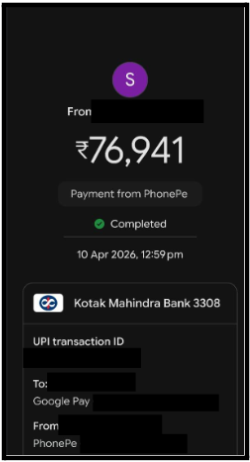
A broker that manipulated contract notes, wiped out an investor’s capital, charged brokerage exceeding the entire investment, and then demanded more was held fully accountable.
Lessons from the A C Agarwal Recovery Case
This case did not have to happen. The red flags were present from day one. Spotting them earlier could have saved the investor the entire capital.
These lessons exist so you do not face the same outcome.
Red Flags You Should Not Ignore
If any of these sound familiar, act before it is too late.
- Verbal promises of monthly returns: If it is not in writing, it does not exist. And if it is, it is unauthorized.
- No documents at account opening: Missing tariff sheet, risk disclosure, or derivative consent means the broker violated compliance before your first trade.
- RM placing trades on your behalf: A broker’s relationship manager cannot legally give personalised investment advice. Calls directing your trades are a violation.
- Screenshots that differ from contract notes: Cross-check what you are shown against your official contract notes. Every single time.
- Brokerage charges that feel disproportionate: Demand the tariff sheet in writing before placing a single trade.
- Pressure to deposit more after losses: A broker asking for more funds after wiping out your capital is not helping you recover. Document everything and stop immediately.
How to Report Against Unauthorised Trading?
If you suspect broker manipulation or unauthorised trading, act immediately. Every day of delay gives the other side more time to cover their tracks.
- Preserve All Evidence: Save screenshots, contract notes, call records, trade logs, and every message before anything disappears.
- File a Written Complaint with the Broker: Approach the compliance department formally with a clear record of submission.
- Register a Complaint in SCORES: File a detailed complaint with full supporting documentation through the SEBI investor grievance portal.
- Raise a Complaint with Smart ODR: If SEBI SCORES brings no resolution, SMART ODR is your most effective next step, formally adjudicated and legally binding.
- Arbitration in Share Market: If still unresolved, approach exchange arbitration for a binding decision based on evidence.
You do not have to navigate this alone; we have done it before, and we know exactly how it works. Register with us today.
We assess your full case, identify every applicable violation, and build a complaint that holds up at every escalation level, from the first broker complaint through to SMART ODR representation.
From the first broker complaint all the way to SMART ODR representation, we handle everything so you can focus on what matters.
If what happened to this investor sounds familiar, manipulated figures, RM-driven trades, brokerage charges that make no sense, tell us what you have.
We will tell you honestly whether your case can be built the same way this one was.”
₹90,000 Lost, ₹76,941 Recovered
A first-time investor. ₹90,000 in capital. A brokerage bill that exceeded the entire investment.
Contract notes that contradicted every screenshot shown throughout. And a broker that came back asking for more after wiping out everything completely.
The A C Agarwal unauthorised trading recovery case proves that broker manipulation, however layered, always leaves evidence.
With the right documentation, the right escalation path, and the right people in your corner, that evidence delivers results. ₹76,941 recovered. 100% of the claimed amount.
Frequently Asked Questions
1. My broker’s RM gave me trade instructions, and I followed them. Who is legally responsible here?
The broker can still be held responsible if trades were driven by RM instructions, especially where proper disclosures, documented consent, or independent client decision-making are missing.
2. My screenshot and contract note show completely different loss figures for the same trade; is that normal?
No. Major differences between screenshots and official contract notes for the same trade can indicate serious reporting issues and require immediate documentation and escalation.
3. I never received any documents at account opening; does that weaken my case?
Not necessarily. Missing tariff sheets, risk disclosures, or derivative consent documents can strengthen your complaint and point to compliance failures during account opening.
4. The broker wiped out my capital and then asked for more money to recover losses; is that actionable?
Yes, pressuring a client to deposit more funds after a complete capital wipeout is predatory conduct and a documented violation under SEBI’s investor protection framework.
5. SEBI SCORES gave me no resolution; is there anything left?
Yes, SMART ODR is a separate, legally binding adjudication platform, and it is exactly where this investor’s full ₹76,941 recovery was achieved.





 Add us as a preferred source on Google »

