
A trader deposited ₹15.20 lakh with IIFL Securities.
He never placed a single trade himself. Within one afternoon, 795 transactions swept through his account.
His ₹9.50 lakh credit balance nearly disappeared. Brokerage charges crossed ₹9.13 lakh.
He recovered every single rupee. ₹14,37,200. In full.
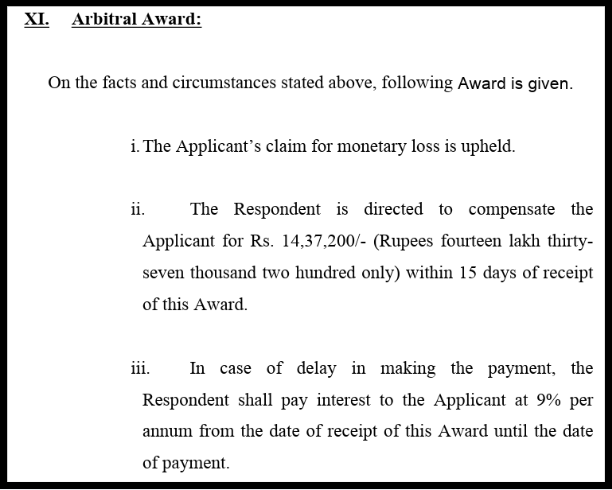
Below is the screenshot of the final arbitral award of full recovery.
This blog explains exactly what happened, what we proved, and how we got it back.
Account Handling by IIFL Securities
This was not a case of market volatility or a failed investment strategy. A broker’s team pushed a client into relentless trading through pressure and misleading promises, and charged him ₹9.13 lakh in brokerage while doing it.
The client opened a trading account with IIFL Securities in July 2024. Soon after, a representative named Vishnu began calling him repeatedly.
At first, the conversations focused on investment opportunities. Then, Vishnu promised guaranteed profit recovery and attractive returns. Eventually, those assurances convinced the client to invest.
Between July and September 2024, the client deposited ₹15.20 lakh. Naturally, he expected careful management of his funds. However, the trading activity told a different story.
Many investors dealing with such mismanagement often wonder, is account handling legal in India?
Legally, brokers are strictly prohibited from executing discretionary trades without explicit client consent for each transaction.
Yet, on one afternoon alone, the account recorded 795 transactions within just 66 seconds.
Consequently, the client’s ₹9.50 lakh credit balance nearly disappeared by the end of the day. Meanwhile, brokerage charges crossed ₹9.13 lakh.
The client never approved those trades. Moreover, audio recordings and WhatsApp chats captured promises of 25% to 80% monthly returns.
Later, the Authorised Person himself acknowledged the involvement of Vishnu and Vishal. He also confirmed their termination for misconduct.
The evidence revealed a disturbing pattern. Rather than follow a genuine investment strategy, the team pushed excessive trading through pressure and false assurances.
That is when we stepped in.
So What Actually Went Wrong in This Account?
This matter involved far more than aggressive trading. Instead, the evidence revealed a pattern of misleading conduct, excessive transactions, and broken regulatory obligations.
1. False Profit Recovery Assurances
Vishnu contacted the client repeatedly and promoted guaranteed profit recovery. Eventually, those assurances persuaded the client to open an account and invest.
Between July and September 2024, the client deposited ₹15.20 lakh based on these representations. However, the promised results never materialised.
Instead, the account moved toward substantial losses.
2. Responsibility Could Not Be Shifted Elsewhere
During the proceedings, the broker attempted to distance itself from the conduct of its representatives. However, the evidence told a different story.
In one recording, the Authorised Person confirmed the involvement of Vishnu and Vishal. He also acknowledged their later termination for misconduct.
3. Unauthorised and Excessive Trading Activity
The client consistently maintained that he never approved the trades executed in his account. More importantly, contract notes revealed 795 transactions within just 66 seconds on a single afternoon.
When unexpected trade volumes appear overnight, it points toward systemic IIFL Securities unauthorised trading where high-frequency transactions are pushed through without real-time client verification
No retail investor could reasonably monitor, review, or authorise such activity in real time.
Consequently, the Tribunal rejected any suggestion that the trading reflected normal client instructions.
4. Massive Brokerage Generation at the Client’s Expense
While the account suffered losses, brokerage charges continued to rise. In fact, the broker collected more than ₹9.13 lakh in brokerage alone.
That amount represented nearly 63% of the client’s total loss of ₹14.37 lakh.
Therefore, the trading activity generated substantial revenue for the broker while eroding the client’s capital.
5. Misleading Return Promises
The evidence included audio recordings and WhatsApp conversations. Those records showed broker representatives promoting returns ranging from 25% to 80% per month.
Naturally, such assurances created unrealistic expectations.
Moreover, the Tribunal treated those promises as part of the strategy used to induce trading activity.
6. Psychological Pressure and Misrepresentation
The Tribunal examined the overall conduct of the representatives carefully. Rather than provide objective investment guidance, they relied on pressure tactics and misleading statements.
As a result, the client continued investing funds despite mounting risks and losses.
This Is How We Helped Him Recover ₹14.37 Lakh
This matter reached us after the client suffered substantial trading losses and received no meaningful resolution.
Meanwhile, the broker continued to deny responsibility.
We transformed a complex fact pattern into a structured, evidence-backed claim.
Then, we pursued every available remedy until the client secured full recovery.
Step 1: Case Review and Regulatory Analysis
First, we examined contract notes, account records, WhatsApp chats, and audio recordings. Next, we identified every regulatory breach and linked each issue to applicable broker obligations.
As a result, the case rested on clear facts rather than broad allegations.
Step 2: Preparing the Evidence Record
We organised proof of unauthorised trading, excessive brokerage charges, and misleading return promises.
In addition, we compiled recordings that connected the representatives directly to the misconduct.
Every document supported a specific claim. Consequently, the evidence presented a complete picture.
Step 3: Establishing Broker Responsibility
The broker attempted to distance itself from the conduct of its representatives. However, we highlighted the role of the Authorised Person and the relationship with IIFL Securities.
We also demonstrated that the brokerage generated through the trades ultimately benefited the Trading Member.
Step 4: Challenging the Trading Activity
We focused heavily on the transaction pattern. The contract notes revealed 795 trades within only 66 seconds.
No retail investor could reasonably monitor, approve, or execute such activity. Therefore, the trading records themselves became critical evidence.
Step 5: Presenting the Full Case Before the Tribunal
We relied on documentary evidence, trading data, WhatsApp conversations, and audio recordings.
Additionally, we highlighted promises of guaranteed profit recovery and returns of 25% to 80% per month.
Together, these materials exposed the pressure tactics and misleading representations used against the client.
Step 6: Full Recovery Secured
Ultimately, the Tribunal accepted the client’s case and held IIFL Securities accountable. As a result, the award directed payment of ₹14,37,200, covering the entire trading loss.
Moreover, the Tribunal granted only 15 days for payment. Any delay would attract 9% annual interest. The outcome was complete.
The client recovered 100% of his trading loss, and the claim succeeded in full.
Lessons from the IIFL Securities Recovery Case
This dispute did not begin differently from many others. However, it concluded with a complete recovery for the client.
Most investors facing similar IIFL Securities account handling, unauthorized trading, and misleading broker conduct never recover their losses.
When analysing past IIFL Securities arbitration cases, it becomes clear that many claims fail simply because investors lack evidence, guidance, or a clear recovery strategy.
That is precisely why this case matters. More importantly, these lessons can help protect your investments.
Warning Signs You Should Never Overlook
Pay attention to these indicators before small concerns turn into substantial losses.
- Repeated calls promising guaranteed recovery: No genuine market participant can guarantee profits or recover losses with certainty.
- Assured monthly return commitments: If someone promises 25% to 80% monthly returns, treat it as an immediate warning sign.
- Excessive trading activity: Review your contract notes regularly. Hundreds of trades within minutes deserve immediate scrutiny.
- Transactions you never approved: Question every unfamiliar trade. Always raise concerns as soon as they appear.
- Pressure to invest additional funds: Be cautious when representatives repeatedly encourage larger deposits through aggressive persuasion.
- High brokerage charges with poor outcomes: Monitor fees closely. Excessive brokerage often signals unnecessary trading activity.
- Verbal assurances without documentation: Demand written communication for every important promise, recommendation, or commitment.
- Explanations that do not match account activity: Verify every claim against your contract notes, statements, and trading records.
Stay vigilant. Most importantly, preserve messages, recordings, and account documents. When we represented the client, that evidence played a crucial role in securing the full ₹14.37 lakh recovery.
Did You Experience Something Similar?
If a broker’s representative pushed trades without your approval or lured you with unrealistic return promises, act quickly. Most importantly, preserve evidence before it disappears.
The longer you wait, the harder your case becomes. Meanwhile, crucial records and communications may become difficult to track.
Here are the steps you should take immediately to report a stock broker:
- Gather all records: Save contract notes, account statements, call recordings, WhatsApp chats, emails, and trading reports.
- Raise a formal complaint: Submit a written complaint to the broker and clearly document every grievance.
- NSE Complaint against broker: If the internal broker complaint fails, you can formally lodge a complaint in NSE through the exchange’s investor grievance portal (NSE NICE Plus) to escalate the issue officially.
- Report in SCORES: File a detailed complaint and attach all supporting material available.
- Register a Complaint in SMART ODR: Escalate the dispute through the online resolution platform for structured proceedings.
- Share Market arbitration: If the matter remains unresolved, seek a binding decision through exchange arbitration.
If what happened to this client sounds familiar: excessive trades you never approved, promised returns that never materialised, brokerage charges that ate your capital, your case deserves the same structured approach that secured ₹14.37 lakh here.
We review the facts, build the evidence record, and take it all the way through arbitration if that’s what it takes.
Tell us what happened. We’ll tell you honestly what recovery looks like for your situation. Register with us now & we’ll get back to you within 24 hours.
In this case, our team helped the client establish that excessive trades, misleading assurances, and broker misconduct caused the losses.
Ultimately, the Tribunal ordered recovery of the full ₹14,37,200 loss.
Therefore, do not assume the broker’s version is final. Strong evidence can make all the difference. Reach out to us today for an honest assessment of your case before taking the next step.
We Got Full Recovery of ₹14.37 lakh. It Is Possible.
A client lost ₹14.37 lakh after broker representatives used misleading assurances and excessive trading activity. However, strong evidence changed the outcome.
We presented the contract notes, recordings, and WhatsApp conversations before the Tribunal. Consequently, the Tribunal held IIFL Securities responsible and awarded recovery of the entire ₹14,37,200 loss.
So, if the evidence existed. The process worked. If your situation involves the same patterns, the same outcome is possible.
Frequently Asked Questions
1. Can I file a complaint against IIFL Securities if the misconduct was done by a representative or sub-broker, not by IIFL directly?
Yes. This case confirms it. A Trading Member is legally responsible for the actions of its Authorised Persons and representatives.
If you are compiling evidence to back up your formal IIFL Securities complaints, remember that a broker cannot distance themselves from their employees.
Even if a sub-broker or relationship manager committed the misconduct, you can file a valid claim directly against IIFL Securities.
2. IIFL says I authorised the trades through my account opening form. Is that true?
No. Signing account opening documents does not mean you have approved individual transactions.
SEBI requires specific, verifiable authorisation for each trade. In this case, multiple transactions had no such authorisation, and the Tribunal agreed.
3. The trades in my account happened very fast and in large volumes. Can that itself be used as evidence?
Yes. It was the centrepiece of this case. Multiple transactions without approval proved that no retail investor could have monitored or approved those trades in real time.
Unusual transaction volumes and speeds are directly usable as evidence in arbitration.
4. IIFL Securities has not responded to my complaint. What should I do?
Escalate immediately to SEBI SCORES. Create an official regulatory record with all your documentation attached.
If SCORES does not produce resolution, move to SMART ODR and then formal arbitration through NSE or BSE.





 Add us as a preferred source on Google »

