

Unauthorised trades in your IIFL Securities account? You’re not alone, and you don’t have to accept the loss. We’ve helped investors recover lakhs through NSE arbitration against IIFL Securities.
Here’s what happened in three real cases.
IIFL Securities Arbitrations & Violations
Before we get into the cases, here’s something important to understand. NSE arbitration is not a consumer forum post. It is a structured, quasi-legal process.
An investor files a formal complaint. The broker responds. A neutral arbitrator hears both sides. Then a binding award is passed.
This process matters. Not because it is easy; it is not. But because it works. And these cases show exactly that.
Case 1: How a Novice Investor Lost ₹14 Lakh to IIFL’s ‘Guaranteed’ F&O Tips & Won It Back
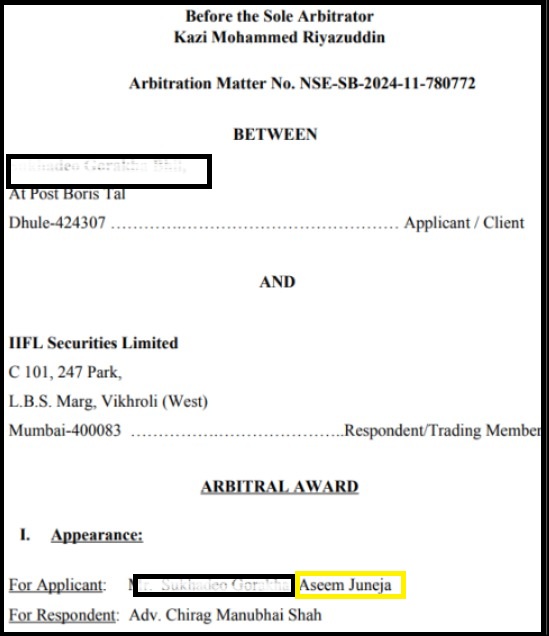
Sukhadeo Gorakha Bhil opened a trading account with IIFL Securities after repeated calls from broker representatives.
They allegedly promised high returns and encouraged him to trade aggressively.
He had no meaningful knowledge of Futures & Options. Over two months, heavy trading activity swept through his account, trades he says he never clearly approved. Losses reached ₹14,37,200. He brought the case to NSE arbitration.
Key Violations
1. Unauthorised Trade Execution
The investor alleged that trades were executed in his account without explicit approval.
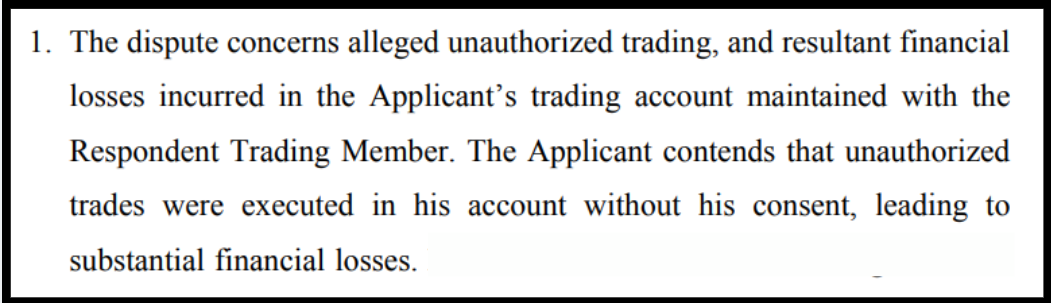
During the proceedings, the Tribunal noted that IIFL Securities failed to produce any recording or evidence showing that the client had authorised such high-frequency trades.
The trading activity was found to be excessive and beyond the investor’s own trading capability or understanding.
2. Misleading Profit Assurances
The Tribunal examined WhatsApp chats and audio recordings submitted by the investor.
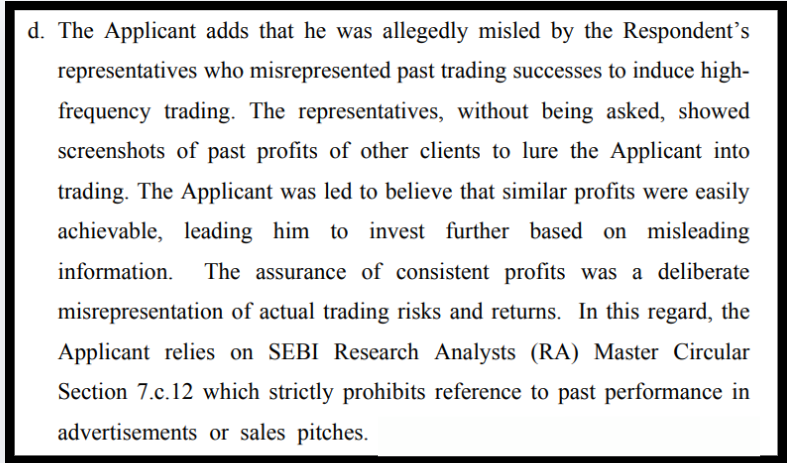
According to the findings, representatives allegedly promised unrealistic returns ranging from 25%–40% in one month and even higher returns later.
The investor was repeatedly reassured that losses were temporary and profits were “guaranteed” in future trades.
3. Excessive Trading for Brokerage Generation
The arbitration order observed unusually high trading activity in the account.
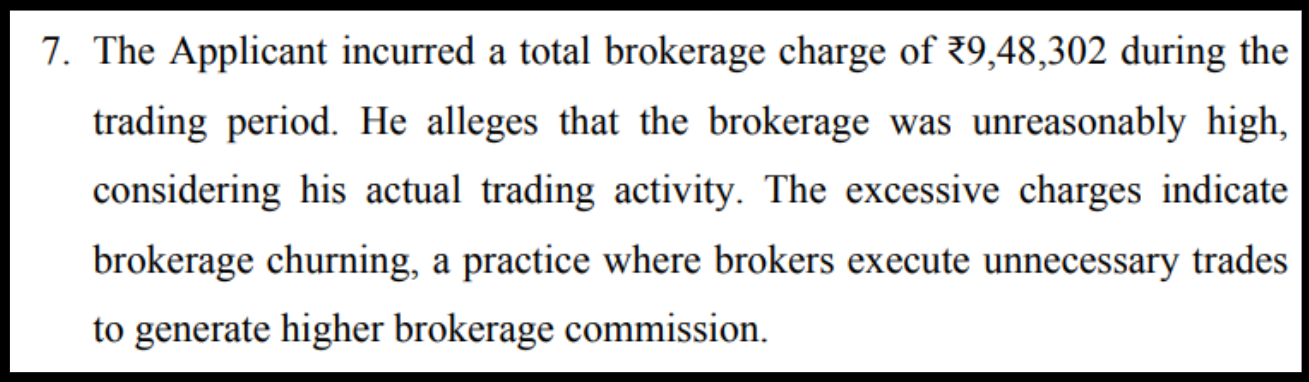
The Tribunal concluded that the pattern appeared designed to generate abnormal brokerage commissions rather than serve the investor’s interests.
The trades were described as operating at a speed and complexity beyond what the investor could reasonably monitor himself.
4. High-Pressure Sales Tactics
The investor claimed he was constantly pushed to deposit more funds through repeated phone calls and WhatsApp messages.
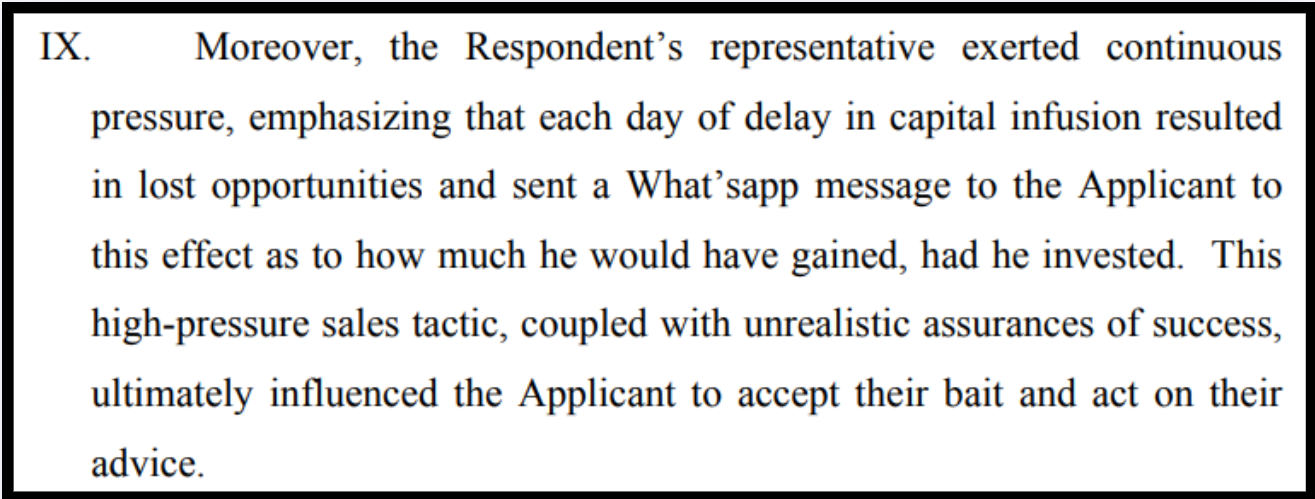
The Tribunal found that representatives used fear-of-missing-out (FOMO) tactics and psychological pressure to encourage repeated capital infusion, even after substantial losses had already occurred.
5. Failure of Supervision by the Broker
The broker attempted to shift responsibility to its authorised persons and their employees. However, the Tribunal held that the trading member remained responsible for the conduct of its representatives acting under its platform and authority.
The arbitration order specifically stated that regulatory obligations require brokers to supervise authorised persons properly and protect investor interests.
Final Award
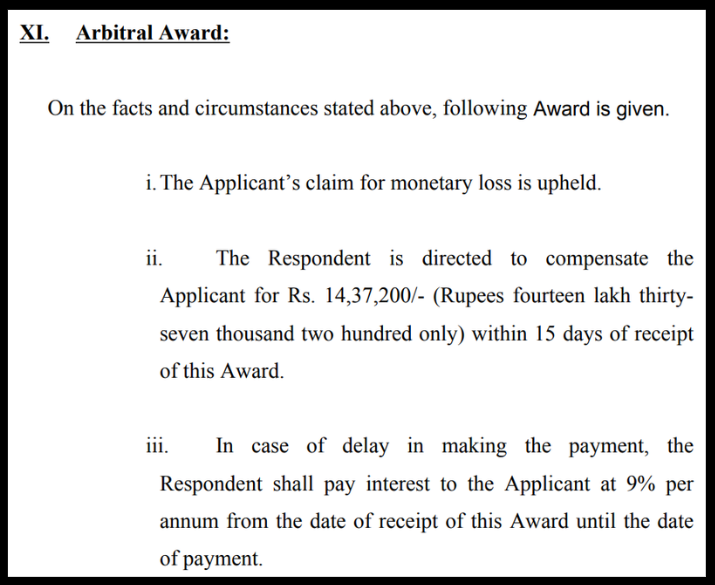
After reviewing the evidence, including audio recordings, WhatsApp chats, and trading data, the Tribunal ruled in favour of the investor.
The arbitrator concluded that the investor had been subjected to unauthorised trading, misleading representations, excessive transactions, and pressure tactics, resulting in significant financial loss.
IIFL Securities was directed to compensate the investor ₹14,37,200 within 15 days of the award. The order also stated that delay in payment would attract 9% annual interest.
Case 2: IIFL Kept Trading While Losses Mounted: An Investor Finally Said Enough
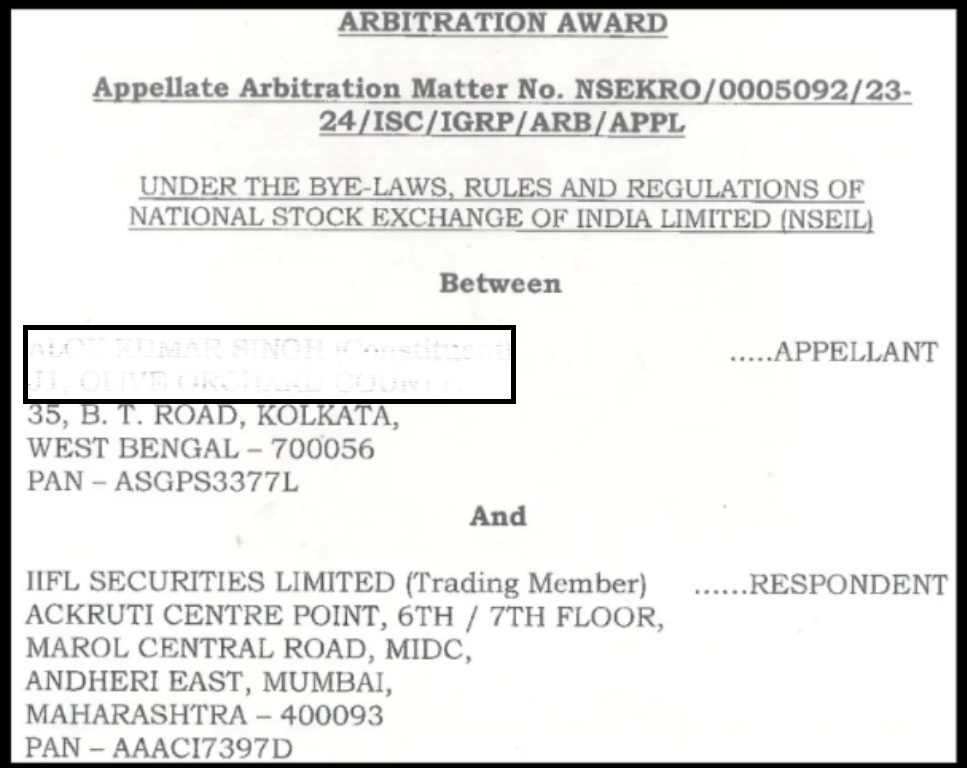
Alok Kumar Singh traded through IIFL Securities as a retail investor. Over time, the account showed large trading activity and rising debit balances.
However, the investor claimed he never properly authorised many of those trades. Instead, he relied heavily on the broker’s representatives while trading.
Additionally, he alleged that IIFL Securities never clearly explained MTF, trading risks, or account exposure. As disputes increased, the matter eventually reached NSE Appellate Arbitration.
Key Violations:
1. Inadequate Oversight of Client Account
The Tribunal observed that IIFL Securities failed to maintain proper oversight over the investor’s account despite continuous debit balances and rising risk exposure.
The broker allowed trades to continue even while losses kept increasing.
2. Lack of Proper Clarity on Margin Trading Facility (MTF)
The investor argued that he had never clearly opted for MTF. Although the Tribunal noted that consolidated agreements may legally include MTF activation, it also stated that the broker failed to properly explain the implications, risks, and consequences of margin trading to the client.
3. Incomplete Records and Communication Issues
The investor alleged that IIFL Securities did not provide complete SMS logs, email records, and ECN details during the proceedings.
The broker later claimed that some records were initially missing due to technical issues. The Tribunal noted lapses on the broker’s side regarding proper documentation and communication.
4. Failure to Supervise Relationship Managers Properly
The investor claimed that broker representatives handled trades and influenced account activity.
The Tribunal noted the investor’s reliance on representatives, but held IIFL Securities responsible for failing to supervise those representatives properly. The accountability sat with the broker
Final Award
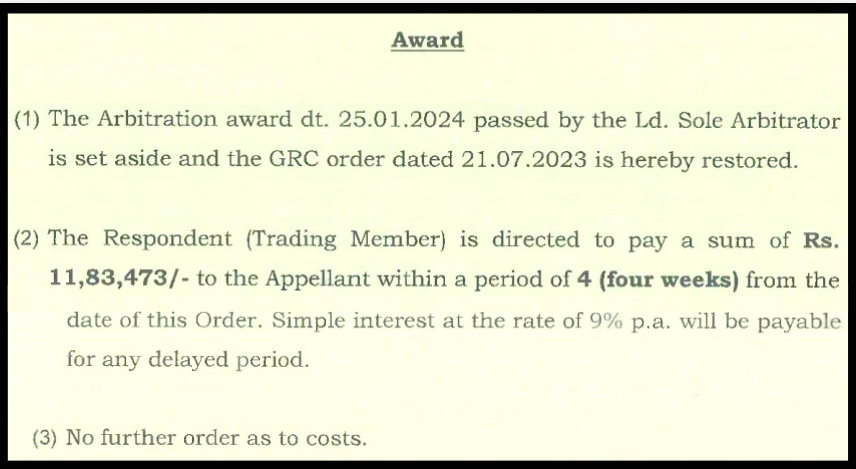
The Appellate Arbitration Tribunal examined the evidence and held IIFL Securities responsible for multiple lapses in handling the client’s account. The Tribunal observed deficiencies in supervision, communication, and overall account management practices.
Based on the findings, the award was passed in favour of the investor. IIFL Securities was directed to pay ₹11,83,473 to the applicant within 4 weeks of the award date.
How to Register a Complaint Against IIFL Securities?
IIFL Securities is a SEBI-registered stockbroker. That means it is fully accountable to the exchange and the regulator. You have clear, accessible channels to raise and escalate your complaint.
Here is the step-by-step process to file a complaint against unauthorised trading:
Step 1: Raise it directly with IIFL Securities
Step 2: Lodge a Complaint with SCORES
If IIFL does not resolve your complaint within 15 working days, file on SEBI SCORES. This is the regulator’s official complaints portal.
Use your Client ID and broker name, and attach your trade records and complaint trail.
Step 3: Register a Complaint with SMART ODR
The SMART ODR platform is a SEBI-mandated online dispute resolution system. It combines conciliation and online arbitration.
After you file, the platform aims to provide a resolution update within 21 calendar days. This step is especially useful if your SCORES complaint doesn’t move.
Step 4: Share Market Arbitration
If your issue remains unresolved and involves financial loss, you can opt for Exchange Arbitration. This is a quasi-legal process at the NSE where a neutral arbitrator hears your case and passes a binding award.
There are no exchange fees for investors registering complaints. For arbitration where the claim is below ₹10 lakhs, the cost is significantly lower than court proceedings.
Need Help?
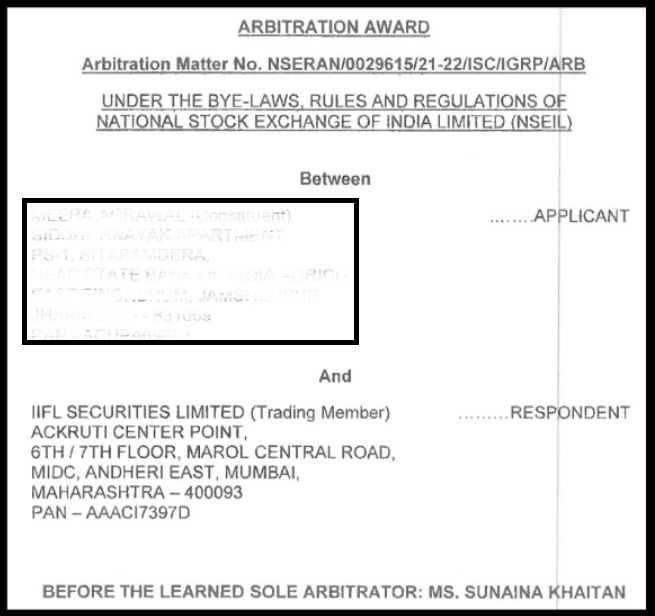
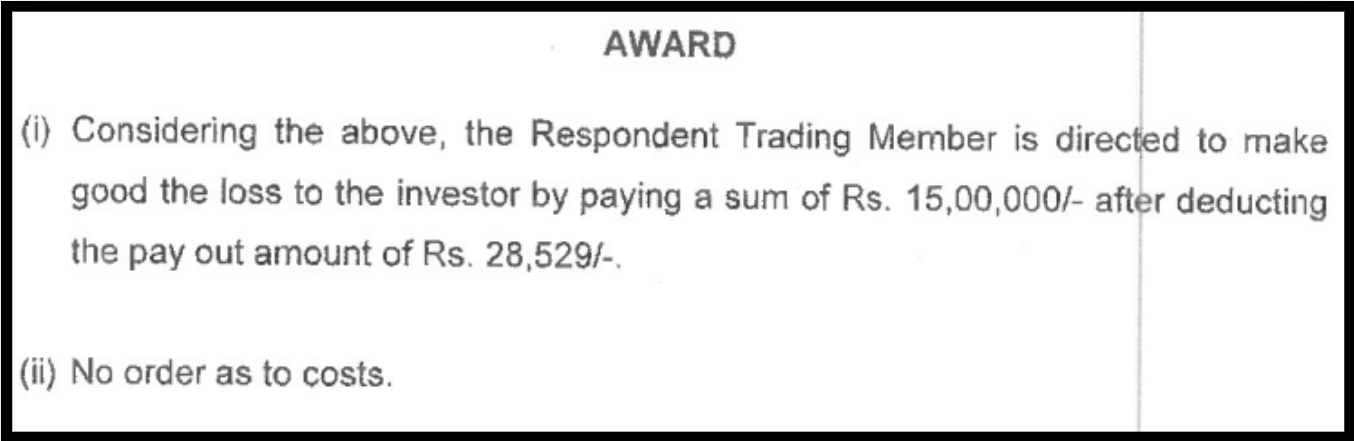
₹14,37,200. ₹11,83,473. ₹15,00,000. These weren’t won because the violations were obvious; they were won because every piece of evidence was organised, every violation was mapped to a specific regulation, and every escalation step was handled correctly.
That is exactly what we do.
If IIFL Securities traded your account without consent, pushed you into trades you didn’t understand, or can’t explain where your money went, tell us what happened. We’ll assess your case and tell you honestly what recovery looks like.
Register with us now and get a response within 24 hours.
Conclusion
The three arbitration cases covered in this blog show a consistent pattern of IIFL Securities unauthorised trading, poor grievance handling, lack of proper communication, and fund management failures that retail investors should understand clearly before engaging with any broker.
In each case, investors who chose to fight through the formal process received recognition.
That is what NSE arbitration exists for. Not every investor needs to go that far. But every investor should know that the option exists, and that it works.
The most important thing you can do as a trader is stay informed, keep records, and act quickly when something feels wrong. Your broker is accountable to the exchange and to SEBI. And that accountability is not just on paper.
So, if IIFL Securities has caused you financial loss, don’t wait. The sooner you act, the stronger your case. Register with us today and let our team assess your situation for free.
Frequently Asked Questions
1. IIFL says I authorised the trades through my account opening documents. Is that true?
No. Account opening documents don’t authorise individual transactions. As Case 1 shows, the broker must produce specific evidence, call recordings, written instructions, or messages, proving you approved each trade before it was executed.
If they can’t, that absence is your evidence.
2. I never logged into my IIFL account, but trades appeared. What should I do?
This is exactly what happened in Case 3. Immediately request the IP address records for every disputed trade; SEBI requires brokers to maintain these.
If IIFL cannot produce them, that failure itself becomes a central part of your arbitration case.
3. My IIFL relationship manager gave me trade instructions over WhatsApp. Is that usable as evidence?
Yes, and in Case 1 it was decisive. Screenshot every conversation immediately and back it up in multiple locations. WhatsApp chats, audio recordings, and call logs were all accepted as evidence in the cases above.
4. IIFL is blaming its authorised person for the misconduct. Does that affect my case against IIFL?
No. As the Tribunal confirmed in Case 1, the Trading Member remains responsible for the conduct of authorised persons operating under its platform.
You file against IIFL Securities directly, regardless of which representative was involved.
5. How much does NSE arbitration cost for an investor?
For claims below ₹10 lakh, there is no exchange fee for investors. For larger claims, fees are significantly lower than in civil litigation.
The process is designed to be accessible to retail investors; you don’t need a lawyer to file, though professional support significantly improves case presentation.





 Add us as a preferred source on Google »

