
Quick Summary
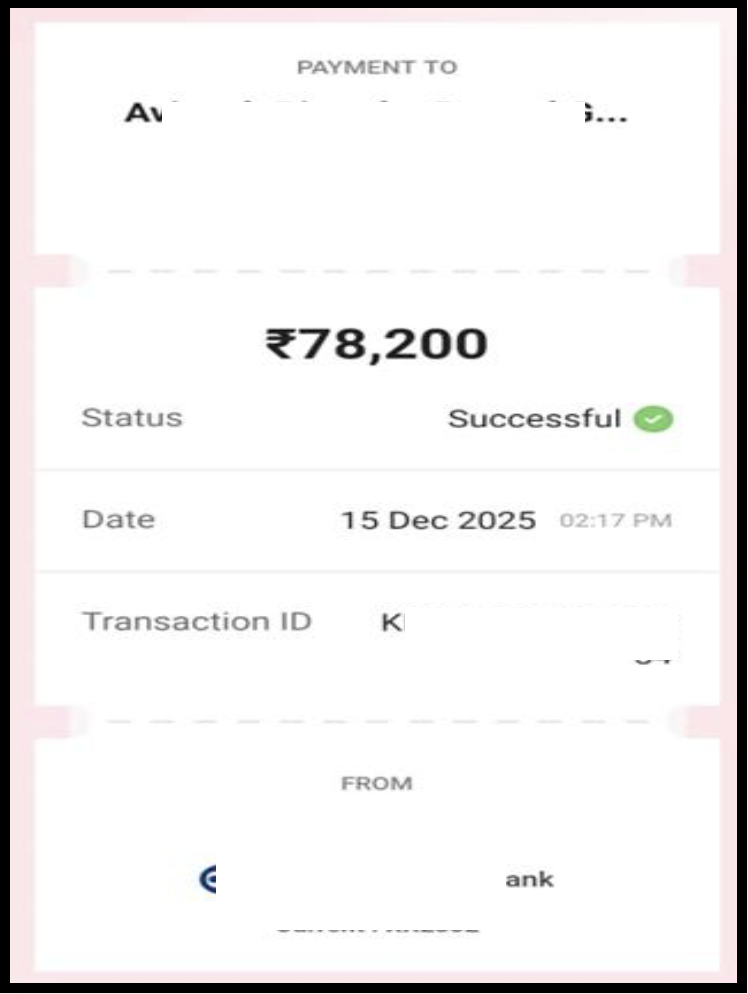
Sometimes the complaint is not bad advice. It is no advice at all. One client paid a research analyst 88,500 for premium research. He received nothing. No reports, no market analysis, no calls. Then the number went quiet. He recovered 78,200. This is a cleaner case than most. You do not have to argue the advice was wrong. You only have to show you paid and received nothing in return. Non-delivery cases recover well because the failure is simple and documented. This page shows what these cases recovered and how to build one.
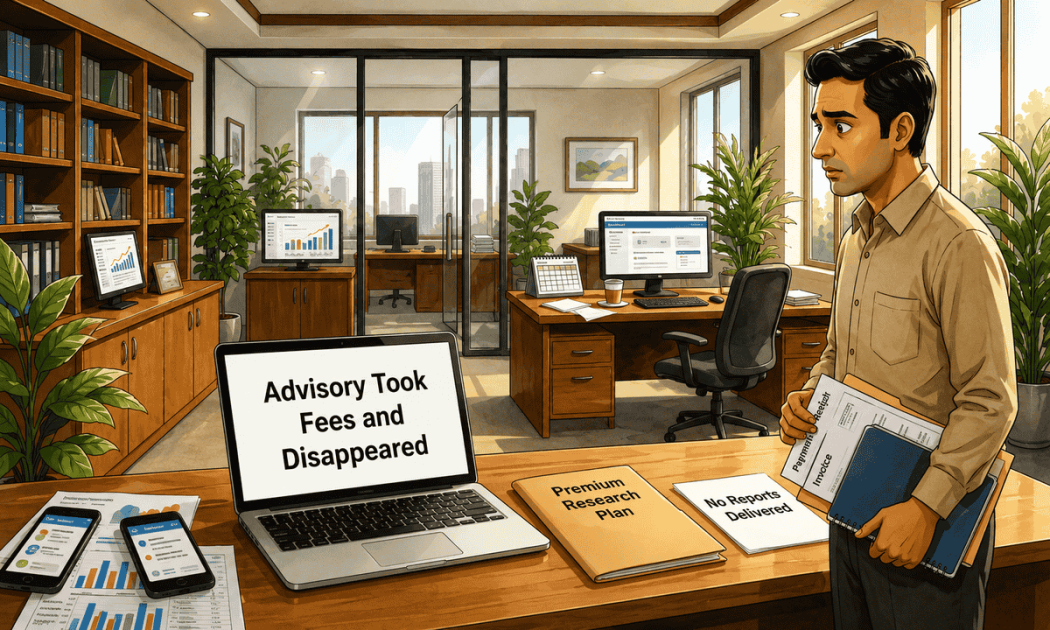
An advisory took fees and disappeared. That is a different complaint from losing money on bad trades.
Most recovery cases argue about the quality of advice, asking: Was the tip unsuitable? Was the risk disclosed?
A non-delivery case skips all of that because you paid for a service that never came.
In one settled file, a client paid 88,500 for premium research services. He got no reports, no updates, and no answers to his messages. The firm stopped responding once the money cleared.
Despite this, he still managed to recover ₹78,200. Here is why these cases are strong and what they returned.
Advisory Took Fees and Disappeared: Why Non-Delivery Is Easy to Prove
A non-delivery claim rests on two facts:
- You paid.
- You received nothing.
Both are documented. The payment sits in your bank record, and the silence sits in your chat history. You do not need to prove the advice was bad, because there was no advice.
Compare that to an ordinary advisory complaint. There, you argue the trades were unsuitable, or the risk was hidden. The firm argues back that markets move and losses happen. That argument takes time and evidence.
A non-delivery case removes the argument. The firm charged for a service and did not provide it. That is a plain failure, and plain failures settle faster.
In the case above, the client requested the research he had paid for. He got no response. The absence of any delivered service is itself the evidence. It is written into the gap in his messages.
Paid for Advisory Got No Service: What Three Cases Recovered
Three files in this set turned on non-delivery, and all three recovered a meaningful share.
| What was paid for | Fees | Recovered | Share of claim |
|---|---|---|---|
| Premium research, nothing delivered | 88,500 | 78,200 | 71.1% |
| Advisory service, team vanished | 0 fees, loss only | 1,10,000 | 68.8% |
| Algo plan, then silence | 70,000 | 23,600 | 100% of fees |
Three cases cannot promise you a number, but the pattern is clear: When a firm takes money and delivers nothing, the fee portion tends to come back.
The reason connects to a rule that runs through every recovery case. Fees are documented and easy to argue back. Trading losses are harder. A non-delivery case is almost entirely fees, which is why it recovers the way it does.
The stock advisory refund breakdown works through that fee-to-loss split in detail.
Paid a firm that took your money and went silent?
We document the payment, the missing service, and the silence. Then we build the complaint around a simple failure to deliver.
Register with us for a free consultation.
The Non-Delivery Pattern: What It Looks Like From the Inside
The non-delivery case follows a shape, and the shape is worth knowing.
- The firm sells hard before payment, answering every call and following up until you agree to pay.
- After payment, the effort stops, and the same urgency disappears almost overnight.
- The reports do not arrive, or they arrive far less often than you were promised.
- The promised guidance does not come, leaving you without the support that convinced you to sign up.
- Messages get slower, then stop, until your calls and reminders no longer receive a response.
In one file, the client paid for premium research. He received no reports, no market analysis, and no updates. Calls and messages went unanswered. The service existed only in the sales pitch.
These tells separate non-delivery from ordinary bad advice:
- You paid for a defined service, such as research reports or a subscription plan
- Little or none of that defined service arrived
- Your requests for what you paid for went unanswered
- Communication dropped off sharply once the money was received
If most of these fit your situation, your complaint is about non-delivery, not about advice quality. That is a simpler and often stronger claim.
Advisory Took Fees and Disappeared: The Records That Prove It
Two records carry a non-delivery case, and you already hold both.
1. Your payment records come first: Bank statements, UPI records, and any invoice. These establish what you paid and when. In these files, the fees often arrived in parts, and every part counts.
2. Your chat history comes second: This is where the silence lives. The requests for the promised service. The unanswered messages. The point where responses stopped.
3. A few more items strengthen the file:
- Any plan description or package name the firm sold you
- Screenshots of what was promised at the point of sale
- The dates of your requests and the dates responses stopped
Once these are together, a SEBI SCORES complaint opens the registered route where the firm holds a registration. SMART ODR follows where the grievance does not resolve.
Gather the chat history now. Numbers go dead, and accounts vanish, and the silence you need to show can become harder to reach.
When the Firm Was Never Registered
Some non-delivery cases involve a firm that was never registered at all.
Even then, the route shifts slightly, but the case does not weaken. A firm charging for advice without registration was never permitted to charge you in the first place. On top of that, non-delivery becomes a second failure.
If your firm turns out to be unregistered, the complaint runs a different path, and the advisor not SEBI registered breakdown covers what changes and what these cases recovered.
Conclusion
Not every recovery case is an argument about advice. Instead, some are far simpler.
You paid for a service. The service never arrived. The firm went quiet. That is a documented failure, and it does not depend on proving a tip was wrong, or a risk was hidden.
The three cases here recovered 71.1%, 68.8%, and the full fee amount. Each turned on the same plain fact. Money went out, nothing came back, and the records show it.
Pull your payment records and your chat history. The proof of non-delivery is already sitting in the gap where the service should have been.
Report. Recover. Stay Fraud Free.
Frequently Asked Questions
Yes. Non-delivery is one of the cleaner recovery cases. You paid, and the service did not arrive. Both facts are documented in your bank record and your chat history, which is why these cases tend to settle.
The silence is central. Your unanswered messages, with their dates, show the point where delivery stopped. That gap in your chat history is evidence, not just frustration.
No, and that is the strength of it. A non-delivery claim is about a service that never came, not about the quality of one that did. You skip the argument over whether a trade was suitable.
Often it is the strongest document you hold. The UPI record proves the payment and the date. Many of these firms never issue invoices, and that absence is itself a failure they must answer for.
The route changes but the case holds. An unregistered firm was never allowed to charge you, and non-delivery adds a second failure on top. Confirm the registration status on sebi.gov.in before you file.





 Add us as a preferred source on Google »

