

Quick Summary
Ashish Pandey served as Company Secretary of Fourth Dimension Solutions Ltd. (FDSL) and CFO during FY 2017-18. FDSL was both a vendor and customer of Ricoh India, which was itself under SEBI investigation for suspicious accounting practices. When SEBI’s forensic auditor requested invoices, purchase orders, digital accounting data, and other records from Pandey, he allegedly failed to comply despite multiple formal reminders. SEBI imposed a ₹5 lakh penalty under Section 15A(a) of the SEBI Act for this non-cooperation. This page covers the full case, and the general process for reporting non-cooperation or misconduct to SEBI, whether the individual involved is registered with SEBI or not.
Have you ever seen a company fight to keep its own records hidden from the very regulator investigating it?
That’s exactly what Ashish Pandey’s story is: a real, documented case of what happens when someone in the corporate world refuses to hand over evidence SEBI is legally entitled to.
This page covers exactly what SEBI found, what Pandey was accused of, and what it means for ordinary investors watching whether the companies they trust actually cooperate when scrutiny comes calling.
Who Is Ashish Pandey?
Before we jump into the SEBI orders, let’s clarify who Ashish Pandey is. He wasn’t a “market influencer” type but a corporate officer tied to the Ricoh probe.
He served as the Company Secretary of Fourth Dimension Solutions Ltd. (FDSL), and also acted as CFO during FY 2017-18.
That job title matters more than it sounds.
FDSL was both a vendor and a customer of Ricoh India. So when SEBI started digging into Ricoh’s books, FDSL naturally came under the microscope too.
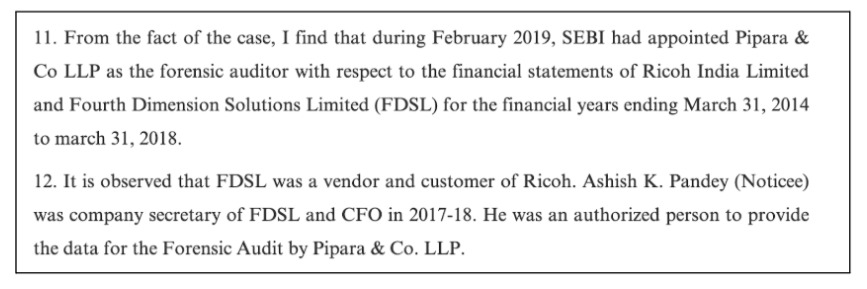
SEBI’s forensic auditor (Pipara & Co. LLP) needed records. And Pandey was treated as an authorised person to provide data and documents for that audit.
Ashish Pandey SEBI Order
To understand the SEBI orders, you first need the context of the broader case: the investigation into Ricoh India Ltd.
Ricoh India was undergoing a deep probe by SEBI into possible accounting problems and suspicious transactions between Ricoh and certain related parties.
SEBI’s investigation included examining transactions, invoices, sales entries, and even forensic audits spanning multiple years.
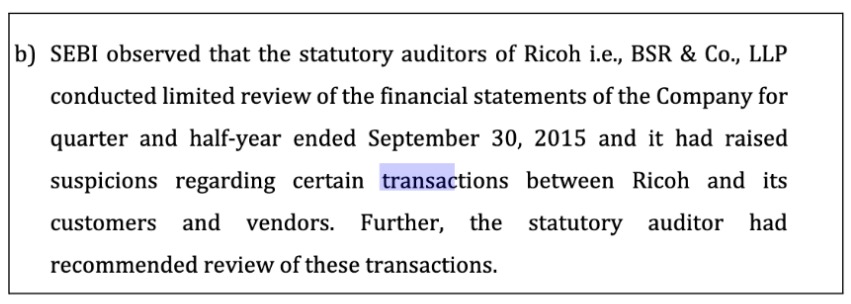
In this context, Ashish Pandey came into SEBI’s focus because he was the Company Secretary of FDSL, a company that was both a vendor and a customer of Ricoh, and he was also the CFO of FDSL during part of the period when SEBI investigated.
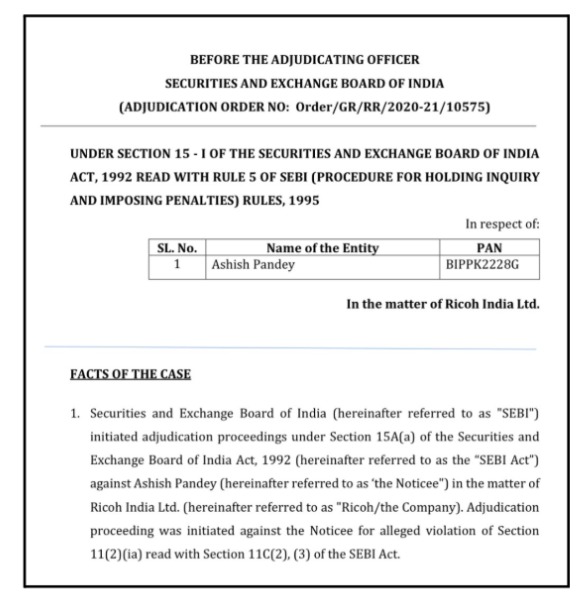
So Ashish Pandey was not some random outsider. He occupied a key corporate position in a company deeply tied to the Ricoh matter.
What SEBI Actually Alleged Against Him?
SEBI appointed a forensic audit firm (Pipara & Co. LLP) to analyze the books of both Ricoh India Ltd. and FDSL for a multi-year period, because earlier probes and auditor flags suggested suspicious accounting practices.
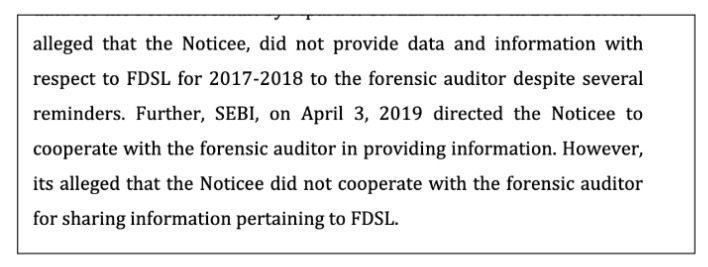
As part of that process, SEBI officially asked Ashish Pandey, in his capacity as an FDSL officer, to provide the following.
- Invoices and financial details.
- Delivery challans and purchase orders.
- Purchase and sales documentation.
- Digital accounting data, like files from Tally.
- Bank account details of directors and key persons.
- Shareholding and company documents relevant to the audit.
SEBI even issued multiple reminders and formally directed him to cooperate with the forensic audit.
But the allegation was that he failed to hand over the materials, despite those reminders and statutory obligations. SEBI said this refusal hampered the investigation.
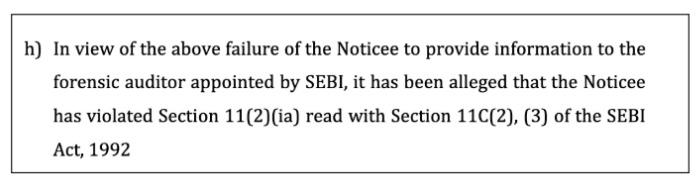
Under the SEBI Act, officers and insiders must preserve and produce relevant books and records when asked by a regulator. Failure to do so is a violation of Sections 11(2)(ia), 11C(2), and 11C(3) of the SEBI Act.
The Penalty SEBI Imposed
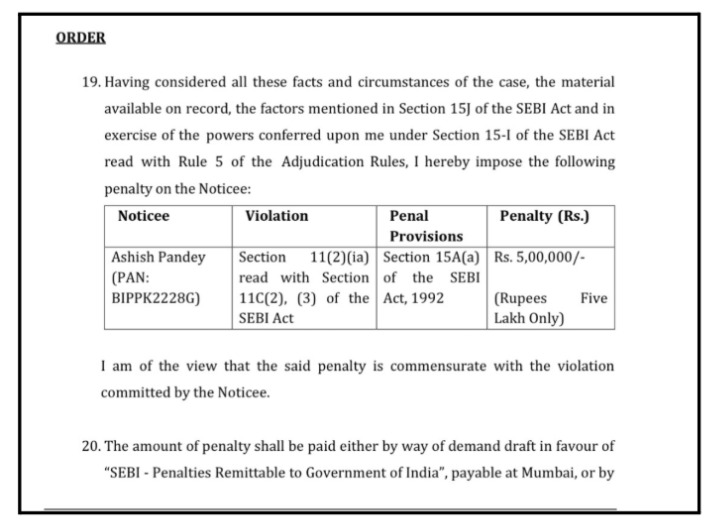
Based on this, a monetary penalty was imposed under Section 15A(a) of the SEBI Act.
Ashish was advised to pay a penalty amount of Rs. 5 lakhs within 45 days; otherwise, recovery proceedings were ordered to follow.
So SEBI made an example of him, both to ensure compliance and to signal that withholding information in an investigation won’t be tolerated.
What This Case Teaches Investors?
Ashish Pandey’s story isn’t really about one company or one penalty. It’s about what happens the moment cooperation with a regulator breaks down, and why that moment matters more than most investors realise.
A few real lessons worth taking from it.
- Corporate investigations are serious. Investigators don’t just look at stock prices; they look at real accounting, real transactions, and real supporting evidence.
- Regulators need cooperation. If an insider refuses to share records, it creates a gap in the investigation that could hide material misrepresentation.
- Investors should value transparency. When a company’s books or its officers resist scrutiny, it raises real red flags about governance.
Ashish Pandey’s case is a reminder that markets thrive on trust backed by facts. When facts are withheld, investors are the ones left in the dark.
How to Report Misconduct to SEBI?
If you’re dealing with a situation involving withheld information, non-cooperation with a regulator, or misconduct by someone connected to a listed company or a market intermediary, the right reporting path depends on one specific factor: whether the individual or entity is currently registered with SEBI.
If the Individual or Entity Is SEBI Registered
- Start by documenting everything you have. Save any correspondence, records, or evidence relevant to your concern, and note specific dates and details.
- File a formal complaint through the SEBI SCORES portal, SEBI’s official online complaint platform, citing the entity’s registration number and attaching your documentation.
- If SCORES doesn’t resolve the matter, escalate through SMART ODR login, SEBI’s structured online mediation platform.
- If mediation also fails, arbitration in share market is the final, binding step, producing a legally enforceable decision.
If the Individual or Entity Is Not SEBI Registered
Whether the person or firm was never SEBI registered to begin with, or their registration has since been cancelled or suspended, the standard investor grievance channels built around active, registered intermediaries won’t apply here.
Two real options exist instead, depending on what actually happened.
- Write directly to SEBI. Even without a formal registration involved, SEBI accepts written complaints via email for matters that fall within its regulatory scope.
- File through the cyber crime portal instead, if the concern involves fraud or financial deception rather than a straightforward compliance issue. This is India’s national reporting system for complaints against unregistered or unidentified parties.
Keep every document, screenshot, and piece of correspondence you have before filing, regardless of which route applies.
A complaint built on organised, dated evidence carries significantly more weight than one without it.
Have questions about how to report a case involving withheld information or non-cooperation with a regulator?
We help you organise your documentation, identify the correct filing channel for your specific situation, and prepare a complaint that’s ready to submit.
Conclusion
Ashish Pandey was penalised by SEBI not because he made a trading mistake or failed to disclose a shareholding. He was punished for refusing to cooperate with a forensic audit conducted by SEBI into Ricoh India Ltd.
That lack of cooperation, especially in an investigation full of suspicious transactions, hit right at the heart of market integrity.
If anything, this story should make you more aware, not just of what investments you make, but how well the companies you invest in respond to scrutiny when regulators ask tough questions.
Report. Recover. Stay Fraud Free.
Frequently Asked Questions
For failing to provide records requested during a forensic audit into Ricoh India, despite multiple formal reminders from SEBI to cooperate.
₹5 lakh, imposed under Section 15A(a) of the SEBI Act, with recovery proceedings to follow if the amount went unpaid within 45 days.
Invoices, purchase orders, delivery challans, digital accounting data, bank account details of directors, and shareholding documents relevant to the audit.





 Add us as a preferred source on Google »

