

Have you ever followed a stock tip on Telegram and later questioned whether the source was trustworthy?
The dilsetrader7 Telegram channel has gained attention among many retail traders in India. However, not everyone checks whether such channels follow regulatory norms before acting on trade calls.
Late at night, traders often scroll through Telegram channels searching for quick opportunities. An admin posts entry levels, targets, and stop losses.
Then, phrases like “sure shot” create urgency and excitement. As a result, many traders place trades instantly.
Meanwhile, Telegram-based stock market channels continue growing rapidly across India. Some share educational and research-oriented content.
Others, however, raise concerns that traders should examine carefully before risking money.
One widely searched channel is Dil Se Trader, operated by Gokul Chhabra.
Therefore, in this blog, we’ll examine who runs the channel, the type of content shared, and the possible SEBI-related concerns linked to such posts.
Dilsetrader7 Telegram Channel Review
Gokul Chhabra is a SEBI-registered Research Analyst operating under license number INH000014827, based in Saharanpur, Uttar Pradesh.
He runs the brand “Dil Se Trader” and describes himself as an intraday trader, investor, and mentor with over five years of experience in equity, Nifty, and Banknifty options.
His digital presence spans multiple platforms. RA Gokul Chhabra runs the Telegram channel @dilsetrader7 with over 84,900 subscribers, a mobile app called “Dil Se Trader Pro” available on Google Play, a website at dilsetrader.in, and a YouTube channel.
The @dilsetrader7 channel operates as a free Telegram channel that feeds into paid premium groups and app subscriptions.
This is a common funnel model in India’s advisory space. The free channel builds an audience, and the paid tier is where the real money flows.

The Dil Se Trader Pro app on Google Play describes its service as providing live index option signals for NIFTY, BANKNIFTY, and FINNIFTY, with defined entry, exit, stop-loss, and target zones.
It also includes BTST and swing trade recommendations and educational content.
The app’s official Google Play listing does carry a disclaimer: “No guaranteed returns. All insights are research-based recommendations provided as per SEBI Research Analyst guidelines.”
That disclaimer, however, sits in sharp contrast with certain communications that have appeared in the channel’s groups.
The following sections break down each type of content and the regulatory concern each one raises.
Violations By Dilsetrader7 Telegram Channel
Several posts shared on the Dilsetrader7 Telegram channel display communication patterns that deserve careful attention.
Certain claims, promotional styles, and trading-related statements may raise important regulatory and investor protection concerns under SEBI guidelines.
Category 1: Showing Only Winning Trades and Selective Profit Performance
Every single trade in the table shows a positive result. There are no stop-loss hits. There are no loss-making trades visible. No mention of trades that did not work out.
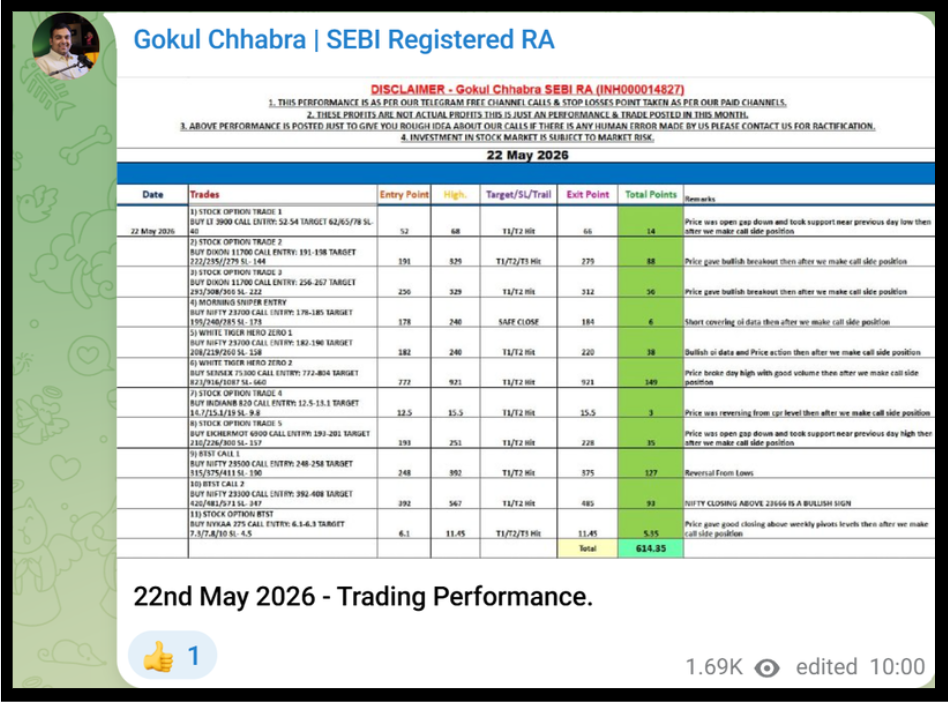
Under SEBI’s Research Analyst Regulations, advisors must present performance in a balanced and complete manner.
Selectively showcasing only winning days or profitable calls, without disclosing overall performance, losing trades, or stop-loss hits, creates a distorted picture of actual accuracy.
A trader looking at this table has no way of knowing the real success rate or total capital risk involved. SEBI explicitly requires that research reports and performance disclosures not mislead investors about the analyst’s track record.
Category 2: Guaranteed Returns in Exchange for Deposits
This kind of communication is a direct and serious violation of SEBI norms.
A SEBI-registered Research Analyst is expressly prohibited from promising or guaranteeing returns of any kind, soliciting deposits in exchange for profit-sharing, or representing that a fixed amount of money will be returned within a set timeframe.
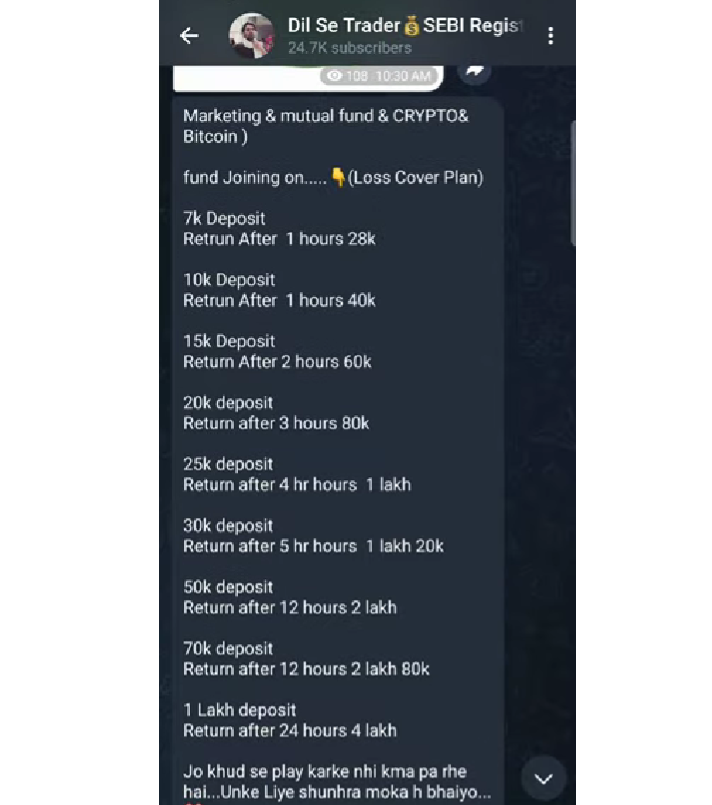
Promising “₹15,000 in 2 hours becomes ₹60,000” is not research. It is a guaranteed profit claim, and we must ask ourselves: can telegram trading channels promise safe returns?
It is a guaranteed profit claim. No registered Research Analyst can legally make such claims under the SEBI (Research Analysts) Regulations, 2014.
This type of communication, regardless of who circulates it, falls entirely outside the permitted scope of RA activity.
Category 3: Pressure-Selling Tactics to Push Premium Groups
SEBI’s Code of Conduct for Research Analysts requires that all recommendations be based on independent research, not sales incentives.
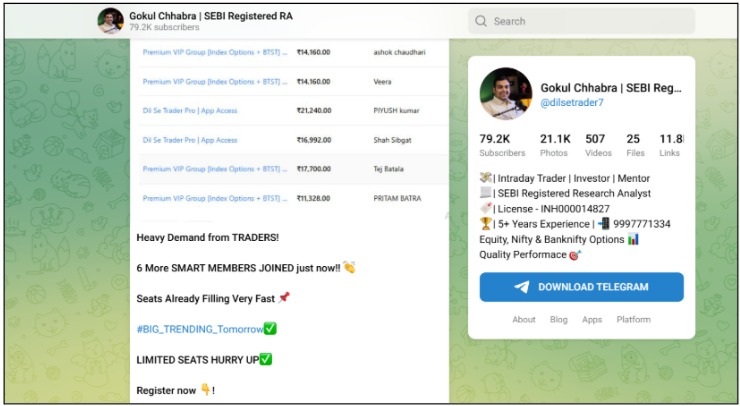
Using manufactured urgency, showing payment receipts as social proof, and creating artificial scarcity to rush subscribers into paid conversions is ethically problematic under SEBI norms.
SEBI regulations require that subscribers be given adequate time to evaluate any advisory service before committing.
Pressure-based selling that bypasses this evaluation window contradicts the spirit of fair dealing mandated by the Code of Conduct.
Category 4: Showcasing Only Profitable Past Calls
Using cherry-picked successful trades as promotional material, without showing the full track record including losses, is a form of misleading representation.
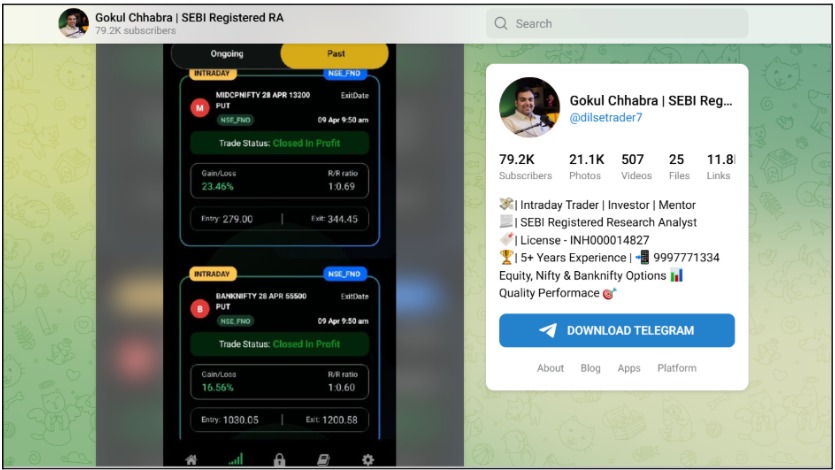
SEBI’s fair presentation requirements apply to all research communications, including promotional screenshots.
Consistently highlighting winners while losses receive no visibility distorts subscriber perception of actual accuracy rates and overall risk.
Category 5: Broker Connect for Auto Trading
Under SEBI’s framework for algorithmic trading (updated with new regulations effective April 2026), offering an AI scalping bot or automated trading system to third-party users requires specific registration and empanelment with exchanges.

SEBI has banned open APIs for uncontrolled third-party platforms.
Any “black box” algorithmic strategy offered to retail users requires the provider to hold a SEBI Research Analyst license and comply with additional compliance requirements, including maintaining documented research reports on the algorithm’s logic.
Encouraging subscribers to “connect their broker” for automated execution through a third-party setup, without the proper exchange empanelment and compliance framework in place, raises serious questions under the new algo trading regulations.
Also Read: Eqwires Research Analyst Telegram, covering another firm’s Telegram presence and plans.
What SEBI Does Not Allow Telegram Channels to Do?
Now that we have looked at the specific content patterns, it helps to understand the broader regulatory picture.
SEBI has built a clear framework around what Telegram channels, registered or otherwise, cannot do when operating in the Indian securities market.
Telegram channels operating in the investment advisory space are prohibited from:
- Promising or guaranteeing fixed monetary returns in exchange for deposits.
- Showing only profitable trades while hiding stop-loss hits and losses.
- Using urgency and artificial scarcity to pressure subscribers into paid plans.
- Operating AI scalping bots or auto-trading systems for retail clients without proper exchange empanelment.
- Circulating deposit-and-return schemes, regardless of how they are framed.
- Soliciting broker credential connections through unverified, non-empanelled third-party systems.
- Using social proof (payment receipts, membership counts) as sales pressure tools instead of research-based recommendations.
A SEBI registration number does not give a Research Analyst unlimited freedom. It comes with a code of conduct, and every communication, including Telegram posts, must comply with it.
What Should You Do If You Face Issues Following This Channel?
If you have been facing issues following the dilsetrader7 Telegram channel, or any similar channel, it is important to take immediate action and report the matter through the proper channels.
Here are the steps you can follow:
Step 1: Collect All Evidence
First, gather every relevant document carefully. Save payment receipts, subscription records, screenshots of trade calls, chat messages, and promotional material.
Also, preserve any written promises or return-related claims.
Step 2: Draft a Proper Complaint
Next, prepare a clear and structured complaint. Mention dates, payments, promises made, losses faced, and the exact issue.
Use factual language and avoid emotional accusations or unnecessary details.
Step 3: Register the Complaint With the Company First
Before approaching regulators, raise the issue directly with the company or advisor. Send your complaint through email or official support channels.
Also, keep records of every response or acknowledgment received.
Step 4: File a Complaint with SCORES
If you do not receive a satisfactory response, file a complaint on SEBI’s SCORES portal. Attach supporting evidence and explain the issue factually.
Most importantly, avoid emotional or exaggerated statements.
Step 5: Lodge a Complaint with SMART ODR
If the matter remains unresolved, escalate it through SEBI’s SMART ODR platform.
This system handles disputes through online conciliation and structured resolution processes before court action becomes necessary.
Step 6: Stock Market Arbitration
Finally, consider formal arbitration through the relevant stock exchange mechanism if the dispute continues.
Additionally, seek independent legal guidance if the financial loss is substantial.
Start documenting everything early. A properly organised case always carries more strength.
Need Help?
You do not have to navigate this alone.
If you or someone you know has lost money following trade calls from a Telegram channel, or has been part of a deposit-and-return scheme, reach out with your evidence.
Save screenshots of all calls and messages, payment receipts, UPI transaction records, and a brief account of what happened.
Filing a complaint against a Research Analyst while managing your own finances is genuinely difficult. The regulatory process works best when you use the right platforms, document correctly, and act within required timelines.
Register with us with your evidence. That is the first and most important step.
Conclusion
India’s retail trading boom has led to a rapid rise in Telegram channels, advisory platforms, and trading mentors promising quick profits and effortless wealth.
While some channels genuinely focus on investor education, others raise concerns through selective profit screenshots, guaranteed return claims, aggressive sales tactics, and promotions that may not fully align with SEBI regulations.
The Dilsetrader7 Telegram channel, operated by SEBI-registered Research Analyst Gokul Chhabra, does hold a valid SEBI registration.
However, investors should understand that registration alone does not automatically validate every claim, communication, or promotional practice used on a channel.
Before following any trading channel or paying for stock market guidance, investors should think carefully about whether the platform is transparent about losses as well as profits, whether the claims being made sound realistic, and whether pressure or urgency is being used to influence decisions.
Successful investing is built on patience, discipline, and independent research, not blind trust in Telegram trading channels.





 Add us as a preferred source on Google »