

If you’ve been exploring discount or regional broking options and came across Econo Broking Private Limited, based out of Bhavnagar, Gujarat, this blog is for you.
They operate as a SEBI-registered stockbroker with a listing on the Bombay Stock Exchange, which gives them the legal standing to facilitate equity trades for retail clients.
Before you open an account or transfer funds, it’s worth knowing what the public record says, and what existing users have shared about their experience.
This blog brings together available registration details, regulatory information, and user-reported experiences to help you make a more informed decision.
Econo Broking Private Limited Review
Econo Broking Private Limited is a SEBI-registered stock broker active since August 2021.
Based in Bhavnagar, Gujarat, it is a registered member of the National Stock Exchange (NSE), BSE, and Multi-Commodity Exchange (MCX) for capital markets, derivatives, and commodities.
Key details:
- Full Legal Name: Econo Broking Private Limited
- Trade Name: Econo Broking Private Limited
- SEBI Registration Number: INZ000301331
- Registration Type: Stock Broker
- Exchange Association: Bombay Stock Exchange (BSE)
- Registration Validity: August 23, 2021 – Perpetual (subject to regulatory compliance)
- Registered Office Address:
Plot No. 2137 A, Near Golden Arc Complex,
Atabhai Chowk, Bhavnagar, Gujarat - Contact Details:
Email: [email protected] - Website: https://econobroking.com/

Econo Broking SEBI Registration & Regulatory Standing
Econo Broking Private Limited holds an active SEBI stockbroker registration (INZ000301331) with effect from August 23, 2021, and carries perpetual validity.
This means the firm is currently authorised to operate as a stockbroker on the BSE platform.
No SEBI orders, penalties, show-cause notices, or disciplinary actions were available in the materials provided for this blog. As of the time of writing, no formal regulatory action could be confirmed from the documents at hand.
That said, a clean regulatory record is a baseline, not a comprehensive indicator of service quality.
It means the firm has not been the subject of formal SEBI action; it does not speak to the day-to-day conduct of agents, the quality of client servicing, or how disputes with individual clients are handled.
For a more complete picture, that’s where user reviews become relevant.
Also Read: ATS Broking complaints, capital shrinking while brokerage kept climbing.
Econo Broking User Complaints
The Google reviews available for Econo Broking paint a consistent picture across multiple users, and the themes that emerge are worth understanding clearly.
1. Account Suspension Without Notice
One reviewer describes how their trading account was suspended without any prior warning or communication from the firm.
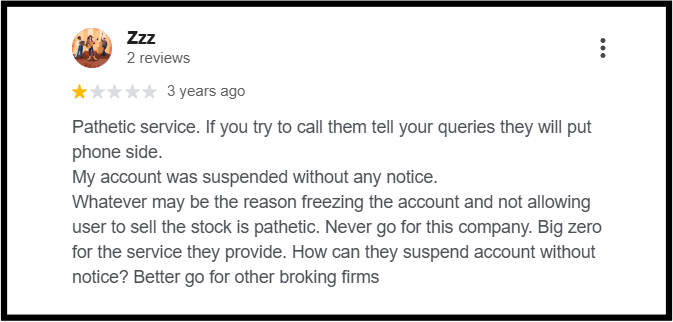
What made the situation worse, they note, was that during this period they were unable to sell their existing stock holdings, leaving them exposed to market risk with no recourse.
When they attempted to call the firm for clarification, the call was reportedly dismissed without resolution.
The reviewer gave the firm a 1-star rating and specifically called out the impact of account suspension on their ability to trade their own holdings as unacceptable.
This kind of experience, where a client cannot exit a position because of an administrative action, is a serious operational concern that prospective clients should ask about upfront.
2. Agent Conduct and Losses
Another client writing with significant frustration describes a pattern where the broker’s agent was allegedly more focused on generating brokerage than on the client’s investment outcomes.
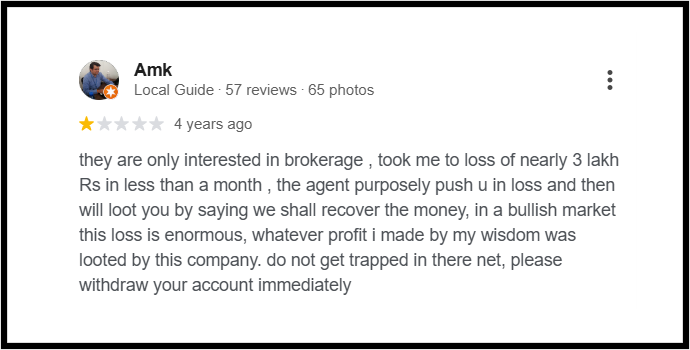
The reviewer reports losses of close to ₹3 lakh in under a month in a broadly bullish market, and states that the profits they independently made were absorbed by brokerage charges and losses driven by agent-suggested trades.
They go on to describe a situation where the agent allegedly promised to “recover the money” after the losses, a framing that raises questions about the nature of the advice being provided.
The reviewer urged others to withdraw from the firm immediately.
It is important to note: these are user-reported experiences. They have not been adjudicated by any authority, and this blog does not draw any legal conclusions from them.
They are presented here as a part of the public record that prospective clients deserve to be aware of.
3. Unresponsive Communication After Payment
In another case, the reviewer reports that a substantial amount of money was paid to the firm, after which their calls went unanswered.
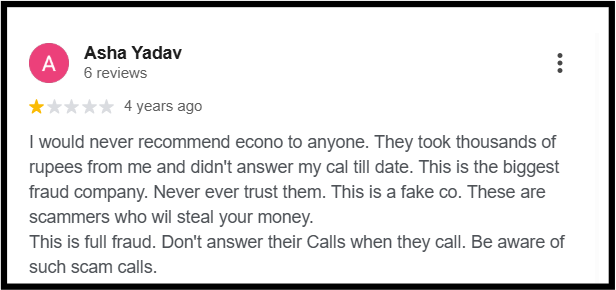
The reviewer states that to date, at the time of writing their review, their calls had not been returned. They gave the firm 1 star and warned other potential clients not to trust the company.
What does the pattern suggest?
Across all three reviews, a few recurring themes stand out:
- Communication breakdown: Multiple users describe an inability to reach the firm or get responses after issues arose
- Account actions without notice: At least one user experienced a sudden account suspension with no prior warning
- Concern about agent-driven losses: One reviewer specifically flagged what they perceived as brokerage-focused advice that resulted in significant personal losses. This frequently leaves retail investors questioning reality vs. regulations, specifically: can brokers advise you based on your available funds? Understanding these boundaries is critical before acting on any agent’s verbal suggestions.
These are user experiences shared on a public platform, not findings of any regulatory body.
Also Read: complain against Acumen Capital Market, the exact SEBI order reference cited in full.
What Investors Should Keep in Mind?
Before opening an account with any stockbroker, whether Econo Broking or any other firm.
Here are some practical checks every retail investor should make:
- Verify the SEBI registration independently: Never rely only on what the firm tells you. Go to the website and use the intermediary search to verify the registration number (INZ000301331 in this case), the name, and the current status. This takes under two minutes and removes any ambiguity.
- Understand what you’re authorising before you sign: The account opening documents you sign with a stockbroker can include a power of attorney (POA) that gives the broker certain permissions over your demat holdings. Know exactly what you’re authorising and ask for plain-language explanations of anything you don’t understand.
- Track brokerage charges actively: High-frequency trading driven by an agent’s suggestions can generate significant brokerage even when your portfolio is losing money. Ask upfront for the exact brokerage structure, flat fee vs. percentage-based, and track it against your trade history regularly.
- Be cautious of promises to “recover losses”: A SEBI-registered broker or their agents are not permitted to guarantee returns or promise to recover losses. If any agent makes this kind of commitment verbally, it is a red flag. Never accept such assurances without written confirmation.
- Registration is not an endorsement. SEBI registration means the broker has met regulatory eligibility criteria. It does not mean SEBI has evaluated, approved, or vouches for the quality of service, agent conduct, or client outcomes. Treat registration as a minimum requirement, not a mark of quality.
Also Read: Aaritya Broking complaints, delayed payments, four cases, none of them dismissible.
How Do I Complain About a Stock Broker?
If you’ve already had a bad experience with Econo Broking or need to initiate a formal complaint against stock broker entities, here’s how to act on it, step by step.
Step 1: Raise the Issue with the Broker First
Start by contacting the company directly:
- Use official email IDs
- Clearly describe your issue
- Attach supporting documents
Keep everything documented. This step is required before escalation.
Step 2: File a Complaint in SCORES
If the firm does not respond or the resolution is unsatisfactory, you can file a complaint in SEBI.
SCORES (SEBI Complaints Redress System) is the official platform for investor complaints.
How to use it:
- Visit the SCORES website
- Register with your details
- Submit your complaint with documents
- Track SEBI complaint status online
The broker is required to respond within a defined timeline.
Step 3: Lodge a Complaint in SMART ODR
For financial disputes with registered intermediaries, the SEBI Smart ODR platform offers structured conciliation and arbitration.
This is particularly useful for disputes involving specific financial amounts where you’re seeking a binding resolution.
What to Gather Before Filing:
- Bank transfer records or payment receipts.
- Account opening documents and any signed agreements.
- Screenshots of all communication -WhatsApp, email, or app messages.
- Trade confirmations and contract notes.
- Any written or recorded promises made by agents.
- Your own account statement showing losses or deductions.
Step 4: Stock Market Arbitration
If the issue remains unresolved after SCORES and ODR, arbitration becomes the final step.
This is a formal process where an independent authority reviews the case, examines evidence from both sides, and delivers a binding decision.
While more structured, it requires clear documentation and patience, as timelines may be longer.
Need Help?
If you’re feeling stuck or unsure how to proceed, you’re not alone. Many investors face difficulty navigating complaint systems.
Here’s how we can support you:
- Review your case and documents
- Help structure your complaint clearly
- Assist with SCORES filing
- Guide you through Smart ODR
- Connect you with arbitration support if needed
- Monitor SEBI complaint status




 Add us as a preferred source on Google »

