

Quick Summary
A fake senior advisor in the stock market is often not a person at all. It is a role played to make a small operation look like a real firm. In one settled case, a client was passed between three phone numbers. A junior introduced the service. A second number built trust. Then a third number, a self styled Senior Advisor, pushed the large trades that caused the loss. That client recovered 1,10,000. The handoff is the trick. Each new voice feels like proof of a bigger organisation. This page shows how the setup works and how these cases recover.
You think you are dealing with a firm. A junior first, then a manager, then a senior expert who makes the real calls.
Often there is no firm but a small group running roles. The junior, the manager, and the senior advisor may be the same few people. Sometimes one person works several numbers.
In one settled file, a client was moved across three numbers. The last was a man calling himself Piyush Sir, Senior Advisor. On his aggressive push, the client entered large option trades that lost heavily. Then all three numbers went silent together.
Here is how the coordinated setup works and what these cases recovered.
Fake Senior Advisor Stock Market: Why the Handoff Works
The handoff does one job. It makes a small operation feel large.
A junior passes you to a manager. The manager passes you to a senior. Your mind fills in an organisation behind them. Each new voice seems to confirm the firm is real, staffed, and serious.
That impression is the product. The seniority is a costume, not a credential. The Senior Advisor persona exists to justify bigger trades and bigger deposits. A senior expert sounds worth trusting with more money.
In the case above, the escalation was deliberate. The junior warmed the client up. The middle number kept him engaged. The senior advisor arrived exactly when it was time to push the large, high-risk trade.
That sequence is a script, not a coincidence.
Advisory Using Multiple Numbers: The Signs of a Coordinated Setup
Several numbers is not automatically a scam. But a specific pattern of numbers is a warning.
Watch for these signs:
- You were passed from a junior to a manager to a senior in a short span
- Each new person urged more trust, more capital, or bigger trades
- The most aggressive push came from the most senior-sounding voice
- All the numbers went quiet at the same time when the loss landed
In the file above, the client dealt with three distinct numbers in one operation. Each introduced the next as more experienced and more senior. The last one directed the trade that caused the largest loss, then stopped answering along with the rest.
When the numbers coordinate their arrival and then coordinate their silence, you were dealing with one operation wearing several faces. That is the thing to document.
Fake Senior Advisor Stock Market: What These Cases Recovered
The coordinated setup cases recovered across a range, shaped by how the loss was built.
| Setup | Claimed | Recovered | Share |
|---|---|---|---|
| Three numbers, senior advisor persona | 1,60,000 | 1,10,000 | 68.8% |
| Plan handoff, demat switch midway | 23,600 | 23,600 | 100% of fees |
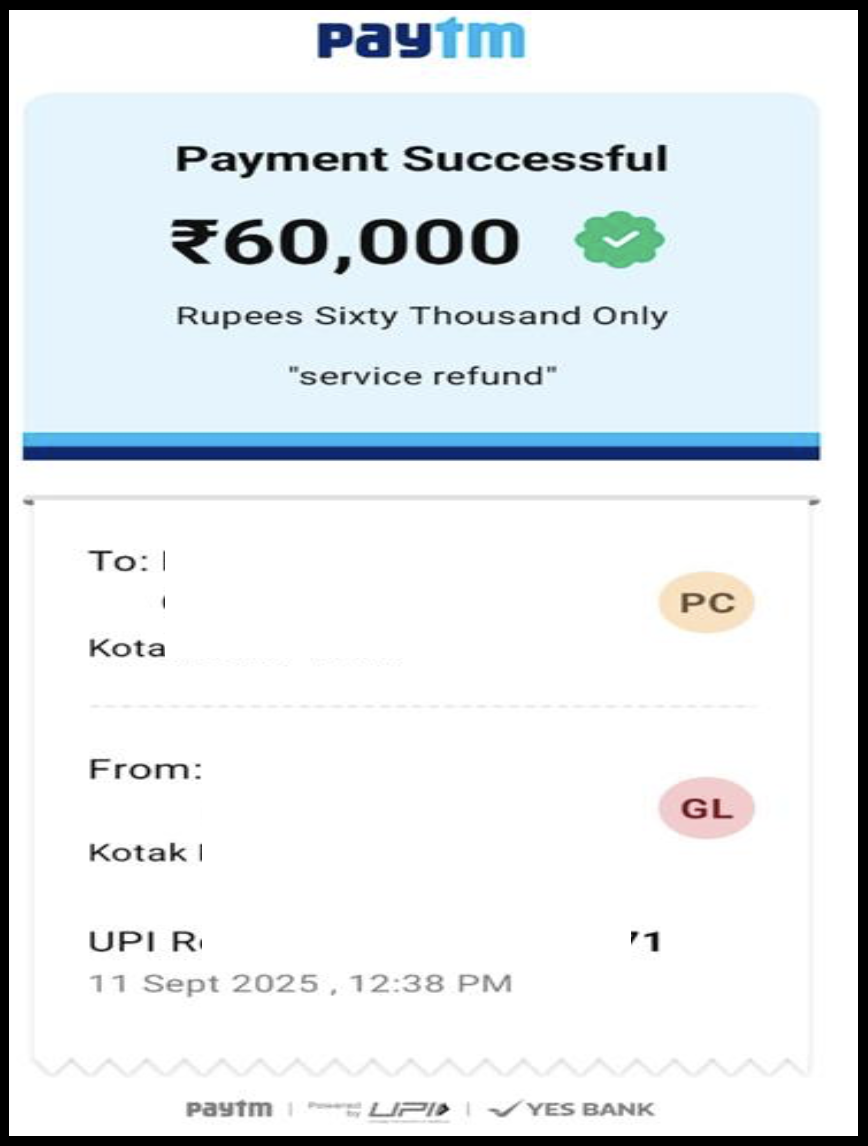
Two cases cannot set your expectations. But both recovered a solid share, and the coordinated conduct helped rather than hurt.
The multiple numbers and the fake seniority are not just background. They are evidence of a deliberate setup, which strengthens a complaint about misrepresentation. A firm that invents senior staff to push trades is misrepresenting who you are dealing with.
The size of what comes back still turns mostly on the fee-to-loss split, the same driver behind every recovery case. The stock advisory refund breakdown works through that split with the figures.
Passed between several numbers by a firm that then vanished?
We map the numbers, the handoffs, and the senior advisor claims, then build the misrepresentation case around them.
Register with us for a free consultation.
The Demat Switch: A Variant Worth Watching
One coordinated case adds a move worth its own warning. Midway through, the client was told to change his demat account.
The reason given was better trade performance. The real effect was a fresh account, a fresh start, and a break in the paper trail. The pattern of losses simply continued on the new setup.
A firm that tells you to switch demat accounts mid-relationship is worth questioning hard. There is rarely a genuine reason for it, and it often serves the firm rather than you.
If you were moved to a new demat account partway through, note when and why you were told to do it. That instruction, sitting in your chat history, is part of the picture.
Fake Senior Advisor Stock Market: The Records to Save
A coordinated setup case is built on showing the coordination. The records do that.
1. Save every number that contacted you: List them with the role each person claimed. Junior, manager, senior advisor. The list itself shows the structure.
2. Keep the chat history from each number: The introductions, the handoffs, the escalating pushes. Together they show a designed sequence rather than random contact.
3. A few more items help:
- Any point where one number introduced another as more senior
- The trade that the senior voice pushed hardest
- The dates every number stopped responding, if they went quiet together
- Your payment records across the whole relationship
Once these are together, a SEBI SCORES complaint starts the registered route where a registration exists. SMART ODR follows where the grievance does not resolve.
Many of these operations turn out to be unregistered. If yours does, the advisor not SEBI registered breakdown covers how that changes the route and what those cases recovered.
Conclusion
The firm you pictured may have been a few people and several phone numbers.
A junior, a manager, and a senior advisor each had a role rather than a real position. The handoff between them was built to make a small operation feel like an institution worth trusting with large trades.
The two cases here recovered 68.8% and the full fee amount. The coordination that fooled the client became evidence for the complaint. Inventing senior staff to push trades is misrepresentation, and it is documented in the numbers and the chats.
Save every number, every role they claimed, and every handoff. The structure that was meant to impress you is the structure that supports your case.
Report. Recover. Stay Fraud Free.
Frequently Asked Questions
Several numbers alone is not proof. The warning sign is a pattern: a junior handing you to a manager, then to a senior, each pushing more capital, all going silent together. That coordination is what marks a setup.
Often it is a role, not a real position. The senior advisor persona exists to justify larger, riskier trades. Treat the title as a sales tool unless it is backed by a verifiable registration on sebi.gov.in.
There is rarely a genuine reason for it. A switch mid relationship breaks the paper trail and gives the firm a fresh start. Note when and why you were told to do it, because the instruction is part of the case.
Yes. A coordinated silence, where every number goes quiet together, shows the contacts were one operation. The dates of that shared silence, from your chat history, support the complaint.
List each number with the role the person claimed, and keep the chat history from each. The list and the chats together show a designed structure rather than random callers, which strengthens a misrepresentation claim.





 Add us as a preferred source on Google »

