

Have you logged into your trading account only to find transactions you never approved?
Or perhaps you’ve watched your hard-earned portfolio shrink, wondering if the relationship manager you trusted is making unauthorized decisions behind your back.
If you are dealing with unexpected trades or suspicious ICICI Securities account handling, you are not alone, and more importantly, you do not have to accept it.
There is a clear distinction between receiving investment advice and giving someone permission to execute trades on your behalf.
If your broker has crossed that line, taking immediate, structured action is the only way to protect your funds and recover your losses.
Here is exactly how to determine whether your rights have been violated and the step-by-step process for holding your broker accountable.
Can ICICI Securities Handle Your Account Without Your Permission?
Many investors regularly speak to dealers, relationship managers, and authorised persons. They discuss stocks, market opportunities, and investment strategies all the time.
But here’s something many people don’t realise.
Getting advice is not the same as giving someone permission to operate your account.
Just because you discussed a stock with someone doesn’t mean they can place trades whenever they want. Just because you trust a relationship manager doesn’t mean they can make investment decisions on your behalf.
Your account is supposed to operate according to your instructions.
So if you’re seeing trades you never approved, transactions that don’t match your investment goals, or activity that nobody properly explained to you, it’s worth taking those concerns seriously.
ICICI Securities Account Handling: Real Case
Imagine trusting someone to manage your investments, building up a portfolio worth ₹45 lakh, and then waking up to find they have traded your money away without your permission.
This isn’t a hypothetical nightmare; it is exactly what happened to an investor with ICICI Securities.
She trusted an “Authorised Person” (a broker’s agent) who convinced her to open a specialized trading account, only to take control of her funds.
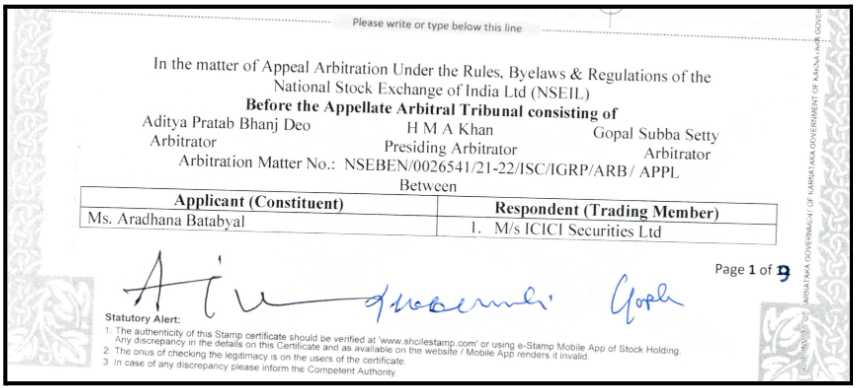
Instead of letting it go, she fought back and took her case all the way to the National Stock Exchange (NSE) Appellate Arbitration Tribunal, a special legal court just for stock market disputes.
According to the case records, an Authorised Person associated with ICICI Securities encouraged her to open a Margin Trading Facility account and assured her about the management of her investments.
For years, she relied on the information and updates she received.
Then things started to unravel.
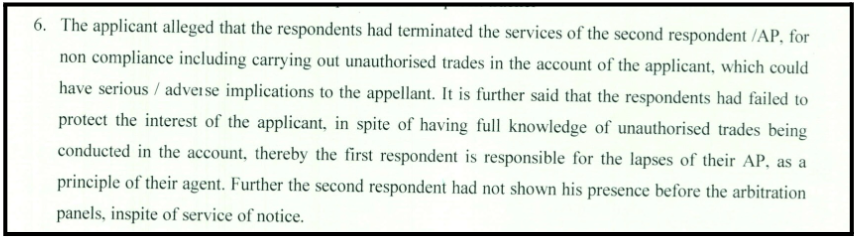
When she eventually reviewed her account records and portfolio more closely, she claimed that the actual condition of her investments was very different from what she believed.
Significant losses had accumulated, and she began questioning how the account had been operated.
Naturally, questions followed.
- Were all these trades properly authorised?
- Who was actually making the decisions?
- How had the account reached this stage without her fully understanding what was happening?
The dispute eventually reached arbitration.
During the proceedings, the tribunal examined the role of the Authorised Person, the trading activity in the account, and the responsibilities of both the broker and the investor.
One important fact that emerged during the case was that ICICI Securities had previously terminated the Authorised Person after issuing a notice relating to unauthorised trades in client accounts.
After reviewing the evidence, the Appellate Arbitral Tribunal concluded that ICICI Securities could not completely avoid responsibility for the actions of its Authorised Person.
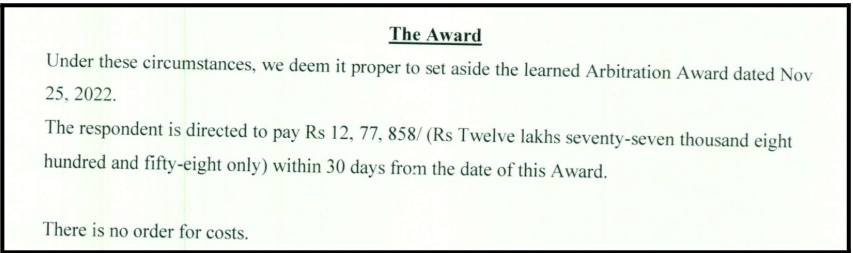
At the same time, the tribunal also found that the investor had placed considerable trust in the individual and had not regularly reviewed contract notes, statements, and trade alerts that were being sent to her.
Because responsibility was shared, the tribunal awarded the investor ₹12,77,858, which was approximately 50% of the estimated loss considered during the proceedings.
The case sends an important message to investors.
Just because you trusted someone doesn’t automatically mean you lose the right to question what happened in your account.
How to File a Complaint Against ICICI Securities?
If you suspect something is wrong, don’t wait. First of all, change your password immediately. Review your account settings.
Make sure your email address, phone number, and other security details haven’t been changed without your knowledge.
Your priority should be preventing further activity while you investigate.
Step 1: Start Collecting Evidence
This is where many investors make mistakes.
They know something feels wrong but don’t start gathering documents until much later.
Download and save:
- Contract notes
- Ledger statements
- Demat statements
- Trade history
- Email communications
- SMS alerts
- WhatsApp messages
- Payment records
- Screenshots
The more information you preserve, the stronger your position may be later.
Step 2: Raise a Written Complaint With ICICI Securities
Don’t rely only on phone calls.
Clearly explain:
- Which transactions concern you?
- Why do you believe they were unauthorized?
- When you first became aware of the issue.
- What losses or concerns resulted from the activity?
Always keep copies of your complaint and any responses you receive.
Step 3: Escalate Through SEBI SCORES
If you are not satisfied with the broker’s response, you can escalate the matter through SEBI SCORES.
Understanding how to file SEBI complaint against broker through the official SEBI SCORES portal is crucial here.
A detailed complaint supported by documents is usually much more effective than a complaint based only on allegations.
Step 4: Complaint Against Broker in NSE
If your initial ICICI Securities complaints don’t resolve the issue, your next major step is to take the fight directly to the stock exchange.
Since ICICI Securities is a member of the National Stock Exchange (NSE), you can file a formal complaint with the NSE Investor Grievance Cell.
Step 5: Use SMART ODR
If the issue remains unresolved, you can pursue the matter through SMART ODR.
This platform allows investors and intermediaries to attempt dispute resolution online before moving to arbitration.
Step 6: Arbitration in Stock Market
If nothing else resolves the dispute, arbitration may become necessary. This is where your evidence becomes extremely important.
The ICICI Securities arbitration case discussed above shows that investors can obtain relief when they present sufficient evidence and establish what went wrong.
Need Help?
Many investors don’t know what to do next. They know something feels wrong, but they’re unsure whether the activity amounts to unauthorised trading, whether they have enough evidence, or how to take the matter forward.
The worst thing you can do is, wait. The longer you wait, the harder it can become to gather records, understand what happened, and build a strong case.
If you’re confused about the next steps, we can help.
Our team can review your account activity, identify potential account handling concerns, analyse trade records, organise supporting evidence, and help you understand the options available to you.
We also assist investors with broker complaints, SEBI SCORES complaints, SMART ODR proceedings, and arbitration matters.
Register with us now and get professional guidance regarding your ICICI Securities account handling concerns.
Conclusion
Discovering unusual activity in your trading account is frustrating and stressful. You may feel confused and angry.
If trades don’t make sense, if your portfolio doesn’t match your instructions, or if you believe someone may have been making decisions without your approval, take action as early as possible.
The ICICI Securities arbitration case shows that investors can challenge account handling concerns and seek compensation when the facts support their claims.
The sooner you start asking questions and gathering evidence, the better your chances of protecting your rights.
Frequently Asked Questions
1. Can ICICI Securities relationship manager trade in my account without my permission?
No, receiving investment advice does not equate to giving a broker permission to execute trades on your behalf.
All account activity must be based on your explicit instructions.
2. What should I do if I find unauthorized trades in my ICICI Securities account?
Immediately change your account password, review your security settings, and begin gathering evidence such as contract notes, trade history, and communication records to support your claims.
3. What is the importance of evidence in an arbitration case?
Evidence is critical. In cases of unauthorized trading, documentation like ledger statements, SMS alerts, and email communications helps establish the nature of the unauthorized activity and strengthens your case before a tribunal.
4. How do I raise a formal complaint against ICICI Securities?
Start by raising a written complaint directly with ICICI Securities, clearly detailing the problematic transactions and your concerns.
If unresolved, you can escalate the issue through platforms like SEBI SCORES or SMART ODR.
5. Is it possible to receive compensation for losses due to unauthorized trading?
Yes, as demonstrated in the case of ICICI Securities unauthorised trading, investors can potentially receive compensation if they can prove unauthorized account handling, although the final award may depend on factors like shared responsibility.


 Add us as a preferred source on Google »

