
Quick Summary
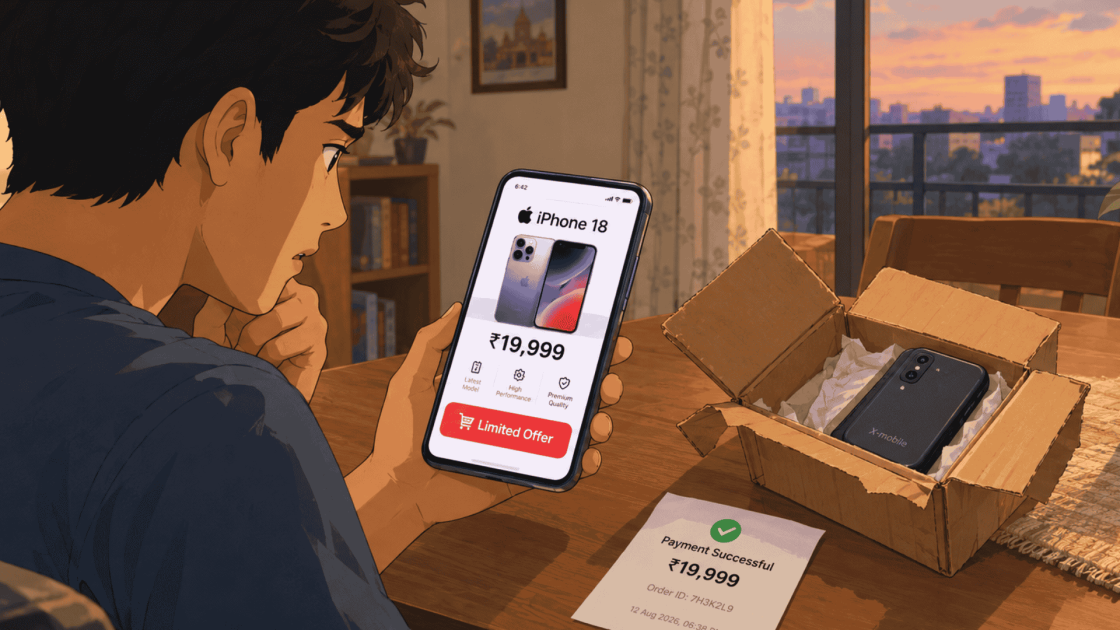
Over 200 fake domains referencing the new iPhone 18 lineup appeared within 24 hours of Apple’s September 9 launch, with some scam pages live two weeks before the official announcement. In Hong Kong alone, more than 700 complaints have already been logged over unauthorized charges, totaling HK$14.7 million. Only the iPhone 18 Pro and iPhone 18 Pro Max are actually shipping right now, the Duo doesn’t open for pre-order until October 16, and the standard iPhone 18 doesn’t exist yet at all. Knowing that one fact is the fastest way to spot a fake listing before you pay anything.
Apple hadn’t even finished talking before the fake websites went live.
By the time the iPhone 18 Pro, the iPhone 18 Pro Max, and Apple’s first-ever foldable, the iPhone Duo, were actually unveiled on September 9, some of these scam pages had already been sitting online for two whole weeks. Waiting.
That’s the part that really gets me. This isn’t scammers scrambling to react after the fact. This is people who already knew exactly what was coming, and had everything built and ready to go before Apple said a single word.
Within the first 24 hours after the announcement, over 200 new domains popped up referencing the new phones. And these weren’t lazy, half-built placeholder pages either.
We’re talking real product photos, fake specs copied straight from Apple’s own site, and working checkout pages, ready to take your money the second you clicked “buy.”
So let’s actually walk through this properly. How big this has already gotten. How the scam works, step by step. How these people are actually finding you in the first place.
What’s genuinely for sale right now versus what isn’t real yet. And exactly what to do if you’ve already paid one of these sites.
How Big Is This iPhone 18 Scam Actually Getting?
Here’s a number worth sitting with for a second.
Normally, domain names mentioning new iPhone models get registered at a rate of maybe one a day, if that. The moment Apple’s keynote actually ends, that number jumps past 200 within hours.
That’s not a handful of opportunists reacting fast.
That’s an organised setup, built in advance, sitting ready, just waiting for the real specs and pricing to go public so the fake pages suddenly start looking legitimate.
And this isn’t just an iPhone 18 Pro problem either. Cybercriminals are actively building counterfeit stores around the iPhone Duo too, weeks before its actual pre-order window even opens on October 16.
Same tactics, same fake urgency, just aimed at a product that isn’t even purchasable yet.
And the damage here isn’t some hypothetical, “this could happen to you” kind of warning.
In Hong Kong alone, police have already logged around 1,200 reports tied specifically to unauthorized charges from iPhone 18 pre-orders, worth roughly HK$25 million, all within just the first two days of pre-orders opening.
Why Hong Kong specifically?
One theory worth knowing: Apple’s own checkout process may have skipped an extra security step, something like 3D Secure, just to keep the pre-order line moving fast during that first rush of demand.
That’s exactly the kind of gap someone with stolen card details is happy to slip right through.
And it’s not just Hong Kong either. Similar reports have come out of the UK too, fake sites built to look almost identical to real Apple retailers, offering the 18 Pro for hundreds of pounds under its actual £1,199 price tag.
How Does the iPhone 18 Scam Actually Work?
Once you see the actual mechanics laid out plainly, it genuinely gets a lot easier to spot.
Here’s roughly how the timeline usually plays out.
- Weeks or months before launch, scammers register domain names with trust-building words baked right in, “apple,” “iphone,” sometimes even the exact model name.
- At this early stage, the pages are usually pretty thin. Sometimes it’s genuinely just a “buy now” button sitting on an almost blank page.
- The moment Apple’s real event happens, real specs, real pricing, and real product names go public, and those same thin, empty pages get filled in fast.
- AI tools have made this worse too. What used to take real design skill and real time now takes a fraction of both, and the result still looks convincing enough to fool careful, cautious buyers.
From there, the actual sales tactics almost always come down to the same three things.
- The price sits noticeably below what Apple’s actually charging. Real pricing right now is $1,199 for the 18 Pro, $1,299 for the Pro Max, and $1,999 for the Duo. Anything meaningfully cheaper, especially dressed up as a “launch special,” should make you pause right away.
- There’s the manufactured urgency. Countdown timers. “Only 3 left.” These exist for exactly one reason, to stop you from thinking too long before you hand over your payment details.
- The payment method itself gives it away almost every time. A real retailer takes your card the normal way. A fake one often insists specifically on bank transfer or crypto, because both of those skip the fraud protection that comes standard with a card payment.
If any of this sounds familiar already, our guide on where to complain about a fake website walks through exactly what to do next.
How Do These Scammers Actually Reach You?
Here’s the part most articles skip entirely, and honestly, it’s the part that matters most.
This scam rarely starts with you going out and searching for something. It starts with the scam finding you first, through one of a few specific, recognisable channels.
1. Social Media Ads
Social media ads are the biggest entry point by far.
A sponsored post shows up looking exactly like a real Apple promotion, product photos lifted straight from Apple’s own marketing, copy that reads something like “iPhone 18 Pro launch offer, limited stock left.”
2. WhatsApp Forwards
WhatsApp forwards do a lot of damage too, and honestly, this one’s sneakier than the ads. A message gets shared in a family group, forwarded along from someone you actually trust.
Something like, “My cousin got his iPhone 18 Pro two days early through this link, a few slots still left.”
The link goes straight to a fake site, but because it came from someone you know, most people skip the scrutiny they’d normally apply to a random ad.
3. Direct Calls and Texts
Some scammers skip the middleman entirely and just call or text you directly, claiming to be an “authorised reseller” or a courier confirming a pre-order you never actually placed.
The whole point is to create just enough confusion that you end up paying a small “processing” or “customs” fee simply to make the confusion go away.
The language they use follows a script almost every single time: “Official launch partner.” “Verified seller.” “Limited early access.” “Guaranteed delivery before official stock.”
These phrases sound reassuring on the surface, but none of them actually mean anything specific or checkable.
If a message like this ever lands in front of you, the test is simple, and it’s the same one covered next. Does what they’re offering actually match what’s real right now?
What Can You Actually Buy Right Now?
This, honestly, is the single most useful thing in this whole article.
Right now, only two phones are actually shipping: the iPhone 18 Pro and the iPhone 18 Pro Max. Pre-orders opened September 12, and shipping began September 18 in the first wave of countries.
The iPhone Duo, Apple’s first foldable, isn’t even open for pre-order yet. That starts October 16, with the phone shipping a week later on October 23. A few more countries won’t get it until October 30.
The standard iPhone 18 and the cheaper iPhone 18e don’t exist to buy at all, in any form, right now. Apple’s pushed both of those out to spring 2027.
That one fact alone is honestly the fastest scam detector you’ll ever need. Anyone selling a standard iPhone 18 today, or taking “deposits” toward one, is lying to you. Full stop. There’s no version of that transaction that’s real right now, no matter how polished the website looks.
One more thing worth knowing plainly. Apple doesn’t run lotteries.
Apple doesn’t recruit random people to “test” unreleased phones. Any message built around either idea is made up from start to finish.
What Should You Actually Watch Out For?
Pulling all of this together, here’s what’s genuinely worth checking before you pay anyone for an iPhone 18 right now.
None of these alone proves a scam, but seeing more than one should stop you completely.
- A domain that clumsily stuffs in “apple” or “iphone” or a model number, instead of matching Apple’s real site exactly.
- Pricing that sits noticeably below the real numbers, $1,199, $1,299, $1,999.
- Countdown timers or “limited stock” pressure that exists purely to rush you into paying faster.
- Any insistence on paying by crypto or bank transfer instead of a normal card payment.
- A listing for the standard iPhone 18, the 18e, or an “available now” Duo, none of which are actually real right now.
- Any mention of an Apple lottery or a paid phone-testing gig.
One of these showing up is worth pausing over. More than one, and you should just walk away entirely.
Already lost money to a fake iPhone 18 or Duo website?
We’ll help you get your documentation together, figure out the right place to file, and stick with you until it’s actually resolved.
How to Protect Yourself If You’ve Already Paid a Fake iPhone 18 Site?
If you’ve already put in card details or sent money somewhere matching this pattern, speed genuinely matters more than anything else right now.
A few things to do immediately:
- Call your bank or card provider straight away and tell them plainly you think you’ve been scammed. If you paid by card, ask directly about a chargeback, one of the strongest protections you actually have.
- Act fast. A chargeback works better the sooner you move; waiting even a few days can weaken your case.
- Change any passwords you shared on that account and anywhere else you’ve reused the same one, since scam sites often harvest more than just payment details.
- Keep everything you have. Screenshots, payment confirmations, the exact URL, and any messages tied to the purchase all become useful the moment you file a formal complaint.
How to Complain About an iPhone 18 Scam?
Filing the right complaint in the right place genuinely helps, and there’s more than one route worth taking, often at the same time.
Here’s exactly where to start, and where to go next depending on how you paid:
- Contact your bank or card issuer first, if you paid by card. A chargeback dispute is often the fastest way to actually get your money back, and it runs separately from any other complaint you file.
- Raise it through your UPI or payment app if that’s how you paid. Google Pay, PhonePe, and Paytm all have their own fraud reporting flows, worth running alongside your bank dispute, not instead of it.
- File through the cyber crime portal to create a real, timestamped record of the fraud itself, useful both for supporting your bank dispute and for flagging the site if it’s still live.
- Select the right complaint category on the portal, choosing “Financial Fraud” specifically if money was actually taken, so your case routes correctly.
- Save your acknowledgment number once submitted; you’ll need it both to track your case and as proof for your bank dispute.
- Consider consumer court if the loss is significant and the routes above don’t resolve things. It’s a slower, heavier process, genuinely only worth it for larger amounts.
If what happened to you looks more like a general situation where you’d want to report online shopping fraud rather than something specific to the iPhone launch itself, it’s still worth reporting through the same process.
Conclusion
Every big iPhone launch brings out a predictable wave of fraud. This one’s just bigger, and honestly smarter, than most that came before it, thanks largely to AI tools making fake sites easier to build convincingly than ever.
But here’s the good news in all of this. The single best defence against basically all of it is stupidly simple. Just know what’s actually real right now. Only the 18 Pro and Pro Max are shipping.
The Duo isn’t even open for orders until mid-October. The regular iPhone 18 doesn’t exist yet, period.
Understanding how these iphone scams actually operate is the best protection you have, whether it’s this specific launch or the next one.
Any site telling you otherwise isn’t a deal. It’s a trap wearing a nice outfit.
Report. Recover. Stay Fraud Free.
Only the iPhone 18 Pro and iPhone 18 Pro Max are currently shipping. The iPhone Duo and standard iPhone 18 aren't available yet in any form. Scammers register domain names weeks before launch, then fill them in with real specs the moment Apple's event goes public. It's a prepared operation, not a spontaneous reaction. Any insistence on cryptocurrency or direct bank transfer instead of a card. Both skip the fraud protections a normal card payment gives you. Call your bank immediately and ask about a chargeback, then change any passwords you may have shared. Speed matters more than anything else here. Start with India's official cyber crime portal to create a timestamped record. Our step-by-step guide covers exactly which category to select and what to attach.Frequently Asked Questions




 Add us as a preferred source on Google »

