

Quick Summary
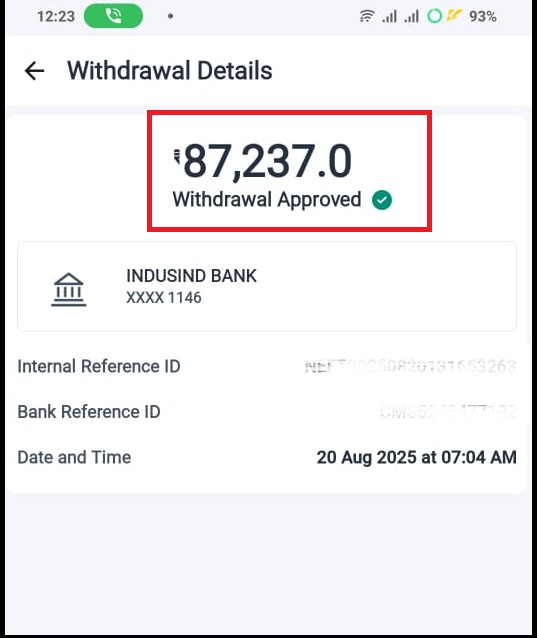
Initial Claim: ₹1,50,000 Core Violation: A broker charged brokerage far beyond the flat rate plan the client had explicitly signed up for, with no notice of any plan change, while a sub-broker’s fund handling separately drained a large deposit with little explanation. Forum Used: Direct negotiation with the broker, following a formal legal notice. Recovery Secured: ₹87,237. Rakesh Solanki (name changed) is from Jodhpur, Rajasthan. He opened his account on a specific promise, a flat twenty rupees per executed order. His bill on one particular day looked nothing like that promise.
At the time Rakesh opened his trading account, he specifically selected a plan carrying a flat brokerage rate of ₹20 per executed order. This was not a vague general understanding.
It was a specific plan he had knowingly chosen.
On one particular trading day, a total of ₹1,97,106.95 was debited from his account.
Of that amount, ₹1,48,425 was charged as brokerage alone, a figure wildly disproportionate to what a flat per order rate should have produced.
Spotting the Discrepancy: How Hidden Brokerage Fees Add Up?
Nothing in Rakesh’s records showed any communication from the broker about a change to his brokerage plan. He was not asked to consent to a different rate. He was not even informed that a change had occurred.
He discovered the discrepancy only by reviewing his own trade and obligation statement after the fact.
A brokerage structure that changes silently, without formal notice, undermines the entire premise of a plan a client specifically selected.
Anyone billed above their agreed brokerage plan without notice can file complaint against stock broker, since SEBI rules require any change to brokerage terms to be communicated clearly and formally before it applies.
Misleading Guidance: How Sub-Broker Advice Led to Unexplained Drains?
Layered on top of the brokerage discrepancy was a separate issue involving the sub-broker who had managed Rakesh’s onboarding. Early in the relationship, Rakesh deposited ₹2,01,000 into his account on this sub-broker’s specific advice.
Shortly after, ₹21,000 of that deposit was lost, with only ₹4,500 credited back the following morning. No clear explanation of the trades responsible, or the risk involved in them, was ever provided.
Recognizing Multiple Misconduct Issues in a Single Brokerage Account
The brokerage plan discrepancy and the sub-broker’s fund handling were connected only by the fact that they hit the same account.
They were not the same violation, and treating them as one would have understated the full picture of what Rakesh had actually experienced.
How We Structured the Legal Notice for Maximum Impact?
With a brokerage dispute and a separate fund management concern both live at once, this case needed each one argued on its own footing.
Step One: We Pulled The Original Plan Documentation
Rakesh’s original account opening records, confirming the flat ₹20 per order plan he had selected, were secured as the baseline against which the disputed day’s charges would be measured.
Step Two: We Isolated The Single Day’s Brokerage Anomaly
The specific day showing ₹1,48,425 in brokerage was pulled out and compared directly against what the agreed flat rate should have produced for the same volume of trades.
Step Three: We Requested Formal Proof Of Any Plan Change Notice
We asked the broker to produce any communication informing Rakesh of a change to his brokerage structure. No such record existed, strengthening the claim considerably.
Step Four: We Documented The Sub-Broker’s Fund Handling Separately
The ₹2,01,000 deposit, the resulting loss, and the limited credit back were compiled as their own distinct issue, kept apart from the brokerage dispute so neither claim diluted the other.
Step Five: We Sent A Legal Notice Covering Both Issues Together
Our notice demanded reversal of the excess brokerage and a clear accounting of the sub-broker’s fund handling, with both claims presented side by side but argued on separate grounds.
Step Six: We Pushed Through Direct Negotiation With The Broker
With the plan documentation and the missing notice both clearly established, our team moved the matter toward resolution through direct engagement with the broker.
Through this direct negotiation, the matter was resolved with a recovery of ₹87,237.
Billed Above The Plan Rate You Actually Signed Up For? Our Team Can Help
Rakesh’s case worked because his original plan selection was on record, and the broker could never produce proof that it had been changed. Pull your own account opening documents today and compare them against a recent bill.
Register with us and we will take it from there.
Conclusion
A brokerage plan you specifically selected at account opening is a documented agreement, not a suggestion the broker can quietly override later.
Rakesh’s case shows why the absence of any formal notice of a plan change is often the single strongest piece of evidence available, since a broker cannot easily produce a document that was never sent.
Keeping a brokerage dispute separate from an unrelated fund management concern, even when both involve the same account, gives each claim the clarity it needs to actually be argued on its own merits.
Report. Recover. Stay Fraud Free.
Frequently Asked Questions
Any change to an agreed brokerage structure must be communicated clearly and formally before it takes effect, under SEBI's disclosure requirements.
Compare your specific plan's agreed rate against your actual trade and obligation statement for the day in question. A significant gap points to a discrepancy worth raising.
They can be raised together, but documenting them as separate violations with their own evidence gives each one more clarity and strength.
Your original account opening documentation showing the plan you selected, and the absence of any formal notice of a later change, are usually the two most important pieces.
Request a detailed trade history for the exact period, including timestamps and risk disclosures that should have accompanied each trade.





 Add us as a preferred source on Google »

