

Have you ever wondered how a simple stock advice website can turn into a serious SEBI case?
That is exactly why my stock expert INA000013952 is getting attention among investors today.
On the surface, it looked like another market advisory service promising tips and guidance. But when SEBI looked deeper, the story became very different and much more serious.
This case is not just about one adviser; it is also about how investors can get misled by branding and promises.
It shows why every investor should pause before paying for stock tips or “expert” advice. If a service sounds convincing, does that automatically make it legitimate?
That is the exact question this blog helps answer in simple words.
My Stock Expert Review
If you try to search for a registered entity named “My Stock Expert,” you may not find it listed as a standalone advisory firm. This is because the name does not clearly appear as an independent registered brand.
Instead, the activity associated with “My Stock Expert” has been linked to Sandeep Subhashbhai Borse, who held an Investment Adviser registration (INA000013952).
The services were not presented directly under his registered name but appeared to be operated through platforms such as Stockkhoj and SK Sales.
These platforms were offering paid services related to stock cash, stock futures, stock options, and index-based trading ideas.
The structure and presentation were more aligned with a fee-based advisory model rather than purely educational or informational content.
The fee that was being taken from the clients was also not according to the SEBI rules.
Below you can see the huge amount of fees that were taken for different kinds of services:
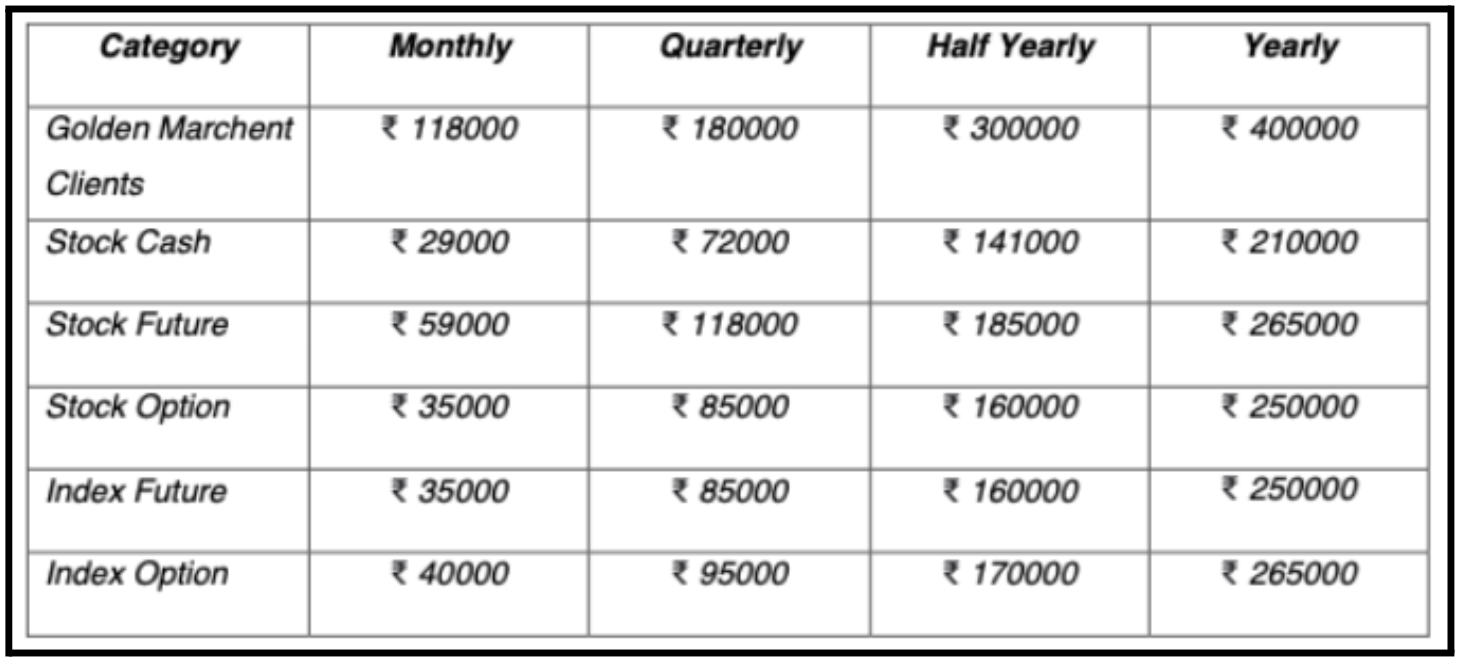
From a user’s perspective, this creates a layer of confusion. When a service is marketed under a different name than the registered entity, it becomes difficult for investors to clearly identify who is actually responsible for the advice being provided.
Additionally, when services involve paid market calls instead of general education, it becomes important for investors to verify whether the structure, branding, and communication are fully transparent and aligned with regulatory expectations.
Situations like this highlight why investors should always check not just the name of the service, but also the actual registered entity behind it before making any financial decision.
SEBI Order Against My Stock Expert
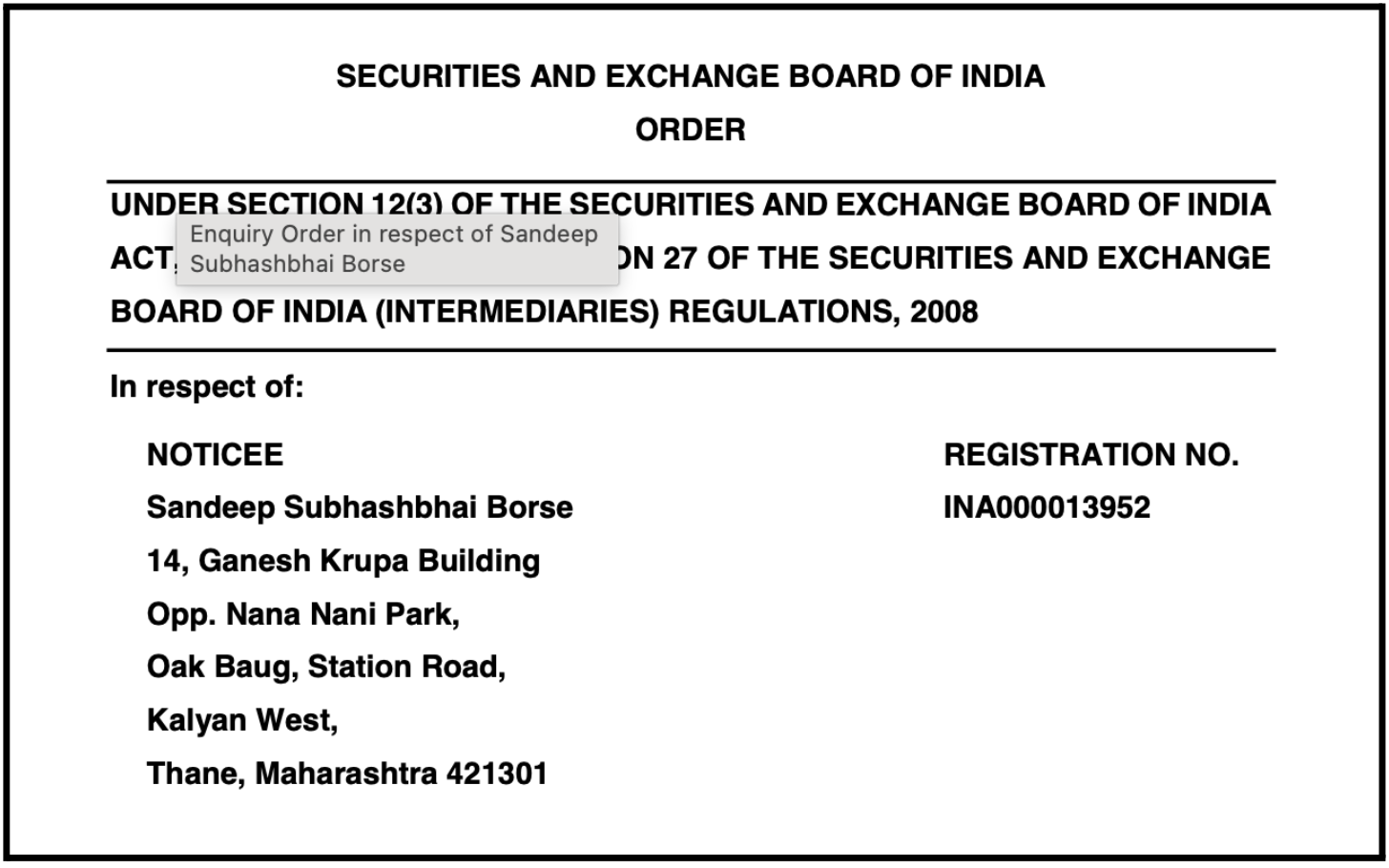
SEBI’s order against Sandeep Subhashbhai Borse says he was registered as an investment adviser in his individual capacity.
But, SEBI found that he had already been running investment advisory services through an unregistered partnership firm, SK Sales/Stockkhoj, and had hidden that fact while applying for registration.
SEBI therefore concluded that he violated the SEBI Act and Investment Advisers Regulations, and it cancelled his registration with immediate effect.
What is the order?
SEBI received a complaint about Stockkhoj.com, which was collecting fees from investors for “trading tips,” “advisory,” and similar services.
SEBI examined the website, invoices, bank statements, KYC records, and the partnership deed, and found that SK Sales and Stockkhoj were linked and were offering paid advice on stock, futures, options, and index products.
The order says these were not just educational or tax-consultancy services; they were investment advisory services in substance.
Why did SEBI act?
The core issue was registration and disclosure.
Under SEBI rules, no one can act as an investment adviser without proper registration, and any false or misleading information given to SEBI must be disclosed.
SEBI found that Borse had represented that he would run advisory activity individually, but in reality, he used the partnership firm and website to conduct the business, both before and after his own registration date.
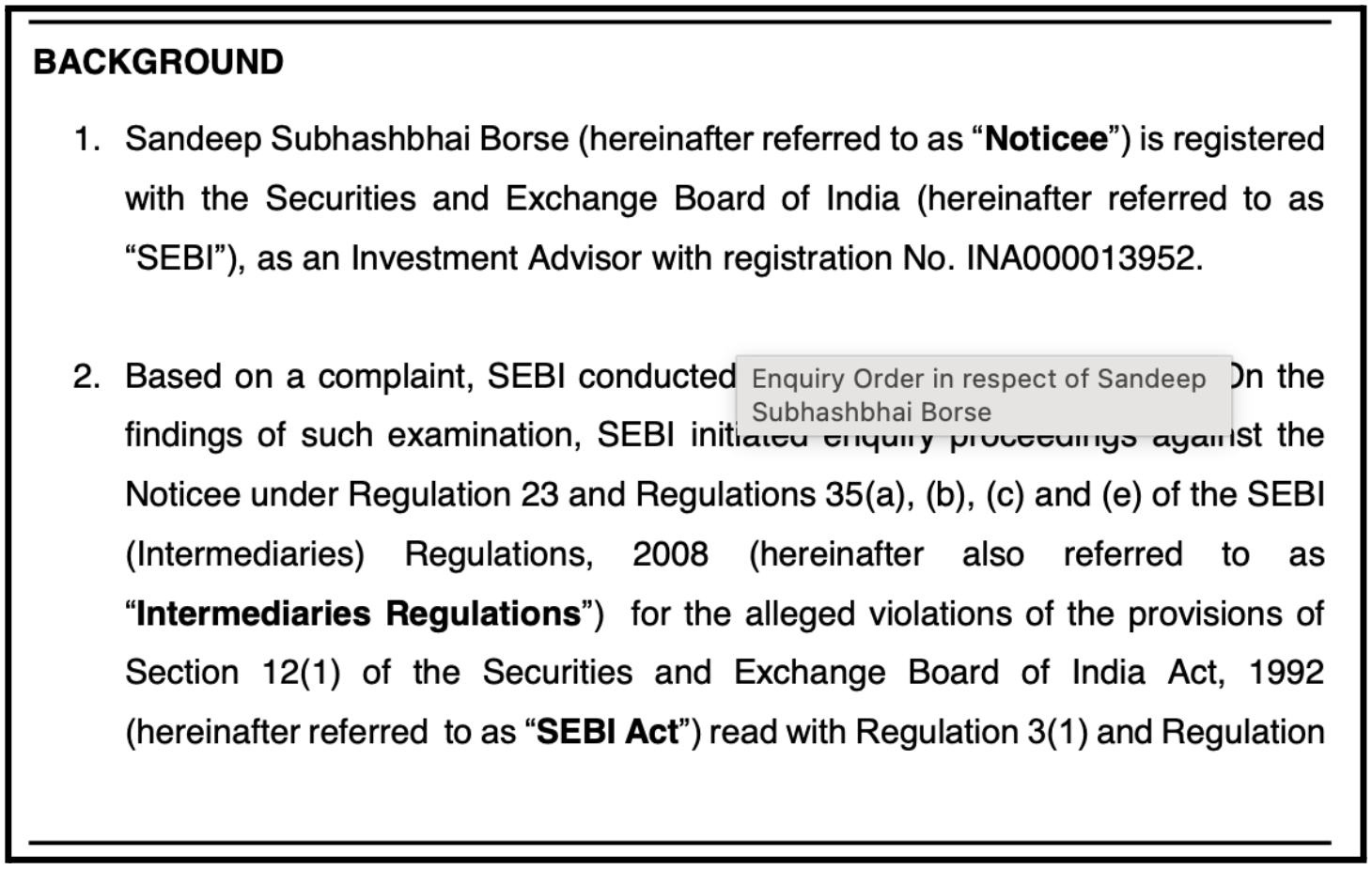
SEBI also held that his 1% partnership stake did not protect him because he was an active partner, an authorised signatory, and involved in the firm’s bank accounts.
What SEBI found?
SEBI relied heavily on the archived website content and bank narrations.
The website advertised trading tips, “low investments, big profits,” and pricing plans for stock cash, stock futures, stock options, and index futures. This made it clear that money was being taken for market-related advice.
The bank statements also used terms like “trading fees,” “advisory fees,” “shares advice,” and “registration for tips,” showing that the firm was receiving payment for investment-related services.
On that basis, SEBI concluded that the firm was operating as an unregistered investment adviser.
Outcome of the case
SEBI cancelled Borse’s certificate of registration as an investment adviser, registration number INA000013952, with immediate effect. SEBI also noted that a separate order dated December 28, 2023, had already imposed refund directions and a penalty for the same unregistered activity.
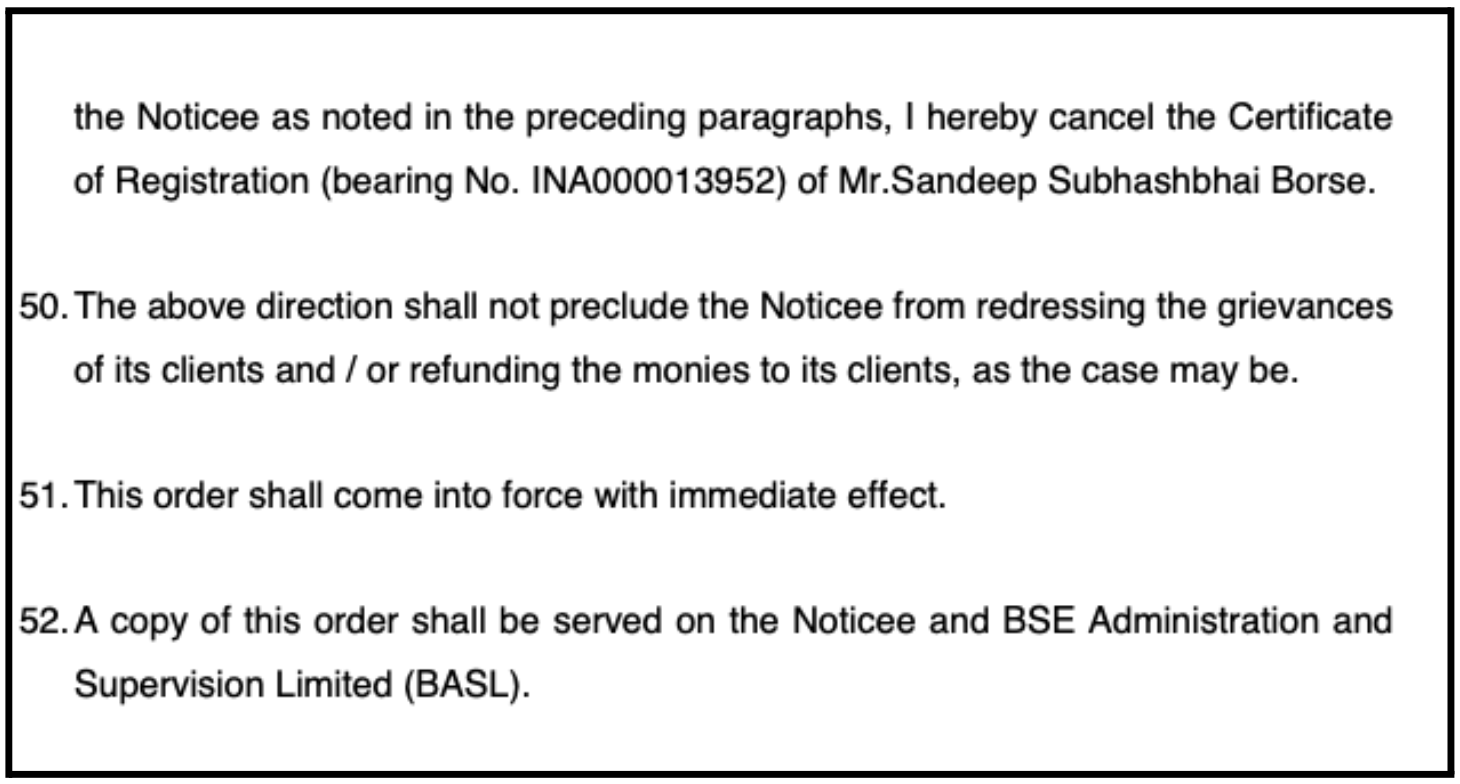
The order clarifies that cancellation does not prevent him from refunding clients or resolving complaints.
Investor learnings
- Investors should verify whether an adviser is SEBI-registered before paying any fee, especially for stock tips, “HNI services,” or guaranteed-return style products.
- A professional-looking website, invoices, or testimonials are not enough; the real test is whether the entity is properly registered and compliant.
- Also, words like “education,” “consultancy,” or “research” should not distract from the actual service being sold if it is really trade advice.
- Finally, if payment narrations and pricing plans show market advice, that is a red flag that the service may be unregistered and risky.
How To Report an Investment Advisor?
If you feel trapped by an advisory company, don’t wait for “one more trade” to fix it.
Report it step-by-step, like a clean case file.
1. Stop payment, stop access
Pause further payments immediately and do not share the following:
- OTPs
- remote-access app permissions
- UPI PINs
- screen-sharing during trading.
If they are “handling your trades,” take control back because the longer it continues, the harder it becomes to separate advice from execution and responsibility.
2. Collect proof
Save every proof, such as:
- WhatsApp and Telegram messages
- call recordings (if available)
- payment proofs
- bank statements
- UPI screenshots
- invoices
- any “profit calculation” they sent
Also, write a simple timeline: date, what they promised, what you paid, what happened after.
3. Demand a written resolution first
Send a clear message/email:
“I want a refund/closure. Here are the payment details. Here is the problem.”
Keep it short and factual. If they threaten you, save that too because threats become evidence.
4. Lodge a Complaint in SCORES
SCORES is SEBI’s online platform to lodge complaints related to the securities market.
Upload your proof, write the timeline, and clearly mention the exact issue: unregistered advisory, misleading profit-sharing promise, pressure trading, non-refund, or harassment.
5. Report in Smart ODR
For disputes that go beyond normal complaint handling. SEBI’s Smart ODR framework is meant to help resolve eligible disputes through an online dispute resolution process instead of going to court.
Use it when the complaint is stuck, and you need a structured dispute route with documentation.
6. Arbitration in the Stock Market
If complaints through SEBI (SCORES) and Smart ODR don’t resolve the issue, file for arbitration via NSE or BSE.
Submit all proof and claim details; the decision is legally binding.
Need Help?
If you have been a victim and are struggling to file your complaint, you can register with us.
We are a team that specialises in helping victims to recover money lost to fraud or scams.
Our team will help you gather evidence to file a complaint.
Conclusion
The case of my stock expert INA000013952 is a strong reminder that flashy stock tips can hide serious compliance problems.
SEBI found that the advisory business was being run through an unregistered firm and that key facts were not properly disclosed.
That is why the registration was cancelled, and the matter was treated seriously.
For investors, the biggest lesson is not to trust a service just because it sounds expert-driven or looks active online. Always verify the registration, the business name, and the payment trail before paying any fee.
If something feels unclear, that itself is a reason to slow down. A good investment decision starts with verification, not with excitement.





 Add us as a preferred source on Google »

