

Quick Summary
Initial Claim: ₹80,000 (₹30,000 in fees plus ₹49,851.77 in trading losses) Core Violation: A firm registered as a Research Analyst showed a client a manufactured profit and then extracted an equal fee from it, charged that fee hours before any terms were shared, and offered to operate his trading account directly using his one time password. Forum Used: SEBI’s Online Dispute Resolution platform, following a formal legal notice. Recovery Secured: ₹50,000. Rahul Bhamre (name changed) is from Nagpur, Maharashtra. His adviser showed him a profit of thirty thousand rupees. His adviser then took thirty thousand rupees from him. The math on that alone should have been the first warning sign.
Rahul had already disclosed two things to the representative who contacted him, that his trading capital was borrowed money, and that he had already lost over five lakh rupees in options trading over the previous few years.
The response was not caution. It was an assurance that everything would be recovered within one to two months.
A day into the engagement, a series of intraday levels produced what was shown to Rahul as a net profit of roughly ₹30,000.
Almost immediately after, he was asked for his feedback on the firm’s performance, and the conversation turned to fees.
He ended up paying exactly ₹30,000, in three separate transfers, sent under direct pressure that the next recommendation depended on the payment going through quickly.
The Forbidden Request: Asking for Account Access and OTPs
When timing became an issue for placing trades on the levels being issued, the representative did not suggest Rahul trade at his own convenience or skip a trade he could not act on.
Instead, she proposed the firm operate his account directly, and that he simply forward the one-time password whenever it arrived.
A registered research analyst is explicitly barred from ever requesting a client’s login credentials or OTPs, and from executing trades on a client’s behalf under any circumstances.
This was not a grey-area interpretation. It was a direct request for exactly what SEBI’s rules exist to prevent.
Anyone asked to hand over an OTP so a firm can trade on their behalf can file a complaint against SEBI registered research analyst, since this specific request is prohibited outright regardless of how it is framed or how willingly a client agrees.
Fees Extracted Before Any Agreement or Risk Disclosure
Payment was collected from Rahul at 10:47 in the morning.
The firm’s own terms and conditions link, along with a request for his identification documents, arrived more than three hours later, at 2:07 in the afternoon.
Research services had already been rendered the day before any of this documentation existed.
No executed agreement, no fee schedule, no risk disclosure, and no conflict of interest disclosure were ever furnished to him at any point in the relationship.
Unregulated Advice Leading to a Devastating Expiry Loss
Trading conducted in Rahul’s account, which he maintains he did not personally direct, carried a position overnight into an expiry session.
One leg of that position closed at a price representing a loss of ninety-four percent against its purchase cost.
Across the full expiry cycle, the realised loss came to ₹49,851.77, sustained in an account funded with borrowed capital the firm had been told about from the very first conversation.
Refusing a Refund While Pressuring for Additional Capital
When Rahul asked for his money back, the firm refused, citing a policy against refunds for trading dissatisfaction, and instead pressed him to deposit further funds to continue receiving assistance.
This came after he had explicitly told the firm his capital was borrowed and that he had already suffered significant prior losses.
How the OTP Request Became the Core Evidence in the Dispute?
Among everything documented in this case, the explicit request to operate Rahul’s account using his OTP stood out as the single clearest, least arguable violation available.
Step One: We Isolated The OTP Request As The Central Violation
The specific message proposing the firm operate the account directly was pulled out and treated as the anchor of the entire complaint, since this prohibition admits no exceptions regardless of client consent.
Step Two: We Timed The Fee Collection Against The Terms Disclosure
The gap between the 10:47 a.m. payment and the 2:07 p.m. terms and conditions link was documented to the minute, establishing the fee had been charged well before any consent process had even begun.
Step Three: We Connected The Manufactured Profit To The Extracted Fee
The shown profit of approximately ₹30,000 and the fee of the same amount were placed side by side, showing the fee had been computed directly from a gain the firm itself had declared rather than any independent, disclosed rate.
Step Four: We Requested The Broker’s Own Account Access Records
We formally requested login and session records from Rahul’s broker covering the disputed period, since these third-party records could independently confirm whether the account had been accessed outside Rahul’s own control.
Step Five: We Documented The Refund Refusal Against The Firm’s Own Published Policy
The firm’s own refund policy, which explicitly commits to refunds where SEBI finds regulatory non-compliance, was used directly against its initial refusal, since the violations documented fell squarely within that stated exception.
Step Six: We Sent A Legal Notice And Escalated Through Smart ODR
When the firm did not settle within the deadline given, we escalated formally through SEBI’s Smart ODR platform, carrying the OTP request, the fee timing, and the broker records forward as the core of the case.
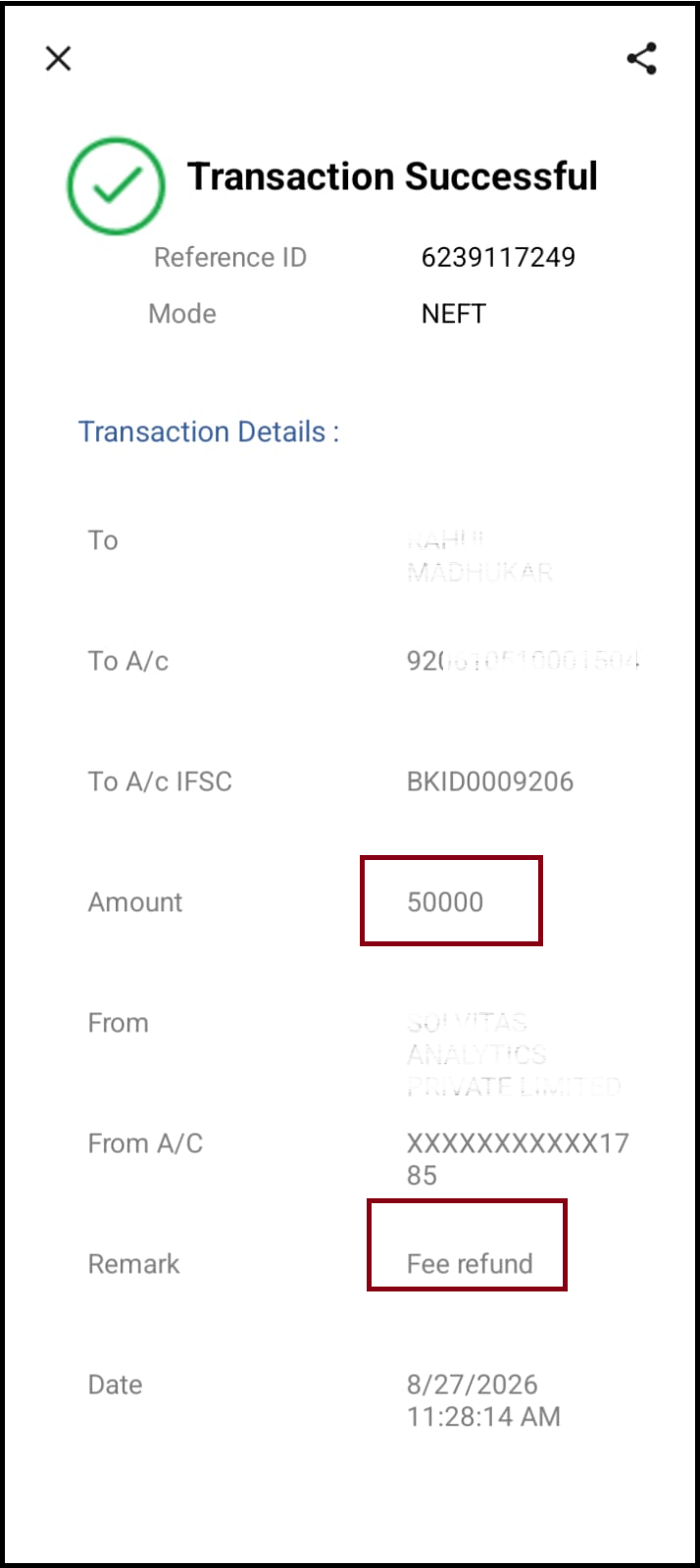
Through this process, the matter was resolved with a recovery of ₹50,000.
Asked To Share An OTP So An Adviser Could Trade For You? Our Team Can Help
Rahul’s case turned on one message, a direct request for his OTP framed as a convenience. If you have ever been asked for this, save that message exactly as it was sent today.
Register with us, and we will take it from there.
Conclusion
A request for a client’s OTP is not a grey area an adviser can talk their way around; it is one of the clearest, most absolute prohibitions in the entire regulatory framework governing research analysts.
Rahul’s case shows why isolating a single, unambiguous violation like this can carry more weight than a long list of smaller complaints, since it leaves almost no room for the firm to argue context or intent.
A fee that happens to match a profit just shown to you, and a request for your OTP framed as help rather than a red flag, are both worth pausing on the moment they appear, not after the account is already empty.
Report. Recover. Stay Fraud Free.
Frequently Asked Questions
No. This is prohibited outright under SEBI's rules for research analysts, regardless of the reason given or how willingly a client might agree.
Yes. A fee computed directly from a shown gain, rather than a disclosed, independent rate, is a strong sign the profit itself was shown specifically to justify the charge.
Yes. SEBI rules require consent on terms before any fee is charged. A documented gap between payment and disclosure is strong, precise evidence of this specific violation.
Yes. If a firm's published policy includes exceptions for regulatory non-compliance, documented violations falling within that exception can be used directly against an initial refusal.
Your broker's own login and session logs are independent, contemporaneous records that neither you nor the firm can alter, and can help establish exactly how and when your account was accessed.





 Add us as a preferred source on Google »

