

Quick Summary
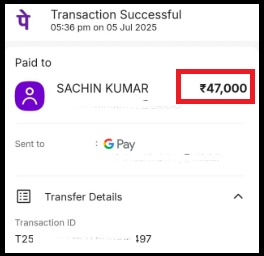
Initial Claim: ₹63,900 Core Violation: A trading advisory plan was paused at the client’s own request during a temporary cash shortage, with an assurance he could resume once ready. When he returned with funds, the firm went completely unresponsive. Forum Used: Direct negotiation with the firm, following a formal legal notice. Recovery Secured: ₹47,000, roughly 74 percent of the claim. Sachin Verma (name changed) is from Meerut, Uttar Pradesh. He did everything right. He told the firm honestly that he needed to step back for a while. The firm agreed. Then it disappeared.
Sachin purchased a trading advisory plan for ₹63,900. He used it actively for about ten to twelve days, during which he incurred a loss of close to ₹20,000.
Facing a temporary shortage of trading capital, he informed the firm honestly that he would need to pause his participation for a while.
Rather than treating this as a problem, the firm assured him the plan would simply be put on hold, ready to resume whenever he had sufficient funds again.
The Assurance That Established Accountability
At that point, Sachin had no complaint. The firm’s handling of his pause request felt professional and reasonable, and he trusted that his paid plan and remaining service period were being safeguarded exactly as promised.
That trust is precisely what makes what happened next so significant.
A firm that behaves reasonably at the point of pause has already shown it understood what it owed the client.
From Mutual Agreement to Complete Wall of Silence
Once Sachin had arranged the necessary funds, he began reaching out to resume his plan. Calls went unanswered. Messages received no reply.
Every attempt to reach the firm’s support team met the same wall of silence.
None of his queries were acknowledged in any form. A relationship that had started with a responsive, reasonable pause ended with complete unresponsiveness the moment he tried to actually use what he had paid for.
Anyone facing this kind of silence after paying for a service plan can file a complaint against SEBI registered research analyst firms or equivalent advisory providers, since a total failure to respond is itself a documented grievance redressal failure.
The Financial Loss Behind the Unused Subscription
Of the ₹63,900 originally paid, only about ten to twelve days of active service had actually been used before the pause.
The unused portion of that plan represented real, paid-for value that the firm was simply withholding through silence rather than through any stated refusal.
How We Turned Their Unresponsiveness into a Regulatory Grievance
Because there was no fraud narrative to build here, this case rested entirely on establishing the firm’s own failure to respond as a violation in its own right.
Step One: We Compiled The Full Communication Timeline
Every call attempt and unanswered message following the resumption request was logged with dates, building a clear, dated record of the firm’s total non-response.
Step Two: We Calculated The Unused Portion Of The Plan
Based on the roughly ten to twelve days actively used against the full plan duration, we established a clear proportional figure representing the value never delivered.
Step Three: We Framed The Pause Agreement As A Binding Commitment
The firm’s own assurance that the plan could be resumed later was documented as the specific promise being breached, not a vague or informal understanding.
Step Four: We Sent A Formal Notice Demanding Reactivation Or Refund
Our notice offered the firm a clear choice: honour the original pause agreement by reactivating the plan, or refund the unused portion, with a firm deadline attached to either option.
Step Five: We Escalated Through Persistent Direct Follow-Up
Given the firm’s established pattern of non-response, our team maintained consistent follow-up pressure rather than allowing the notice to sit unanswered the way earlier communications had.
Step Six: We Negotiated A Cash Settlement For The Unused Portion
With reactivation no longer realistic given the firm’s continued silence, our team pushed for and secured a direct settlement instead.
Through this direct negotiation, the matter was resolved with a recovery of ₹47,000.
Paused A Plan In Good Faith And Now Getting No Response? Our Team Can Help
Sachin’s case worked because he had done nothing wrong himself, he paused responsibly and returned in good faith. If a firm has gone silent on you after a similar pause, start logging every unanswered call today.
Register with us and we will take it from there.
Conclusion
A firm that behaves reasonably at the moment a client pauses a service has already demonstrated it understands the obligation it holds.
Going silent the moment that client tries to actually use what they paid for turns a reasonable pause into an unreasonable withholding of value, and that shift is worth documenting precisely rather than treated as ordinary poor service.
Sachin’s case shows that a paid, unused portion of any plan represents real money owed, and total non-response to a legitimate resumption request is a grievance failure that can be pursued formally rather than absorbed quietly.
Report. Recover. Stay Fraud Free.
Frequently Asked Questions
Yes. A documented assurance, even given informally through calls or messages, represents a specific commitment that can be raised if the firm later fails to honour it.
A dated log of every call attempt and unanswered message is often the strongest evidence available, showing a clear pattern rather than a single missed reply.
Yes. If only part of the plan's service period was actually used, the unused portion represents value the firm still owes you.
Continue logging every attempt with dates, then send a formal notice offering a clear choice between reactivation and refund, with a specific deadline attached.
Yes. A complete failure to acknowledge or respond to a client's legitimate request is itself a documented grievance redressal failure, separate from any underlying service dispute.





 Add us as a preferred source on Google »

