If you have ever thought about trading in the stock market, you have probably heard about different stockbrokers.
Stockbrokers act as a bridge between traders and the stock market.
They provide trading platforms, help execute orders, and make it easier for people to buy and sell shares.
Because of this, traders place a lot of trust in their brokers.
However, sometimes problems can occur when trades are executed without the trader’s permission.
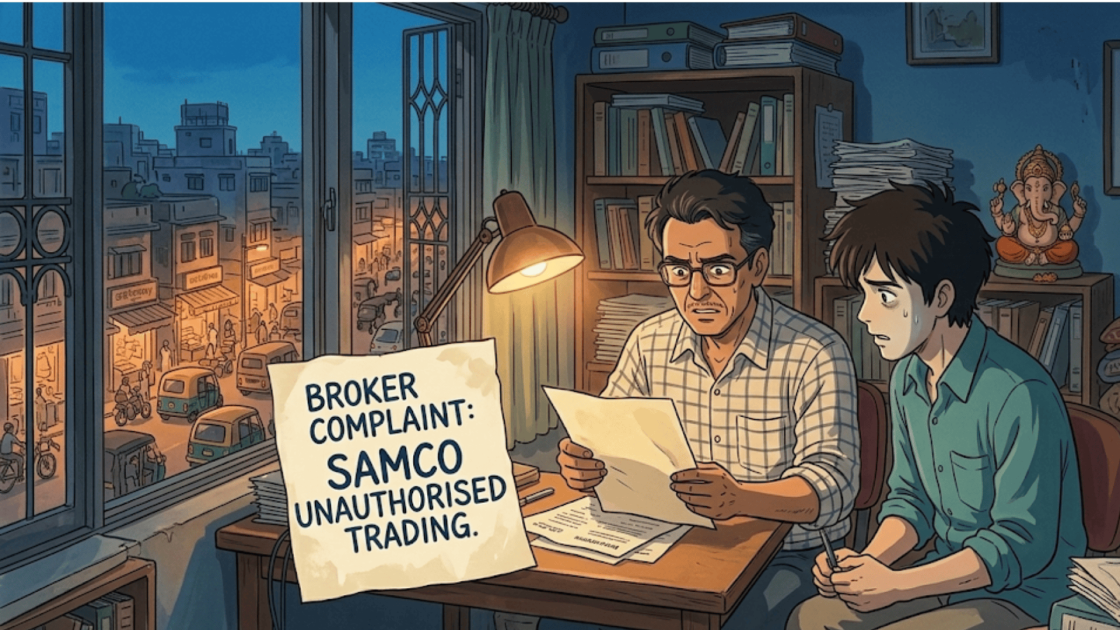
This situation is known as unauthorised trading, and it can cause serious financial losses for investors.
In this blog, we will understand how unauthorised trading can happen with Samco and what traders can do if they face such issues.
Samco Securities Overview
Samco Securities is an Indian stockbroker that offers trading and investment services in equity, derivatives, commodities, and mutual funds.
The company provides an online trading platform that allows traders to place orders, track their portfolios, and analyse market trends.
Samco is known for offering brokerage services and tools designed for retail traders and investors.
Like many online brokers, it provides mobile and web-based trading platforms that make trading more accessible.
However, as with any financial service provider, traders should always stay alert and regularly monitor their accounts to ensure that all transactions are authorised.
Samco Securities Unauthorised Trading Complaints
Unauthorised trading happens when trades are placed in a trader’s account without their consent or knowledge. This can occur due to several reasons.
The data below shows the total number of complaints received and how many of them were related to unauthorised trading over the last few financial years.
This helps us understand how frequently such issues are reported and whether the trend is increasing or decreasing.
Summary table: Overall Complaints, Unauthorised trading complaints, % of unauthorised trading
| Year | No. of complaints | No. of complaints for unauthorised trading | Percentage of unauthorised trading |
| 2021-22 | 48 | 7 | 14.58% |
| 2022-23 | 42 | 1 | 2.38% |
| 2023-24 | 58 | 7 | 12.06% |
| 2024-25 | 74 | 21 | 28.37% |
| 2025-26 | 49 | 14 | 28.57% |
Looking at the numbers, it is clear that among other Samco Securities Complaints, unauthorised trading complaints form a noticeable portion of the total complaints received in some years.
In particular, the percentage increased significantly in recent years, indicating that more investors are reporting such issues.
While the total number of complaints may change each year, the data highlights why traders should always monitor their accounts carefully and review their contract notes and trade confirmations regularly.
It also shows why regulatory bodies like the Securities and Exchange Board of India (SEBI) have strict rules for brokers regarding trade authorisation and record keeping.
These rules are designed to protect investors and ensure transparency in the trading process.
Impact on Traders
For retail traders, unauthorised trading often leads to sudden losses they never planned for.
Since the trades were not part of their strategy, the positions may expose them to unexpected market risks.
Some common impacts include:
- Financial losses due to risky or unwanted trades
- Margin penalties or additional charges
- Stress and loss of trust in the broker
- Difficulty in managing existing investments
These situations can be especially difficult for small investors who depend on careful planning and limited capital.
When Can Action Be Taken Against a Broker?
Being SEBI-registered comes with strict responsibilities. Brokers are required to follow specific guidelines when handling client accounts and executing trades.
If these rules are ignored, investors have the right to raise a complaint and take action.
SEBI has introduced clear regulations to protect traders, especially because complaints related to unauthorised trading have increased in recent years.
1. When There Is No Proof of Trade Approval
One of the biggest factors in unauthorised trading cases is proof. Brokers must be able to show that the client actually placed or approved the trade.
This proof can include things like recorded phone calls, order confirmations from the trading platform, emails from the client’s registered email ID, or instructions sent from the registered mobile number.
If the broker cannot provide any clear evidence that the client approved the transaction, the trade may be treated as unauthorised.
2. When Trades Are Executed Beyond the Client’s Instructions
Sometimes investors allow brokers or dealers to place certain trades on their behalf.
However, problems arise when the broker executes trades that go far beyond what the client agreed to.
For example, placing larger orders, adding extra positions, or making frequent trades without proper discussion can still fall under unauthorised trading.
Even if some level of permission was given, it does not mean the broker has unlimited authority to trade.
3. When the Broker Cannot Provide Records During a Dispute
If an investor raises a complaint, the broker is required to provide proper records related to the disputed trades.
This may include call recordings, system logs, order details, or other transaction records.
If the broker fails to produce these records, it becomes difficult for them to prove that the trades were properly authorised.
In such situations, regulators may view the case more seriously.
4. When Dealer Access or Systems Are Misused
Sometimes brokers blame unexpected trades on system errors or technical problems. However, such explanations are not always acceptable.
Dealer terminals and trading systems must be used responsibly.
If someone with access to the account misuses it or executes trades without permission, the broker can still be held responsible.
Why This Matters for Retail Investors
Many retail traders think that a complaint is only valid if the trade resulted in losses. But that is not how the rules work.
Even if a trade ended up making a profit, it can still be considered unauthorised if the investor did not clearly understand or approve it.
These regulations exist to protect traders from being exposed to risks they never agreed to take.
How to Complain Against a Stock Broker?
If you notice unauthorised trading in your account, you should act quickly. Here are the steps to file a complaint against unauthorised trading:
1. Contact the broker immediately
Inform your broker’s customer support team about the issue and clearly explain the problem you have noticed in your trading account.
Ask them for a detailed explanation regarding the trade or transaction in question and request clarification on how it occurred.
2. Submit a written complaint
Send a formal complaint by email or through the broker’s grievance portal.
In your complaint, clearly describe the issue you are facing and include all important details such as the date of the transaction, the trade details, and the nature of the problem
3. Check contract notes and statements
Carefully review all transaction details to identify unauthorised trades.
Check the dates, time, quantity, and price of each transaction and compare them with the trades you actually approved or placed.
Pay close attention to any trades that appear unfamiliar, were executed without your knowledge, or do not match your investment strategy.
4. Escalate the complaint
If the broker does not resolve the issue within a reasonable time or fails to provide a satisfactory explanation, the next step is to escalate the complaint to the concerned stock exchange or the relevant regulatory authorities.
Investors can file a formal complaint with the exchange where the trade was executed, such as the NSE or BSE, through their online grievance redressal mechanisms.
5. File a complaint with SEBI
You can submit a complaint through the SCORES platform if the issue remains unresolved.
This is the official online complaint redressal system developed by the Securities and Exchange Board of India (SEBI) to help investors address grievances against listed companies, stockbrokers, and other market intermediaries.
6.File arbitration in the stock market
If the complaint is not resolved through SCORES or at the broker level, you may escalate the matter by initiating arbitration in NSE or BSE.
You may choose to begin arbitration proceedings by submitting a complaint to SMART ODR.
Need Help?
If you are facing issues related to unauthorised trading or broker misconduct, you do not have to deal with it alone.
Our team can help you understand your rights and guide you through the process of taking action against the broker.
We assist investors in reviewing their trading records, identifying unauthorised transactions, and preparing the necessary complaints.
If needed, we can also help you escalate the matter to the appropriate authorities, including the Securities and Exchange Board of India (SEBI).
Taking quick action is important in cases of unauthorised trading. The sooner the issue is addressed, the better the chances of resolving the matter and protecting your investments.
If you need support or guidance, reach out to us. We are here to help you through every step of the process.
Conclusion
Unauthorised trading is a serious issue that can affect any trader if proper precautions are not taken.
The complaint data also shows that unauthorised trading cases have formed a noticeable share of total complaints in recent years.
This highlights why Samco should regularly monitor their accounts and review every transaction carefully.
While brokers provide important services that make trading easier, traders must always stay alert and regularly monitor their accounts.
If you ever notice suspicious activity or trades you did not approve, take immediate action.
Reporting the issue quickly and following the proper complaint process can help protect your investments and ensure that your rights as a trader are respected.