

Quick Summary
StockGro is a genuine, SEBI-registered company, holding Research Analyst registration INH000018300. That confirms it’s real, not fake. At the same time, several things worth knowing sit in the app’s own contest structure, its marketing screens, its trade cards, and its published Terms and Conditions, each examined here with the actual evidence behind it. None of these alone prove wrongdoing, but together they give you a fuller picture than the registration number does on its own.
A friend sends you a StockGro invite link. An ad promises cash prizes for picking the right stocks. Maybe you’ve even noticed StockGro’s name attached to a celebrity game show now.
Somewhere in all of that, one question actually matters: is StockGro app real or fake, and does it deserve your money and your data?
Here’s the honest starting point. StockGro is real, registered, and functioning, not a scam hiding behind a fake name.
But real doesn’t automatically mean fully trustworthy, and this page walks through both sides using only what’s publicly documented, so you can decide with the complete picture rather than half of it.
Is StockGro App Real or Fake?
The direct answer, before anything else. StockGro is a real, operating company, not a fabricated app running under a made-up identity.
It was started in 2020 by Ajay Lakhotia and is run by a company called AssetGro Fintech Pvt. Ltd.
It has a working app on both the Play Store and App Store, a real user base, and a genuine SEBI registration, which this page confirms below.
One detail worth knowing, and it’s entirely public. StockGro co-sponsors Wheel of Fortune India, the TV game show hosted by actor Akshay Kumar that began airing on Sony Entertainment Television in January 2026.
Sony’s own press announcements confirm this partnership, and it connects directly to StockGro’s contest-based, prize-driven way of promoting itself, worth keeping in mind as you read the rest of this page.
So being real settles one question. Whether the app treats users fairly is a separate question, and it needs actual evidence, not just a registration number, to answer.
Is StockGro SEBI Registered?
This is the most basic fact to verify, and it’s worth being precise about exactly what’s registered and what isn’t.
StockGro operates under SEBI Research Analyst registration number INH000018300, held under the entity name StockGro Technology LLP.
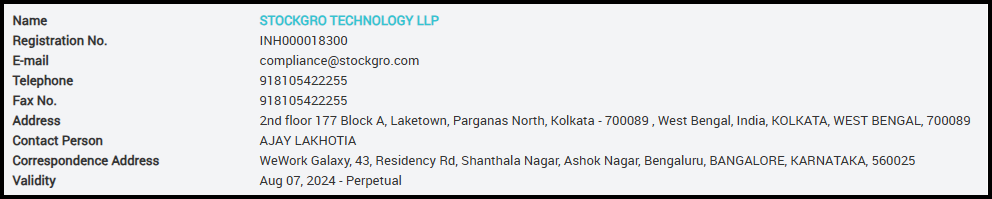
According to this registration record, the compliance email is [email protected], the telephone and fax number is 918105422255, and the registered address is 2nd Floor 177, Block A, Laketown, Parganas North, Kolkata, West Bengal, 700089.
A separate correspondence address is listed at WeWork Galaxy, 43 Residency Road, Shanthala Nagar, Ashok Nagar, Bengaluru, Karnataka, 560025.
Ajay Lakhotia is named as the contact person on the registration, and its validity is listed as August 7, 2024, onward, on a perpetual basis.
This registration is independently checkable. Every detail above is verifiable directly on SEBI’s own portal using the registration number, rather than something that needs to be taken on the app’s word alone.
Separately, the app hosts many individual SEBI-registered Research Analysts and Investment Advisers who post their own trade calls and portfolios through the platform.
Each of these individuals carries their own distinct SEBI number, separate from StockGro’s company-level registration.
Ajay Lakhotia, the founder, does not hold a personal SEBI registration in his own name.
The registration belongs to the company, StockGro Technology LLP, not to him as an individual, an important distinction if you’re trying to understand who exactly is accountable for what.
To dive deeper into the firm’s owner and his journey, you can check our guide: StockGro founder.
One detail worth noting for accuracy.
Some public company records and press coverage refer to the entity behind StockGro as Assetgro Fintech Private Limited, while this SEBI registration itself lists StockGro Technology LLP.
Company structures sometimes involve more than one registered entity operating under one brand, worth knowing simply as a factual detail.
So yes, there is real SEBI registration behind StockGro.
But a registration confirms the company met SEBI’s basic entry requirements.
It does not, by itself, confirm good behavior, fair treatment, or that every single feature inside the app follows every applicable rule. That’s exactly what the rest of this page examines.
Also Read: Is Springpad AI real or fake? Some users say they were blocked after asking for refunds.
Does StockGro’s Contest Model Match SEBI’s Rules?
SEBI’s own 2023 rule states that registered research analysts and advisers are not permitted to run games, leagues, or contests involving prize money.
StockGro’s core product is built around exactly this structure: virtual trading contests with real cash rewards, now paired with a sponsorship tie-in to a celebrity-hosted prize game show.

This is a fact worth stating plainly, since it sits directly alongside the SEBI rule quoted above, and both are independently verifiable: SEBI’s published 2023 circular on one side, StockGro’s own contest and sponsorship structure on the other.
Does StockGro’s Marketing Show Realistic Numbers?
SEBI also restricts showing exaggerated or unverified profit figures in advertising, since figures like these can set unrealistic expectations for anyone seeing them.
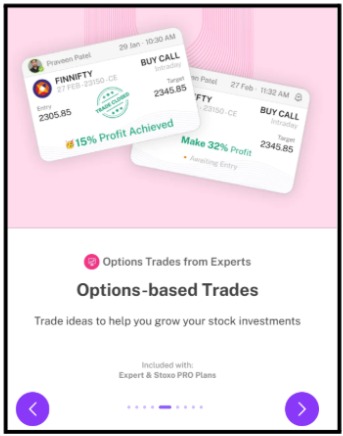
Marketing cards inside the app state “15% Profit Achieved,” “Make 32% Profit,” and a demo screen shows ₹4,50,000.12, listed as 22.50 percent in “overall returns.”
A fair point worth stating clearly.
These appear to be shown as feature illustrations, sample numbers meant to demonstrate how a tool works, not claims about any real user’s actual results.
But the label distinguishing illustration from real outcome is small and easy to miss, and a new user scrolling quickly could reasonably read these as genuine, guaranteed-style results.
Whether intended as illustration or not, the effect on someone reading fast can still be misleading.
Also Read: Supreme Investrade real or fake. The firm was SEBI-registered, but its regulatory history raises important questions for investors.
Do StockGro’s Trade Cards Include Required Disclosures?
SEBI rules require every stock recommendation to carry a written reason behind it, along with a standard risk warning.
The trade idea card inside the app shows an entry price, a target, a stop-loss, and a “percent potential upside” figure, but no visible reason or risk warning appears on that specific screen.
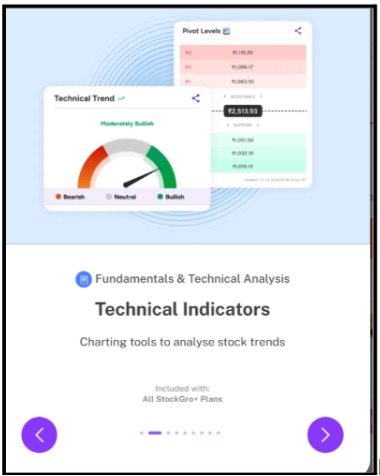
This is a factual, checkable gap, verifiable simply by opening any trade idea card inside the app itself.
What Do StockGro’s Own Terms Say About Withdrawals?
This point comes directly from StockGro’s own published Terms and Conditions, not from any user complaint or outside allegation.
Here’s what it actually means, in plain terms. Say you have some money in your StockGro wallet, but not quite enough to hit the minimum amount you’re allowed to withdraw.
If you then add a bit more money specifically to cross that minimum, the company can flag this as suspicious.
Once flagged, your withdrawal gets frozen for at least 30 days. That’s the minimum wait, not a fixed number, just the shortest possible time you might wait.
There is no fixed end date after that. If the company’s internal review team decides you were trying to “exploit the system,” meaning they believe you added money just to game the withdrawal rule rather than for genuine trading, the freeze can continue with no clear point at which it automatically ends.

To put it simply, topping up your own wallet to meet a rule the company itself set can be treated as a red flag against you, and once that happens, there’s no guaranteed date by which you get your money released.
The decision about whether you were “exploiting the system” sits entirely with the company’s own review team, based on their own judgment.
This is worth reading directly in StockGro’s own terms before you rely on any specific withdrawal amount, since the exact wording and how the review process works in practice matters more than a summary of it.
Also Read: Alpha Wealth Research is real or fake to understand the claims, services and customer experiences
Does This Withdrawal Clause Explain What Happened to Real Users?
Reading this clause against an actual documented user account is worth doing carefully, rather than assuming either that the clause justifies everything, or that it explains nothing.
The clause itself carries a structural weakness worth naming plainly.
The company determines “intent” using its own judgment, with no fixed timeline and no outside check built into that decision. That means one party sets the rule, decides who broke it, and holds the money, all in the same hands.
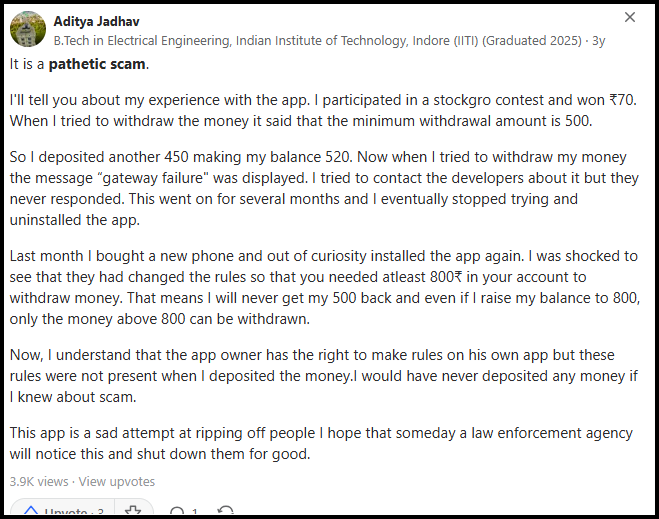
In the specific documented case covered on our page about StockGro Reviews, this clause was not even the reason given at the time.
The user was shown a plain “gateway failure” error, not a message stating his withdrawal was under review for policy reasons.
The lasting block came later, when the withdrawal minimum was quietly raised from ₹500 to ₹800 with no notice, a separate issue from this specific clause entirely.
So the clause does not place fault on that user’s actions.
If anything, it shows a rule broad enough to treat entirely ordinary behavior, topping up an account to meet a limit the company itself set, as suspicious, based solely on the company’s own judgment, with no clear time limit on holding the funds.
What Should You Take Away From All of This?
Reading through the registration details, the contest structure, the marketing claims, and the withdrawal terms above, it helps to step back and put the full picture together in one place.
Here’s what actually matters, in plain terms:
- A SEBI registration is real, but it functions as a starting point, not a guarantee. StockGro is genuinely registered, and that registration doesn’t, by itself, promise fair treatment around withdrawals, advertising accuracy, or contest structures.
- Treat any “profit” figures shown inside the app carefully. Some appear to be feature demonstrations rather than real user results, though the app doesn’t always make that distinction obvious at a glance.
- Prize contests operate differently from regulated investing. These contests don’t carry the same official protections a genuine brokerage account offers if something goes wrong.
- No SEBI order, fine, or police case has been filed against StockGro by name as of now. Everything covered on this page describes real, documented, publicly verifiable patterns, not a proven legal violation, and that distinction is worth keeping clear.
If something you’ve read here matches your own experience and you’re ready to act on it, our guide on how to file complaint against StockGro walks through every stage of that process.
Weighing whether to trust StockGro with real money, or already stuck on something specific?
Tell us what you’re looking at, and we’ll help you separate what’s verified fact from what’s just marketing, before you decide anything.
If you’re weighing whether the app’s AI research tool specifically deserves your trust, that’s examined separately on our page: Stoxo.
Disclaimer: This page reflects publicly available records, including SEBI’s registration database and StockGro’s own published Terms and Conditions, at the time of writing, and is shared for informational purposes only. No SEBI order, fine, or legal action has been filed against StockGro by name, and readers are encouraged to verify any specific detail directly before relying on it.
Conclusion
StockGro is a real, functioning, SEBI-registered app, not a fabricated operation.
That much is fair and independently verifiable.
What deserves equal weight is the specific, documented gap between its contest-driven business model and SEBI’s own rule on prize contests, the marketing language that can mislead at a glance, the trade cards missing a required disclosure, and a withdrawal clause broad enough to treat ordinary behavior as suspicious.
None of this amounts to a proven legal violation. All of it is worth knowing before you decide how much of your money and trust belong here.
Report. Recover. Stay Fraud Free.
StockGro is a real, SEBI-registered company, not a fake operation. It holds Research Analyst registration INH000018300, verifiable on SEBI's official portal. SEBI's 2023 rule states that registered research analysts and advisers are not permitted to run games, leagues, or contests involving prize money, which is worth weighing against StockGro's contest-based product structure. Some appear to be feature illustrations rather than actual user results, though the labeling distinguishing illustration from real outcomes is easy to miss at a glance. According to its own Terms and Conditions, the company can freeze a withdrawal for a minimum of 30 days with no fixed end date if it determines a user added funds specifically to meet a minimum withdrawal threshold. No SEBI order, fine, or police case has been filed against StockGro by name as of now. This page describes documented, publicly verifiable patterns, not a confirmed legal violation.Frequently Asked Questions





 Add us as a preferred source on Google »

