

Quick Summary
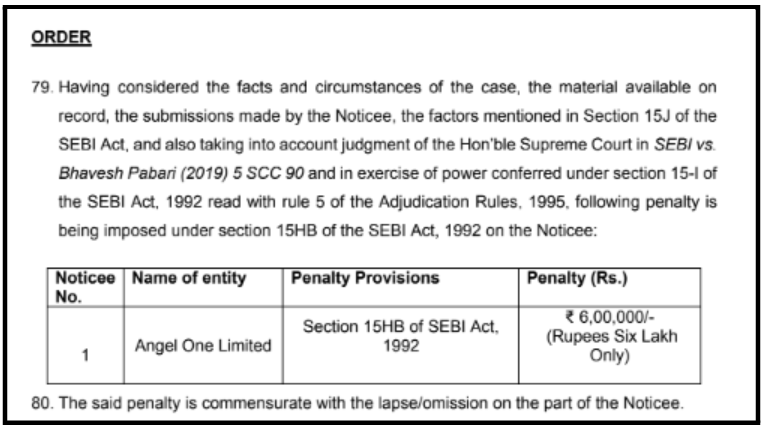
In November 2024, SEBI imposed a ₹6,00,000 penalty on Angel One, the only order in this set that resulted in a formal adjudicated penalty rather than a negotiated settlement. The order covered three areas: failing to settle inactive client accounts within required timelines, not reporting technical glitches to the exchange as mandated, and gaps in supervising an Authorised Person’s office setup. This page walks through each finding and how the case was actually decided.
Most of Angel One’s recent SEBI orders were resolved by settlement. This one was not. SEBI imposed a ₹6,00,000 penalty after adjudicating the matter directly. Here is what it found.
About Angel One Inactive Client SEBI Order: What Was Examined
SEBI’s order identified three separate compliance failures, each tied to specific circulars, and proceeded through formal adjudication rather than the settlement route Angel One used for most of its other recent orders.
What SEBI’s Findings Described
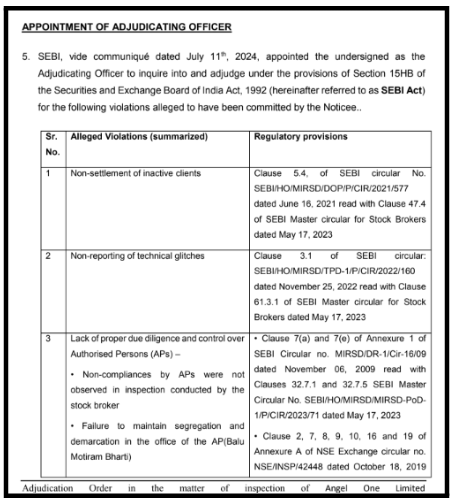
- Non-settlement of inactive client accounts: SEBI found Angel One had not settled inactive client accounts within the timelines required under its own May 2023 Master Circular for Stock Brokers, which builds on an earlier 2021 circular setting out the settlement process for accounts that have gone dormant.
- Non-reporting of technical glitches: The order found Angel One had failed to report technical glitches to the exchange in line with SEBI’s 2022 circular on the subject, which requires brokers to notify exchanges of business-disrupting technical failures within set timeframes.
- Supervision gaps over an Authorised Person’s office: The order specifically named an Authorised Person, Balu Motiram Bharti, whose office setup did not maintain the proper segregation and demarcation required under exchange circulars. Angel One’s broker-level inspections had not detected this non-compliance.
Why This Went to Adjudication Instead of Settlement
Unlike the other recent orders against Angel One, this one proceeded to a formal adjudicated finding under Section 15HB of the SEBI Act, rather than being resolved through the settlement process where a broker pays without contesting the allegations.
That distinction carries weight beyond this one order too; the same account-settlement and glitch-reporting issues SEBI adjudicated here show up independently in the patterns investors have been raising in Angel One complaints for years.
SEBI examined the evidence on all three findings and reached its own determination directly.
What SEBI Concluded
SEBI imposed the ₹6,00,000 penalty directly, based on its findings across all three areas.
This distinction matters because an adjudicated penalty represents SEBI’s own determination after considering the evidence, rather than an amount Angel One agreed to pay without contesting the underlying allegations.
It is a more direct finding of non-compliance than the settled orders elsewhere in this set.
What This Order Means If Your Account Went Dormant
If you have an Angel One account that became inactive and you experienced delays getting it settled or closed, this order confirms SEBI has already identified exactly this kind of delay as a compliance failure at the broker.
Similarly, if you experienced a technical glitch that Angel One did not adequately explain or acknowledge, this order shows the broker has previously been found short on its reporting obligations for exactly this issue.
Account-level controls have been a recurring theme in SEBI’s findings against Angel One, whether that’s a dormant account not settled on time or, in a separate order, fabricated identities that slipped past onboarding checks, covered in the Angel One Bogus Accounts SEBI Order.
Neither issue points to the same failure, but both sit on the same weakness: account oversight that didn’t catch a problem until well after it had already taken hold.
For a real arbitration case involving repeated technical failures, see Angel One technical glitch arbitration, where a client recovered compensation after Angel One had a documented pattern of similar issues.
Has your inactive account or a technical glitch not been resolved by Angel One?
Our team checks whether your situation matches findings SEBI has already made, and builds the right complaint or arbitration route around it. Register with us for a free consultation.
Conclusion
This is the one SEBI order against Angel One in recent years that resulted in a direct, adjudicated penalty rather than a settlement, covering inactive client accounts, unreported technical glitches, and a supervision gap over an Authorised Person’s office.
The ₹6,00,000 penalty is smaller than the settlement amounts elsewhere in this set, but the fact that it was adjudicated rather than settled makes it a more direct regulatory finding.
Report. Recover. Stay Fraud Free.
Frequently Asked Questions
Most of Angel One's recent SEBI orders were resolved through settlement, where the broker pays without admitting or denying the findings. This order was formally adjudicated, meaning SEBI reached its own determination and imposed the penalty directly under Section 15HB of the SEBI Act.
Three issues: delayed settlement of inactive client accounts, failure to report technical glitches to the exchange as required, and a supervision gap over an Authorised Person's office that did not meet segregation requirements.
SEBI imposed a penalty of ₹6,00,000 under Section 15HB of the SEBI Act, 1992.
It provides useful regulatory context showing SEBI has already found the broker fell short in exactly these areas. Your own specific complaint or claim still needs to be raised separately, but this order supports the pattern you may be describing.





 Add us as a preferred source on Google »

