
Quick Summary
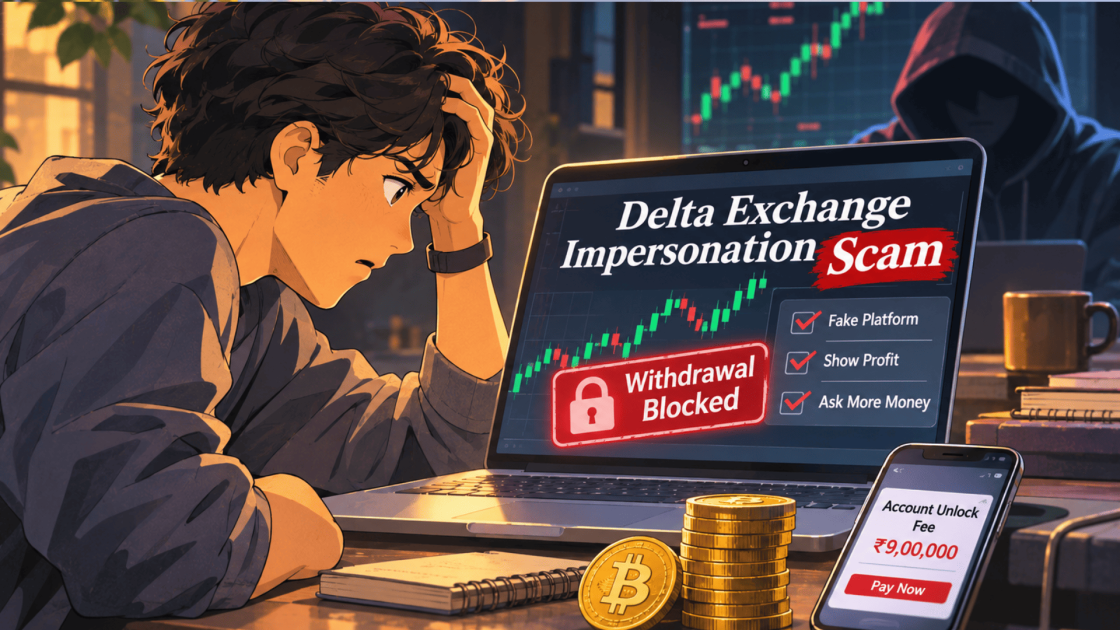
Fraudsters are using the Delta name, including Delta Exchange India, to run fake investment sites, apps and social media profiles. Delta Exchange has warned that look alike websites are not linked to it. Reported victims were shown fake profits, allowed a small withdrawal, then asked for more money to unlock their funds. This page explains how the Delta Exchange impersonation scam works, the forms it takes, reported cases and what to do next.
The dashboard shows your profit growing every day. Then the withdrawal button stops working.
That is the story many investors tell after trusting a site or app that used the Delta name. The real businesses behind that name are not the ones taking the money.
This post explains the Delta Exchange impersonation scam using Delta’s own public warning and cases reported online.
Read it before you add one more rupee.
Delta Exchange Review
Delta Exchange India is a real trading platform, and it has published a notice about fake websites using its name.
Delta Corp is another genuine company whose name is reported to be misused.
It has raised concerns about fake social media accounts and deepfake videos using its identity.
Reports describe these as different fraudulent entities and impersonation attempts, not one confirmed scam operation.
This blog keeps them apart for the same reason.
Are These Delta Investment Offers Real or Fake?
This is the question investors ask once withdrawals fail.
Here is what Delta Exchange itself says.
In its notice, Delta Exchange stated that multiple fraudulent websites impersonate it and are not associated with Delta Exchange India.
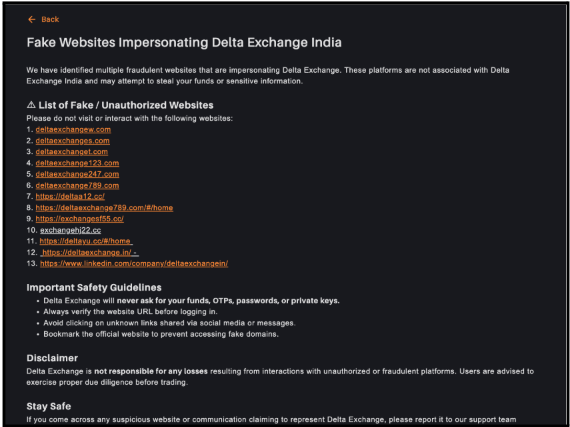
It listed look-alike domains and asked people not to visit them.
It also said it will never ask for your funds, OTPs, passwords, or private keys, and advised people to check the website address before logging in.
So an offer in the Delta name that asks for deposits through a link, group, or app should be verified before you pay.
Also Read: A caller offered ₹15 lakh under a 20-year agreement, ₹25,000 monthly rent and free internet, then asked for ₹30,000 to ₹35,000 in processing fees, as reported in our Airtel tower installation scam guide.
Delta Exchange Impersonation Scam in India
This section explains what the scam is and where investors meet it.
It also shows why the Delta name makes it look believable.
Fraudsters misuse the names, logos, and websites of genuine businesses, or create fake entities with similar names, to win an investor’s trust.
It is a classic impersonation scam, where a trusted brand is borrowed so a paid investment looks safe.
They may use fake websites, social media profiles, messaging groups, and AI-generated deepfake videos, and may falsely claim links with established companies or well-known public figures.
How Does the Delta Exchange Impersonation Scam Work?
Reports follow a fairly steady pattern.
Here is the order in which it is described to unfold.
- A look-alike site or app. Fraudsters copy a real brand’s name and branding to build a website, trading platform, or social profile.
- A fake dashboard. Investors register and deposit money by bank transfer or crypto. The screen shows fabricated profits.
- A small withdrawal. Reports say a small withdrawal may be allowed early on, which builds trust and encourages a bigger deposit.
- A blocked withdrawal. When investors try to take out larger amounts, they are asked for payments such as account unlocking, verification, or processing fees.
- Complainants report that communication may be blocked after the extra payments.
Most of these steps are the same ones seen in many clone trading apps, only with a different name on top.
Common Forms of Delta Impersonation Scams
The Delta name appears in more than one kind of offer.
The table below lists the forms mentioned in the research and what investors may notice.
| Form | What investors may see | Warning sign |
| Look-alike exchange websites | An address close to the real one, with copied branding | The address does not match the official site |
| Fake trading apps | A dashboard showing steady profits | Withdrawals fail and new fees appear |
| IPO style platforms | Discounted IPO allotments and high returns | Money asked into different bank accounts |
| Fake social profiles and deepfake videos | Company staff or public figures promoting investments | Pressure to move to a chat group |
| Investment groups with Delta style names | Group admins offering managed returns | Deposits only by transfer or crypto |
None of these forms proves that one single company is behind them.
They show how widely a trusted name can be copied, so check any Delta named offer at its source before paying.
Also Read: Police allege one suspect used stolen photos, a US-registered WhatsApp number and an audio chat app while posing as the company’s chief executive to pitch Bitcoin, as reported in our Galaxy digital impersonation fraud guide.
Reported Cases Involving Delta Named Platforms
These cases involve different platforms that used a Delta-style name.
They are allegations by the poster or the report, and the real Delta businesses are not accused.
1. An IPO Platform That Blocked a ₹3 Lakh Withdrawal
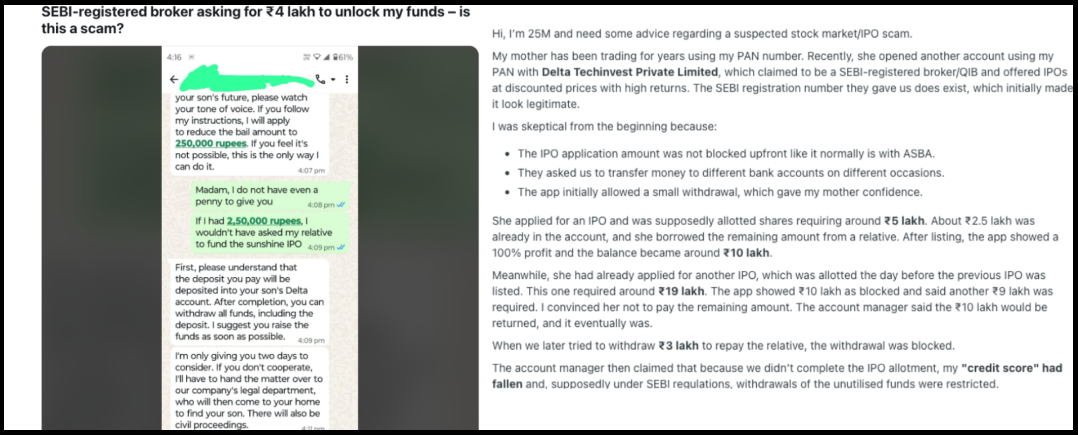
A Reddit user said their mother opened an account on a platform with a Delta-style name, which claimed to be a SEBI-registered broker.
The registration number it gave reportedly existed, which made it look genuine.
The poster said the platform did not block the IPO amount upfront as the normal process does.
Money was asked into different bank accounts, and a small withdrawal was allowed first.
An IPO allotment of about ₹5 lakh showed 100% profit, taking the balance to about ₹10 lakh.
A second IPO then needed around ₹19 lakh, and the family did not pay the rest.
When they tried to withdraw ₹3 lakh, it was blocked.
The account manager allegedly blamed a fallen “credit score”, then asked for ₹9 lakh to complete another allotment or a ₹4 lakh security deposit to unlock the funds.
The poster also reported threats of legal action and a home visit.
A registration number that exists does not prove that the platform using it is authorised.
2. A ₹11.29 Lakh Loss on a Fake Investment App
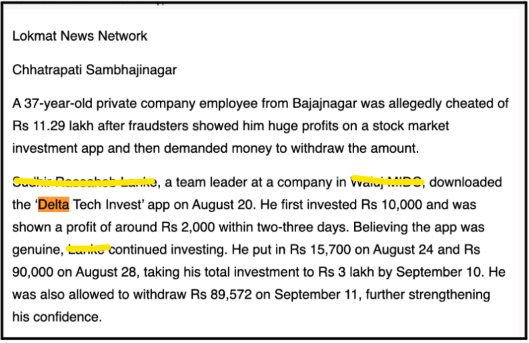
A local news report described a 37-year-old private company employee who allegedly lost ₹11.29 lakh through a fake stock market investment app.
He reportedly started with ₹10,000, saw about ₹2,000 in displayed profit within days, and later withdrew ₹89,572.
That success encouraged him to raise his investment to about ₹3 lakh.
The app then showed profits above ₹46 lakh.
When he tried to withdraw, the operators allegedly demanded a 20% service charge and then an income tax payment.
He paid about ₹9.19 lakh in charges and still could not withdraw.
He reported the matter on 1930, and a police case was registered.
Also Read: Scammers posing as Shopify Experts reportedly used free email accounts and screenshots of official badges, and one partner said at least six clients were contacted in six months, as covered in our Shopify impersonation scam guide.
What the Reported Cases Have in Common
Both cases look different on the surface. This section pulls out the pattern investors can spot early.
- Early proof of success. A small withdrawal or a paper profit is shown first.
- Rising deposits. Investors are encouraged to put in more after seeing profits.
- A new charge at exit. Unlocking, service, or tax payments appear only when money is to leave.
- Pressure and threats. Deadlines and legal warnings are used to keep investors paying.
How to Stay Safe From Fake Delta Investment Offers?
A few checks before you deposit can stop most of these tricks. This section lists them in plain steps.
- Type the address yourself. Do not log in through links sent on social media or chat. Bookmark the official website.
- Never share OTPs, passwords, or private keys. Delta Exchange says it will never ask for them.
- Check where the money goes. Be careful when deposits are asked into different bank accounts or personal wallets.
- Verify the registration. A SEBI registration number must match the exact name of the platform you are paying.
- Doubt quick profit stories. Steady daily gains and a small early withdrawal are the usual bait.
Many victims first meet this trick through an IPO pitch, as one investor who invested in IPO using his link later found out.
What to Do If You Lost Money to a Fake Delta Platform?
If you have already deposited, act quickly and calmly. This section gives the order to follow.
- Stop paying. Do not pay any unlocking, tax, verification or service charge to release your funds.
- Save the evidence. Keep screenshots of the app or site, chats, account details, transaction IDs, and bank statements.
- Call helpline straight away. This is the national cyber fraud helpline, and early reports give banks more time to act.
- Inform your bank. Share the transfer details so it can flag the receiving accounts.
- File a complaint online. Use the national cybercrime portal and submit your evidence, as explained in our guide how to file a cyber crime complaint.
- Report the fake page or profile. Flag it to the platform and, if it is a fake Delta page, to Delta Exchange through its official support.
No one can promise that money will come back.
Quick reporting only gives you the best chance of the right agencies acting.
Deposited money on a Delta named platform and cannot withdraw it?
Losses in these cases are often large. Our team reviews cyber fraud cases of ₹30,000 and above, and a clear record of deposits helps a lot. If your loss is in that range, register with us and we will go through your case with you.
Conclusion
Delta Exchange India and Delta Corp are real businesses, and both have warned about their names being misused.
The fake sites, apps, and groups are the problem.
A genuine platform does not ask for a fee to release your own money.
If you are asked to keep paying, stop, save your proof, and report it.
Report. Recover. Stay Fraud Free.
Frequently Asked Questions
No. Delta Exchange India is a real platform and has warned about fake websites using its name. The scam is the impersonation of that name.
Check the address against the official site, and avoid links from social media or chat groups. Delta Exchange says it never asks for funds, OTPs, passwords or private keys.
In the reported cases, withdrawals were blocked until investors paid unlocking, tax or service charges. Paying more usually leads to further demands.
Stop paying, save your evidence, call 1930, inform your bank and file a complaint on the cyber crime portal.
No one can promise it. Reporting quickly gives banks and agencies the best chance to act.


 Add us as a preferred source on Google »