
Investors searching “is Shares Bazaar research analyst safe” are likely not browsing casually, they’ve either been approached, already invested, or heard something concerning.
The direct answer, based on publicly available regulatory records: BSE expelled Shares Bazaar Pvt Ltd in December 2022 for running an assured returns scheme. SEBI subsequently found it was operating a Ponzi and MLM structure.
The Research Analyst registration currently held is the third registration the same entity has operated under. That context is what every investor needs before making any financial decision here.
Is Shares Bazaar Research Analyst Safe Or Not?
The question isn’t whether Shares Bazaar holds a SEBI registration; it does (INH200010001) and the contact person is Bhupal Naik Nanavath.
The question is what that registration actually means given the regulatory history behind the entity holding it.
SEBI registration does not erase a prior BSE expulsion. It does not override an SEBI finding of Ponzi conduct. And it does not make direct bank transfers, 48% monthly return promises, or withdrawal delays any less concerning.
What Regulators Have Already Established About Shares Bazaar?
Before examining investor complaints and platform behaviour, it is important to understand what India’s financial regulators have already formally found about Shares Bazaar Pvt Ltd (SBPL), the entity behind the Research Analyst registration.
This is not based on investor opinions or online reviews. It is drawn from documented regulatory actions on public record.
1. 2021-2022: NSE Investigation and EY Mystery Shopping
The National Stock Exchange initiated an investigation into Shares Bazaar’s operations. As part of this process, Ernst & Young conducted a mystery shopping exercise, a method where investigators pose as potential investors to examine what a platform actually offers versus what it claims.
The findings were significant. EY confirmed that SBPL was offering advisory services and portfolio management services (PMS) with assured returns under a programme called ‘Making Millions Financially Free’ (MMFF Program 2021–25).
Running a PMS without SEBI registration is a regulatory violation. Promising assured returns on market-linked activity is also prohibited.
2. December 2022: BSE Expels Shares Bazaar as a Trading Member
Acting on the NSE press release, BSE initiated proceedings against SBPL. On 30 December 2022, BSE expelled Shares Bazaar as a trading member for offering an assured returns scheme, the MMFF programme confirmed by EY’s report.
An expulsion from a stock exchange is among the most serious regulatory consequences an entity can face. It means SBPL was no longer permitted to operate as a broker on Indian exchanges.
3. October 2022-April 2023: Fresh Registration Obtained by Concealing the Expulsion
Here is where the documented timeline becomes especially significant for investors.
In October 2022, while the NSE investigation was active, SBPL applied for registration as a Category III Alternative Investment Fund (AIF) manager with SEBI. The AIF registration was granted in April 2023.
SEBI later found that SBPL did not disclose the NSE press release, the cease and desist order, or the BSE expulsion in its AIF application or in any subsequent communication with the regulator. SEBI’s own order described this as “a pattern of concealment of material information” that “prima facie points to SBPL’s dishonest and unethical conduct in obtaining registration.”
4. November 2023: ₹21 Crore Raised from Investors Through the AIF
Using the freshly obtained AIF registration, Shares Bazaar AIF completed its first fund closing in November 2023, raising a total capital commitment of ₹21 crore from investors, all while the prior BSE expulsion and regulatory history remained undisclosed.
5. February 2024: SEBI Bars the AIF and Freezes All Accounts
SEBI issued an interim order on 1 February 2024, confirmed shortly after, barring Shares Bazaar AIF from raising any further funds.
The custodian of the AIF, Orbis Financial Corporation, was directed not to permit any debit or credit transactions in the fund’s trading, demat, or bank accounts.
SEBI’s order stated directly: “The credibility attached to the status as registered intermediaries cannot be used to conceal illegal activity.”
What this timeline means for investors today
The Research Analyst registration (INH200010001) that Shares Bazaar currently holds is not a clean slate.
It belongs to the same entity that was expelled from BSE in 2022, which SEBI found had operated a Ponzi and MLM structure, and that obtained subsequent registrations without disclosing prior regulatory actions.
When investors ask, “is Shares Bazaar research analyst safe?”
The answer regulators have already provided through their own orders is that this is an entity with a documented pattern of misrepresentation across multiple registrations. The current RA registration is the latest chapter of that same history, not a fresh start.
Shares Bazaar Red Flags
Recently, several observations and investor discussions connected to Shares Bazaar have started raising concerns online.
These observations do not automatically establish misconduct or wrongdoing.
However, some patterns and reported experiences are significant enough that investors should examine them carefully and conduct proper due diligence before making financial decisions.
So, let us look at some important red flags investors should not ignore:
1. Assured Returns: Already Illegal
Certain reviews on online community platforms have stated that the company gave an assured returns promise.
This becomes important because market-linked activities naturally involve risk and uncertainty.
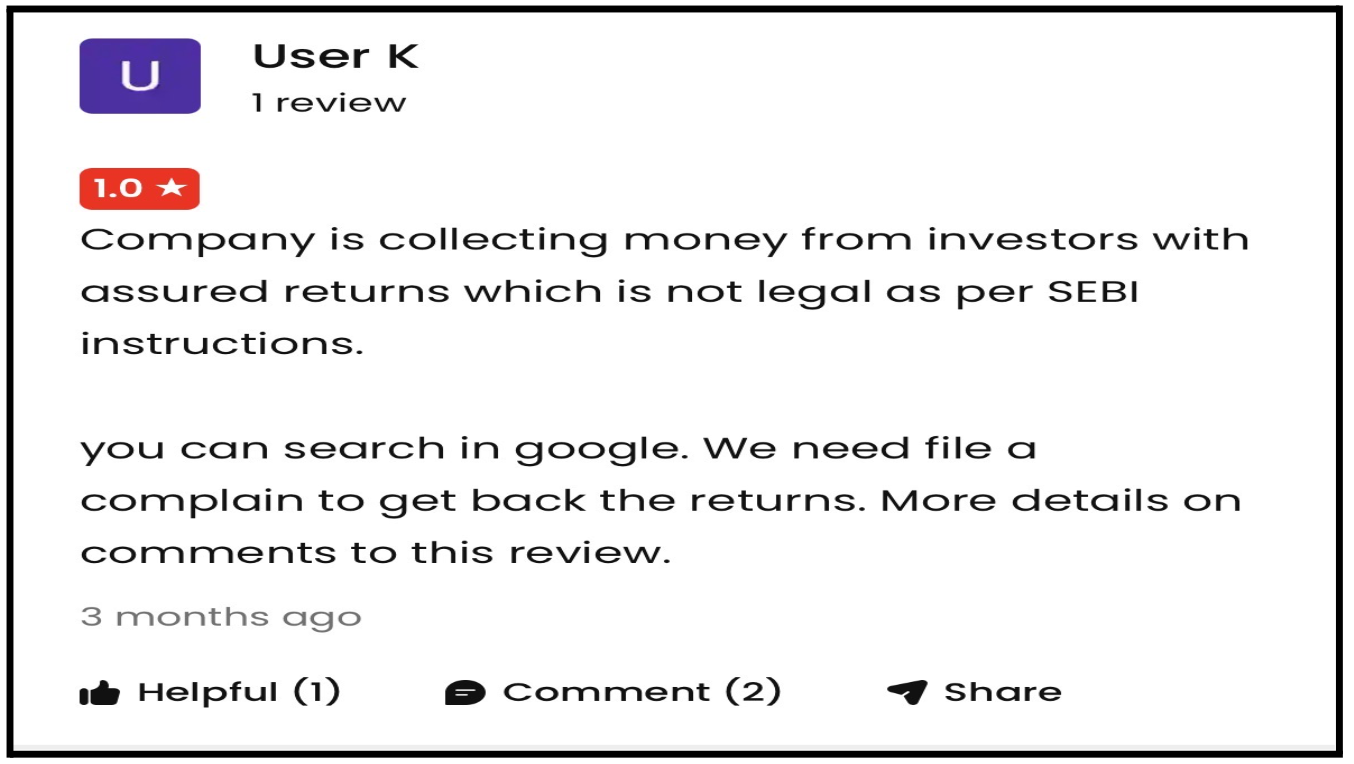
Whenever words like safe profits or fixed payouts are heavily emphasised, investors should become extra cautious.
No financial activity should be treated as completely risk-free without proper verification.
2. Bank Transfers: Ponzi Routing Mechanism
Another question repeatedly raised by investors involves payment handling practices.
Bank account details and IFSC information were reportedly shared directly with investors.
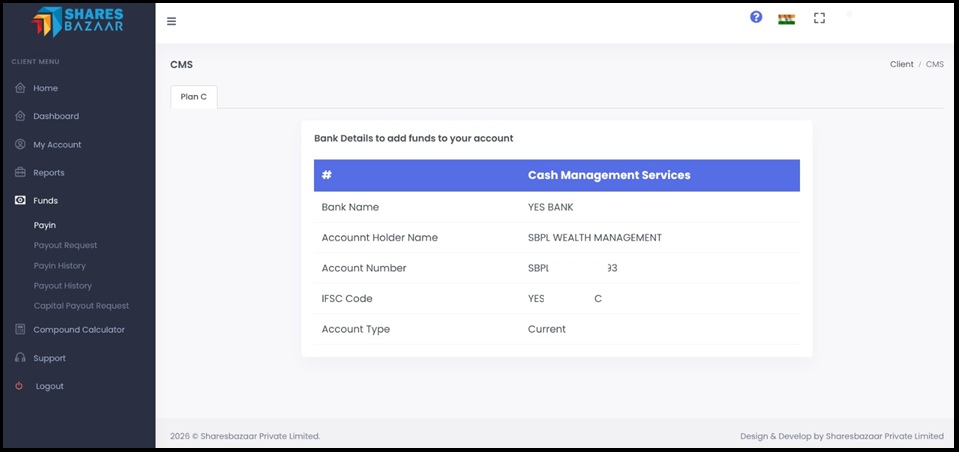
This creates an important concern for many users.
If investors are expected to invest through their own trading accounts, why are direct transfers required first?
Before transferring funds anywhere, investors should always seek complete transaction clarity.
3. Withdrawal Delays: Liquidity Collapse Signal
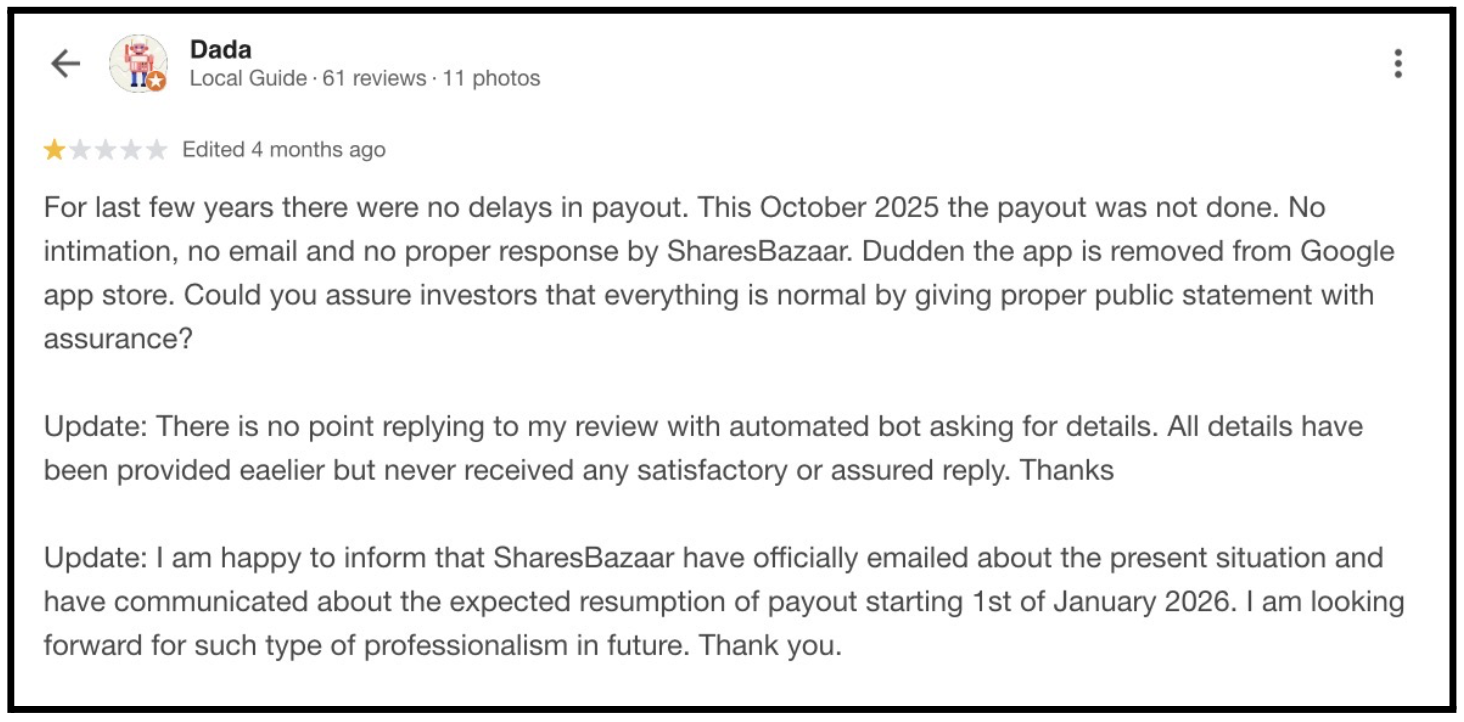
Shares Bazaar now revolves around delayed payments and pending withdrawals. Investors claim they are still waiting for their money to be returned.
During a webinar discussion, financial hardships faced by investors were also acknowledged openly.
References were made to hospital expenses, school fees, and personal financial pressure.
This suggests that many people may have invested substantial personal savings.
4. LIVE Webinar
Another issue that caught investor attention involved the live webinar communication.
According to discussions shared online, investors were reportedly discouraged from posting critical reviews publicly.
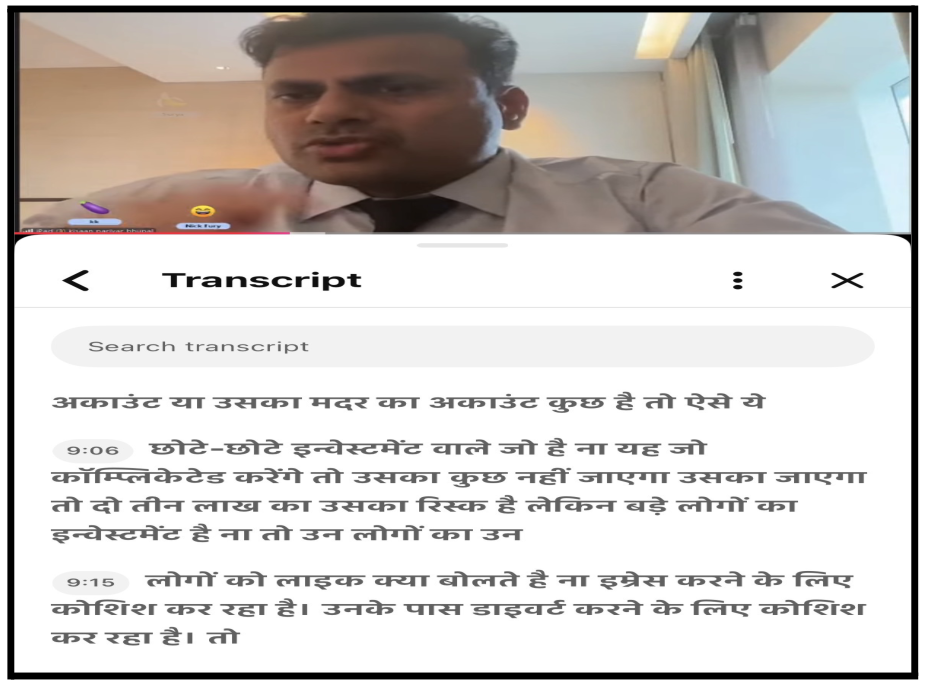
There were also references to legal action and defamation-related consequences against critics.
Such statements may create discomfort among investors already dealing with payment uncertainty.
Transparent communication usually becomes extremely important during financial disputes.
5. Changing Timelines
During the webinar, repayment timelines ranged from one week to two months, with June mentioned as a possible window, but no firm date was committed to.
For investors who had already been waiting weeks at that point, this was not a timeline.
It was an indefinite delay dressed up as a schedule. When a company cannot give a specific repayment date to investors who have already submitted withdrawals, it usually means the funds are not readily available, because they were never held separately from operational cash in the first place.
6. Shares Bazaar Complaints
At first glance, the online rating may look reassuring to new visitors. The platform reportedly holds strong ratings on Google from several users.
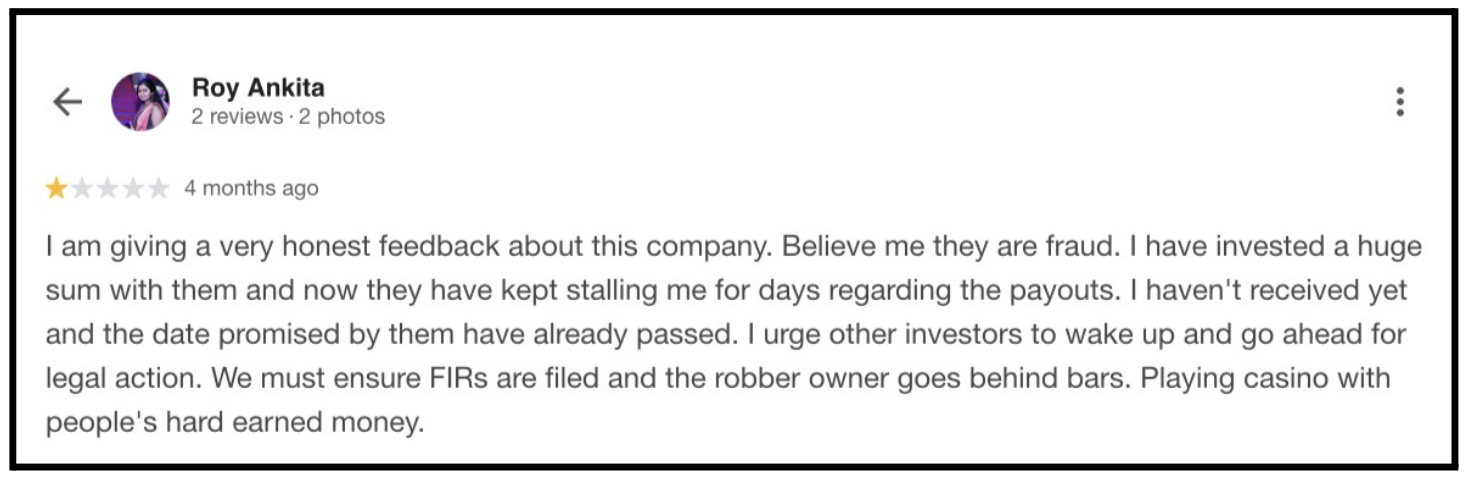
However, ratings alone never tell the complete story behind an investor’s experience.
Some negative reviews focus on delayed payments, communication issues, and withdrawal-related concerns.
According to discussions linked to a leaked webinar video, investors were allegedly encouraged not to spread criticism publicly.
This naturally raises questions regarding whether online ratings fully reflect investor sentiment or not.
Another observation raised by users relates to complaint transparency. SEBI-regulated entities are generally expected to maintain clear grievance-related disclosures.
However, some users claim they could not easily locate complaint-related information on the platform.
For investors, transparent complaint handling mechanisms are always an important trust factor.
These accumulated concerns are precisely why so many people are actively debating Shares Bazaar Research Analyst genuine or fake across forums and review platforms today.
7. 48% Return Claims
Shares Bazaar research analyst investment scheme is one major concern.
Many visitors may struggle to identify whether they joined a research service or an investment opportunity.
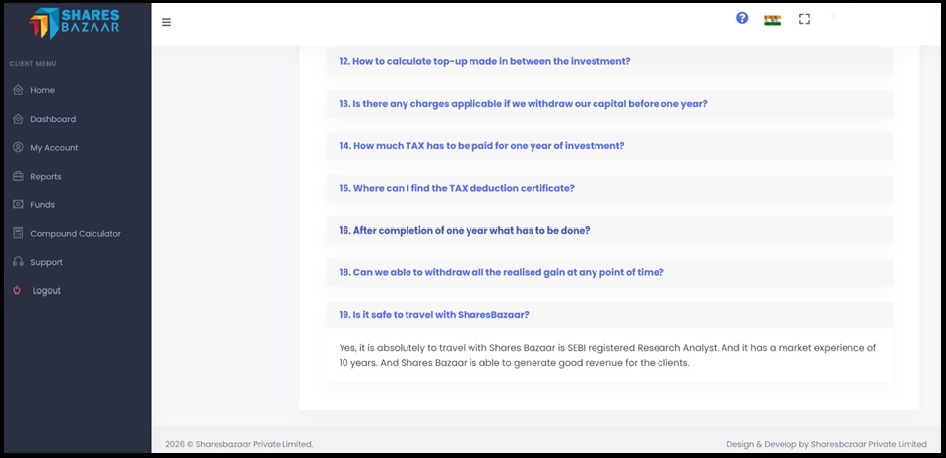
A Research Analyst is generally expected to provide analytical research and market-related insights.
However, several sections of the platform reportedly focus heavily on investment style discussions and returns.
This naturally creates confusion regarding the actual nature of the offering.
Another major talking point involves extremely high monthly return expectations.
Some investors reportedly purchased plans that mentioned returns close to 48% within one month.
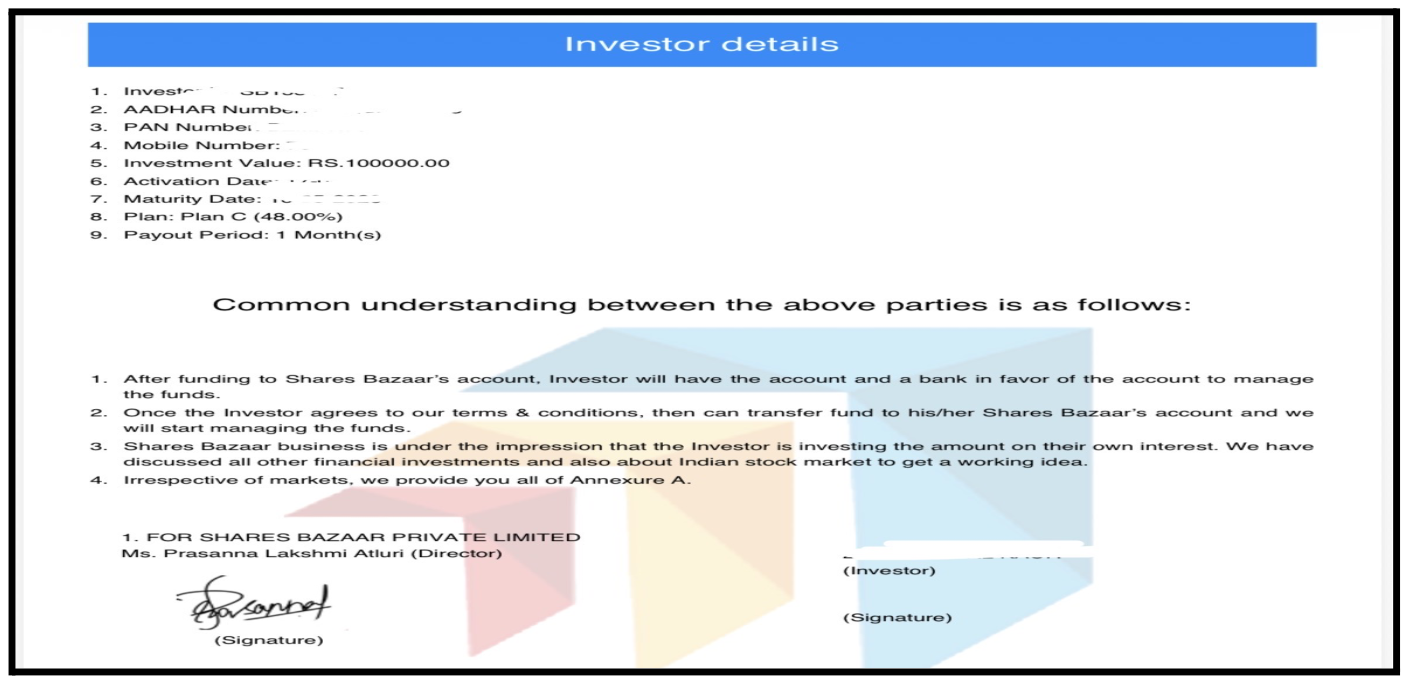
For most retail investors, such numbers immediately sound attractive and difficult to ignore.
However, unusually high return projections always deserve careful verification and deeper questioning.
Investors should always ask how such payouts are being generated consistently.
How To Complaint Against Shares Bazaar?
If you believe you are facing unresolved issues, proper complaint filing becomes very important.
A structured complaint process often improves clarity and strengthens your position significantly:
1. Collect Every Important Evidence
Begin by collecting all important records related to the interaction and payments.
Keep screenshots, payment receipts, webinar recordings, emails, WhatsApp chats, and any promotional material safely organised.
Proper documentation helps build a clearer and more structured complaint later.
2. Draft A Proper Complaint
A properly drafted complaint often improves procedural clarity significantly.
SEBI generally expects investors to first approach the concerned entity directly before escalation.
Keeping records of replies and acknowledgements also becomes extremely important here.
3. File a Complaint in SCORES
If the issue is not resolved directly with the company, investors can formally approach the Securities and Exchange Board of India through the SCORES platform.
SCORES functions as SEBI’s official investor grievance redressal system for complaints against regulated entities.
While filing the complaint, investors should carefully attach all supporting documents, payment proofs, communication records, and a clear timeline of events.
4. Lodge a Complaint in SMART ODR
Investors may also consider using the SMART ODR platform for online dispute resolution assistance.
The platform is designed to help resolve disputes between investors and regulated entities through a digital process.
5. Arbitration in the Stock Market
If the matter still remains unresolved, arbitration may become another possible legal option for investors.
At this stage, taking proper professional legal guidance can help in understanding the available remedies and documentation requirements.
Need Help?
You can register with us and receive structured assistance throughout the process.
We help individuals understand the proper steps, documentation, and complaint procedure that may be required in such matters.
Our team can also assist in organising payment proofs, communication records, timelines, and other supporting evidence clearly and systematically.
Conclusion
Based on publicly available regulatory records, BSE expulsion in 2022, SEBI’s Ponzi finding, AIF registration obtained through concealment of prior actions, and a custodian-level freeze on fund transactions, Shares Bazaar is not a platform with some concerning reviews.
It is an entity with a documented regulatory history that investors deserve to know about in full.
If you have already invested, do not wait for the next webinar update.
File on SEBI SCORES immediately, preserve every document, and treat every “we’re raising fresh funds to pay you” statement as the warning it is.