

Investors asking “Can you trust Mir Uniserv?” deserve a straight answer built on documented facts, not marketing language.
SEBI records, investor complaints, and the firm’s own regulatory history provide a far clearer picture than promotional claims ever can.
This blog covers the firm’s registration, SEBI order, user reviews, and everything else you need to make an informed decision.
Mir Uniserv Research Analyst
Mir Uniserv is a Kanpur-based research analyst firm run by proprietor Saurabh Shukla.
The firm offers equity tips, Nifty and Bank Nifty calls, intraday recommendations, and F&O advisory packages to retail investors.
It markets itself through a website, social media presence, and a sales team that reaches out to prospective clients directly over the phone.
The firm charges significant package fees, with some clients reporting six-month packages priced at ₹1.25 lakh and above.
Is Mir Uniserv SEBI Registered?
Yes, Mir Uniserv holds SEBI registration number INH100007639 under the Research Analyst Regulations, 2014, with validity from June 24, 2020, on a perpetual basis.
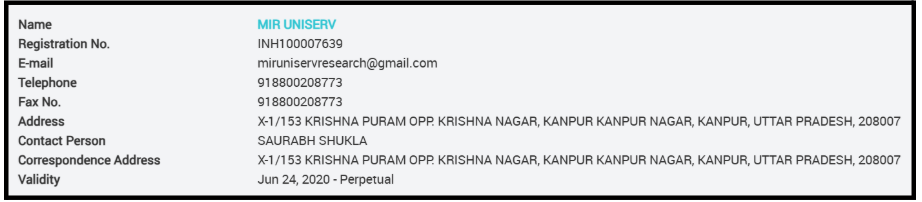
The contact person on SEBI’s records is Saurabh Shukla, registered at X-1/153 Krishna Puram, Opp. Krishna Nagar, Kanpur, Uttar Pradesh, 208007.
That said, a perpetual registration does not mean perpetual compliance, and SEBI’s own adjudication order against this firm makes that distinction clear.
Should You Trust Mir Uniserv?
The answer of “Can you trust Mir Uniserv?” requires weighing documented facts on both sides, not taking either the firm’s marketing or its critics at face value alone.
1. Holds a Legitimate SEBI Registration Since 2020
Mir Uniserv has maintained a valid SEBI registration since June 2020, for over five years.
Obtaining this registration requires meeting eligibility criteria and submitting to SEBI’s vetting process.
The firm therefore operates within India’s formal regulatory framework, at least in terms of its registration status.
2. Self-Reported Complaint Data Shows Resolution Activity
Mir Uniserv displays grievance data on its own website, showing 18 total complaints received across all years, with 17 resolved and 1 pending.
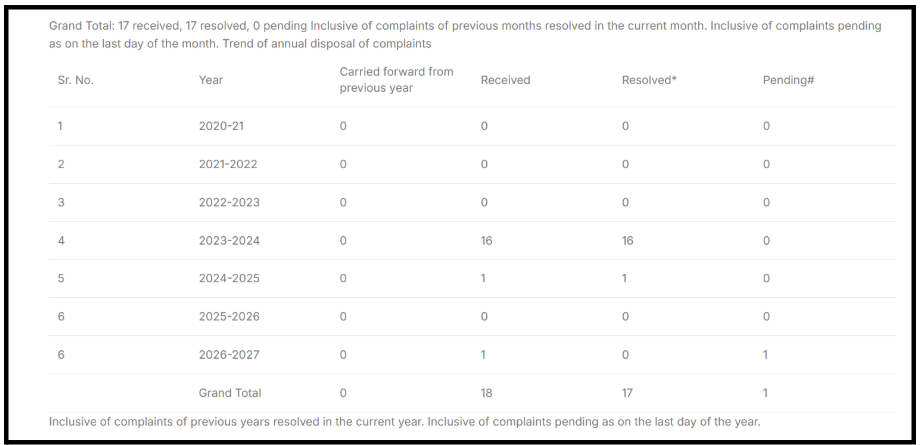
In 2023-24 alone, the firm received 16 complaints and resolved all 16 within that year.
A firm that engages with formal complaints at all is preferable to one that ignores them entirely.
3. The Self-Reported Complaint Data Raises Its Own Questions
The complaint data shows zero grievances recorded for 2020-21, 2021-22, and 2022-23, three full operating years with no formally captured complaints.
Then 16 complaints arrived in a single year.
This pattern is suspicious rather than reassuring, particularly since SEBI’s adjudication order confirmed that Mir Uniserv obtained its SCORES ID only in July 2022, two full years after registration.
Without a SCORES ID, clients had no formal grievance channel, meaning the zero-complaint years reflect an absent system rather than satisfied clients.
Before examining the regulatory findings in detail, it is important to understand the formal action initiated by SEBI against the firm and the scope of the adjudication proceedings.
SEBI Order Against Mir Uniserv
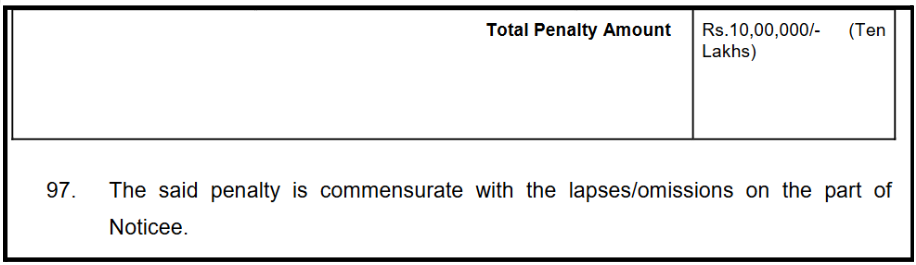
SEBI’s formal adjudication proceedings against Mir Uniserv resulted in a total penalty of ₹10,00,000, imposed across four distinct penalty provisions covering the full range of violations the inspection uncovered.
| Order Number & Date | Penalty |
|
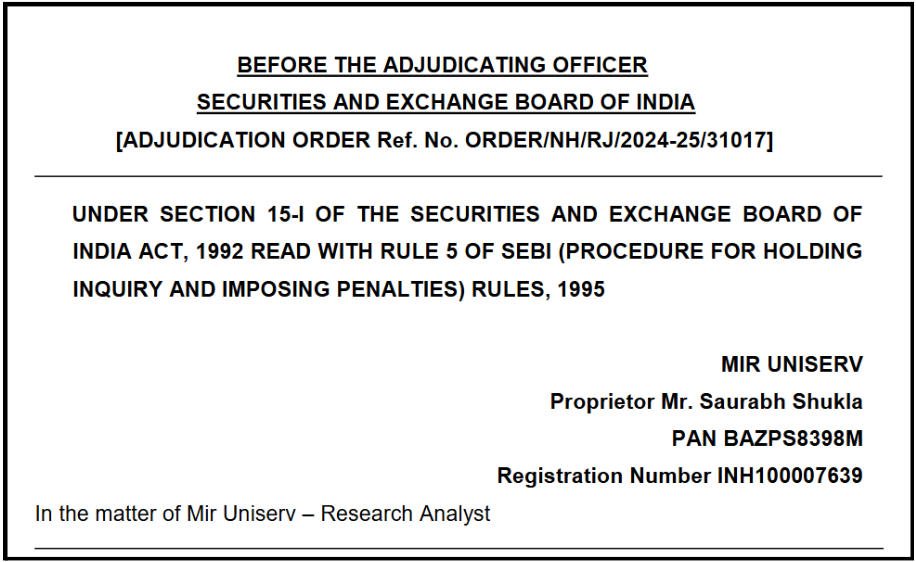
Adjudication Order Ref. No. ORDER/NH/RJ/2024-25/31017 November 29, 2024
|
₹5,00,000 under Section 15HA · ₹3,00,000 under Section 15EB · ₹1,00,000 under Section 15C · ₹1,00,000 under Section 15A(a) · Total: ₹10,00,000
|
-
Violations by Mir Uniserv
SEBI established violations across distinct issues, here are the most significant ones investors must understand.
1. Profit Assurances and Return Claims to Investors
Mir Uniserv’s communications and SCORES complaints referenced claims including “100% profits” and monthly returns of ₹50,000–60,000, with one investor reportedly paying ₹71,000 after receiving such assurances.
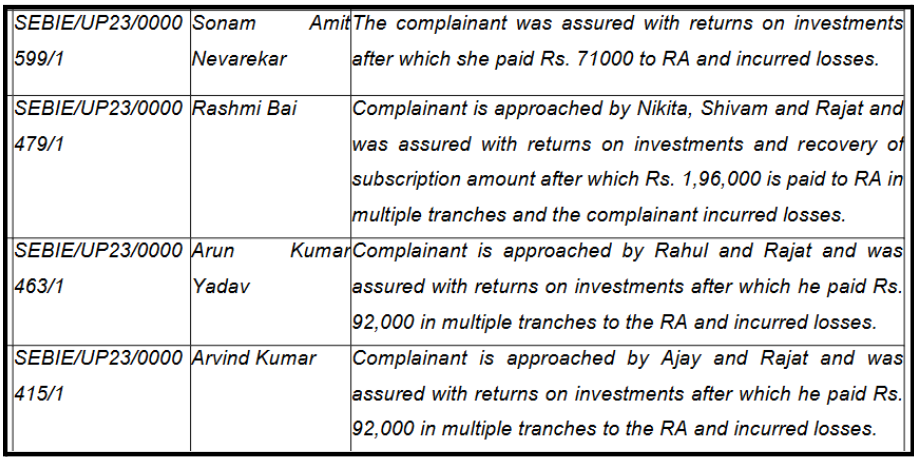
SEBI treated these claims as violations of PFUTP Regulations relating to fraudulent and misleading conduct.
2. Missing KYC Records and Delayed Investor Grievance Access
Mir Uniserv admitted that 190 clients lacked KYC records and blamed a technical glitch without producing supporting evidence.
The firm also obtained its SCORES ID two years after registration, leaving investors without a formal grievance channel during its early operations.
3. ₹2.54 Crore Paid to Third-Party Associates Without Contracts
Mir Uniserv admitted that external associates handled onboarding, client sourcing, and payment guidance during the inspection period.
The firm paid these parties ₹2,54,72,612 without written contracts or an outsourcing policy, while investor complaints also referenced the same individuals.
4. Non-Disclosure of Associated Entities and Website Removal During Inspection
Mir Uniserv initially submitted NIL disclosures for third-party payments despite records showing payments to associated entities including Banknifty Expert.
Additionally, the firm removed all website content during the inspection process, prompting the Adjudicating Officer to describe the conduct as a “lackadaisical attitude” that “cannot be condoned.”
A clearer picture of how these regulatory findings translate into real-world investor experience emerges from public feedback shared by users across different platforms.
Mir Uniserv User Complaints
Real investor experiences with Mir Uniserv reflect a pattern that aligns closely with what SEBI’s inspection documented.
Across multiple reviewers and multiple years, the same issues surface repeatedly.
1. Profit Promises and Poor Quality Trading Calls
One user alleged that a firm representative promised to turn ₹40,000 into ₹2.5 lakh within two months and ₹6 lakh within six months while assuring capital safety before collecting ₹43,500 in fees.
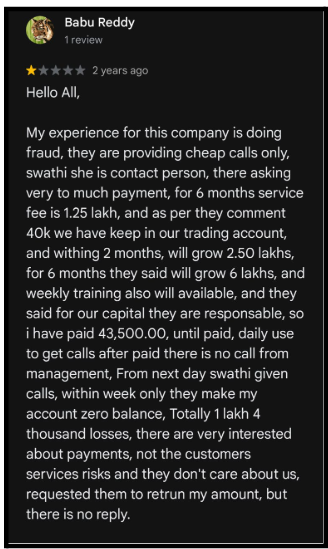
Additionally, another user criticised the firm’s equity and F&O calls as poor quality and financially damaging, warning other investors to avoid the service entirely.

These allegations closely mirror the profit assurance findings documented in SEBI’s adjudication order.
2. Unresponsiveness After Fee Collection and Trading Losses
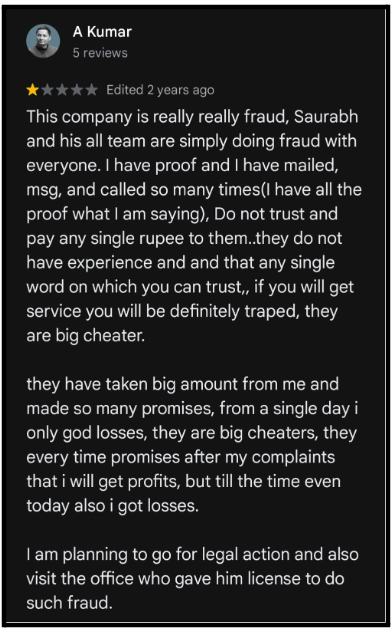
Another alleged that the firm stopped responding meaningfully after collecting fees and generating losses despite repeated calls, emails, and messages.
Similarly, Mukka Diwakarreddy described a pattern of upfront payments followed by capital erosion and complete silence, while also alleging fake reviews and a fake customer support number on the firm’s website.
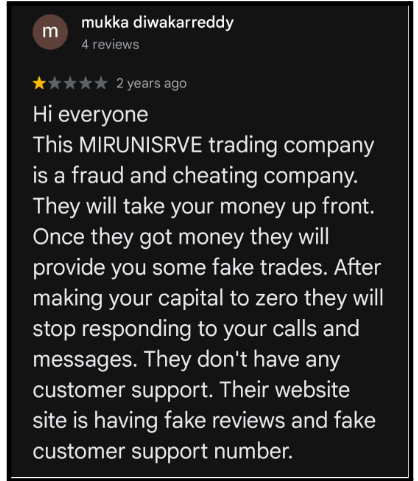
Together, these reviews describe a recurring pattern of poor grievance handling and post-payment inaccessibility.
3. Representatives Becoming Unreachable After Losses
Himanshu Chaudhary alleged that a representative named Jeetendra became completely unreachable after losses started occurring in his account.
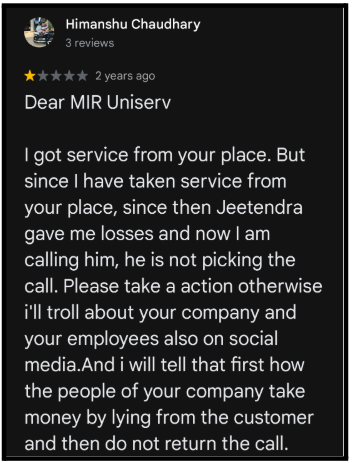
The review further accused the firm of using misleading claims to collect money before refusing to respond once accountability became necessary.
What Investors Must Keep in Mind?
Can you trust Mir Uniserv?
No SEBI registration guarantees honest conduct and Mir Uniserv’s case demonstrates exactly what a firm can do while holding a valid, perpetual registration.
Before engaging any research analyst, investors must build their own due diligence process around documented facts rather than sales pitches:
- Verify the firm holds an active SCORES ID and check the timeline of its complaint resolutions, not just the total count.
- Reject any communication that mentions specific monthly return figures, capital growth targets, or assured profit outcomes.
- Demand documented research rationale with every recommendation; a buy or sell call with no reasoning behind it is not research.
- Save every communication from the very first contact, messages, calls, emails, and payment receipts; all become critical evidence if things go wrong.
If a firm’s salesperson spends more time talking about what you will earn than about the risks you face, treat that as a signal to pause and investigate further before committing any money.
How To File A Complaint Against Research Analyst?
If Mir Uniserv took your fees, made profit promises that did not materialise, and then became difficult to reach, you have formal legal remedies and you must act on them quickly.
Delays weaken your case at every stage of the process:
Step 1: Put Your Complaint in Writing
Before escalating the matter, send Mir Uniserv a formal written complaint outlining the promises made, the amount paid, the losses suffered, and the timeline of events.
Include payment proofs and any messages, emails, or calls referencing assured returns or profit figures.
Preserve copies of everything you send, as regulators and arbitrators may later ask for proof that you first attempted direct resolution.
Step 2: File a Complaint in SCORES
Register a complaint on SEBI SCORES with complete supporting evidence, including your timeline, payment details, and communications with the firm.
SEBI forwards the complaint to the intermediary and tracks its response process.
Since Mir Uniserv already faces documented regulatory findings, additional complaints contribute to the broader compliance record surrounding the firm.
Step 3: Register a Complaint in SMART ODR
If the SCORES process does not resolve the dispute satisfactorily, escalate the matter to SEBI’s SMART ODR platform for structured conciliation.
An independent neutral party works with both sides to help settle traditional court proceedings.
Submit a complete evidence set, including written profit claims, transaction records, and details of the losses linked to the firm’s recommendations.
Step 4: Initiate Arbitration in the Stock Market
Where conciliation fails, move forward with arbitration under the same dispute resolution framework.
Arbitration can result in a binding legal award against the intermediary.
Prepare thoroughly before filing by organising all payments, communications, recommendation records, and written explanations connecting the firm’s claims to your financial losses.
Need Help?
We support investors facing disputes with research analysts, including cases involving misrepresentation, fee-based services, and regulatory grievance escalation.
- Case Analysis: We examine your transactions, documents, and communications to understand the strength and structure of your claim.
- Complaint Structuring: We prepare detailed, regulator-compliant filings for SEBI SCORES and SMART ODR platforms.
- Record Preparation: We organise all evidence including payments, chats, emails, and loss breakdowns into a clear file.
- End-to-End Assistance: We guide you through each stage of escalation, from initial filing to conciliation and arbitration.
Register with us if you need structured support in pursuing your investor complaint effectively.
Conclusion
Can you trust Mir Uniserv? The documented record, SEBI adjudication order, ₹10 lakh penalty, and multiple violations across five categories raise serious concerns.
User reviews also describe profit promises followed by losses and unresponsiveness, giving investors strong reason to proceed with caution.
Registration exists. Compliance did not. If you have already paid fees and suffered losses, formal remedies exist through SEBI SCORES, SMART ODR, and arbitration.
Act now, while your evidence is intact and your timelines are still within reach.





 Add us as a preferred source on Google »

