

Investors asking “is Mir Uniserv SEBI registered?” deserve a complete answer, not just a yes or no.
Many investors mistakenly assume that a SEBI registration automatically guarantees fair conduct and regulatory compliance.
Registration is only the starting point. What matters equally is whether the firm actually operates within the boundaries that registration demands.
Mir Uniserv SEBI Registration Details
For investors asking, “is Mir Uniserv SEBI registered?”, the answer is Yes.
The firm holds SEBI registration number INH100007639 under the Research Analyst Regulations, 2014, with validity from June 24, 2020, on a perpetual basis.
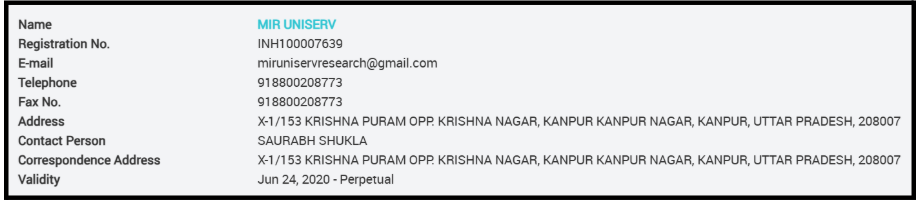
The contact person on record is Saurabh Shukla, based in Kanpur, Uttar Pradesh.
A legitimate research analyst holding this registration must maintain proper KYC records, provide documented research recommendations, and avoid any promise of assured returns.
They must also resolve investor grievances within prescribed timelines and cooperate fully with SEBI during any inspection.
Mir Uniserv research analyst held the registration, but SEBI’s formal investigation found that the firm fell short of several of these fundamental obligations, resulting in a documented adjudication order against it.
SEBI Action Against Mir Uniserv
SEBI conducted a formal inspection of Mir Uniserv covering April 1, 2022, to December 31, 2023 and initiated adjudication proceedings that resulted in Adjudication Order Ref. No. ORDER/NH/RJ/2024-25/31017.
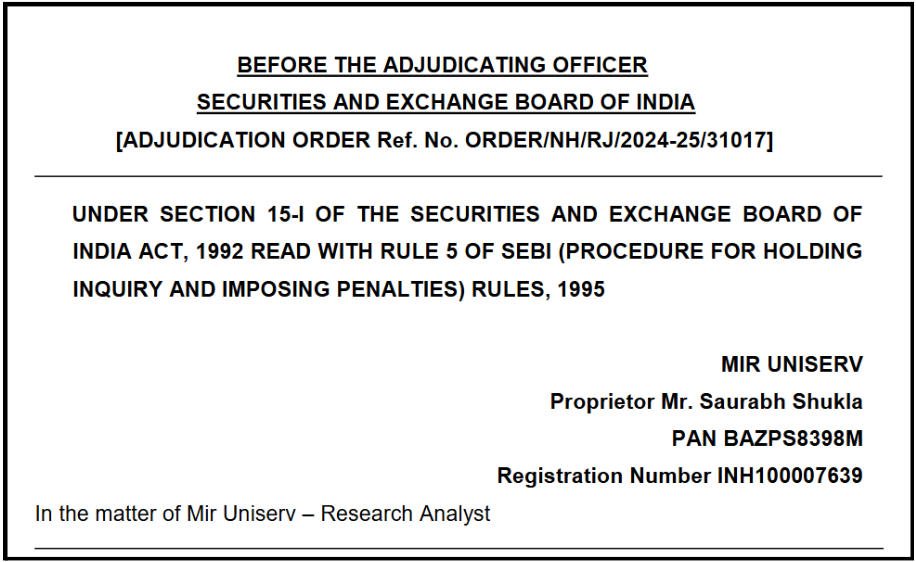
The order examined five distinct categories of violation and established breaches across every one of them.
-
Violations by Mir Uniserv
SEBI established the following violations, each one directly impacting either client interests or regulatory integrity.
1. Alleged Assured Profit Promises to Investors
Several investor complaints filed on SCORES claimed that Mir Uniserv promised specific profits, including 100% returns and monthly earnings between ₹50,000 and ₹60,000, to persuade clients to pay fees.
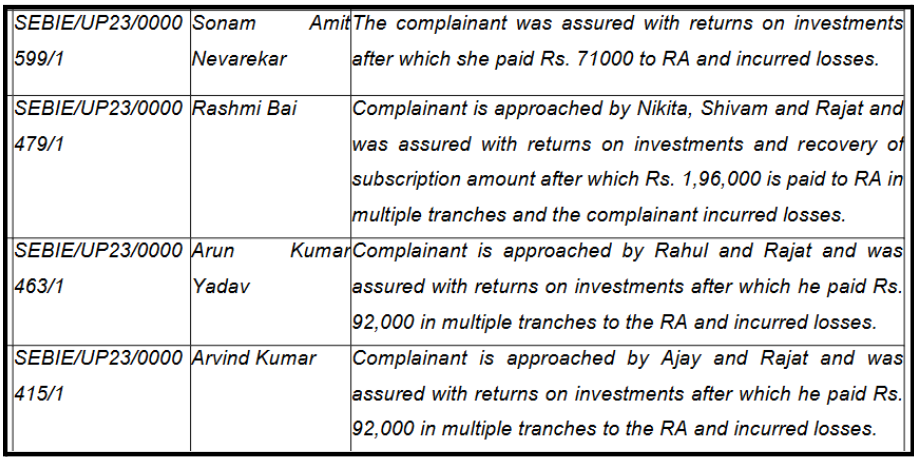
Additionally, SEBI reviewed written communication from the firm referring to “expected profits with predefined maximum and minimum losses.”
SEBI concluded that this language represented a profit assurance instead of a legitimate risk disclosure.
Accordingly, SEBI held Mir Uniserv in violation of PFUTP Regulations 2(1)(b) and (c), 3(a) and (d), 4(1), and 4(2)(k), (o), and (s).
2. Outsourcing of Core Activities Without Formal Arrangements
SEBI found that Mir Uniserv outsourced important functions such as client onboarding, KYC collection, and client servicing to external marketing associates and telecallers.
The firm paid these parties a total of ₹2,54,72,612.
However, Mir Uniserv did not maintain written agreements, an outsourcing policy, or verifiable proof showing that these individuals worked as internal employees.
As a result, SEBI rejected the firm’s explanations and treated the conduct as a violation of the December 15, 2011, SEBI circular and the Code of Conduct under the RA Regulations.
3. Non-Disclosure of Associated Entities and Removal of Website Content
During the inspection, SEBI requested information relating to third-party payments.
In response, Mir Uniserv submitted NIL disclosures even though its own financial statements reflected payments to entities such as Banknifty Expert, Options Experts, MCXcommodityresearch, and Tradepix Investment Planner.
SEBI also noted that Banknifty Expert operated as a proprietorship connected to the same proprietor.
Mir Uniserv removed all content from its website, preventing inspectors from independently verifying compliance-related information.
Although the firm claimed that the website hosting had expired, SEBI found no supporting evidence for that explanation and therefore concluded that the conduct violated Regulations 29(1) and 29(2) of the RA Regulations.
4. Delay in SCORES Registration and Investor Complaint Handling
Mir Uniserv received SEBI registration in June 2020 but obtained its SCORES ID only on July 5, 2022.
Consequently, investors lacked access to a formal grievance mechanism for nearly two years.
Moreover, SEBI identified 12 investor complaints that the firm resolved beyond the prescribed timelines, with delays ranging from 31 to 94 days instead of the stipulated 21-day and 30-day limits.
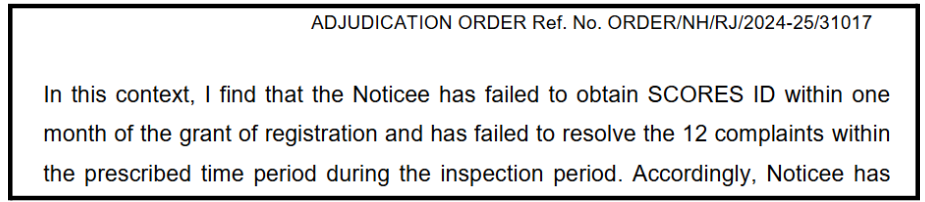
Because of these delays, SEBI held the firm in violation of Regulation 26B(1) of the RA Regulations and the applicable grievance redressal circulars.
5. KYC Documentation Missing for Hundreds of Clients
After reconciling the firm’s records, SEBI found that Mir Uniserv failed to maintain KYC documentation for at least 190 out of 1,270 clients. The firm itself acknowledged this discrepancy during the proceedings.
Mir Uniserv attributed the missing records to a technical glitch. However, it failed to provide any supporting material or evidence for that claim.
Therefore, SEBI concluded that the firm violated Regulation 16 of the KYC Regulations, along with several SEBI circulars governing client identification and record maintenance.
-
Penalty
SEBI imposed a total monetary penalty of ₹10,00,000 (Ten Lakh Rupees) on Mir Uniserv through the adjudication order dated November 29, 2024.
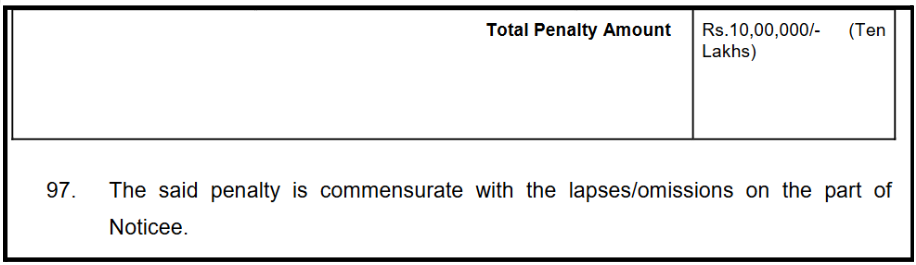
The distribution of the total penalty on Mir Uniserv across multiple violations established:
- ₹1 lakh under Section 15A(a): Failure to provide information, concealment of records, and non-cooperation during inspection
- ₹1 lakh under Section 15C: Delayed SCORES registration and delayed grievance resolution
- ₹3 lakh under Section 15EB: KYC violations, outsourcing of core functions, and Code of Conduct breaches
- ₹5 lakh under Section 15HA: Assured profit claims violating PFUTP Regulations
Together, these penalties covered operational, compliance, grievance handling, and investor protection failures identified by SEBI.
-
Lesson for Investors
Investors searching “is Mir Uniserv SEBI registered?” should understand that a registration number confirms existence, not conduct.
This case demonstrates exactly why investors must look beyond registration alone.
- Verify that the firm maintains a SCORES ID and check its complaint history before paying any fees.
- Reject any communication that mentions specific profit figures, monthly return ranges, or assured outcomes.
- Confirm that the firm provides documented research rationale with every recommendation, not just a buy or sell call.
- Cross-check the firm’s disclosed associates and business relationships against what appears on SEBI’s records.
Mir Uniserv’s case shows that a firm can hold a perpetual SEBI registration and simultaneously run operations that fall well outside what that registration permits.
Investors who verify only the registration number and stop there expose themselves to exactly the kind of experience the clients below describe.
Mir Uniserv User Reviews
Real investor experiences with Mir Uniserv reflect a consistent pattern of poor quality recommendations, financial losses, and difficulty reaching the firm after paying.
These reviews align closely with the conduct that SEBI’s adjudication order documented and penalised.
1. Poor Quality Calls and Broken Promises
A user described paying a large amount after the firm made multiple promises, only to suffer losses from the very first day and no support was given afterwards.
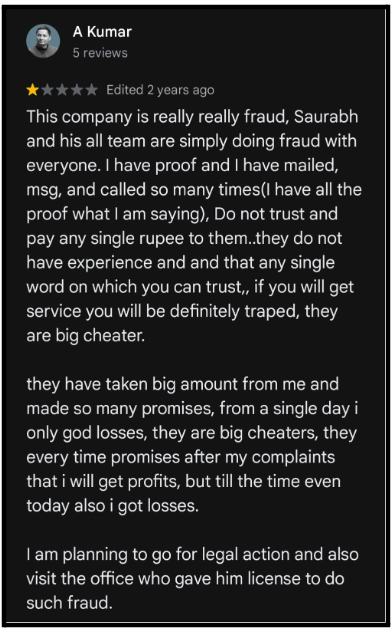
Another user described a similarly poor experience with the firm’s research quality, particularly in the equity and F&O segments.

He warned other investors to avoid the firm entirely, stating that the calls were poor and did not justify the fees charged.
2. Faced Losses and Complete Inaccessibility After Subscribing
A user described subscribing to Mir Uniserv’s services and then suffering consistent losses under the guidance of a firm representative named Jeetendra.

When the user attempted to reach Jeetendra after the losses began, the representative stopped picking up calls entirely.
3. Fake Reviews and Zero Customer Support
A user described a structured pattern, upfront payment, initial trades that eroded capital to zero, followed by complete unresponsiveness to all calls and messages.
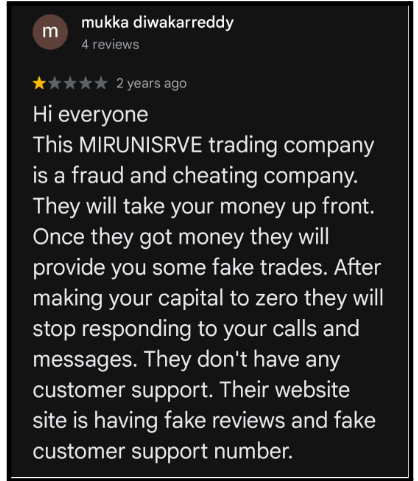
The reviewer flagged that the firm’s own website carried fake reviews and a fake customer support number, and confirmed that no genuine customer support existed after fees were collected.
This review directly mirrors the outsourcing and KYC compliance failures that SEBI documented in its adjudication order.
How To File A Complaint Against Research Analyst?
If Mir Uniserv took your fees, delivered poor recommendations, made profit promises it did not honour, and then became difficult to reach, you have formal legal remedies.
Act quickly, because delays weaken your case at every stage.
Step 1: Reach Out to Mir Uniserv in Writing
Send a formal written complaint to Mir Uniserv before escalating anywhere else. State clearly what the firm promised you, how much you paid, what losses you suffered, and on what specific dates these events occurred.
Attach copies of every payment receipt, message, and communication where a profit or return was referenced.
Keep a complete copy of everything you send, regulators and arbitrators may ask you to demonstrate that you attempted direct resolution before escalating.
Step 2: Lodge a Complaint in SCORES
SEBI SCORES accepts investor complaints against registered intermediaries and directs them formally to the firm for a monitored response.
File a detailed complaint with your timeline, supporting documents, and clear details of the violations, including profit promises, poor recommendations, or unresponsiveness.
Moreover, because SEBI already holds an enforcement record against Mir Uniserv, your SCORES complaint adds to an existing regulatory pattern and increases pressure on the firm to respond seriously.
Step 3: File a Complaint in SMART ODR
If SCORES does not produce a satisfactory outcome, move to SEBI’s SMART ODR portal for structured conciliation. A neutral third party works with both sides to reach a resolution outside of court.
File your case with your complete evidence, every payment, every profit promise in writing, and a clear account of the financial loss you suffered.
This process moves significantly faster than litigation and costs far less.
Step 4: Arbitration in Stock Market
If conciliation through SMART ODR does not resolve your dispute, escalate to formal arbitration within the same framework.
Arbitration produces a legally binding award that the firm cannot simply ignore.
The question “is Mir Uniserv SEBI registered?” matters at this stage because SEBI registration alone does not prevent disputes, investor losses, or regulatory violations.
Need Help?
We assist investors handling disputes involving research analysts, misleading investment communications, fee-based advisory services, and regulatory complaint proceedings.
Our assistance includes:
- Reviewing your payments, chats, emails, and supporting records to assess the strength of your case.
- Preparing structured complaints for SEBI SCORES and SMART ODR in a regulator-ready format.
- Organising transaction records, communications, and loss details into a clear evidence file.
- Guiding you through the complete escalation process, including conciliation and arbitration.
Register with us if you need professional support in preparing and pursuing your investor complaint.
Conclusion
Mir Uniserv holds a valid SEBI registration.
However, its adjudication order, user reviews, and complaint data together reveal conduct that SEBI found to fall well outside what that registration permits.
A ₹10 lakh penalty, violations across five distinct categories, and consistent investor complaints describing losses and unresponsiveness form the complete picture.
Investors asking “is Mir Uniserv SEBI registered?” should verify the registration but also examine the firm’s regulatory history, complaint record, and compliance conduct.
If you have already paid fees and suffered losses, use the formal remedies available and act before more time passes.





 Add us as a preferred source on Google »

