

Every few months, a new “investment opportunity” grabs attention on social media. The pitch is always the same: guaranteed returns, expert guidance, limited spots. And somewhere at the bottom of the thread, a few curious investors type three words into Google: Shares Bazaar review.
If you’re one of them, you’ve landed in the right place.
This is not a sponsored post. This is not a PR piece.
What you’re about to read is an honest, research-backed breakdown of Shares Bazaar: its founder, its business model, what regulators have found, and what real investors are saying publicly.
Read every section. Then decide.
Shares Bazaar Investment Scheme
Let’s start with what Shares Bazaar actually claims to be, and then what it actually appears to do.
On paper, Shares Bazaar positions itself as a research analyst firm offering market insights to retail investors.
Their SEBI registration number is INH200010001. Under this registration, the firm is legally permitted to publish research reports, offer general market analysis, share educational content about financial markets, and recommend sectors based on publicly available data.
None of that sounds alarming. Research analysts are a legitimate, regulated part of India’s financial ecosystem.
But here is where the story takes a sharp turn.
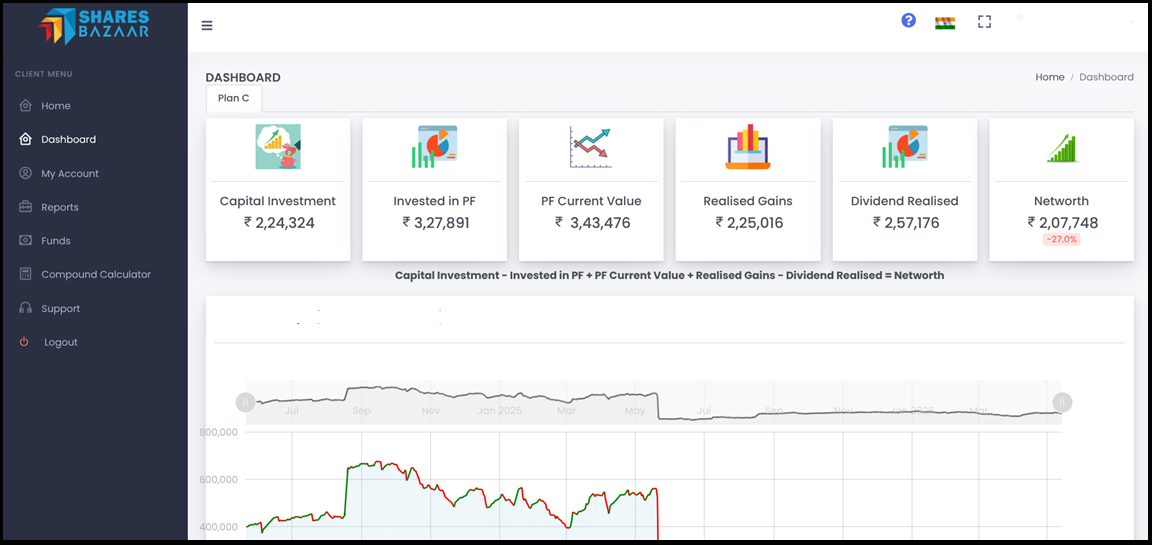
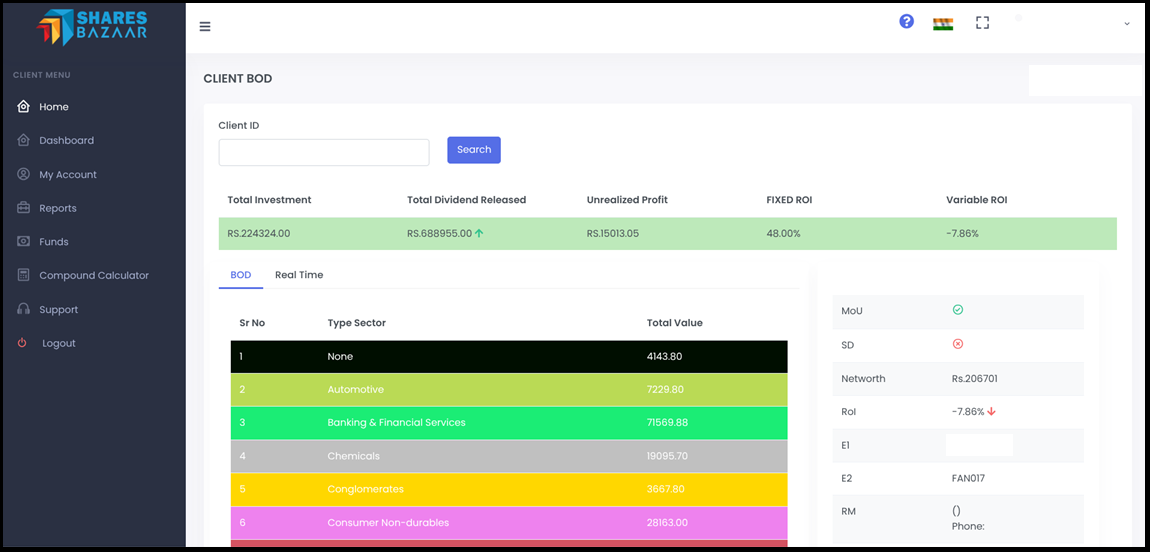
The moment you land on their website, something feels off. Instead of research reports and subscription packages, you’re greeted with return-based plans, prominently, a 48% return on investment promise.
There is a dashboard showing a growing investment figure in real time. It looks impressive. It feels exciting. It is also almost certainly fake.
SEBI is very clear: registered research analysts are not permitted to guarantee returns or solicit client funds.
They cannot advise you to put money into specific stocks, and they absolutely cannot collect that money into their own bank accounts.
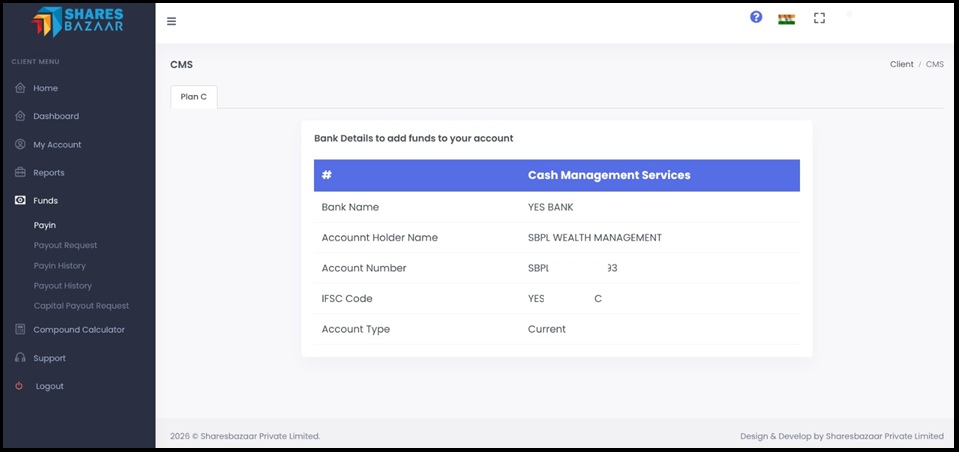
Yet Shares Bazaar reportedly shared a bank account number and IFSC code directly on their website, which raises one unavoidable question: if investors are managing their own money (as regulations require), why does a research firm need your funds transferred to their account?
That question has no innocent answer.
Their FAQ section adds another layer of concern. Several questions carry grammatical inconsistencies, and the tone reads less like a service company clarifying its offerings and more like a pitch deck designed to reassure wavering investors.
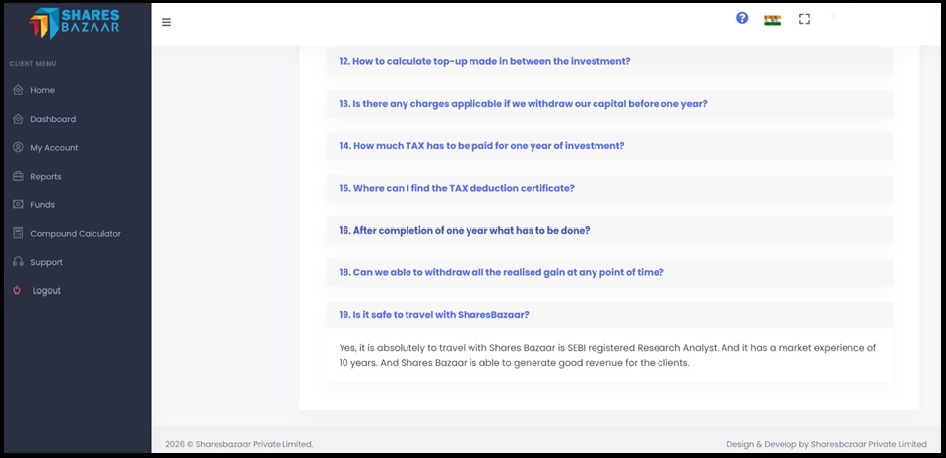
A genuine research platform explains how to access reports. This one explains why your returns are worth waiting for.
And perhaps the most glaring regulatory gap: SEBI mandates that registered research analysts publicly disclose their complaint data.
Shares Bazaar shows no such information anywhere on its website. This is not a technicality. It is a direct, visible non-compliance.
Also Read: Bigbull Research mentions AI disclosure, but its website does not clearly explain whether or how AI is used in its research process.
Shares Bazaar Founder
Nanavath Bhupal Naik, also known as N.B. Naik, was born on April 8, 1983, in Kandikonda Village, Kuravi Mandal, Mahaboobabad District, Telangana.
He earned an MBA in Business Analytics from Hindustan Institute of Technology and Science.
Before entering entrepreneurship, Nanavath Bhupal Naik worked as a petrol pump attendant, a humble beginning that, by his own account, instilled discipline and people skills that shaped his leadership later on.
He eventually founded Shares Bazaar and also launched Kisaan Parivar, an agricultural initiative that claims to support organic farming and rural communities.
In April 2025, he was honoured at the 25th Asian Business and Social Forum in New Delhi as one of India’s Greatest Sustainable Leaders 2024-25 by AsiaOne Magazine.
On the surface, it is a compelling origin story. But as we will see in the sections that follow, the biography and the business record tell very different stories.
Shares Bazaar Private Limited Fake or Real
This is the question thousands of investors are now typing into search engines, and it deserves a precise answer rather than a vague one.
Shares Bazaar Private Limited is a real, registered company. It holds a valid SEBI registration as a research analyst. It has a functioning website, a social media presence, and a recognisable founder.
None of that is in dispute.
What is in dispute is whether the company operates within the legal and ethical boundaries of what a SEBI-registered research analyst is actually permitted to do.
The distinction matters enormously. A company can be “real” in the sense of being legally incorporated while simultaneously operating in ways that regulators consider illegal.
The registration number alone does not guarantee that the business model is compliant, and in Shares Bazaar’s case, multiple regulators have suggested that exactly that gap exists.
Share Bazaar SEBI Registered
A SEBI registration number is not a character certificate. It is an entry pass, one that confirms a firm cleared the paperwork on day one, not that it has stayed within the rules every day since.
Shares Bazaar carries registration number INH200010001, and that number is real.
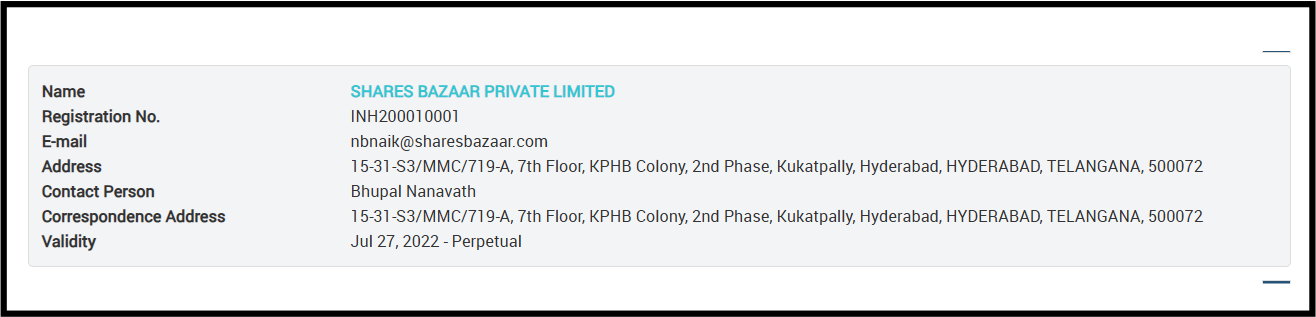
What it does not authorise is collecting investor money, promising fixed returns, or running investment plans dressed up as research subscriptions.
SEBI’s Research Analyst Regulations, 2014, draw that line clearly.
The moment a registered entity crosses it, the licence becomes irrelevant to the harm being caused. Verification takes two minutes on the SEBI portal, but the more important question was never whether the number exists.
It was always what was being done in its name.
Is Shares Bazaar Safe?
This is the section most investors eventually arrive at, usually after they have already sent money and started asking questions they should have asked earlier.
Let’s examine the safety picture from three distinct angles: what regulators found, what independent reviews show, and what the company itself said in a public webinar.
Share Bazaar Research Analyst Regulatory Findings
What makes this entire situation more serious is that concerns are not limited to investor complaints anymore. Regulatory findings and official investigations have already been reported across multiple platforms.
Let us have a look at what regulators have found during their inspection:
- NSE reportedly investigated assured return schemes linked to 18% to 48% returns and found misleading representations about market investments.
- SEBI observations reportedly pointed toward structures that resembled Ponzi and MLM-style fundraising mechanisms.
- BSE reportedly expelled Shares Bazaar as a trading member in December 2022 after a regulatory review.
- Ernst & Young mystery shopping exercise reportedly confirmed the offering of assured return investment style programs under MMFF.
- Reports suggest that despite earlier actions, a Category III AIF was later registered and around ₹21 crore was raised before SEBI intervened.
- SEBI reportedly observed a pattern of concealment of material information during disclosure and registration processes.
SEBI has since confirmed this formally. Our coverage of the Shares Bazaar SEBI order covers the actual ₹20 lakh penalty against the firm and four individuals, the ₹72.66 crore bank trail SEBI traced through the scheme, and why SEBI rejected the company’s later defence that the funds were debentures rather than assured-return payments.
When all these findings are seen together, it no longer looks like a simple complaint-driven issue.
Instead, it becomes a situation where regulatory actions, investigations, and investor concerns all appear to overlap significantly.
Shares Bazaar Reviews
Here is what actual investors are reporting publicly.
These are not isolated complaints about service quality; they describe a consistent, specific pattern: money transferred, returns promised, payouts missing.
1. Understanding the Investment Claim
Many of the investors purchased Plan C, which promises a 48% return on investment within one month.
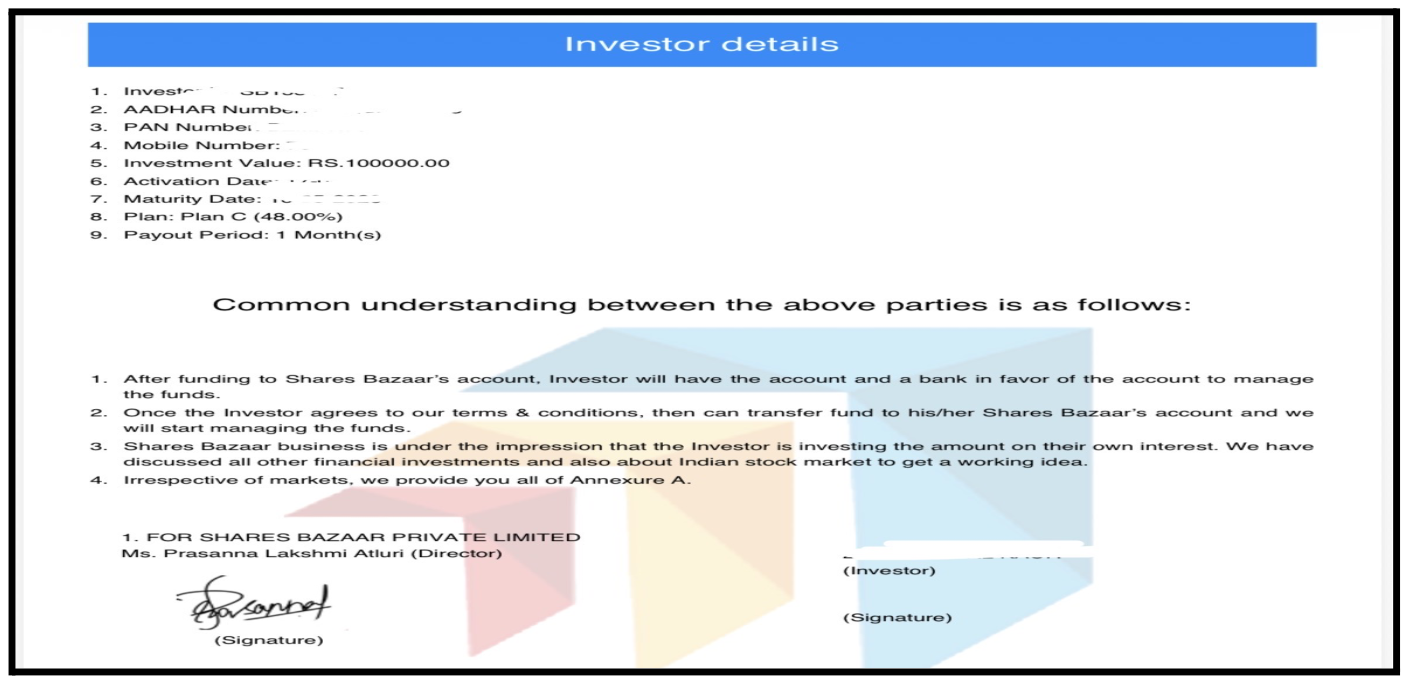
Nearly half your money back in thirty days is an extraordinary claim.
In traditional finance, such returns do not exist without equally extraordinary risk, or worse, without a structure where early investors are paid using money from newer ones.
2. Illegal Assured Returns and Missing Payouts
The reviews coming from actual investors paint a troubling picture.
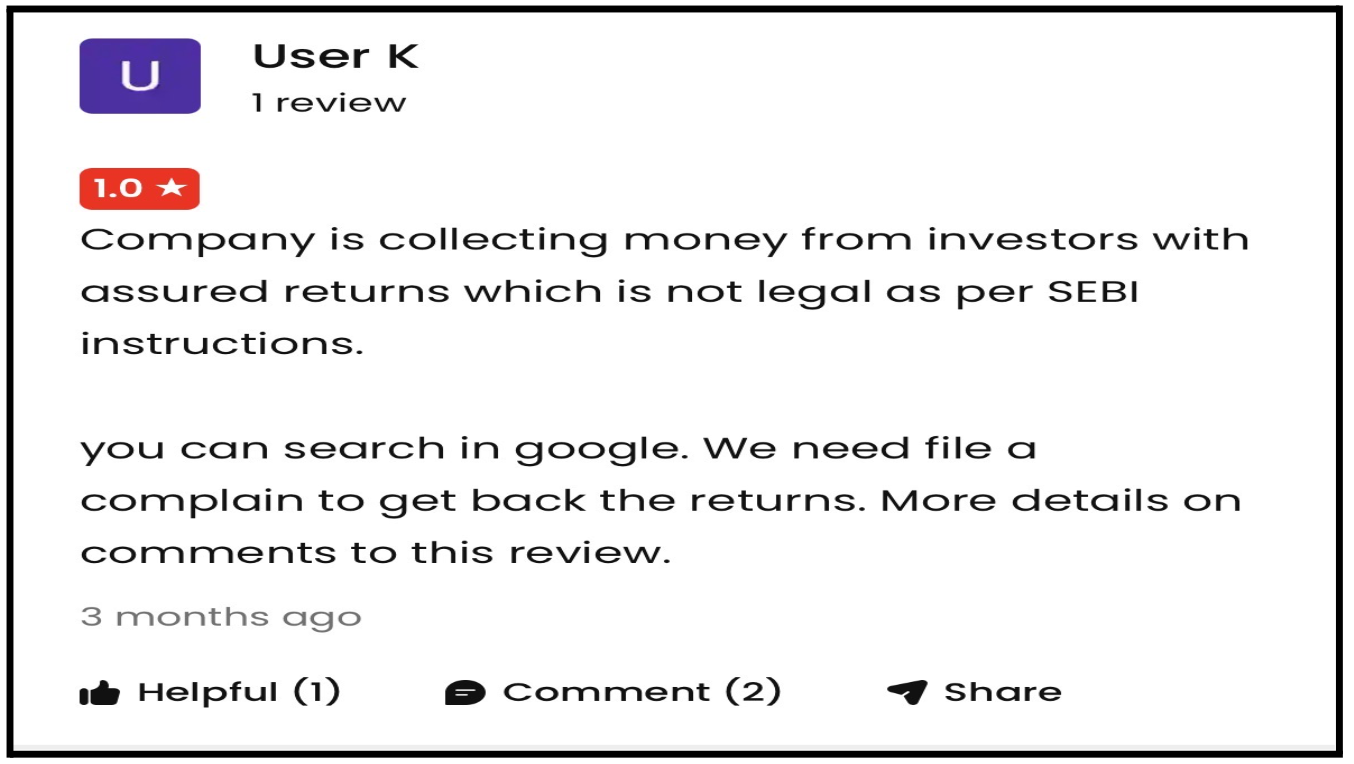
On Just Dial, Several users have rated the company as 1-star and stated that they are giving assured returns, which is not legal.
Further, people haven’t received their returns, and this user urged other people to also file a complaint so that they can get their returns back.
3. A Pattern of Payout Delays and App Removal
On Google reviews, the latest complaints have also been filed with payout delays.
The app has also been removed from the Google App Store, and they haven’t even given a proper public statement apart from the webinar they hosted.
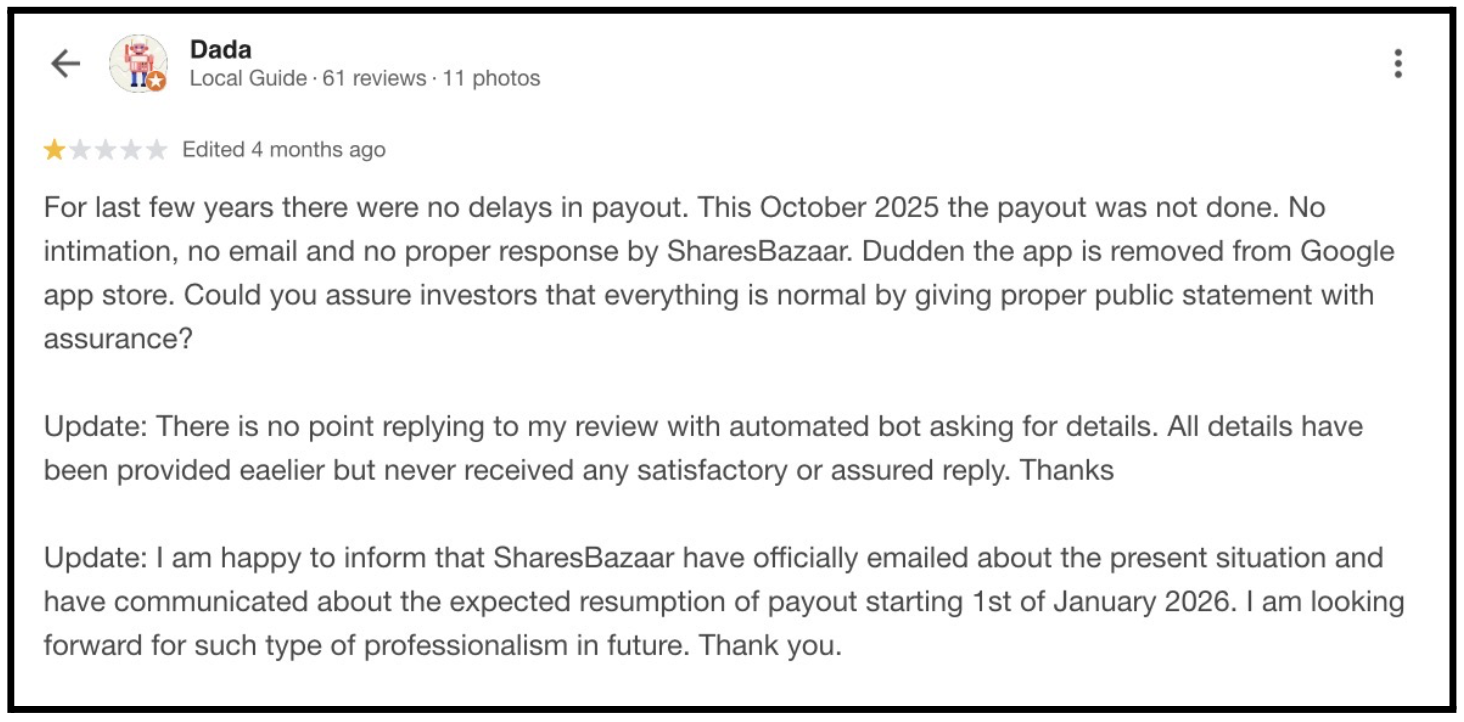
Some negative reviews appear to have been quietly updated after investors received direct email communication from the company, the same company that reportedly warned during its webinar that legal action would be taken against those who “defame” it.
Whether those reviewers changed their posts to protect their pending investments or out of genuine resolution is unclear.
What is clear is that the timing aligns with the webinar’s pressure campaign.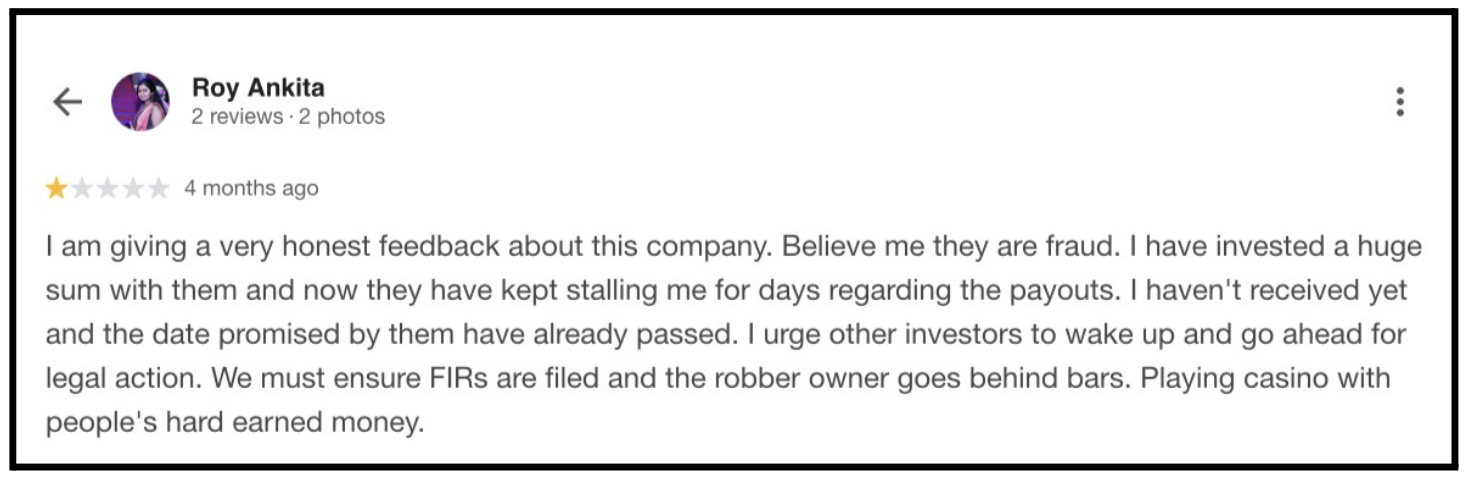
There are Multiple reviews on Google stating that the company is a fraud and they are not giving payouts.
Although the company has shared the details through a webinar, people don’t seem to be convinced enough.
These experiences reflect a consistent pattern that cannot be dismissed as isolated incidents.
Shares Bazaar Research Analyst Webinar Reviews
The company hosted a webinar for investors, and what was said during that session raises some serious eyebrows.
The speaker acknowledged upfront that investors were facing financial and emotional stress because of delayed payments.
He cited frozen accounts, legal verification processes, and complaints filed by investors as reasons for the delay.
Payments, he suggested, could arrive anywhere between one week and two months. June was mentioned as a likely resolution window, though no firm date was committed to.
Here is what stood out most: A significant portion of the session was spent asking investors to stop filing complaints.
The speaker argued that complaints were damaging the company’s reputation, making it harder to raise fresh funds, and ultimately delaying repayments further.
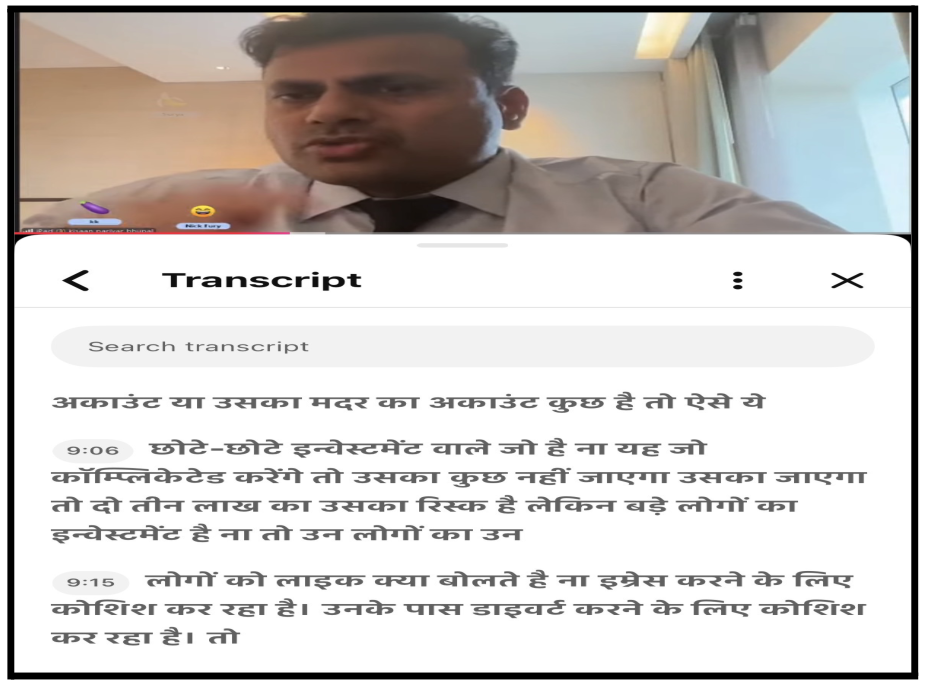
Investors were asked to cooperate, stay patient, and avoid social media discussions or online investor groups.
The speaker also mentioned that the company owns land assets that could be used as backing if needed, but selling them quickly was described as difficult.
Fresh fundraising efforts, he claimed, were underway.
An IPO within three years was even floated as a future possibility.
When a company asks struggling investors to stop filing complaints so it can raise fresh funds to repay them, that is not a customer service problem.
That is a description of how a scheme keeps itself alive.
New money coming in is the only way for earlier investors to get paid. Complaints slow recruitment. That is why silencing critics was the priority, not resolving withdrawals.
Just when investors thought the situation could not get any more uncomfortable, a leaked YouTube video started circulating online.
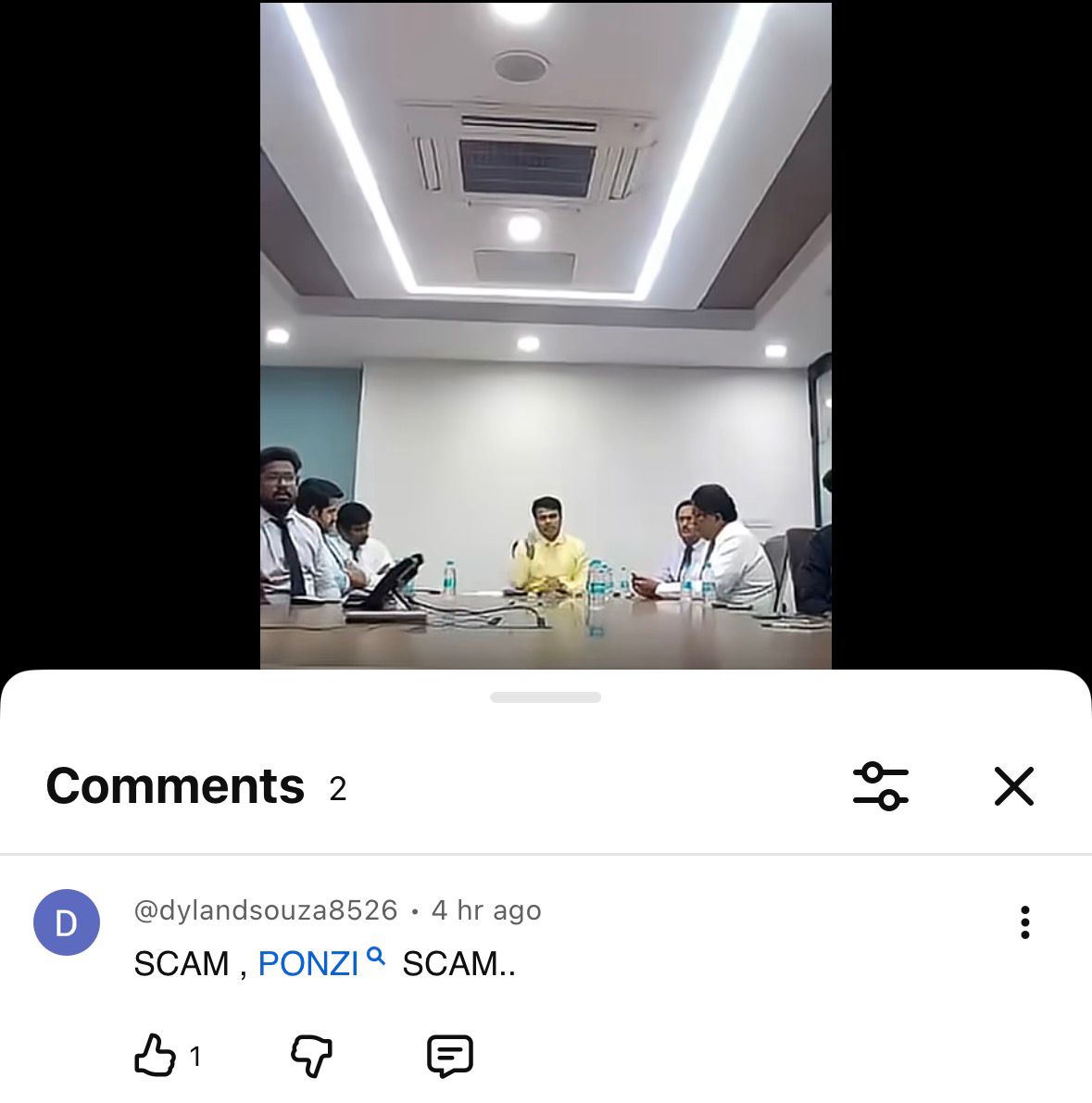
In the clip, a panel member sitting inside the Shares Bazar office is reportedly heard narrating how one worried investor became so frustrated about the money that he created a WhatsApp group and asked other investors to gather outside the company office.
But the real shock comes from what was allegedly said next.
According to the discussion, even if investors reached the office together, “nothing would change,” and the situation would remain the same.
The conversation also reportedly mentioned that if pressure increased publicly, the matter could simply be handled through police involvement.
For many viewers, this did not sound like reassurance at all. It sounded like investors were slowly losing hope.
Is Bhupal Naik Nanavath Running a Ponzi Scheme?
This is the question that has been circulating in investor communities, online forums, and complaint threads for months. It deserves a direct, factual treatment.
SEBI’s own interim order, as reported by Business Standard, explicitly referenced Ponzi and MLM-style mechanisms in connection with Shares Bazaar’s operations.
That language did not come from a disgruntled investor on a forum; it came from one of India’s most powerful financial regulators in a formal order.
The structural indicators are equally difficult to ignore. The classic markers of a Ponzi scheme are well-documented: mathematically unsustainable returns, a constant need for fresh investor inflows to pay existing participants, and a tendency to discourage complaints or external scrutiny precisely because those slow the inflow of new funds.
The Shares Bazaar webinar, where struggling investors were explicitly asked to hold off on complaints so that fresh fundraising could continue. maps uncomfortably closely to that playbook.
A guaranteed 48% monthly return, for context, would turn ₹1 lakh into approximately ₹5.7 crore in twelve months. No legitimate, sustainable investment vehicle generates that. Real markets do not work that way.
The only way those numbers hold up is if someone else’s money is being used to pay you, until there is not enough of someone else’s money left.
Also Read: Shreeji Research website promotes phrases such as “Shares To Buy Today” and “Top 10 Stocks to Buy Tomorrow” without any records.
Bhupal Naik Arrest
Some stories end with a warning. This one ended with handcuffs.
Bhupal Nanavath Naik, the founder of Shares Bazaar Private Limited, has been arrested. An FIR was filed by affected clients, FIR No. 35/2026, at the Cyber Crime Police Station, Surat.
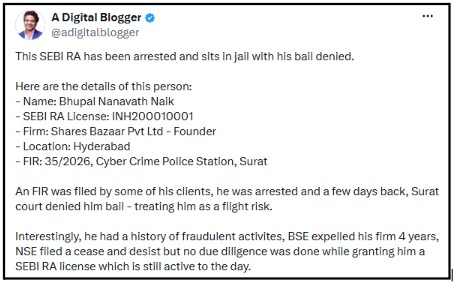
Following his arrest, a Surat court denied him bail, treating him as a flight risk. He currently sits in judicial custody.
Let that land for a moment. This is not a show-cause notice. This is not a regulatory observation. This is a sitting founder, behind bars, bail denied.
His firm was expelled by the BSE four years ago. NSE had filed a cease-and-desist.
Despite that documented history, a SEBI Research Analyst licence under registration number INH200010001 was granted and remained active right through the period investors were sending their money in.
Clients filed complaints. Those complaints became an FIR. That FIR led to an arrest. And a court decided this was someone who should not be allowed to walk free while the matter is pending.
The process has run its course, but only for those who acted.
If your money is still stuck, your next move matters more than ever. Here is exactly how to file your complaint.
How To Complaint Against Shares Bazaar Online?
If you or someone you know has been affected, do not wait.
Here is how to move forward:
1. Collect Evidence
Start by gathering every important document related to your interaction.
This may include payment receipts, WhatsApp chats, emails, webinar recordings, and screenshots.
Proper evidence helps establish a clear timeline of events.
2. Register a Complaint With The Research Analyst First
Send a formal written complaint to the research analyst first.
SEBI generally expects investors to approach the concerned entity before escalating the matter further.
It is also important to maintain records of every reply and acknowledgement received.
3. Register a Complaint in SCORES
The SCORES platform is SEBI’s official investor grievance redressal system.
Register your complaint there with full details and supporting documents.
Proper documentation can help present your grievance more clearly before the regulator.
4. File a Complaint in SMART ODR
This platform is designed for online dispute resolution between investors and regulated entities.
Careful filing often helps avoid unnecessary procedural delays later.
5. Share Market Arbitration
If the matter still remains unresolved, you can proceed with arbitration.
Arbitration may become an important legal remedy in prolonged financial disputes.
A well-prepared case file can become extremely important during arbitration proceedings.
Taking these steps protects you legally and creates a formal record that regulators can act upon.
Need Help?
You can register with us and get professional assistance throughout the process.
We can help you understand the proper sequence of steps that should be followed carefully.
Our team can also help you organise documents, payment proofs, screenshots, and communication records properly.
This makes the complaint process more structured and easier to navigate.
Conclusion
An arrest has been made. A court has denied bail. Regulators flagged this years ago, and investors who acted on those signals protected themselves. Those who waited are still waiting.
Shares Bazaar is not a cautionary tale about one bad company.
It is a reminder that a registration number is not a safety net, a polished dashboard is not proof of returns, and a webinar asking you to stay silent is not customer service; it is damage control.
If you have money stuck, do not let this become a story you tell someone else as a warning. Take the steps, file the complaint, and get your voice into the official record before the window closes.
Your money deserves a fight. Start today.
Frequently Asked Questions
1. Who is the owner of Shares Bazaar?
Shares Bazaar was founded by Nanavath Bhupal Naik, also known as N.B. Naik, who serves as its Chairman and Managing Director.
He is a Telangana-born entrepreneur who also founded Kisaan Parivar, an agricultural initiative.
While he has received various business awards, his company has simultaneously faced serious regulatory findings from SEBI, NSE, and BSE related to its investment-related operations.
2. Is Shares Bazaar SEBI registered?
Yes, Shares Bazaar holds a SEBI registration as a Research Analyst with registration number INH200010001.
However, SEBI registration does not mean all activities conducted under that registration are compliant.
3. Is it safe to invest through Shares Bazaar?
Based on publicly available regulatory findings, investor complaint patterns, and SEBI’s own interim orders, investing through Shares Bazaar carries significant risk.
Multiple regulators have flagged the company for operating outside the permitted boundaries of a SEBI-registered research analyst. If you have already invested, documenting all communications and approaching SCORES is strongly advised.
4. What should I do if I have lost money through Shares Bazaar?
Start by collecting all evidence: payment receipts, screenshots, WhatsApp messages, email communications, and webinar recordings.
File a written complaint with the company first, keep a record of their response, then escalate to SEBI’s SCORES portal.
If unresolved, SMART ODR and arbitration are further remedies available to you. Professional guidance can help you structure your complaint in a way that is taken seriously.
5. Has Bhupal Naik Been Arrested?
Yes. Bhupal Nanavath Naik, the founder of Shares Bazaar Private Limited, has been arrested following an FIR filed by affected clients, FIR No. 35/2026, at the Cyber Crime Police Station, Surat.
A Surat court subsequently denied him bail, treating him as a flight risk. He currently remains in judicial custody.
This came after years of regulatory action, including BSE expulsion and NSE cease-and-desist proceedings, all of which were documented long before the arrest took place.





 Add us as a preferred source on Google »

