Trust plays a central role in the relationship between an investor and a stock broker.
When a trader places an order, they expect the broker to execute exactly what they authorised; nothing more and nothing less.
That is why allegations of unauthorised trading often raise serious concerns among retail investors.
At the same time, it is important to understand that not every complaint automatically means a regulatory violation.
Investor grievances can arise for many reasons, miscommunication, misunderstanding of orders, or disputes over how instructions were interpreted.
So when the term “unauthorized trading” appears alongside a broker’s name, it naturally prompts questions.
Were trades actually executed without permission? Were these isolated disputes, or part of a larger pattern? And what protections exist for investors in such situations?
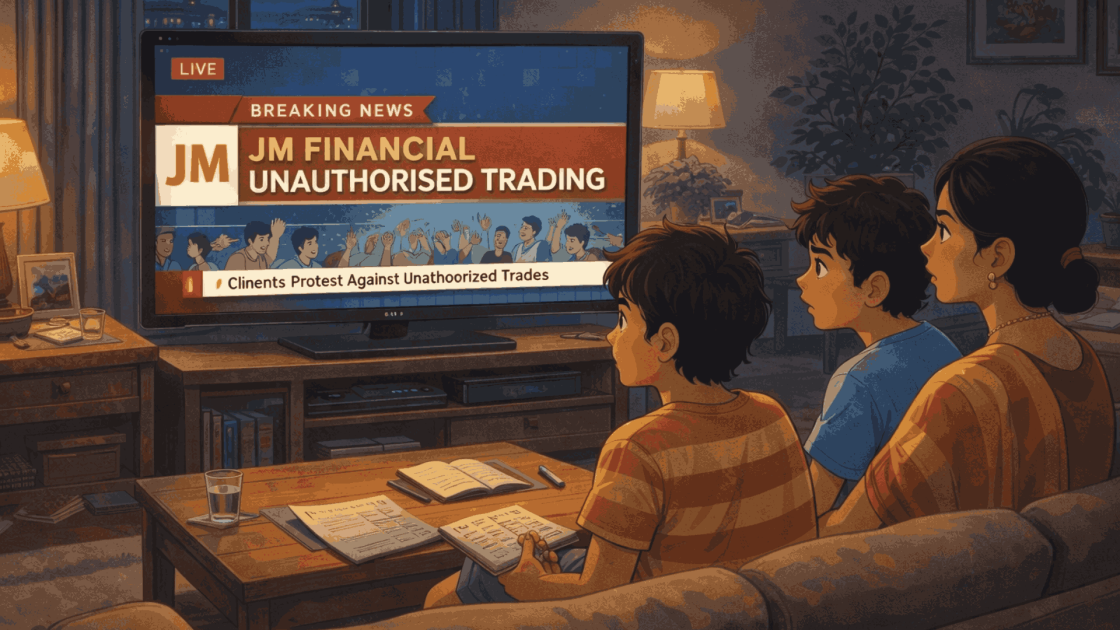
In this article, we take a closer look at unauthorised trading complaints related to JM Financial Services.
Using complaint data reported on the exchange platform and the regulatory framework laid down by the Securities and Exchange Board of India, the goal is not to jump to conclusions but to understand what the data actually tells investors.
JM Financial Services Complaints
Before looking at the complaint numbers, it helps to first understand what unauthorised trading actually means in the context of the stock market.
In simple terms, unauthorised trading refers to a situation where trades are executed in a client’s account without the client’s permission or proper authorisation.
This could happen if a dealer places trades without clear instructions, or if an order is executed without a verifiable client confirmation.
Because such allegations directly involve an investor’s funds, the issue is taken seriously by the Securities and Exchange Board of India.
The regulator has issued guidelines requiring stock brokers to maintain clear records of client orders.
These records may include call recordings, email instructions, order logs, or authenticated online trades.
The purpose of these rules is straightforward. If a dispute arises, the broker should be able to demonstrate that the client actually placed or authorised the order.
NSE Complaint Data
With that context in mind, it becomes easier to understand the complaint data reported on the exchange platform for JM Financial Services Limited.
| Year | Total Complaints | Type IV (Unauthorised Trading) | % Type IV |
|---|---|---|---|
| 2020–21 | 54 | 5 | 9.26% |
| 2021–22 | 61 | 4 | 6.56% |
| 2022–23 | 73 | 3 | 4.11% |
| 2023–24 | 86 | 3 | 3.49% |
| 2024–25 | 103 | 2 | 1.94% |
| 2025–26 | 124 | 3 | 2.42% |
At first glance, the numbers may appear relatively small. In most years, the complaints classified under unauthorised trading range between two and five cases.
Because the percentage is low, some retail investors may assume that such complaints are insignificant. However, the nature of the complaint is important to understand.
Unauthorised trading allegations usually involve a claim that trades were executed without the investor’s approval.
Even when the number of complaints is limited, the issue itself is sensitive because it relates to how trading instructions are handled within a brokerage account.
At the same time, investors should remember that a complaint does not automatically mean a regulatory violation has occurred.
Complaints are essentially grievances raised by investors, and many of them arise due to misunderstandings about order instructions, communication gaps, or disputes about how trades were authorised.
This is precisely why regulators require brokers to maintain proper documentation of client instructions.
When a dispute arises, these records help determine whether the trade was placed with valid authorisation.
For retail investors, the key takeaway is not simply the percentage shown in the table.
Instead, it is important to understand how such complaints arise and what safeguards exist to protect investors in case of a dispute.
When Can Action Be Taken Against A Broker?
Allegations of unauthorised trading are taken seriously within the regulatory framework. However, action against a stock broker does not happen simply because a complaint has been filed.
Regulators and exchanges typically examine whether there is clear evidence that a trade was executed without the client’s authorisation.
In India, brokers operate under the oversight of the Securities and Exchange Board of India and the stock exchanges where they are registered.
These authorities can step in when there is credible evidence that regulatory rules have been violated.
Action may be considered in situations such as:
- When trades are executed without documented client instructions
- When a broker cannot produce order records such as call recordings, emails, or authenticated order logs
- When there is repeated evidence of improper handling of client orders
- When exchange investigations confirm that regulatory norms were not followed
If such violations are established, the exchanges or regulators may take disciplinary action.
Depending on the severity of the issue, this could include warnings, monetary penalties, suspension of trading rights, or other regulatory measures.
At the same time, it is important to understand that many disputes between investors and brokers are resolved through the grievance redressal and arbitration mechanisms of the stock exchanges.
These systems exist to examine evidence from both sides and determine whether the trades were authorised or not.
For investors, this regulatory structure acts as an important safeguard.
It ensures that complaints related to trading disputes are examined through a formal process rather than remaining unresolved.
How To Report A Complaint Against Broker in India?
If an investor suspects that trades were executed without their permission, the first step is to review the trading records carefully.
Contract notes, order logs, and trade confirmations often help clarify how a particular order was placed.
If the issue still appears unresolved, investors can follow a structured complaint process.
1. Contact the Broker
Start by contacting the broker’s customer support or grievance redressal team.
Most brokers maintain a dedicated grievance cell to handle client complaints.
In many cases, disputes are resolved at this stage itself.
2. File a Complaint with the Stock Exchange
If the response from the broker is unsatisfactory, the investor can escalate the matter to the exchange where the broker is registered, such as the National Stock Exchange of India or the BSE Limited.
Exchanges have dedicated investor grievance mechanisms to examine such complaints.
3. File a Complaint in SCORES
Investors can also file complaints through the SEBI SCORES platform.
This is an online system where investors can submit complaints against market intermediaries, including stock brokers.
4. Escalate Complaint in SMART ODR
If the issue still remains unresolved after the SCORES complaint, investors can escalate the matter through the dispute resolution platform used by stock exchanges for mediation and settlement.
4. Arbitration in Stock Market
If the dispute continues even after the complaint process, investors may approach the arbitration mechanism provided by the stock exchanges.
Arbitration panels review the evidence from both the investor and the broker and then issue a decision.
This structured system allows investors to raise concerns and seek resolution through an established regulatory process.
Need Help?
If you believe trades were executed in your account without your approval, the first step is to review your trading records carefully.
Contract notes, order logs, and trade confirmations can often help clarify how a particular order was placed.
If you are still unsure about what happened or how to move forward, you can register with us for guidance.
Our team can help you understand the complaint process and the steps available under the regulatory framework.
Acting promptly and keeping proper records can make it easier to address such disputes through the appropriate channels.
Conclusion
Unauthorised trading complaints can raise concerns for any investor. At the same time, it is important to interpret such complaints in the right context.
The data shows that complaints categorized under unauthorised trading form a relatively small portion of the total complaints reported against JM Financial Services Limited.
However, the nature of such allegations means that investors should still remain attentive to how their trading accounts are handled.
Always review contract notes, monitor trading activity regularly, and understand how your orders are placed and executed.
Staying informed about regulatory safeguards set by the Securities and Exchange Board of India can also help investors respond appropriately if any dispute arises.
A well-informed investor is always in a stronger position to protect their interests in the market.