

Rajesh subscribed to a stock market service after seeing impressive market discussions online.
Initially, everything seemed professional.
However, before renewing his subscription, he decided to verify the regulatory status, complaint process, and disclosures.
That simple verification exercise helped him ask better questions and make a more informed decision. If you’re reading this Stock Wise IQ review, you’re likely trying to do the same.
Stock Wise IQ Details
According to the official website of Stock Wise IQ, the platform presents itself as a stock market research and advisory service offering market analysis, research reports, trading updates, and investment-related guidance.
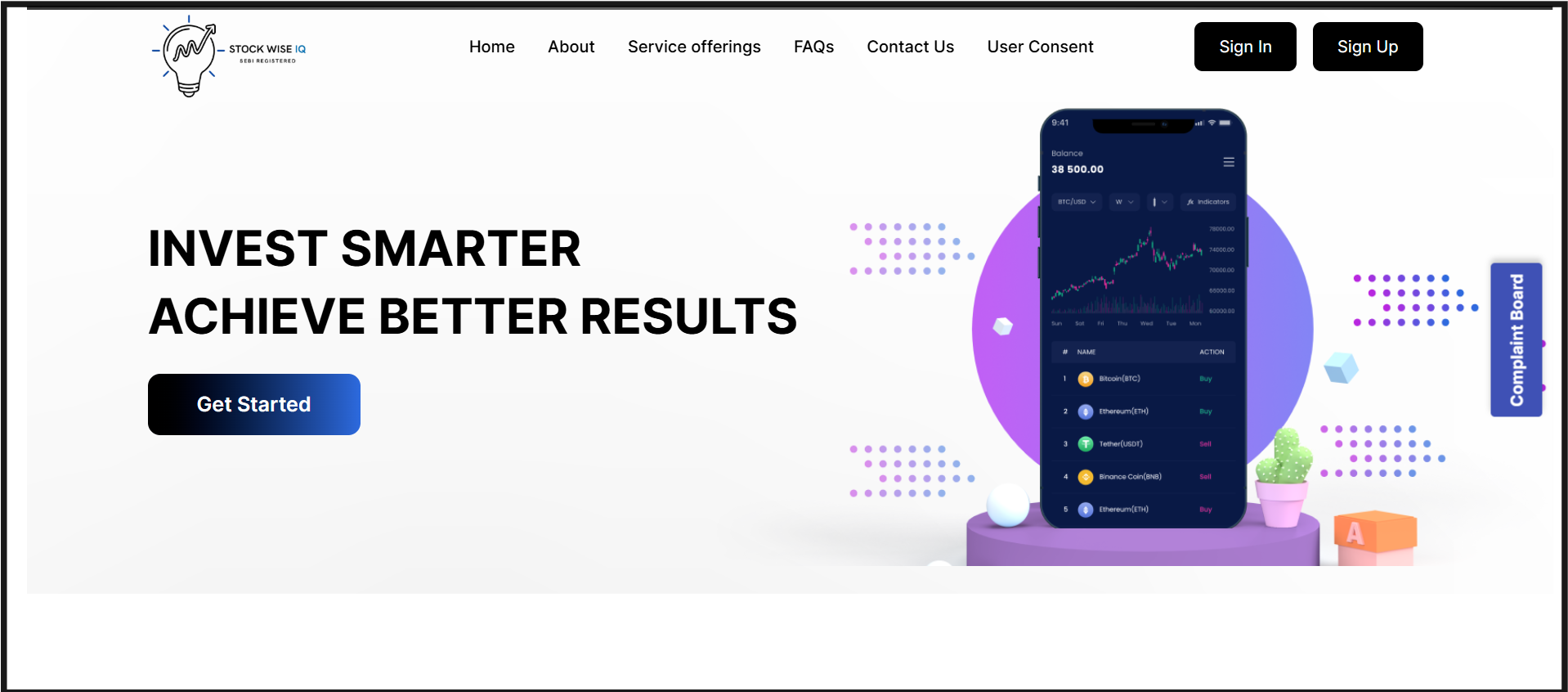
The website is registered under the name Neha Vijay Sondhi.
It uses language like “risk-managed calls,” “clear targets and stop-loss guidance,” and “years of industry experience.”
Several compliance-related pages are also publicly visible on the platform, including:
- User Consent.
- Refund Policy.
- Grievance Redressal.
- Investor Charter.
- Terms & Conditions.
- Risk Disclosures.
Now, here’s what those pages tell you, and what they don’t.
The presence of compliance pages is a positive signal. SEBI-regulated intermediaries are expected to publish these disclosures.
But compliance pages alone don’t confirm service quality, ethical communication, or realistic outcomes.
Any investor who has ever been misled by a platform that looked legitimate on paper will tell you exactly that.
So let’s dig deeper.
Is Stock Wise IQ SEBI Registered?
This is the question most investors ask first, and it’s the right question to start with, but the wrong place to stop.
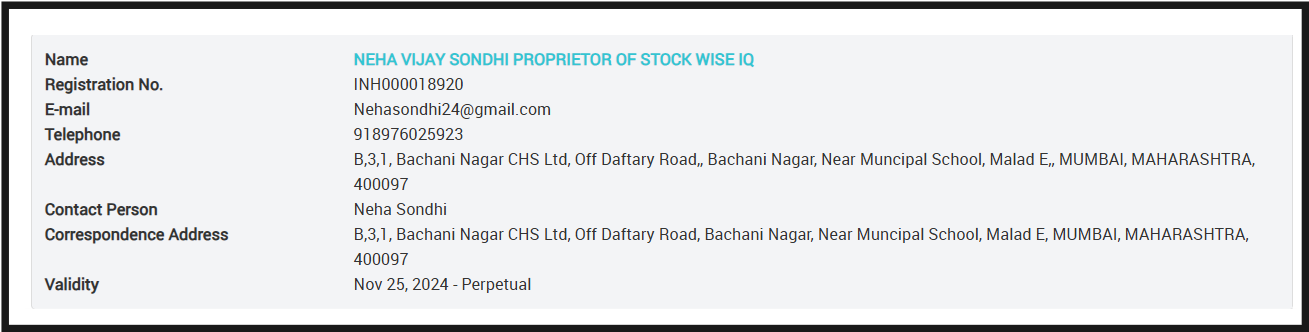
Stock Wise IQ claims to operate under SEBI Research Analyst Registration Number INH000018920 under the proprietorship of Neha Vijay Sondhi.
The platform repeatedly describes itself as “SEBI Registered” and references compliance with the SEBI (Research Analysts) Regulations, 2014.
But here’s the critical point that most investors misunderstand, and where costly assumptions are made.
SEBI registration is not a performance guarantee.
Even Stock Wise IQ’s own website states clearly:
- Investments in securities markets are subject to market risks.
- Returns are not guaranteed.
- Research recommendations can result in losses.
- SEBI registration does not guarantee performance or returns.
Registration means an entity is operating within a regulatory framework and must follow prescribed compliance obligations.
It does not mean every investor will profit. It does not mean every experience will be positive. And it certainly does not mean the risk disappears.
This distinction is not a technicality; it is the foundation of informed investing.
Is Stock Wise IQ Genuine?
“Genuine” is a word investors use when what they really mean is: Can I trust this with my money?
That’s a fair question. And it deserves a fair answer.
From publicly available information, Stock Wise IQ does display regulatory details, contact information, grievance procedures, and risk-related disclosures on its website.
The platform also states clearly that:
- Guaranteed returns are prohibited.
- Clients should never share trading passwords or OTPs.
- The Research Analyst cannot execute trades on behalf of clients.
- Trading involves risks and past performance does not indicate future results.
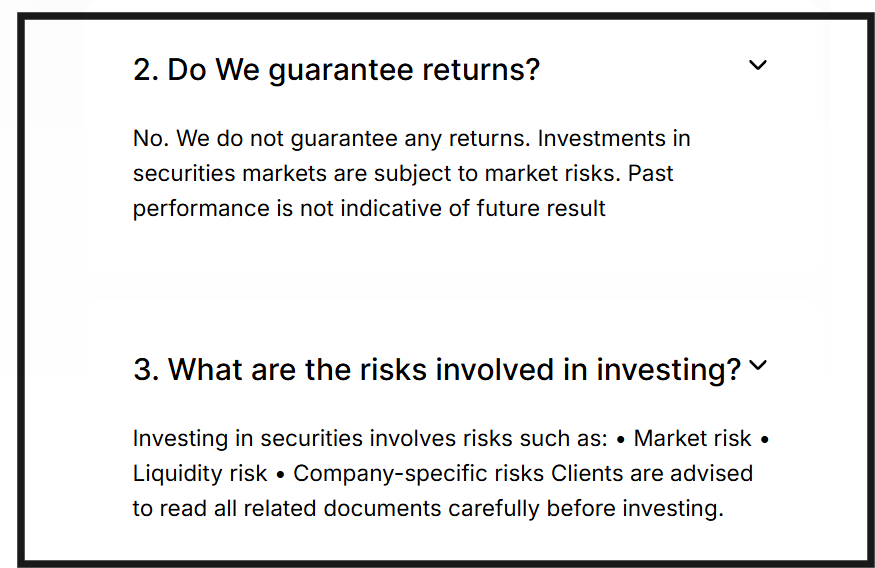
These disclosures are consistent with what SEBI regulations require of Research Analysts.
However, and this is where many investors learn the hard way, what a platform publishes and what happens in actual client interactions can sometimes diverge significantly.
Before subscribing to any advisory service, including this one, verify the following:
- Is all communication happening through official, traceable channels?
- Are proper invoices and written agreements being provided?
- Are risks being explained clearly before payment, not buried in fine print after?
- Is anyone creating unrealistic return expectations in conversation?
- Do the trading quantities being recommended match your actual financial capacity?
Most advisory disputes in India are not about SEBI registration.
They’re about gaps between what was promised in a sales conversation and what was actually delivered. That gap is where investor losses and legitimate grievances are born.
Also Read: Rakesh Bansal Ventures with a promised track record you can only see if you ask for it on WhatsApp, not published anywhere else.
Stock Wise IQ Complaints
Every complaint starts with a moment of doubt. For some investors, it happens after a losing trade.
For others, it begins when promised support becomes difficult to access, questions go unanswered, or expectations created during the sales process appear different from the actual service experience.
Below are some of the recurring concerns investors often raise while discussing advisory experiences:
-
No Risk Disclosure Concerns
This is the most common complaint theme across the entire advisory industry in India.
Investors report that risks were either not explained at all during the sales process, or were so briefly mentioned that they didn’t register.
Interestingly, Stock Wise IQ’s own website includes detailed market-risk warnings.
But as many investors discover too late, what’s published on a website and what’s communicated during an eager sales conversation can feel like two different realities.
If you’re evaluating any advisory service right now, ask yourself: Did someone explain my downside clearly, or were they focused entirely on the upside?
-
Recovery Assurance Concerns
Another complaint pattern sometimes discussed in advisory-related disputes involves “recovery” conversations after losses.
In some situations across the industry, investors report being told that future trades may help recover earlier losses.
No research analyst can legally assure fixed profits or guaranteed recovery of losses.
In fact, the Stock Wise IQ website itself states that assured return schemes are prohibited.
Investors should therefore remain careful whenever any communication appears to create certainty around recovery or guaranteed outcomes.
Also Read: Stock Research Analytics 360 with testimonials promising money made “easily” and “faster,” something that SEBI says no to.
How to Complain Against Stock Wise IQ India?
If you’ve already subscribed and something has gone wrong, a communication dispute, a refund issue, or a concern about how the service was sold to you, here’s exactly what to do.
The most important thing first: act methodically, not emotionally. Social media posts may feel satisfying, but they rarely resolve disputes. Documented, structured complaints do.
Here is a step-by-step process to follow:
Step 1: Gather Proper Evidence
Before filing any complaint, first organise all important records related to the service.
This may include payment receipts, bank transaction proof, invoices, WhatsApp chats, emails, trade statements, screenshots of service claims, and call recordings where legally permissible.
Proper documentation becomes extremely important during dispute resolution because it helps establish timelines, communication history, and the nature of the issue clearly.
Step 2: Contact the Company First
Before escalating, raise your issue with the platform through email or any support channel they provide.
Keep a written record, screenshots and email threads of everything. Regulators require that you first attempt resolution directly with the entity.
Step 3: Lodge a Complaint in SCORES
If the issue remains unresolved, investors may file a complaint through the official SEBI SCORES platform.
SCORES is SEBI’s online grievance redressal mechanism for securities market-related complaints.
The process generally involves registering on the portal, selecting the relevant intermediary category, uploading supporting evidence, and tracking the complaint status online.
Step 4: Register a Complaint with SMART ODR
If the dispute still continues after the complaint process, investors may also explore SEBI’s SMART Online Dispute Resolution (ODR) mechanism.
This framework supports structured dispute resolution through conciliation and arbitration processes.
Step 5: Arbitration in Stock Market
Depending on the facts and financial impact involved, arbitration-related remedies may also become relevant in larger disputes.
An independent arbitrator reviews the evidence submitted by both sides and passes a legally binding decision.
Proper documentation and organised records become extremely important at this stage.
Need Help?
Here’s what most investors realise too late: knowing you have a grievance and knowing how to present it effectively are two very different things.
Many investors struggle to identify which documents actually matter, how to frame their complaint in the language regulators understand, and which platform is appropriate for their specific situation.
A poorly prepared complaint is a dismissed complaint.
If you’re at any stage of this process, still evaluating the service, mid-dispute, or frustrated by a lack of response, we can help you take the right next step.
Conclusion
Stock Wise IQ publicly presents itself as a SEBI-registered Research Analyst platform offering market research and trading-related guidance.
It claims to offer risk-managed calls, 24/7 support, and actionable market insights.
The website includes several compliance disclosures, risk warnings, and grievance procedures that investors should carefully read before subscribing.
At the same time, investors should remember an important principle.
No advisory service can eliminate stock market risk.
A careful investor usually focuses less on excitement and more on transparency, documentation, and risk understanding.
That approach often protects capital far better in the long run.
Frequently Asked Questions:
1. What should I do before subscribing to Stock Wise IQ?
Before subscribing, verify the SEBI registration details, read the terms and risk disclosures carefully, understand all fees and refund policies, and avoid relying on any promises of guaranteed returns.
Always keep records of communications, invoices, and payment receipts for future reference.
2. I lost money following advisor’s calls. Do I have a valid complaint?
If the service was sold using misleading language, if risks were not disclosed, or if assurances were made about returns or recovery, those are separate and potentially valid concerns.
3. How long does the complaint process take?
Direct resolution can happen within days if the platform is responsive. SEBI SCORES complaints typically receive initial responses within 30 days.
Arbitration proceedings can take several months depending on the complexity of the dispute.
4. Can I recover money paid to a research analyst?
Recovery depends on the facts, the evidence available, the nature of the communication, and the applicable dispute resolution process.
Investors should preserve all records and explore the available complaint mechanisms as early as possible.





 Add us as a preferred source on Google »

