

You come across a stock market training program, a webinar, or a trading course and notice the name Umesh Sharma associated with it.
Naturally, before spending money on any market-related education or service, one question comes to mind: Is Umesh Sharma SEBI Registered?
This question is important because investors today are increasingly cautious about who they learn from and whose market opinions they follow.
While educational content can be valuable, investors should always verify credentials, understand the nature of the services being offered, and set realistic expectations before enrolling in any stock market program.
This guide examines Umesh Sharma’s background, SEBI registration status and important considerations for investors.
Is Umesh Sharma SEBI Registered?
Yes, Umesh Sharma is SEBI registered. His registration number INH000015622 appears in SEBI’s publicly available Research Analyst list, confirmed independently in the March 2025 SEBI RA database.
This means he is legally authorised to publish stock research reports and recommendations as a Research Analyst under SEBI’s Research Analyst Regulations, 2014.
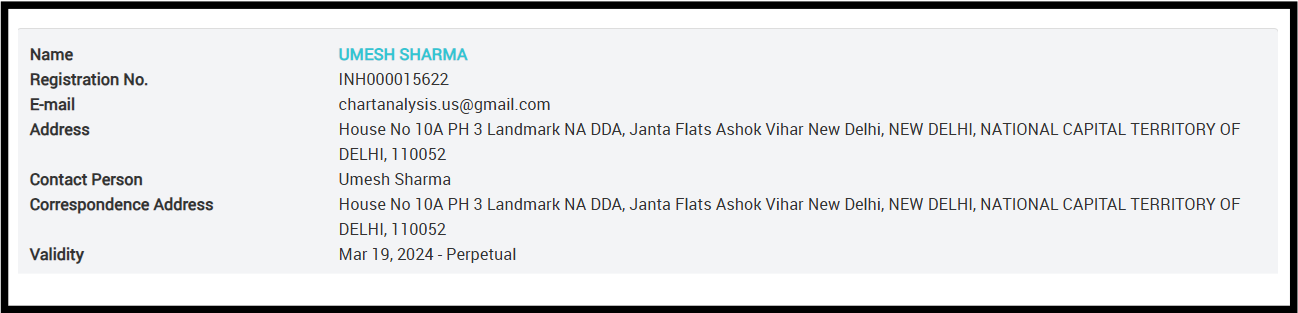
What does this registration mean in practice? A formal code of conduct binds a SEBI-registered Research Analyst.
All stock recommendations must be backed by published research reports with a stated basis, conflict-of-interest disclosures are mandatory if the analyst holds positions in recommended securities, and performance guarantees of any kind are explicitly prohibited.
Fees must be collected in the registered entity’s bank account, not personal accounts.
The stock market remains uncertain regardless of who provides education, research, or analysis.
Therefore, investors should view SEBI registration as one factor in their decision-making process rather than the sole factor.
What a SEBI Research Analyst Is Allowed to Do?
Many investors assume that a SEBI registration allows a Research Analyst to offer any type of market-related service.
In reality, SEBI Research Analysts operate within a specific regulatory framework and are permitted to perform only certain activities.
A SEBI-registered Research Analyst can publish research reports, provide stock recommendations supported by research, conduct market analysis, offer educational content, and share investment-related insights with subscribers.
They may also conduct seminars, webinars, workshops, and stock market courses designed to improve investor knowledge.
However, investors should remember that SEBI registration does not permit guaranteed returns, assured profits, or misleading performance claims.
Understanding these boundaries can help investors better evaluate the services offered by any SEBI-registered Research Analyst.
Understanding what a SEBI Research Analyst is permitted to do provides useful context when evaluating the services offered through Chart Analysis.
Umesh Sharma Research Platform Overview
Umesh Sharma began his journey in financial markets as a technical analysis faculty at NIFM (National Institute of Financial Management), which forms the academic foundation of his teaching approach.
From there, he built a career spanning broking and advisory firms across Jaipur, Delhi, Mumbai, and Ahmedabad, working as a senior research analyst before eventually establishing his own platform, Chart Analysis.
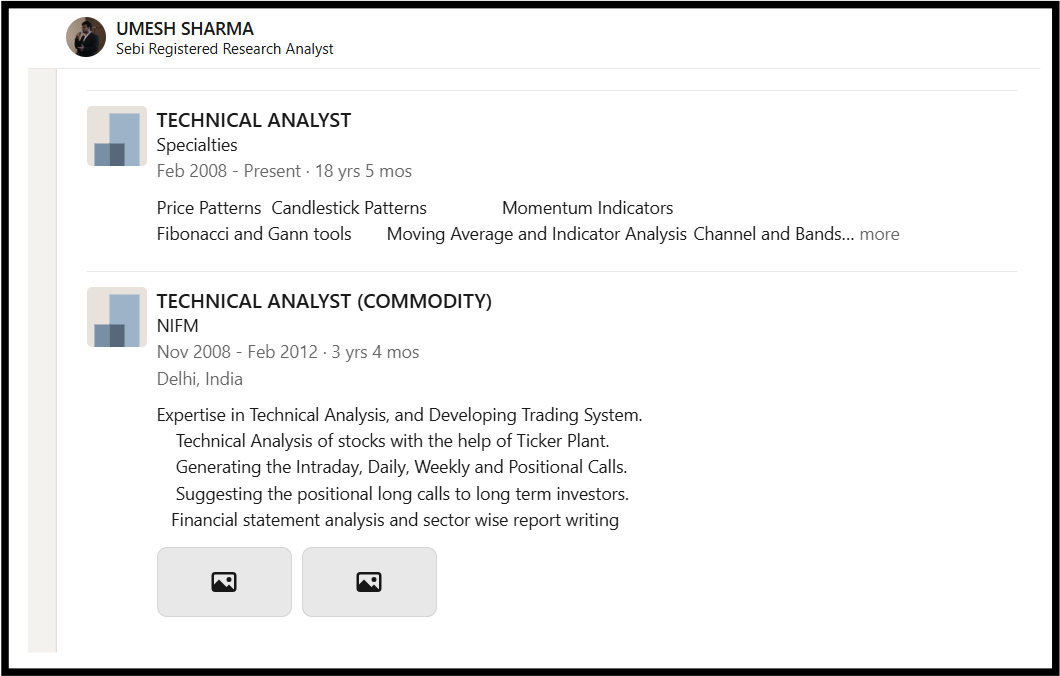
His areas of specialisation, consistently cited across his platforms, include pattern recognition, technical indicators, cyclical analysis, intra-day trading, chart analysis, and trading psychology.
The psychology dimension is notable, it reflects an understanding that market performance is not just about reading charts but also managing the behavioural pitfalls that cause most retail traders to underperform.
Umesh Sharma is the founder and principal educator associated with Chart Analysis, the market education and research platform through which he offers courses, research services, and educational content.
The platform positions itself as a one-stop destination for retail investors who want to learn to trade independently, rather than relying on tip-based advisory services.
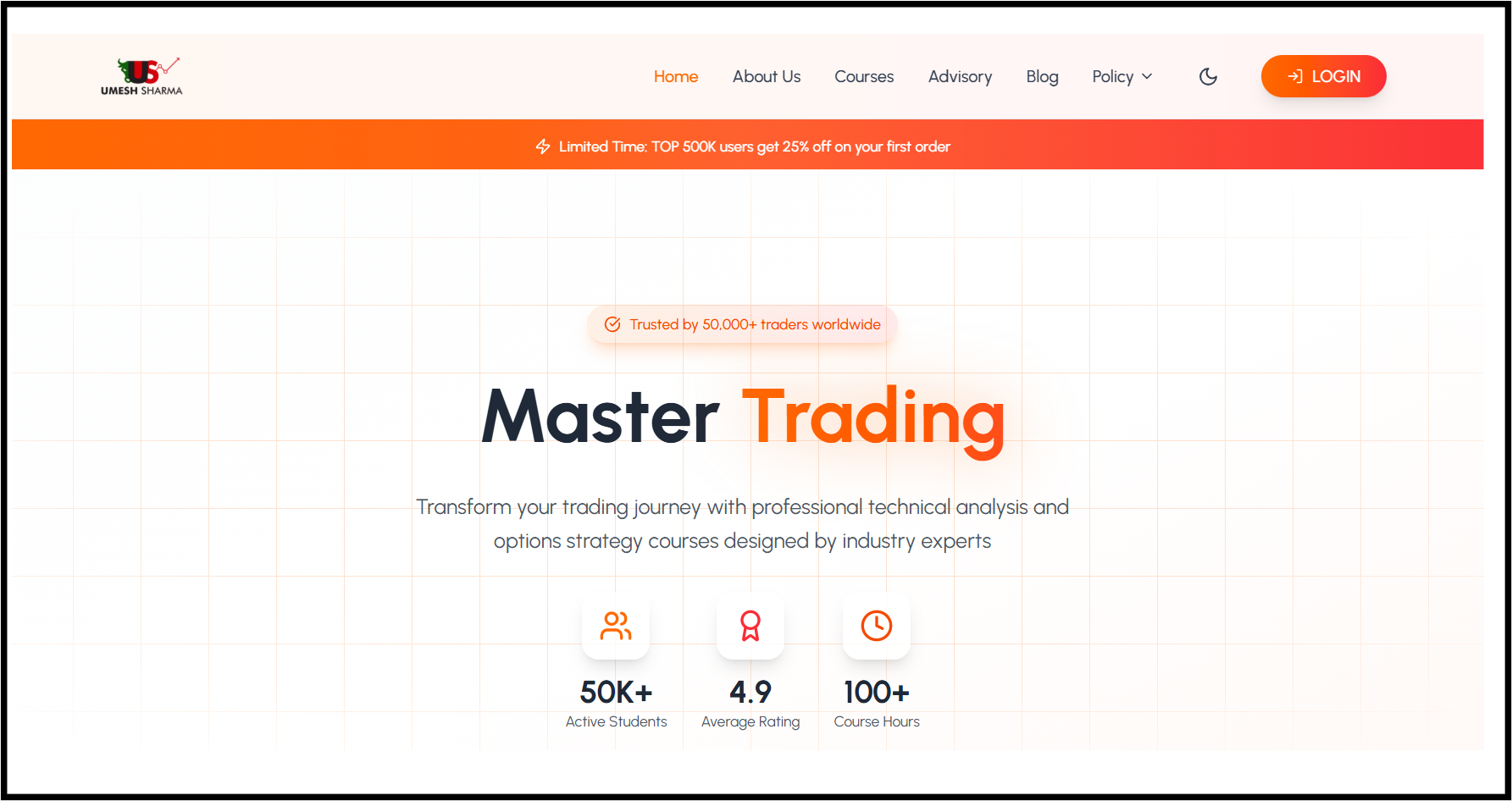
This is a meaningful distinction: the platform’s stated goal is to build traders’ competence through education, not dependency on daily calls.
The emphasis on technical analysis reflects Umesh Sharma’s own areas of deep specialisation built over 15+ years in the market.
Chart Analysis also maintains an active Telegram channel where SEBI-compliant trade calls are shared with proper disclaimers, and a YouTube channel serving as a free-access educational resource.
The combination of free content (YouTube) and paid structured learning (courses) and paid advisory (Telegram/subscription) represents a multi-tier model that gives prospective students the ability to evaluate the quality of content before paying.
Can you Trust Umesh Sharma?
This is the question that matters most to investors considering Chart Analysis, and it deserves a careful, fact-based answer rather than a simple yes or no.
Trust should never be based on marketing alone. When evaluating a market educator or Research Analyst, investors should consider experience, regulatory status, transparency, educational quality, and independent user feedback.
On the positive side, Umesh Sharma’s background is more substantive than the typical social-media-first market educator.
His NIFM foundation, multi-city professional track record, and the sheer volume of free educational content on YouTube provide multiple independent signals of genuine expertise. The SEBI registration is real and verifiable.
The platform’s emphasis on building independent trader competence is also a healthy framing for an education business.
Where any prudent investor should exercise their own judgment: as with any RA offering both advisory and education.
The line between the two can blur, particularly in options courses where live calls may be presented as “teaching examples.”
Any investor considering the advisory subscription (as opposed to the education courses) should apply the same scrutiny they would to any SEBI RA.
Independent users’ reviews beyond the platform’s own testimonials are always the most reliable signal.
How To Complaint Against SEBI Registered RA?
If you have concerns regarding the services of a SEBI Registered Research Analyst, there is a structured grievance process available.
The first step should always be to approach the entity directly and provide an opportunity to resolve the issue.
Investors should preserve all supporting documentation, including payment receipts, emails, WhatsApp conversations, reports, promotional material, and screenshots.
Step 1: Raise the Complaint With the Entity
Clearly explain the issue in writing and request a formal response.
A documented complaint creates a record that may become important later.
Step 2: Lodge a Complaint in SCORES
If the matter remains unresolved, investors may file a complaint through the SEBI Complaints Redress System (SCORES).
The platform allows investors to submit grievances, upload supporting documents, and track complaint progress.
Step 3: File a Complaint in SMART ODR
Where applicable, investors may explore SMART ODR (Online Dispute Resolution).
This framework is designed to facilitate structured dispute resolution within the securities market ecosystem.
Step 4: Stock Market Arbitration
Depending on the facts of the dispute, investors may also consider arbitration or other remedies available under the applicable framework.
The appropriate route depends on the specific circumstances involved.
Need Help?
If you are evaluating whether to subscribe to Chart Analysis’s advisory or enrol in one of Umesh Sharma’s courses, you do not have to make that decision alone.
Many investors begin researching grievance procedures only after a significant time has passed.
Unfortunately, by then, important records may be missing, communication history may be incomplete, and establishing facts may become more difficult.
Register with us. Our team can help you organise documentation, understand the complaint process, and evaluate the next steps available based on your situation.
Conclusion
Umesh Sharma is associated with Chart Analysis, a stock market education platform focused on technical analysis and market education.
Publicly available information indicates that Umesh Sharma is registered under the SEBI Research Analyst framework, although investors should always verify the latest registration status directly through official SEBI records.
Chart Analysis offers educational programs covering technical analysis, trading psychology, market structure, and related topics.
Whether a course is suitable depends largely on the investor’s objectives, experience level, and expectations.
Most importantly, investors should remember that SEBI registration does not guarantee profits or trading success.
Before joining any stock market course, review the curriculum, understand the risks involved, verify credentials, and maintain realistic expectations regarding outcomes.
Frequently Asked Questions
1. Can Umesh Sharma legally guarantee returns or profits in his courses or advisory?
No. SEBI Research Analyst Regulations, 2014 (Regulation 19) explicitly prohibit any SEBI-registered RA from guaranteeing returns, claiming 100% accuracy, or assuring loss recovery.
2. Can SEBI Registered Research Analysts conduct courses?
Yes. Research Analysts can generally conduct educational programs, seminars, workshops, and training sessions relating to securities markets.
Many Research Analysts combine educational content with research services to help investors better understand market concepts.
3. Can stock market courses guarantee profits?
No. No educational course can guarantee profits because market outcomes remain uncertain.
4. What documents should I preserve before filing a complaint?
Investors should keep payment receipts, emails, WhatsApp messages, promotional material, screenshots, and all other relevant communication.
5. Is Chart Analysis suitable for beginners?
Suitability depends on the investor’s objectives, experience level, and learning requirements. Reviewing the curriculum before enrolling is always advisable.





 Add us as a preferred source on Google »

