

₹3.12 lakh recovery from Mir Uniserv shows that investors can challenge misleading advisory practices through legal and regulatory channels.
In this case, a retail investor pursued arbitration through the CORD ODR mechanism, and the Arbitral Tribunal issued a binding compensation award on August 6, 2025.
For investors facing similar losses from Research Analysts or advisory firms, this case highlights the importance of documentation and timely escalation.
Mir Uniserv Review
Mir Uniserv is a Kanpur-based proprietorship run by Mr. Saurabh Shukla. It holds SEBI Research Analyst registration INH100007639.
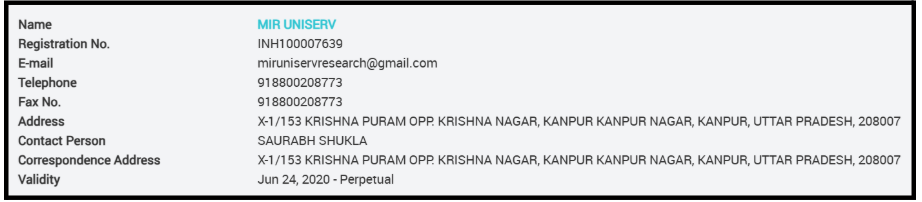
The firm used third-party telecallers to attract retail investors with promises of profitable advisory services.
Two proceedings now document regulatory violations by the firm: a SEBI Adjudication Order dated November 29, 2024, and an NSE Arbitration Award dated August 6, 2025.
₹3.12 Lakh Recovery in Mir Uniserv Arbitration Case
A retail investor from Rajkot approached us after suffering substantial losses while subscribing to Mir Uniserv’s advisory services between January and July 2023.
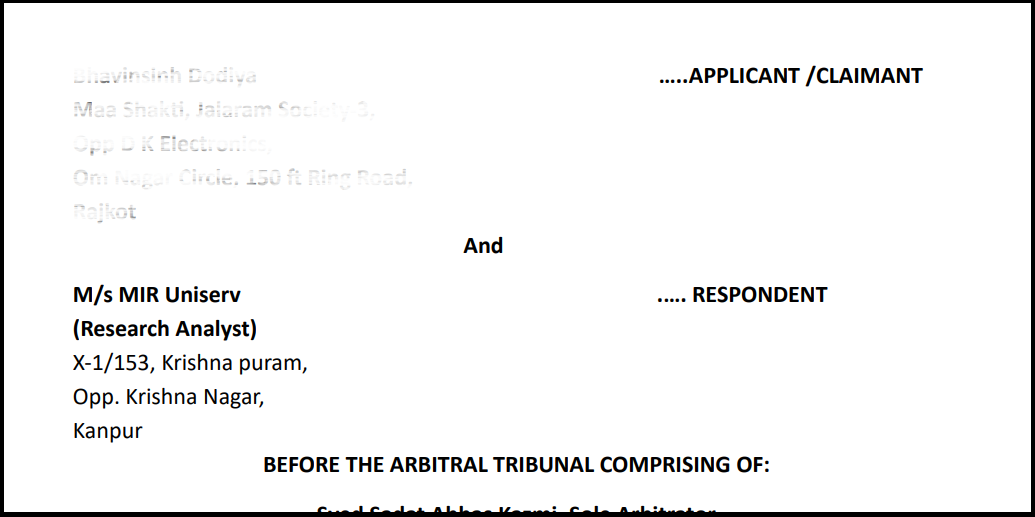
We helped him organise over 160 call recordings, payment records, trade screenshots, and profit and loss statements into a coherent, evidence-linked claim before the Arbitral Tribunal.
The arbitration ran through three hearings on the CORD ODR platform, and the Sole Arbitrator awarded the investor ₹3,12,000 as compensation for financial losses.
Violations by Mir Uniserv in the ₹3.12 Lakh Recovery Case
The Arbitral Tribunal identified multiple violations through documents, call recordings, and oral depositions. Here are the key findings.
1. Execution-Level Trade Instructions via Phone
Representatives called the investor in real time and dictated specific instruments, quantities, lot sizes, and entry timing.
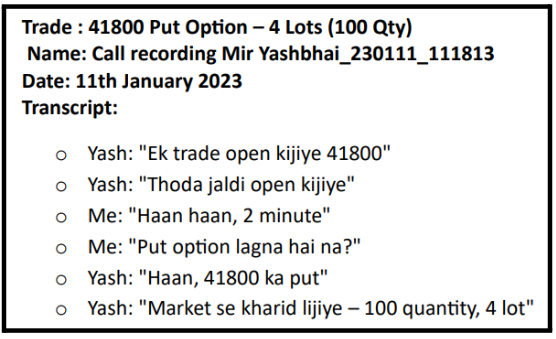
A SEBI-registered Research Analyst holds no license to deliver this level of personalised, trade-execution advice.
2. Assured Profit Promises and Loss Recovery Guarantees
Mir Uniserv loss recovery promises mislead investors.
Representatives repeatedly told the investor that profits were certain and that all past losses would be covered.
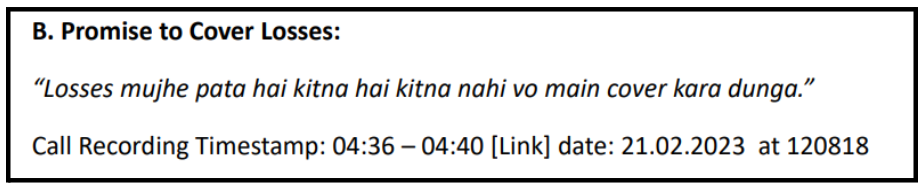
The Tribunal treated these as direct verbal guarantees, which SEBI’s Master Circular explicitly prohibits for any Research Analyst.
3. Fabricated Projections and Upgrade Pressure
After every loss, representatives projected ₹34,500 profits across five days to justify an immediate ₹41,000 payment. They also pressured the investor to upgrade to a ₹1,25,000 plan.
The Tribunal found these scenarios created a false sense of rapid recovery and that recovery promises functioned as a commercial sales tool, not a genuine commitment.
4. Inducement to Borrow and Misleading Client Success Claims
Despite the investor stating he had already borrowed funds, a representative pushed him to arrange more money from any source, claiming lump-sum profits would clear all debts.
The representative also claimed another client turned ₹10,000 into ₹1,50,000. The Tribunal treated this as an attempt to create urgency and false confidence.
5. Offer to Deliver Any Profit the Investor Demanded
A representative told the investor “Aap bolo ki kitna profit aap manoge to main utna profit karwa dun.”
The Tribunal identified this as the most explicit misrepresentation in the entire record.
No Research Analyst carries any regulatory authority to promise a client-specified profit figure under any market condition.
-
Penalty and Recovery
The Arbitral Tribunal awarded the investor ₹3,12,000 (Rupees Three Lakh Twelve Thousand) as partial compensation for financial losses arising from Mir Uniserv’s conduct.
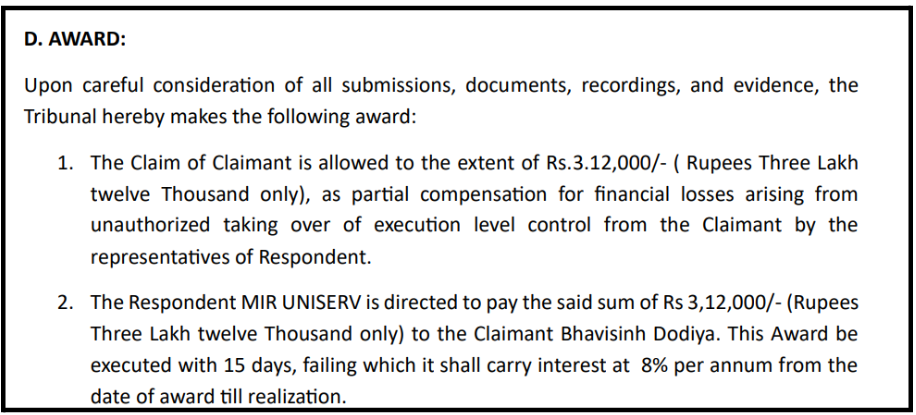
The Tribunal directed Mir Uniserv to pay within 15 days. Otherwise, 8% annual interest applies from August 6, 2025, until full realisation.
What Investors Should Learn from This Case?
This case demonstrates that legal recovery is achievable, but it also highlights something more valuable: the situation becomes far less damaging when investors recognise warning signs early and act before losses compound.
Before relying on any advisory service, keep these three things firmly in mind:
- No SEBI-registered Research Analyst holds any authority to promise loss recovery or assured profits, verbal or written.
- Every call, payment, and instruction deserves a record from day one, documentation determines the strength of any future claim.
- Any representative who pairs a recovery promise with a plan upgrade call deserves immediate suspicion, not compliance.
Prevention costs nothing; recovery costs time, evidence, and effort.
When Is Recovery From A Research Analyst Possible?
Recovery through legal channels becomes possible when investors preserve call recordings, payment receipts, trade records, and written communication.
The stronger and more organized the evidence, the higher the probability of a favourable outcome in conciliation or arbitration.
However, investors must act within limitation periods, generally three years from the cause of action. Concealment or ongoing inducement may extend this timeline.
Waiting too long, or assuming the situation will resolve itself, remains the most common reason investors lose access to legal remedies they would otherwise qualify for.
How To Proceed For Loss Recovery From RA?
Investors who suspect Research Analyst violations have real legal options. Those options work best when investors act systematically from the beginning.
Step 1: Reach Out to the Research Analyst in Writing
Write a formal complaint directly to the firm, stating each incident with the date, the representative involved, and the specific promise made. Sending it in writing creates a timestamped record.
Regulators and arbitrators look for evidence that you attempted direct resolution before escalating, so this step matters more than most investors realise.
Step 2: Register the Complaint in SCORES
File your complaint on SEBI SCORES with payment receipts, call recordings, trade statements, and written communication attached.
SEBI assigns the complaint to the intermediary and monitors their response. Every day the firm delays responding, adds to their compliance record and strengthens yours.
Step 3: File a Complaint in SMART ODR
SEBI’s SMART ODR portal allows retail investors to pursue online conciliation against registered intermediaries, including Research Analysts.
A neutral Conciliator guides both parties toward a resolution. Settlement at this stage avoids the time and effort of arbitration entirely.
If conciliation breaks down, the Conciliator’s report and findings carry real weight in the arbitration that follows.
Step 4: Arbitration in Stock Market
Arbitration through the ODR portal puts your case before an independent Arbitral Tribunal that examines all evidence and delivers a binding award.
This is the stage where the Mir Uniserv investor secured his ₹3,12,000 compensation.
A well-prepared claim with organised recordings, trade records, and written briefs strengthens your case significantly.
Need Help?
Most investors carry the evidence, they just need the right support to turn it into a winning case.
Here is what we do:
- We review your call recordings, payment history, and correspondence to assess your claim’s strength before you file anything
- We organise your documents and recordings into the exact format SEBI SCORES and ODR platforms require
- We prepare your SMART ODR conciliation brief and oral strategy to maximise settlement prospects at every stage.
- We guide you through award enforcement if the respondent fails to pay within the directed timeline
Register with us before limitation periods close the door on your claim.
Conclusion
₹3.12 lakh recovery from Mir Uniserv shows that investors can succeed through securities arbitration with strong evidence and the right process.
The Tribunal examined recovery promises, execution-level trade instructions, and misleading profit projections before ruling in the investor’s favour.
The case also shows that SEBI regulations and arbitration can hold Research Analysts accountable when investors document violations properly.
If you face similar conduct from any Research Analyst, the legal path exists, the process works, and the time to act is now.





 Add us as a preferred source on Google »

