

One wrong stock tip on WhatsApp or Telegram can wipe out years of savings within days.
With thousands of trading channels promising “sure-shot profits,” many investors are now asking: are WhatsApp & Telegram stock tips legal?
The reality is that social media platforms have become a major hotspot for stock market scams, fake advisory services, and manipulated trading calls.
Many groups claim to have expert analysts, insider information, or guaranteed returns to attract innocent investors.
But in several cases, these promises have ended in huge financial losses and legal investigations.
SEBI has repeatedly warned investors against relying on unregistered WhatsApp and Telegram stock tip providers.
In this blog, we will understand whether WhatsApp & Telegram stock tips are legal, real scam cases linked to such groups, SEBI rules, and how investors can register complaints in such matters.
WhatsApp & Telegram Stock Tips Legal in India or Not?
The legality of WhatsApp and Telegram stock tips in India depends on one important factor: whether the person giving the advice is legally authorised to do so.
In India, the securities market is regulated by Securities and Exchange Board of India (SEBI).
Under SEBI regulations, any individual or company that provides stock recommendations, trading calls, portfolio advice, or investment strategies in exchange for money must be registered with SEBI as a:
- Registered Investment Adviser (RIA), or
- Registered Research Analyst (RA)
Many investors wonder, can a research analyst give personalized tips? The short answer is no. Under SEBI rules, a Research Analyst provides general, research-backed recommendations to a broad audience, whereas only a Registered Investment Adviser (RIA) is permitted to provide personalized financial advice tailored to your specific financial goals and risk profile.
This means that if a Telegram or WhatsApp group is charging subscription fees for stock tips, intraday calls, options trading advice, or “premium” recommendations without SEBI registration, it may be operating illegally.
The issue becomes even more serious when such groups:
- Promise guaranteed returns
- Claim “100% accuracy” in stock market predictions
- Manipulate penny stocks through mass promotions
- Use fake SEBI registration certificates
- Circulate misleading profit screenshots
- Run pump-and-dump schemes
- Misrepresent risks associated with trading
SEBI has repeatedly cautioned investors against relying on unregistered social media advisers because many of these channels are designed primarily to attract retail investors through false promises and emotional marketing tactics.
At the same time, it is important to understand that not every stock-related discussion on social media is illegal.
Friends discussing market trends, public stock opinions shared online, or educational financial content generally do not violate the law.
The legal problem begins when financial advice is sold commercially without regulatory approval or when investors are intentionally misled for financial gain.
This is why investors should never trust a stock tip group solely because it has thousands of members, luxury success stories, or screenshots of profits.
Before following any trading advice online, verifying the adviser’s SEBI registration and understanding the associated risks is extremely important.
Real Cases of WhatsApp and Telegram Stock Tips Scam
The danger of WhatsApp and Telegram stock tip groups is no longer just a theory.
Over the past few years, several investors across India have lost lakhs and even crores after trusting online trading channels that appeared genuine and professional.
Most of these scams follow a similar pattern: fraudsters first build trust through free stock tips, fake profit screenshots, and claims of expert market knowledge.
Once investors gain confidence, they are pushed into paid groups, fake trading platforms, or manipulated stock investments.
Here are two real cases reported by major news platforms that show how these scams actually operate and how easily investors can get trapped.
Case 1: Businessman Lost ₹1.88 Crore Through WhatsApp Stock Group
In Maharashtra, a businessman was added to a WhatsApp group called “STOCK Vanguard (F),” where regular stock market tips and trading advice were posted.
The group appeared professional, with around 170 members actively discussing investments.
Gradually, the victim started trusting the recommendations and was later shifted to a “VIP” investment group.
The fraudsters claimed to be market experts and even showed fake SEBI certificates to gain credibility.
They convinced the businessman to invest through a trading app that promised huge profits.
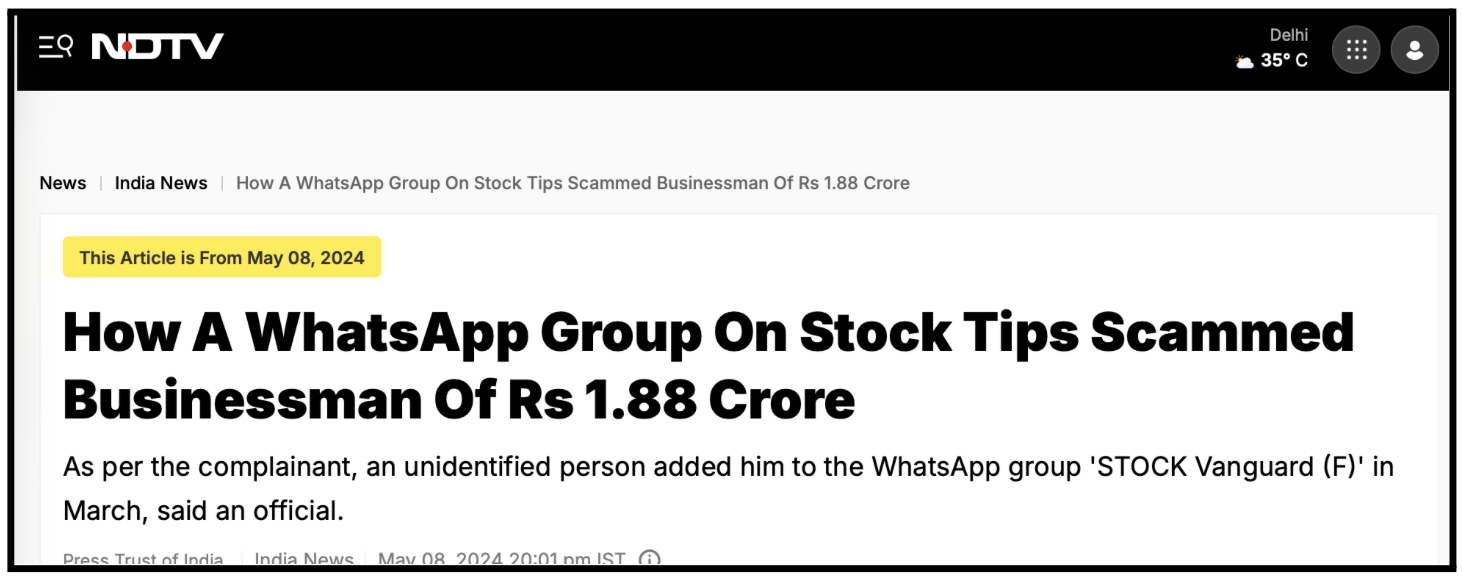
Over time, he transferred more than ₹1.88 crore believing his investments were growing.
The scam came to light only when he tried to withdraw the money and received no response from the operators.
A police complaint was later registered for cheating. This case exposed how easily fake WhatsApp trading groups can manipulate investors using fabricated trust and false promises.
Case 2: Hyderabad Investor Duped Through WhatsApp & Telegram Trading Network
A Hyderabad investor was cheated of nearly ₹32 lakh in an online trading scam linked to WhatsApp groups and Telegram communication channels.
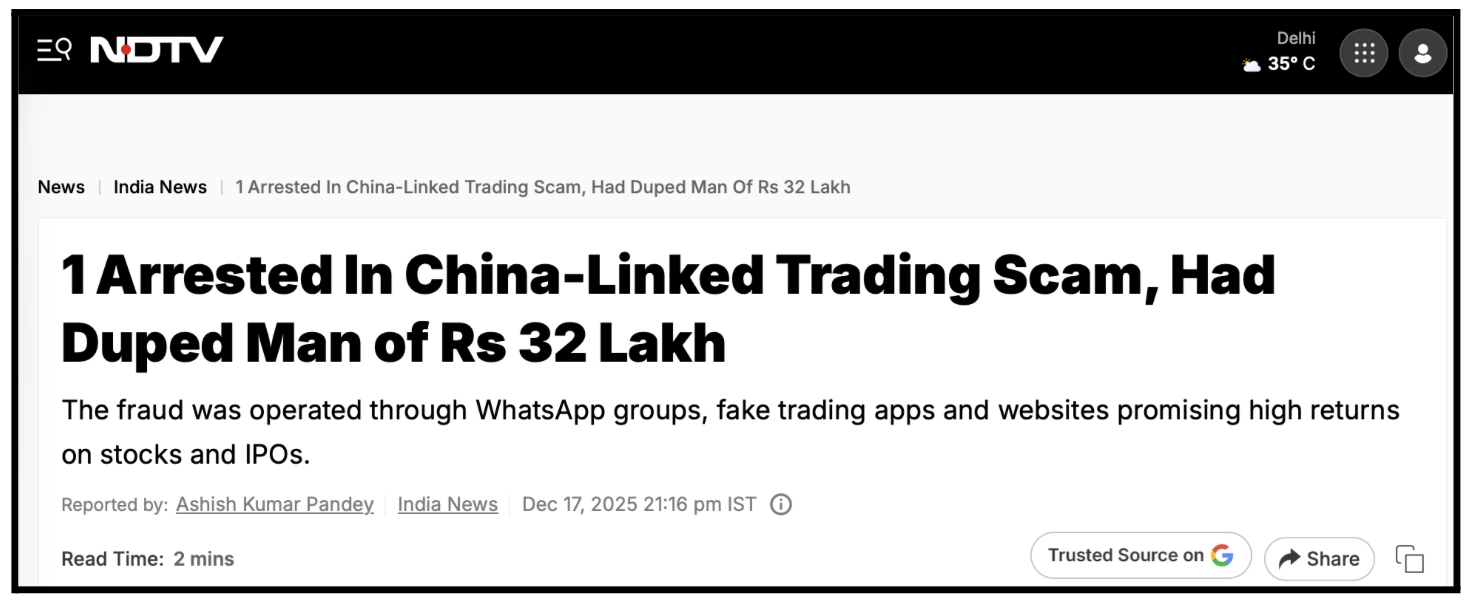
The fraudsters posed as professional market advisers and used fake stock trading platforms to lure victims with promises of high returns on stocks and IPO investments.
The victim was added to WhatsApp groups where fake trading screenshots and profit figures were regularly shared to create confidence.
The scammers then convinced him to transfer money into fraudulent investment platforms.
Initially, the apps displayed fake profits, making the investment appear genuine.
Later, investigators found that the scam had international links and involved cryptocurrency transfers connected to handlers operating through Telegram.
Police arrested one accused and revealed that the fraud network was connected to multiple cyber fraud cases across several Indian states.
The case highlighted how organized stock tip scams are now using both WhatsApp and Telegram to target retail investors.
SEBI Rules for WhatsApp and Telegram Stock Tips
SEBI has become increasingly strict regarding stock market promotions on social media platforms. Many investors wonder whether WhatsApp stock tips from a SEBI registered RA are legal under current regulations.
While registered RAs are permitted to communicate recommendations, they must still follow disclosure norms, avoid guaranteed return claims, and maintain proper client records.
With the rise of online investment scams, the regulator has repeatedly warned investors against unregistered advisers operating through WhatsApp and Telegram groups.
Some important SEBI-related rules and guidelines include:
- Anyone giving investment advice for fees must be registered with SEBI.
- Investment advisers cannot promise guaranteed returns or fixed profits.
- Research analysts must disclose conflicts of interest while recommending stocks.
- Fake SEBI registration certificates and misleading claims are punishable offences.
- Pump-and-dump activities and stock price manipulation are prohibited under securities laws.
- Advisers must maintain transparency regarding risks associated with investments.
- Unregistered entities cannot legally operate paid stock tip services.
- Investors should verify adviser registration directly through the official SEBI database.
SEBI has also taken action in several cases involving social media-based stock manipulation and fraudulent advisory services.
Investors are strongly advised to avoid channels that promote unrealistic profits, secret trading formulas, or “sure-shot” intraday calls.
Risks of Following Unverified Stock Tips
Following illegal WhatsApp and Telegram stock tips can expose investors to serious financial and legal risks.
In many cases, these groups are operated by unregistered individuals whose primary goal is to manipulate investors rather than provide genuine market guidance.
Some major risks include:
- Heavy financial losses due to fake or manipulated stock recommendations.
- Becoming trapped in pump-and-dump schemes involving penny stocks.
- Exposure to fake trading apps and fraudulent investment platforms.
- Misuse of personal and banking information shared with scammers.
- No legal protection against unregistered advisers.
- Increased chances of emotional and high-risk trading decisions.
Many investors realise the fraud only after they are unable to withdraw their money or when the promoted stock crashes suddenly.
This is why blindly trusting social media stock tips without proper verification can become extremely dangerous.
How to Report Misleading Stock Advisory Services?
If you are someone who has been scammed through WhatsApp or Telegram stock tips, you can register a complaint by following some simple steps.
1. Collect Evidence
Before filing a complaint, gather all possible evidence related to the fraud, including:
- WhatsApp or Telegram chats
- Payment receipts
- Bank transaction details
- Screenshots of trading apps
- Contact numbers and usernames
- Fake profit screenshots or promotional material
Proper evidence can significantly strengthen your complaint.
2. Register Complaint With the Company or Broker
If the fraud involved a trading platform, broker, or intermediary, first raise the complaint directly with the concerned company.
Keep records of emails and complaint numbers for future reference.
3. File Complaint in SCORES
Investors can register complaints through the SEBI SCORES Portal.
SCORES is SEBI’s online grievance redressal platform where investors can report issues related to securities markets, advisers, brokers, and fraudulent activities.
4. Register Complaint in SMART ODR
You can also use the SMART ODR Portal for online dispute resolution in securities market-related disputes.
This platform helps investors resolve complaints digitally through mediation and online resolution mechanisms.
5. Arbitration in Stock Market
If the dispute remains unresolved, investors may also pursue arbitration through stock exchanges and legal forums depending on the nature of the fraud and financial loss involved.
In serious cyber fraud cases, victims should also report the matter to local cybercrime authorities and the national cybercrime portal.
Need Help?
If you are facing any challenge in registering your complaint against WhatsApp or Telegram stock tip scams, you can register with us.
Our team can help you understand the complaint process, organize your documents, and guide you through the proper channels for reporting financial fraud and investment-related scams.
Conclusion
WhatsApp and Telegram stock tip groups may appear profitable and trustworthy, but many operate without legal authorization or regulatory oversight.
The growing number of investment scams shows how easily fake advisers can misuse social media platforms to trap investors.
Before trusting any online trading group, always verify SEBI registration and avoid anyone promising guaranteed profits.
If you have already suffered losses, taking immediate legal and regulatory action can improve your chances of recovery.
In the stock market, informed decisions and proper verification are always safer than blindly following viral trading tips.





 Add us as a preferred source on Google »

