

A single trading tip can feel like a shortcut to financial freedom when the markets are moving fast, and emotions are running even faster.
That is exactly why names like Sameer Pande research analyst, and Nifty Pro attract so much attention from retail investors looking for certainty in an uncertain market.
But before you place your trust and money into any research analyst service, one important question needs to be answered carefully: should you trust Nifty Pro?
The answer cannot come only from flashy websites, Telegram screenshots, or claims of high accuracy.
Real trust is built by looking at customer experiences, regulatory actions, arbitration outcomes, and the overall conduct of the company.
In this blog, we will break down the facts, user complaints, arbitration cases, SEBI findings, and the lessons every investor should learn before trusting Nifty Pro.
Should You Trust Nifty Pro or Not?
Sameer Pande is the owner of Nifty Pro Trading Research, a Nagpur based stock market advisory firm registered.
Now the question comes- is Niftypro Trading Research SEBI registered?
Nifty Pro register with Securities and Exchange Board of India as a Research Analyst under registration number INH000009649.
The company offers intraday tips, option trading calls, and premium research services through Telegram, calls, and email alerts.
On its website, Nifty Pro presents itself as a professional advisory platform with SEBI registration details, investor charter disclosures, and different subscription plans for traders.
However, deciding whether you should trust Nifty Pro or not requires looking beyond the company’s website and promotional claims.
And that naturally leads to an equally important question that many investors ask alongside the registration check: is Niftypro Trading Research safe for someone who is putting real, hard-earned capital on the line?
A SEBI registration only means the entity is registered with the regulator. It does not guarantee profits, safety, or ethical practices in every situation.
Before trusting any research analyst, investors should check three things carefully:
- customer reviews
- arbitration disputes
- regulatory actions
In Nifty Pro’s case, several users have reported losses, unrealistic profit promises, and poor support after payments were made.
Arbitration cases have also raised concerns regarding misleading assurances and fee related disputes.
Most importantly, SEBI itself passed an order against Sameer Pande and Nifty Pro for allegedly using misleading promotional claims related to assured profits and high accuracy rates.
These issues do not automatically prove that every client had a bad experience.
But they are serious enough for investors to remain cautious and do thorough research before investing money.
Nifty Pro Reviews
User reviews against Nifty Pro mainly revolve around allegations of misleading profit expectations, heavy trading losses, and aggressive upselling tactics.
Several reviewers on Google claim that the service initially provides one or two profitable trades to gain confidence.
According to these users, once trust is established, clients are encouraged to increase capital size and subscribe to more expensive plans.
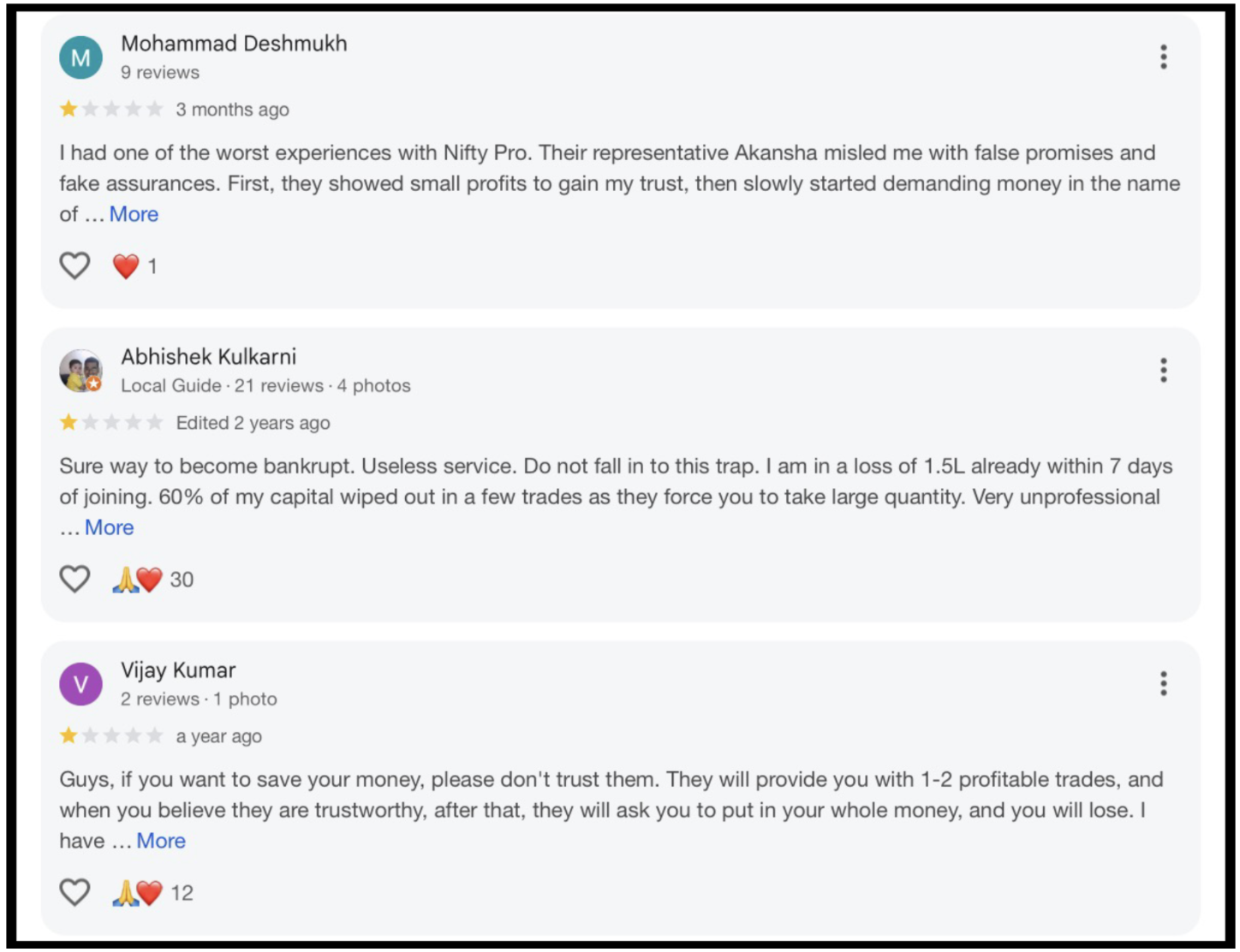
One investor alleged that a major portion of his trading capital disappeared within a few trades because he was pushed toward larger positions without proper risk management guidance.
Another reviewer claimed that after losses started increasing, communication from the company became irregular.
On MouthShut, the feedback appears even harsher.
Users described the experience as emotionally stressful and financially damaging.
Some alleged that demo trades showed profits initially, but once payment was made, the quality of trading calls declined significantly.
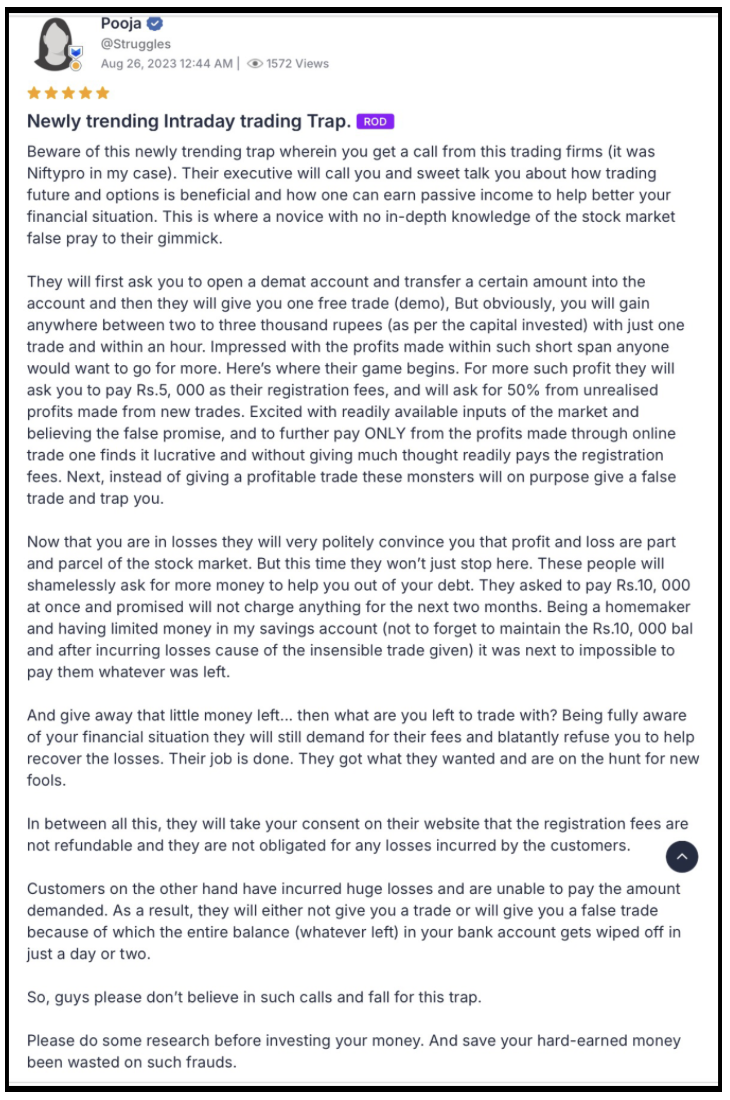
A repeated concern across reviews is the lack of proper stop loss discipline in recommendations. Some users also claimed that refund requests were ignored after losses occurred.
Of course, online reviews alone should never be treated as final proof against any company. Reviews can sometimes be exaggerated or emotionally written after losses.
However, when similar complaints repeatedly appear across different platforms, investors should pause and investigate carefully before investing money into premium trading services.
Nifty Pro Arbitration
Investor complaints become far more serious when they move beyond online reviews and reach formal arbitration proceedings.
In the case of Nifty Pro, one of the most discussed disputes involved allegations of misleading assurances and improper fee arrangements.
The arbitration in this matter was fought by our team on behalf of the investor.
1. Arbitration Case: Chand Ansari vs Nifty Pro
One major arbitration involved investor Chand Ansari, who reportedly paid ₹55,000 upfront after being assured of a profit-sharing arrangement where profits would be shared while losses would remain limited.
According to the allegations, the trading calls later resulted in heavy losses, and the fee was subsequently described as non-refundable.
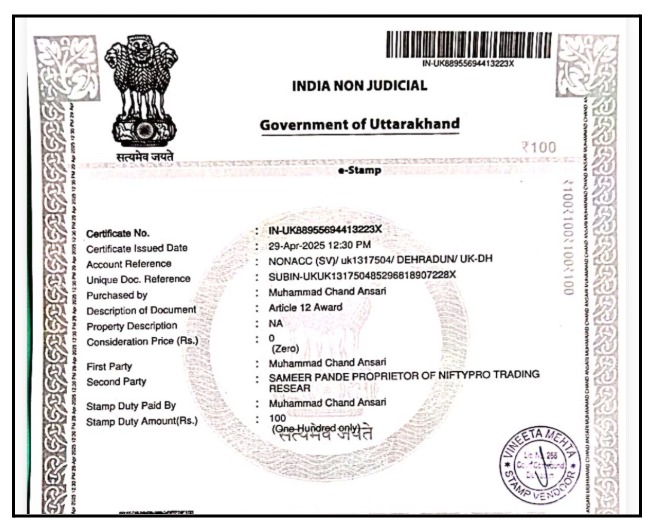
The investor approached our team for assistance, after which the matter was escalated with supporting evidence including audio recordings, payment proofs, and communication records.
The dispute mainly focused on misleading verbal assurances and prohibited profit linked arrangements allegedly used to attract the client.
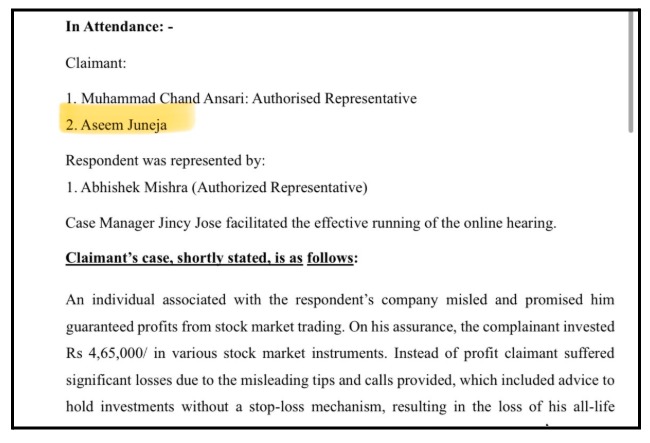
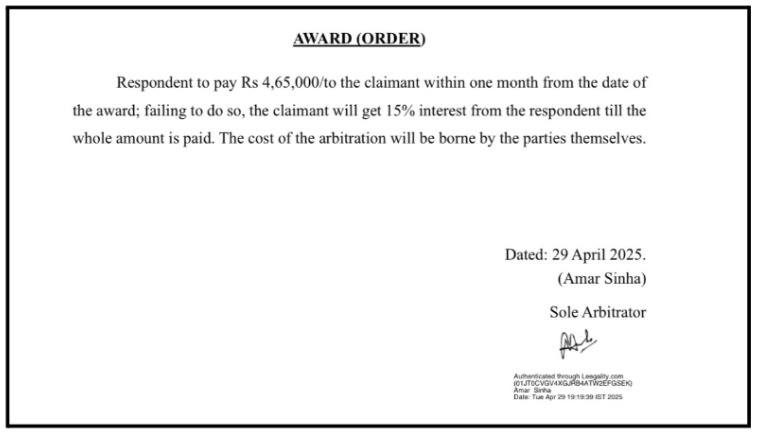
After reviewing the evidence, the arbitrator ruled in favour of the investor and awarded compensation of ₹4.65 lakh along with 15% annual interest.
Our team represented the client throughout the arbitration proceedings and helped present the evidence effectively before the arbitrator.
This case became significant because SEBI regulations clearly prohibit research analysts from offering assured returns or profit sharing style arrangements with clients.
It also highlights why investors should never rely only on verbal promises while dealing with trading advisory services.
Niftypro SEBI Order
Regulatory scrutiny intensified after SEBI investigated the activities of Nifty Pro Trading Research and Sameer Pande.
What Was the Order?
In December 2024, the Securities and Exchange Board of India passed an order against Sameer Pande and Nifty Pro Trading Research after examining the company’s promotional practices and client communications.
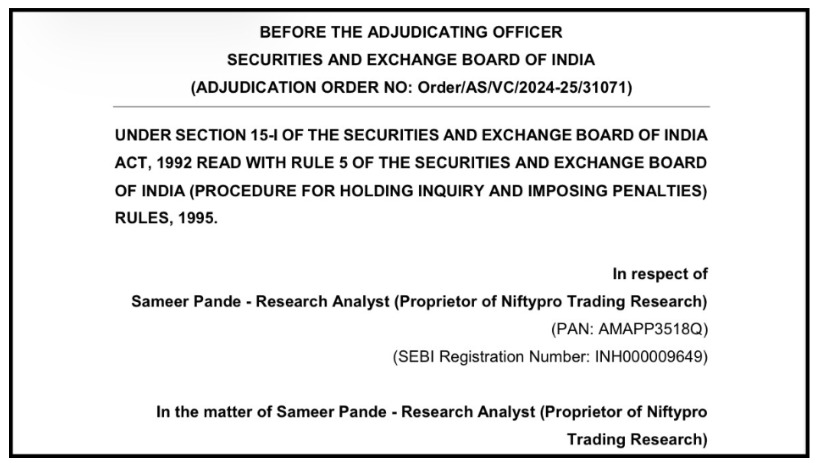
The investigation reviewed website content, Telegram promotions, internal sales communications, and investor related representations made by the company.
Why Was the Order Implemented?
SEBI found multiple violations related to misleading advertisements and prohibited claims made by a registered research analyst.
According to the order, the company allegedly used phrases suggesting assured profits, high accuracy rates, and consistent returns irrespective of market volatility.
Such language directly violates SEBI regulations because research analysts are not allowed to guarantee profits or create unrealistic expectations.
The regulator also reportedly found issues with promotional testimonials and sales practices where investors were allegedly told they could recover subscription fees quickly through trading profits.
SEBI considered these practices misleading because they reduced the perceived risks involved in stock market trading.
Penalty Imposed
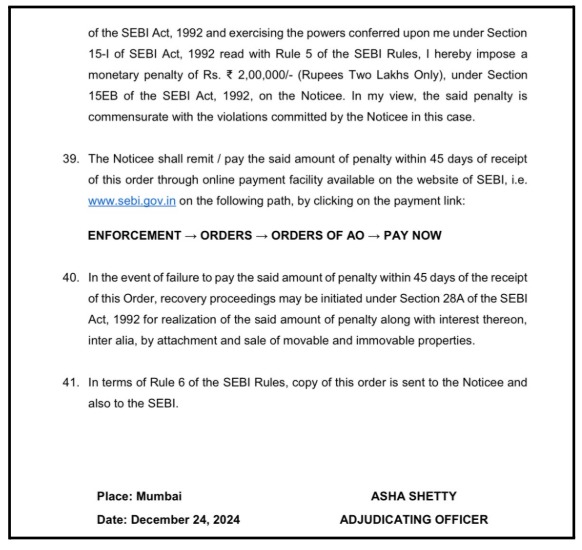
SEBI imposed a monetary penalty of ₹2 lakh on Sameer Pande and directed the removal of misleading content from promotional material and online platforms.
The regulator also emphasized that disclaimers alone cannot justify misleading marketing statements.
If the primary communication creates unrealistic expectations, small disclaimers placed elsewhere do not eliminate regulatory violations.
Although SEBI stopped short of imposing a market ban, the order served as a strong warning regarding the responsibilities of registered research analysts.
What Can You Learn From These Cases?
The complaints, arbitration disputes, and SEBI findings surrounding Nifty Pro offer several important lessons for ordinary investors.
Many people enter the stock market hoping to find someone who can provide certainty and guaranteed profits.
Unfortunately, this mindset often makes investors vulnerable to aggressive marketing and unrealistic promises.
Here are some important learnings investors should remember:
- Never trust claims of guaranteed profits or extremely high accuracy rates.
- A SEBI registration does not automatically mean every service offered is trustworthy or risk-free.
- Always verify customer feedback from independent platforms before paying subscription fees.
- Avoid services that pressure you into increasing trading capital quickly.
- Keep written records, payment proofs, and call recordings whenever possible.
- Be cautious if a company focuses more on marketing profits than explaining risks.
- Understand that stock market trading always involves uncertainty, and losses are possible in every strategy.
The biggest lesson is simple. Trust should be earned through transparency, consistency, ethical conduct, and realistic communication, not through bold promises or emotional marketing.
How to File a Complaint Against Sameer Pande?
If you face issues with Nifty Pro or any other research analyst, there are several formal channels available for investors to seek help.
Step 1: Gather Evidence
Collect payment receipts, call recordings, WhatsApp chats, Telegram messages, trading screenshots, and all communication related to the service.
Strong evidence plays a major role in complaint resolution.
Step 2: Contact the Research Analyst
Before escalating the matter, try contacting the company directly through email or official grievance channels. Sometimes disputes get resolved at this stage itself.
Step 3: Lodge a Complaint with SCORES
Investors can register complaints through the official SEBI SCORES Platform.
This platform allows investors to submit grievances against registered intermediaries.
Step 4: Register a Complaint in SMART ODR
If the issue remains unresolved, investors can move toward the SMART ODR system for online dispute resolution and conciliation support.
Step 5: Stock Market Arbitration
In serious financial disputes, arbitration may become necessary.
Proper documentation and structured presentation of evidence become extremely important during this stage.
Need Help?
If you have faced issues with Nifty Pro or any other research analyst, you do not have to handle the complaint process alone. Many investors struggle with gathering evidence, filing complaints correctly, and navigating SEBI procedures.
You can register with us.
Our team also fought the arbitration case against Nifty Pro on behalf of the investor and successfully helped secure compensation through proper evidence presentation and legal support.
We assist investors with complaint drafting, SEBI SCORES filings, SMART ODR proceedings, and arbitration support to help them pursue their grievances effectively.
Conclusion
Trust in the financial world should never be built on marketing alone.
The discussions surrounding Nifty Pro show why investors must always look beyond websites, Telegram channels, and bold trading claims before making financial decisions.
User complaints, arbitration matters, and SEBI orders collectively raise concerns that deserve careful attention from anyone considering such services.
These cases also remind investors that personal responsibility plays a huge role in protecting hard earned money.
No research analyst can eliminate market risk, and anyone promising certainty in trading should immediately trigger caution.
The smartest investors are not the ones chasing guaranteed profits. They are the ones who verify facts, question claims, and make decisions with patience and awareness.
Before trusting Nifty Pro or any similar advisory service, make sure your confidence is based on evidence and not just promises.





 Add us as a preferred source on Google »

